Table of Contents
- The Enduring Allure of the Catapult STEM Activity
- Unpacking the "STEM" in Your Catapult
- Gathering Your Launchpad Supplies
- Building Your First Popsicle Stick Catapult: Step-by-Step Guide
- Safety First: Ensuring a Smooth Launch
- Turning Your Catapult into a Full-Fledged STEM Experiment
- Exciting Catapult Challenges for Every Age
- Fostering Learning Beyond the Launch
- Adapting the Catapult Activity for Different Ages
- Beyond the Catapult: Continuing the STEM Adventure with I'm the Chef Too!
- Conclusion
- FAQ Section
Do you remember that incredible feeling of discovery, the "aha!" moment when a complex idea suddenly clicks into place? For many of us, it happened with something simple yet profound – perhaps watching a pendulum swing, or seeing how gears mesh together. Imagine giving your child that same thrilling experience, not from a textbook, but by building something amazing with their own hands. That's the magic of a simple DIY catapult STEM project, a gateway to understanding powerful scientific principles, all while having a blast!
At I'm the Chef Too!, we believe that the most impactful learning happens when children are actively engaged, truly curious, and, most importantly, having fun. Our unique mission is to blend food, STEM, and the arts into one-of-a-kind "edutainment" experiences, transforming complex subjects into tangible, hands-on, and delicious cooking adventures. Just like a batch of brownies can teach chemistry or decorating cookies can explore geometry, building a catapult ignites curiosity and creativity through the power of physics and engineering. Developed by mothers and educators, our approach is all about fostering a love for learning, building confidence, and creating those precious, screen-free family bonding moments that truly matter.
This comprehensive guide will walk you through everything you need to know about embarking on your very own catapult STEM adventure. We’ll delve into the fascinating history of these ancient machines, break down the core scientific principles that make them fly, provide step-by-step instructions for building a simple yet effective model, and offer a plethora of exciting challenges to turn a basic build into a rich, experimental learning journey. Get ready to transform a humble collection of craft sticks and rubber bands into a powerful tool for discovery, inspiring budding scientists and engineers right in your home.
The Enduring Allure of the Catapult STEM Activity
For millennia, catapults have captured human imagination, serving as formidable tools of war and incredible feats of engineering. From the Roman onagers to the mighty trebuchets of medieval sieges, these ingenious devices were designed to hurl projectiles with immense force, shaping battles and history itself. But their appeal isn't just historical; it's profoundly educational, making them one of the most iconic and effective STEM activities for kids of all ages.
The beauty of a catapult STEM activity lies in its deceptive simplicity and incredible accessibility. You don't need a state-of-the-art laboratory or exotic materials to explore the fundamental principles of physics and engineering. With just a few common household items, children can construct a working model and immediately begin experimenting, observing cause and effect firsthand. This direct interaction transforms learning from a passive absorption of facts into an active process of discovery and problem-solving. It’s a powerful testament to how simple machines can demonstrate complex scientific ideas.
Consider the intricate dance of forces and energies involved when a catapult launches an object. It’s a real-world, dynamic physics lesson unfolding before their very eyes. Children naturally ask questions: "Why did that one go farther?" "What if I use a bigger rubber band?" "Can I make it hit the target?" These aren't just idle questions; they are the bedrock of scientific inquiry and engineering design. They spark genuine curiosity, encourage critical thinking, and push children to hypothesize, test, and refine their creations, much like an actual scientist or engineer.
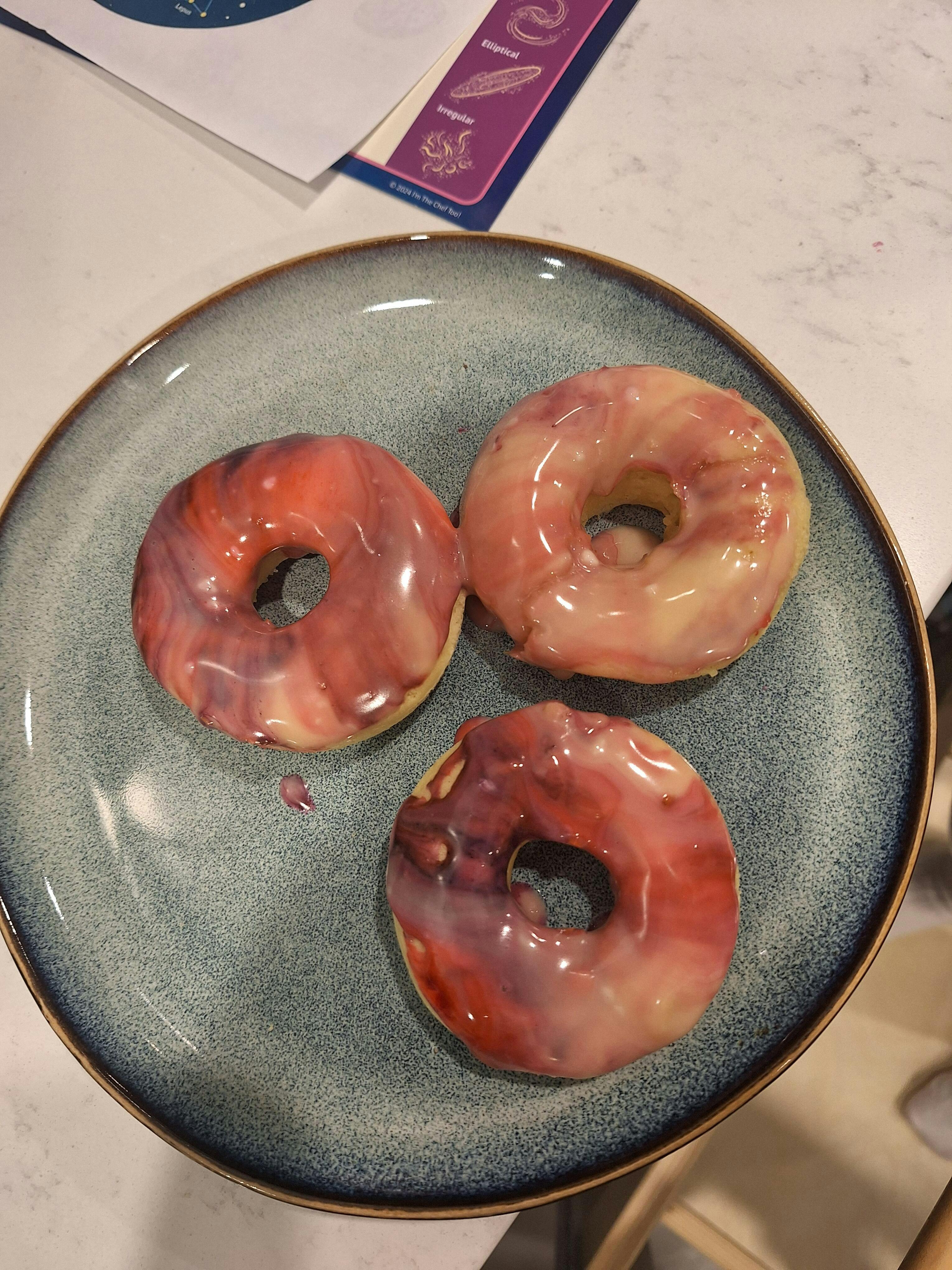
At I'm the Chef Too!, we wholeheartedly embrace the power of hands-on exploration. Our unique "edutainment" approach, meticulously developed by mothers and educators, champions activities that engage multiple senses and encourage children to get their hands dirty – whether it's mixing ingredients for a delicious treat or assembling a working model. A catapult STEM project perfectly aligns with our unwavering commitment to providing enriching, screen-free educational alternatives that truly captivate young minds. It's about more than just building something; it's about building confidence, fostering a deep love for learning, and creating those irreplaceable family memories that last a lifetime. Just as we help children explore the wonders of chemistry by baking up Erupting Volcano Cakes or delve into astronomy with our Galaxy Donut Kit, a catapult project provides a tangible gateway to understanding complex scientific concepts through joyful, active participation.
Ready to bring more excitement and learning into your home every month? Join The Chef's Club and get a new adventure delivered right to your door with free shipping in the US!
Unpacking the "STEM" in Your Catapult
A catapult, despite its humble appearance and simple construction, is a veritable playground for STEM learning. Every component, every adjustment, and every single launch offers a rich opportunity to explore core concepts across science, technology, engineering, and mathematics in a fun, accessible way.
Science: The Physics of Flight and Force
The most immediate scientific lessons derived from a catapult revolve around fundamental principles of physics, particularly Newton's Laws of Motion, the transformation of energy, and the intricacies of projectile motion.
-
Newton's Laws of Motion:
- First Law (Inertia): This law states that an object at rest will stay at rest, and an object in motion will stay in motion with the same speed and in the same direction unless acted upon by an unbalanced force. Before you launch your projectile, it’s sitting still in the cup – at rest. The moment the catapult arm springs forward, it applies an unbalanced force, propelling the object into motion. Without this force, it would simply stay put.
- Second Law (Force, Mass, and Acceleration): Often summarized as F=ma (Force equals mass times acceleration), this law tells us that the acceleration of an object is directly proportional to the net force acting on it and inversely proportional to its mass. In simpler terms, a greater force (achieved with a tighter rubber band, more leverage, or a stronger push) will result in greater acceleration for your projectile, leading to a faster and farther launch. Conversely, if you use a heavier projectile (greater mass), you’ll need to apply more force to achieve the same acceleration and launch distance. This is why a cotton ball flies further than a small rock with the same catapult setting.
- Third Law (Action-Reaction): For every action, there is an equal and opposite reaction. When the catapult arm pushes the projectile forward, the projectile simultaneously exerts an equal and opposite force back on the catapult arm. This is why you might observe the catapult arm recoiling slightly or vibrating after a launch – it’s a direct consequence of this action-reaction pair.
-
Energy Transformation: From Potential to Kinetic: This is one of the most exciting concepts a catapult demonstrates.
- Elastic Potential Energy: When you pull back the catapult arm, you are doing work against the elasticity of the rubber band or the natural bend of the wooden stick. This work isn't lost; it's stored within the stretched rubber band or bent stick as elastic potential energy. Think of it as stored energy, much like a stretched spring or a compressed coil, waiting for its release. The further you pull the arm back, the more potential energy you store.
- Kinetic Energy: The moment you release the catapult arm, that stored potential energy rapidly and dramatically converts into kinetic energy – the energy of motion. This kinetic energy is then transferred to your projectile, launching it through the air. The more potential energy you managed to store by pulling back further, the more kinetic energy the projectile will gain, resulting in a more powerful and impressive launch.
-
Gravity and Projectile Motion: Once launched, your projectile doesn't continue in a straight line forever. As soon as it leaves the catapult, gravity immediately begins to pull it downwards, creating that characteristic curved path you observe, which scientists call a parabola. Understanding how the initial launch angle and the initial velocity affect this parabolic trajectory is a key aspect of projectile motion. Children can observe how a higher launch angle might send the projectile soaring higher into the air but perhaps not as far horizontally, while a lower, flatter angle might provide more distance but less height. This allows for fascinating experiments where kids can try to hit targets at different distances or heights.
-
Levers and Fulcrums: Simple Machines at Work: A basic catapult functions as a classic example of a simple machine – specifically, a lever. The stack of popsicle sticks acts as the fulcrum, which is the fixed pivot point around which the lever arm (the top popsicle stick that holds your projectile) rotates. By pushing down on one end of the lever arm, you apply a force that causes the other end to move upward, launching your projectile. The placement of the fulcrum, the length of the lever arms on either side of it, and the amount of force applied all significantly impact the catapult's performance, offering excellent opportunities for experimentation and design adjustments.
Technology: Tools, Materials, and Innovation
While a homemade catapult might not seem "high-tech" in the modern sense, it profoundly involves technology in its broadest definition – the application of scientific knowledge for practical purposes. Children learn to use simple tools like scissors (always with adult supervision, of course!) and various adhesives to construct their designs. They gain practical knowledge about material properties, understanding how the elasticity of rubber bands is different from the rigidity of popsicle sticks, and how these unique properties can be harnessed to achieve a specific function. Each iteration of their design, trying different materials or assembly methods, is an act of technological innovation. It's about finding the best way to make something work efficiently and effectively.
Engineering: The Design, Build, Test, Iterate Process
The engineering aspect of building a catapult is perhaps the most immediately evident and engaging. It naturally guides children through a classic engineering design process, encouraging a systematic approach to problem-solving:
- Defining the Problem: This often starts with a challenge: "How can we build a catapult that launches a marshmallow the farthest?" or "Can we design one to accurately hit a specific target?" Clear goals help focus the engineering effort.
- Research: Kids can briefly research historical catapult designs, different types of simple machines, or even look at examples of how others have built similar devices. This provides inspiration and foundational knowledge.
- Brainstorming & Design: This is where creativity flourishes! Children experiment with various ways to assemble the sticks, choose the best projectile holder (a bottle cap vs. a spoon), and figure out how to create maximum leverage for their launches. They might sketch out ideas or simply try different arrangements.
- Building: The exciting, hands-on construction phase where their designs come to life. This involves measuring, cutting (again, adult help for scissors!), gluing, and assembling the components.
- Testing: Crucial for any engineer! Launching projectiles and carefully observing the results. Does it fly far? Does it hit the target? What happened?
- Iterating & Refining: Based on the test results, children learn to make adjustments and improvements to their design. This iterative process is fundamental to engineering; it teaches resilience, problem-solving, and the critical importance of learning from "failures." Every failed launch isn't a mistake but a valuable data point that informs the next design modification, leading to better and better performance.
Mathematics: Measurement, Data, and Analysis
Math is seamlessly interwoven throughout the entire catapult activity, providing practical applications for abstract concepts:
- Measurement: Children will naturally engage in measurement, using rulers or tape measures to determine launch distances. They can also estimate or measure launch angles, the height of their catapults, or the lengths of different lever arms.
- Data Collection: Recording observations and measurements is crucial for a scientific approach. A simple chart or notebook where they jot down "Distance 1," "Distance 2," "Average," or "Notes on design change" becomes an invaluable tool.
- Analysis: Comparing data from different trials (e.g., how far did the cotton ball go versus the mini marshmallow with the same catapult?) encourages analytical thinking. Older kids can calculate averages, ratios, or even percentage improvements in launch distance after making specific design modifications. They can also plot data on simple graphs to visualize trends.
This holistic engagement with STEM principles is what makes a catapult STEM activity so profoundly powerful and enduringly popular. It’s not just about building a physical device; it’s about building understanding, fostering a problem-solving mindset, and igniting a lifelong passion for discovery, one exciting launch at a time. This depth of learning, achieved through practical, hands-on engagement, is exactly what we strive for in every I'm the Chef Too! kit. We believe that when learning is delicious, tangible, and full of joyful surprises, children truly thrive.
Not quite ready for a subscription? No problem! You can explore our full library of adventure kits available for a single purchase in our Main Shop Collection.
Gathering Your Launchpad Supplies
One of the greatest advantages of a catapult STEM project is that it requires very few specialized materials. Most of what you need can probably be found around your house or picked up easily at a local craft store. Here’s a detailed list to get you started on your engineering adventure:
-
Popsicle Sticks (Craft Sticks):
- Quantity: You’ll need at least 8-10 jumbo popsicle sticks per catapult. Jumbo sticks are recommended as they offer more stability and are easier for little hands to manipulate. Regular-sized sticks will also work, but the catapult might be a bit flimsier.
- Tip: Look for colorful ones to add an extra layer of fun and personalization!
-
Rubber Bands:
- Quantity: At least 5-7 per catapult.
- Variety: Having a few different sizes and thicknesses can be great for experimenting later, as tighter or thicker bands will store more elastic potential energy.
-
Projectile Holder: This is the "cup" that holds your flying object.
- Plastic Bottle Cap: A standard soda bottle cap works perfectly. It’s light, sturdy, and creates a nice little cup.
- Plastic Spoon (Optional Variation): For a different design or if you want to launch slightly larger or irregularly shaped projectiles, a plastic spoon can be glued to the end of your launch arm.
-
Glue:
- Craft Glue: Standard school glue (like Elmer’s) works well but requires drying time.
- Hot Glue Gun (with adult supervision): This is much faster and creates a strong bond instantly, but absolutely requires an adult to handle for safety.
-
Projectiles (Ammo!): Always choose soft, light objects to prevent damage or injury.
- Cotton Balls: Excellent for initial tests, very light and safe.
- Pom-Poms: Similar to cotton balls, great for indoor use.
- Mini Marshmallows: A delicious option that adds an extra element of fun (and a tasty reward!).
- Aluminum Foil Balls: Crumple small pieces of foil into compact balls. They have a bit more weight than cotton balls, which can be interesting for testing distance, but are still soft enough for safe indoor play.
- Paper Wads: Small, crumpled pieces of paper are also a good option.
-
Measuring Tools:
- Tape Measure or Ruler: Essential for measuring launch distances and making design adjustments.
- Optional: Protractor: For older kids, a protractor can be used to measure launch angles, adding another layer of mathematical analysis.
- Small, Open Area: You’ll need a sturdy, flat surface like a table or a clear spot on the floor, with at least a meter or two of clear space for your projectiles to fly.
-
Optional Decorative Supplies:
- Markers or Paint: For personalizing and decorating your catapult sticks before assembly. This adds an artistic touch to the STEM project!
- Cork (for advanced fulcrum variation): A wine cork or a larger craft cork can be used as an alternative fulcrum for older kids looking to experiment with different springiness and launch power.
Having these materials ready will make your catapult building process smooth and enjoyable, setting the stage for an exciting hands-on learning experience!
Building Your First Popsicle Stick Catapult: Step-by-Step Guide
Now for the fun part: building! This design is a classic for a reason – it’s simple, effective, and perfectly demonstrates the principles of a lever. Remember, adult supervision is highly recommended, especially when using scissors or a hot glue gun.
Step 1: Create the Base Stack (The Fulcrum Foundation) Take six to eight jumbo craft sticks. Stack them neatly one on top of the other. These sticks will form the core of your catapult's fulcrum, providing the necessary height and stability. Secure this stack firmly by winding a rubber band tightly around each end. Make sure the rubber bands are snug enough to hold the sticks together securely, but not so tight that they bend or break the sticks. This stack is key to giving your catapult leverage.
Step 2: Assemble the Launching Arm (The Lever) Take two additional craft sticks. Place one stick on top of the base stack you just created, positioning it perpendicular (like a 'T' shape). This stick will be your main launching arm. Now, slide the other craft stick from this pair underneath the base stack, also perpendicular to it, so that the base stack is sandwiched between these two new sticks. Align these two new sticks perfectly with each other. This creates a strong, flexible "V" shape around the stack.
Step 3: Secure the Launching Arm's Pivot Point Take another rubber band. Tightly wrap it around the ends of the two perpendicular sticks you just added, forming a secure "hinge" on one side of your base stack. The base stack should now be able to slide back and forth between these two sticks, which are held together at one end by the rubber band. This flexible joint is critical for the catapult's springing action.
- Pro Tip for Stability (Optional Notches): If your rubber band tends to slip off the ends of these two sticks, you can ask an adult to carefully make small "V" notches on either side of each stick, about a quarter-inch from the end. These notches will give the rubber band a secure groove to sit in, preventing slippage.
Step 4: Position the Fulcrum for Power This is where you adjust your leverage. Slide the base stack (the stack of 6-8 sticks) closer to the rubber-banded "hinge" end of your two launching sticks. The closer you slide it, the more tension you’ll create when you press down on the launching arm, generally resulting in a more powerful launch. Find a sweet spot where the catapult feels sturdy but also has a good "spring" when you press down the top stick. For a good starting point, try positioning the stack about one-third of the way from the rubber-banded end. You'll see the two sticks forming a 'V' shape with the base stack pushing them apart in the middle.
Step 5: Attach the Projectile Holder Take your plastic bottle cap or plastic spoon. Using craft glue or a hot glue gun (remember, adult supervision for hot glue!), attach it firmly to the top end of the upper launching stick – the end opposite the rubber-banded hinge. This will be the "cup" where you place your projectile. Ensure it’s securely attached and allowed to dry completely if using craft glue before moving on. Leave a small gap at the very end of the stick if possible, so your fingers have space to press down for the launch.
Step 6: Decorate (Optional, but Fun!) Before the glue fully dries, or even before assembly, encourage your child to decorate their popsicle sticks with markers, paint, or glitter. This personalizes their creation and adds an artistic element to the STEM process. Imagine a catapult painted with cosmic swirls, ready to launch a marshmallow through an edible galaxy, much like our Galaxy Donut Kit sparks astronomical adventures!
Step 7: The Test Launch! Once everything is dry and secure, place a soft projectile like a cotton ball or mini marshmallow into the bottle cap. Gently press down on the launching stick, pulling it towards the table or floor, and then release! Observe what happens. Did it fly? How far?
Building Variation: The Spoon-a-Pult Instead of a bottle cap, glue a plastic spoon to the top launching stick. This creates a deeper holder, which can be great for launching larger items like plastic Easter eggs (for an outdoor variant) or slightly heavier pom-poms. The principles remain the same, but the projectile capacity changes.
Building Variation: The Cork Fulcrum (for advanced builders) For older children or those looking for a different challenge, replace the stack of 6-8 popsicle sticks with a wine cork or a thicker craft cork. The natural springiness of the cork can provide a different kind of launch mechanism and adds another variable to experiment with. This will involve more trial and error to get the stability right, but it's a fantastic way to explore different material properties.
Congratulations! You've built your first catapult! Now, the real learning begins.
We're all about blending food, STEM, and the arts into unforgettable learning adventures. If you’ve loved building this catapult, imagine the joy of new hands-on discoveries delivered monthly! Discover the convenience and excitement of The Chef's Club for a continuous stream of creative education.
Safety First: Ensuring a Smooth Launch
While building and playing with a popsicle stick catapult is generally safe, prioritizing safety ensures that the experience remains enjoyable and educational for everyone. Adult supervision is key, especially during construction and initial launches.
-
Projectile Choice is Paramount: This is the most important safety rule. Always use soft, lightweight projectiles such as cotton balls, pom-poms, mini marshmallows, or small, crumpled aluminum foil balls.
- Never use hard, heavy, or sharp objects like pebbles, marbles, metal nuts, or anything that could cause injury or damage property. The goal is learning and fun, not destruction.
- Clear Launching Area: Ensure the area where you are launching is clear of people, pets, breakable objects, and anything valuable. A designated "launch zone" can be helpful. This is especially important if experimenting with farther distances.
-
Adult Supervision: An adult should always be present, especially for younger children.
- Hot Glue Gun Safety: If using a hot glue gun, an adult must handle it or provide very close supervision, demonstrating safe use and ensuring children do not touch the hot nozzle or glue.
- Scissors Safety: If cutting notches in popsicle sticks, an adult should perform this task. Even for general craft stick work, ensure children use appropriate, blunt-tipped scissors if they are handling them.
- Eye Protection (Optional, but Recommended for Enthusiasts): For older children who might be experimenting with higher tensions or more powerful launches, safety goggles can be a good idea, particularly if multiple catapults are being used simultaneously.
- No Aiming at People or Animals: Establish a strict rule that projectiles are never to be aimed at anyone, even as a joke. This teaches respect for others' safety.
- Sturdy Construction: Make sure the catapult is built securely. Rubber bands should be tight, and any glued parts should be fully dry and stable before launching. A wobbly catapult is less predictable.
- Responsible Experimentation: Encourage responsible experimentation. If a child wants to test a heavier object, guide them to understand the risks and discuss why it might not be safe, tying it back to the physics principles of force and mass.
By following these simple safety guidelines, your catapult STEM project will be a source of endless fun, discovery, and valuable learning without any unwanted mishaps!
Turning Your Catapult into a Full-Fledged STEM Experiment
Building a catapult is fantastic, but the real educational gold comes from turning it into a scientific experiment. This transforms a simple craft into a hands-on lesson in the scientific method, critical thinking, and data analysis. Here's how to elevate your catapult project:
1. Formulating Hypotheses: What Do You Think Will Happen? Before you even launch, encourage your child to make predictions. This is the heart of a hypothesis!
- "I hypothesize that if I pull the arm back further, the marshmallow will go farther."
- "I predict that a lighter pom-pom will fly higher than a heavier foil ball."
- "I think moving the stack of sticks closer to the cup will make it launch steeper." Write these hypotheses down. This teaches the first step of scientific inquiry: forming an educated guess.
2. Controlling Variables: Changing One Thing at a Time To truly understand cause and effect, scientists change only one variable at a time while keeping everything else constant. This is crucial for valid experiments.
-
Example 1 (Launch Distance vs. Pullback Force):
- Variable to change: How far you pull back the launching arm (e.g., "a little bit," "halfway," "all the way"). You could even use a ruler to define specific pullback distances.
- Variables to keep constant: The projectile (always use the same cotton ball), the catapult design, the launch surface, the location of the fulcrum.
-
Example 2 (Projectile Weight and Distance):
- Variable to change: The weight of the projectile (e.g., cotton ball, mini marshmallow, small foil ball).
- Variables to keep constant: The catapult design, the amount of pullback force, launch surface, fulcrum position.
-
Example 3 (Fulcrum Position and Launch Angle/Distance):
- Variable to change: The position of the base stack (fulcrum) along the launching arm (e.g., closer to the hinge, in the middle, farther from the hinge).
- Variables to keep constant: Projectile, pullback force, catapult design.
3. Collecting and Analyzing Data: What Did Happen? This is where math comes in!
- Measurement: Use your tape measure or ruler to accurately record how far each projectile travels. Measure from a consistent starting point (e.g., the front edge of the catapult's base) to where the projectile first lands.
- Repetition: Conduct multiple trials (at least 3-5) for each test condition. This helps ensure your results aren't just a fluke and allows you to calculate an average, which is more reliable.
-
Record Keeping: Create a simple chart or logbook to record your observations and measurements.
-
Example Chart:
Trial # Projectile Type Pullback (e.g., "halfway") Distance (cm/inches) Notes (e.g., "bounced," "hit wall") 1 Cotton Ball Halfway 85 cm 2 Cotton Ball Halfway 88 cm 3 Cotton Ball Halfway 82 cm 4 Marshmallow Halfway 50 cm ...
-
Example Chart:
- Analysis: Look at your data. What patterns do you see? Did the heavier object really go less far? Did pulling back further consistently increase the distance? For older kids, you can calculate averages, ranges, or even create simple bar graphs to visualize the results.
4. Drawing Conclusions: What Did You Learn? Compare your findings with your initial hypotheses.
- "My hypothesis that pulling the arm back further would make the marshmallow go farther was supported by my data."
- "My prediction that a lighter pom-pom would fly higher was correct, but it didn't necessarily go farther than the foil ball." Discuss why you think these results occurred, relating them back to the scientific principles you learned earlier (potential energy, kinetic energy, mass, force, gravity). This critical thinking solidifies the learning experience.
By guiding your child through these steps, you're not just building a toy; you're nurturing a young scientist or engineer, teaching them how to approach problems systematically, how to think critically, and how to learn from observation and experimentation. This process-oriented learning is at the heart of what we do at I'm the Chef Too!, whether we're exploring the science of baking or the engineering of a delicious treat like our Peppa Pig Muddy Puddle Cookie Pies, where even beloved characters make learning irresistibly fun!
Ready for a new adventure every month? Don’t miss out on the incredible learning and family fun. Join The Chef's Club and get free shipping on every box!
Exciting Catapult Challenges for Every Age
Once you’ve built your catapult and conducted some initial experiments, it’s time to take the fun to the next level with engaging challenges! These activities reinforce learning, encourage creativity, and often spark friendly competition.
1. Accuracy Challenge: Hit the Target!
This challenge focuses on precision and fine-tuning.
- Materials Needed: Cotton balls or pom-poms, a bowl, plastic cup, or paper plate with a bullseye drawn on it.
- Setup: Place your chosen target a few feet away from the catapult.
- The Challenge: The goal is to get the projectile into (or onto) the target in the fewest number of launches.
-
Variations to Up the Ante:
- Vary Distance: Gradually move the target farther away and see if your child can adjust their launch technique to still hit it. Measure and record the distances they can accurately hit.
- Hole-in-One: For older kids, cut a hole in the middle of a paper plate and challenge them to launch the projectile through the hole.
- Obstacle Course: Create a simple course with obstacles (e.g., small blocks) that the projectile needs to fly over or around to reach the target.
- Different Projectiles: Does the accuracy change when using a marshmallow versus a foil ball? Why might that be?
2. Distance Challenge: How Far Can It Fly?
This challenge is all about maximizing launch power and distance.
- Materials Needed: Cotton balls, marshmallows, or pom-poms, a long tape measure or ruler.
- Setup: Find a long, clear space (a hallway, a room with minimal furniture, or even outdoors on a calm day). Mark a clear starting line for the catapult.
- The Challenge: Launch projectiles and measure how far each one travels. The catapult (or launch technique) that sends the projectile the farthest wins!
- Process: Each child (or each catapult design) gets three to five chances. Measure the distance from the starting line to where the projectile first lands (not where it rolls to). Record each distance.
-
Variations for Deeper Learning:
- Average Distance: Calculate the average distance for each catapult or each launch technique to get a more reliable result.
- Comparing Designs: If you’ve built multiple catapults with different designs, compare their maximum and average distances. Which design was most effective and why?
- Adjusting the Fulcrum: Experiment with moving the fulcrum (the stack of sticks) closer or farther from the launching cup. How does this affect the launch distance?
- Rubber Band Tension: Try using different sizes or thicknesses of rubber bands. How does increased tension affect the distance? (Remember to keep safety in mind and not over-stress the catapult).
3. Force Challenge: Knock It Down!
This challenge explores the concept of force and impact.
- Materials Needed: Light blocks (Duplo, Lego, foam blocks), a slightly heavier projectile (like a small foil ball or a mini eraser – still soft!), and your catapult.
- Setup: Construct a small, loosely stacked tower (e.g., 3-5 blocks high) a few feet away from the catapult. Ensure the blocks are not interlocked, so they fall easily.
- The Challenge: Position the catapult a few feet away from the target tower. The goal is to launch the projectile with enough force to knock down the tower.
-
Variations for Problem-Solving:
- Tower Stability: How does the stability of the tower affect the challenge? Can you make a tower that is harder to knock down?
- Projectile Weight: Does using a slightly heavier, but still safe, projectile make it easier to knock down the tower? Why? (Relate this back to Newton's Second Law: Force = mass x acceleration).
- Distance to Tower: How far can you be from the tower and still knock it down? This combines distance and force.
4. Design Variation Challenge: Innovate and Improve!
This is where the engineering design process truly shines, encouraging students to iterate and innovate.
- Materials Needed: A wider variety of craft supplies (different sized craft sticks, small corks, plastic spoons, varied rubber bands, cardboard scraps, pipe cleaners).
- The Challenge: After building a basic catapult, challenge kids to brainstorm and implement design alterations to improve its performance (e.g., launch farther, be more accurate, be more stable).
-
Ideas for Variation:
- Fulcrum Material/Height: Experiment with a cork instead of a stick stack for the fulcrum, or try a taller stack of sticks.
- Lever Length: Glue another craft stick onto your top launching stick to make it longer before adding the bottle cap. How does a longer lever arm affect the launch?
- Projectile Holder: Try a spoon, a small cardboard cup, or even a folded piece of paper as the projectile holder. Which works best?
- Stabilization: How can you make the base of the catapult more stable so it doesn't move during launch? (e.g., adding wider "feet" or weighing down the base).
- Process: Encourage students to document their design changes, predict the outcome, test, and then record the results. This cyclical process of "Design, Build, Test, Improve" is at the core of all engineering.
These challenges offer endless opportunities for children to apply the scientific and engineering principles they’ve learned in a dynamic, engaging, and memorable way. Each successful launch, each tweak to the design, is a step closer to understanding the world around them.
Don't want the fun to stop? Discover a world of STEM-inspired cooking adventures beyond catapults. Browse our complete collection of one-time kits in our Main Shop Collection today!
Fostering Learning Beyond the Launch
The humble catapult is more than just a fun building project; it's a launchpad for exploring a vast array of interconnected educational themes. By connecting the hands-on experience to broader contexts, we can truly ignite a child's imagination and foster a lifelong love for learning.
The Fascinating History of Catapults
- Ancient Ingenuity: Catapults weren't just medieval inventions. Introduce children to their origins, dating back to ancient Greece (around 400 BCE), where Dionysius the Elder of Syracuse is credited with early designs. These early versions were often powerful crossbow-like devices.
- Roman Engineering: The Romans refined catapult technology, creating impressive siege engines like the ballista (which launched large arrows or spears) and the onager (a torsion-powered machine that hurled heavy stones). Discuss how these machines revolutionized warfare and city defense.
- Medieval Might: Explain the era of the mighty trebuchet and mangonel in the Middle Ages. Some of these colossal machines could launch projectiles weighing over 350 pounds more than 300 feet! Discuss the role of these machines in medieval sieges and how their design evolved.
- Impact on Society: How did these inventions change history? What was life like for soldiers and civilians when catapults were used? This discussion ties science and engineering directly to history and social studies.
Real-World Applications of Catapult Principles
While modern warfare no longer relies on wooden catapults, the fundamental principles of energy storage, release, and projectile motion are everywhere!
- Sports: Think about a baseball pitcher (storing potential energy in their arm, releasing kinetic energy), a golfer hitting a ball, or even a diver springing off a diving board.
- Amusement Park Rides: Many rides, especially those that launch you at high speeds, utilize similar principles of storing and releasing energy (though on a much larger and more complex scale).
- Everyday Objects: Even a simple spring-loaded toy or a mousetrap uses elastic potential energy conversion.
- Science in Nature: The way certain plants disperse their seeds or how some animals jump or pounce involves similar energy transformations.
Careers in STEM: Inspired by the Catapult
A catapult project is a fantastic way to introduce children to potential career paths in STEM.
- Mechanical Engineers: These professionals design, analyze, and manufacture mechanical systems. Building a catapult is a perfect miniature mechanical engineering project.
- Civil Engineers: They design and build infrastructure. Understanding forces, structures, and materials, as explored with a catapult, is fundamental to civil engineering.
- Physicists: These scientists study matter, energy, space, and time. The entire catapult experiment is a direct application of physics principles.
- Industrial Designers: They combine art, business, and engineering to create products. Designing a better catapult holder or a more ergonomic launching mechanism touches upon industrial design.
- Data Scientists/Analysts: Collecting and analyzing launch data, identifying trends, and drawing conclusions is a basic form of data analysis.
By linking the tangible experience of building a catapult to these broader topics, we help children see STEM not as isolated subjects in a classroom, but as interconnected fields that shape our world, offering exciting possibilities for their future. This expansive view of learning, where every activity is a step towards understanding the bigger picture, is a cornerstone of our philosophy at I'm the Chef Too!.
Adapting the Catapult Activity for Different Ages
One of the beautiful aspects of a catapult STEM project is its versatility. It can be easily adapted to suit various age groups, ensuring that every child can engage at their developmental level and achieve meaningful learning outcomes.
Preschool & Early Elementary (Ages 3-6)
For younger children, the focus should be on the pure joy of creation and the magic of cause and effect.
- Simplified Building: An adult should do most of the assembly, or guide them through very simple steps. Use less complex designs with fewer sticks and rubber bands. Pre-cut any notches.
- Focus on Sensory Experience: Let them decorate the sticks with markers and paint. Emphasize the tactile experience of pulling back the arm and releasing the projectile.
- Cause and Effect: "When I pull it back, the marshmallow flies!" Encourage them to notice that pulling back harder makes it go farther.
- Basic Vocabulary: Introduce simple terms like "push," "pull," "up," "down," "far," "near," "fast," "slow."
- Simple Challenges: "Can you make it hit the blanket on the floor?" or "Can you make it land in the big box?" No need for exact measurements; estimations are fine.
- Safety First: Absolutely paramount. Only use softest projectiles (cotton balls, pom-poms) and ensure constant adult supervision.
Upper Elementary (Ages 7-10)
This age group is ready for more hands-on building and an introduction to the scientific method.
- More Involved Building: Children can assemble most of the catapult with moderate adult assistance. Guide them through the steps, allowing them to problem-solve small issues. Adult supervision for hot glue or cutting notches is still essential.
- Introduce Variables: Begin to introduce the idea of changing one thing at a time. "What if we use a marshmallow instead of a cotton ball?" "Does pulling back a little versus a lot make a difference?"
- Basic Data Recording: Use a simple chart to record launch distances. They can measure with a ruler or tape measure.
- Formulating Simple Hypotheses: "I think the marshmallow will go farther because it's heavier." Then test and discuss the results.
- Physics Concepts (Simplified): Explain potential and kinetic energy in simple terms ("stored energy" and "moving energy"). Discuss how gravity pulls things down.
- Design Iteration: Encourage them to make one small change to their catapult and re-test to see if it improves performance.
Middle School (Ages 11-14)
Middle schoolers can tackle the full engineering design process and delve deeper into scientific principles and mathematical analysis.
- Independent Building & Design: Challenge them to design and build their catapults mostly independently, perhaps even researching different designs online.
- Full Scientific Method: Encourage them to formulate clear hypotheses, meticulously control variables, collect detailed data (including multiple trials and averages), and draw conclusions based on their findings.
- Advanced Data Analysis: Have them calculate averages, ranges, and percentage improvements. They can create graphs (bar graphs, line graphs) to visualize their data and identify trends.
- In-Depth Physics: Explain Newton's Laws of Motion, the specific types of potential and kinetic energy, projectile motion, and the concept of levers and fulcrums in more detail.
- Mathematical Integration: Introduce measuring launch angles with a protractor. Discuss how different angles affect trajectory and distance (e.g., the ideal 45-degree launch for maximum distance in a vacuum).
- Material Science & Optimization: Encourage experimentation with different materials for the fulcrum (e.g., cork), different rubber band tensions, and even different lever arm lengths. Discuss how material properties affect performance.
- Problem-Solving & Iteration: Focus on continuous refinement. Set a challenge (e.g., "Hit a target 5 meters away with a specific projectile") and have them iterate their design until they achieve the goal.
- Real-World Connections: Facilitate discussions about the historical impact of catapults and modern applications of similar engineering principles in sports, construction, or even space launches.
By tailoring the complexity and expectations, the catapult STEM project remains a powerful, engaging, and age-appropriate learning experience for children across the developmental spectrum, fostering curiosity and critical thinking every step of the way.
Beyond the Catapult: Continuing the STEM Adventure with I'm the Chef Too!
The joy and discovery found in building a catapult are just a taste of the incredible learning experiences that await when you blend hands-on activities with core STEM principles. At I'm the Chef Too!, this philosophy is at the very heart of everything we do. We are committed to sparking curiosity and creativity in children, facilitating precious family bonding, and providing enriching screen-free educational alternatives that truly stick.
Our unique approach transforms learning into an unforgettable adventure. Imagine exploring the fascinating world of geology and chemical reactions by creating Erupting Volcano Cakes that actually bubble and "erupt" with deliciousness! Or perhaps soaring through the cosmos, learning about planetary orbits and celestial bodies, all while designing and decorating your very own edible solar system with our popular Galaxy Donut Kit. Even beloved characters can make learning fun, like when kids make Peppa Pig Muddy Puddle Cookie Pies, a delightful way to introduce concepts like states of matter and simple measurements through an engaging, story-themed activity.
Each I'm the Chef Too! kit is developed by mothers and educators, ensuring that every "edutainment" experience is not only incredibly fun but also thoughtfully designed to teach complex subjects through tangible, hands-on, and delicious cooking adventures. We understand that children learn best when they are active participants, experimenting, creating, and tasting their way to knowledge.
If your family loved the excitement of a catapult STEM project, imagine the continuous stream of discovery that could arrive at your doorstep every month. Our mission is to keep that spark of curiosity alive, providing fresh, unique, and engaging activities that make learning an eagerly anticipated event.
Conclusion
From the ancient battlefields of history to your kitchen table, the humble catapult stands as a testament to human ingenuity and the enduring power of simple machines. Building a catapult isn't just a craft project; it's a dynamic, hands-on journey through the exciting worlds of science, technology, engineering, and mathematics. It's an opportunity for children to grasp abstract concepts like potential and kinetic energy, Newton's Laws of Motion, and the engineering design process, all while experiencing the thrill of launching their own creations.
At I'm the Chef Too!, we believe these "aha!" moments of discovery are priceless. We are dedicated to providing unique, screen-free "edutainment" experiences that blend food, STEM, and the arts, fostering creativity, critical thinking, and invaluable family bonding. Just as your DIY catapult ignites curiosity, our specially designed kits keep that flame burning with new, exciting challenges every month.
Why wait to launch your child's next great learning adventure? Give the gift of discovery that lasts all year, or simply try a single kit to spark immediate joy.
Ready for a new adventure every month, delivered right to your door with free shipping in the US? There's a world of delicious, educational fun waiting to be explored. Join The Chef's Club today and ignite a lifelong love for learning!
FAQ Section
Q1: What is the best age range for a catapult STEM project? A1: A catapult STEM project is incredibly versatile and can be adapted for children from preschool (with significant adult help) through middle school. For younger children (3-6), the focus is on basic cause and effect. Upper elementary (7-10) can build more independently and begin simple experiments. Middle schoolers (11-14) can tackle the full engineering design process, complex data analysis, and deeper physics concepts.
Q2: What are the safest projectiles to use for a homemade catapult? A2: Safety is paramount! Always use soft, lightweight projectiles. Excellent choices include cotton balls, pom-poms, mini marshmallows, or small, crumpled aluminum foil balls. Never use hard, heavy, or sharp objects like pebbles, marbles, or small toys that could cause injury or damage property.
Q3: How can I make the catapult launch farther? A3: To make your catapult launch farther, you can experiment with several factors:
- Increase Potential Energy: Pull the launching arm back further before releasing it.
- Stronger Rubber Bands: Use tighter or thicker rubber bands to store more elastic potential energy.
- Optimize Fulcrum Position: Experiment with moving the stack of sticks (fulcrum) to find the sweet spot for maximum leverage. Generally, positioning it closer to the "hinge" end of the launching arm can increase power.
- Lighter Projectiles: According to Newton's Second Law, a lighter projectile will accelerate more with the same amount of force, often leading to greater distance.
Q4: How can I make the catapult more accurate? A4: Accuracy requires consistent technique and careful adjustments:
- Consistent Pullback: Try to pull the launching arm back to the exact same spot each time. You can even mark it with a pencil.
- Stable Base: Ensure your catapult's base is sturdy and doesn't move during launch. You might need to add weight to the base.
- Adjust Fulcrum/Angle: Tiny adjustments to the fulcrum's position can significantly alter the launch angle and trajectory. Experiment to find what works for your target distance.
- Practice: Like any skill, practice makes perfect!
Q5: What are some good tips for adult supervision during this activity? A5:
- Hot Glue: If using a hot glue gun, an adult must operate it or provide direct, constant supervision, ensuring children understand not to touch the hot nozzle or glue.
- Cutting: Adults should pre-cut any notches in popsicle sticks. For general cutting, ensure children use age-appropriate scissors.
- Projectile Rules: Establish clear rules about safe projectiles and never aiming at people or animals.
- Clear Space: Help clear a safe, open area for launching.
- Guidance, Not Dictation: Offer guidance and ask leading questions ("What do you think will happen if...?") rather than simply telling them what to do. This fosters independent thinking.
Q6: How can I clean up after a catapult project, especially if using messy projectiles like marshmallows? A6: If using marshmallows, it's best to eat them before they get sticky! Otherwise, they can become quite messy. For general cleanup, a damp cloth for any sticky residue (like glue drips) and a quick sweep or vacuum for any stray cotton balls or pom-poms should suffice. If you've used paint or markers, make sure they are washable and cover your work surface beforehand.