Table of Contents
- Introduction to the Wonderful World of 3rd Grade STEM
- Why STEM Education is Essential for 3rd Graders
- Demystifying the Scientific Method for Young Minds
- The Engineering Design Process: Building Solutions
- Exciting STEM Fair Project Ideas for 3rd Grade
- Guiding Your 3rd Grader Through Their STEM Fair Project
- The I'm the Chef Too! Approach to STEM Learning
- Frequently Asked Questions About 3rd Grade STEM Fair Projects
- Conclusion: Igniting a Lifelong Spark
Have you ever noticed the boundless energy and endless questions that bubble up from a 3rd grader? One moment they're building an elaborate fort out of cushions, the next they're asking why the sky is blue or how a plant grows. This innate curiosity is a superpower, a natural inclination towards discovery that, when nurtured, can spark a lifelong love for learning. What better way to channel that inquisitive spirit than through engaging STEM fair projects? These aren't just school assignments; they're invitations to explore the world, to question, to create, and to understand.
At I'm the Chef Too!, we believe that the kitchen is one of the most exciting laboratories imaginable. Our mission is to seamlessly blend food, STEM, and the arts into one-of-a-kind "edutainment" experiences that captivate young minds. We are dedicated to sparking curiosity and creativity in children, fostering invaluable family bonding moments, and providing a dynamic, screen-free educational alternative. We understand that finding the perfect STEM fair project for a 3rd grader can feel daunting for parents and educators, but we’re here to show you that learning complex subjects can be wonderfully tangible, hands-on, and, most importantly, delicious! This post will dive deep into why STEM projects are so vital for 3rd graders, offer a treasure trove of inspiring ideas, and provide practical tips to ensure their STEM fair journey is filled with discovery, confidence, and joy.
Introduction to the Wonderful World of 3rd Grade STEM
Third grade is a pivotal age where children are transitioning from concrete thinking to more abstract reasoning. Their observational skills are sharpening, their ability to follow multi-step instructions is developing, and their capacity for independent thought is blossoming. This makes it the perfect time to introduce them to the principles of STEM – Science, Technology, Engineering, and Mathematics – through hands-on activities that truly resonate. A STEM fair project provides a unique opportunity for them to apply classroom knowledge in a practical, real-world context, fostering critical thinking, problem-solving, and communication skills. It’s about more than just getting a good grade; it’s about experiencing the thrill of discovery and understanding how the world works.
Imagine a child’s eyes lighting up as they see a chemical reaction they orchestrated with everyday ingredients, or the pride in their voice as they explain how their engineered creation solves a problem. These are the moments we cherish at I'm the Chef Too!, and these are the moments that STEM fair projects can provide. Our approach, developed by mothers and educators, emphasizes that learning is most effective when it’s experiential and fun. So, let’s explore how we can turn your kitchen or classroom into an exciting STEM laboratory for your 3rd grader!
Why STEM Education is Essential for 3rd Graders
At this age, children are sponges, eager to soak up new information and experiences. STEM education offers a multitude of benefits that extend far beyond understanding scientific facts:
- Fostering Curiosity: STEM projects naturally encourage children to ask "why?" and "how?" They learn to question phenomena around them, a foundational skill for all learning.
- Developing Critical Thinking: Unlike memorizing facts, STEM requires analysis, evaluation, and synthesis of information. Children learn to make observations, identify patterns, and draw conclusions.
- Enhancing Problem-Solving Skills: Many STEM projects are essentially puzzles waiting to be solved. Whether it's designing a stable structure or troubleshooting an experiment, children develop resilience and strategic thinking.
- Building Confidence: Successfully completing a project, especially one that involves a bit of trial and error, gives children a profound sense of accomplishment and boosts their self-esteem.
- Encouraging Creativity and Innovation: STEM isn't just about following rules; it's about inventing new solutions and imagining possibilities. Kids can put their own spin on projects, making them truly theirs.
- Promoting Collaboration and Communication: While some projects are individual, many offer opportunities to work with peers or family, teaching valuable teamwork and presentation skills.
- Connecting Learning to Real Life: STEM projects show children how science, technology, engineering, and math are used in everyday life, making abstract concepts concrete and relatable.
Our commitment at I'm the Chef Too! is to facilitate these vital developmental processes through engaging, hands-on activities that children genuinely love. We believe every child has a chef and a scientist within them, waiting to be unleashed.
Demystifying the Scientific Method for Young Minds
The scientific method might sound intimidating, but it’s essentially a structured way of asking and answering questions. For 3rd graders, we simplify it into approachable steps that guide their discovery:
- Ask a Question: Start with something they're genuinely curious about. "What makes a volcano erupt?" or "Which material is best for filtering dirty water?"
- Form a Hypothesis: This is their educated guess, a prediction based on what they already know. "I think the baking soda and vinegar will make the volcano erupt a lot."
- Plan an Experiment: Design a way to test their hypothesis. What materials do they need? What steps will they follow? What will they keep the same (controlled variables) and what will they change (independent variable)?
- Conduct the Experiment: This is the fun part! Follow the plan, making sure to be safe (always with adult supervision, especially in the kitchen!).
- Observe and Collect Data: What happened? What did they see, hear, smell, or feel? Write it down, draw pictures, take photos. This is crucial for drawing conclusions.
- Draw Conclusions: Was their hypothesis correct? What did they learn? It's okay if their hypothesis was wrong; that's how scientists learn!
- Share Results: Present their findings! This could be a poster, a presentation, or even just telling their family what they discovered.
These steps, when woven into a hands-on activity, transform abstract concepts into meaningful experiences. Our kits at I'm the Chef Too! are designed to naturally guide children through this process, often without them even realizing they're "doing science"!
The Engineering Design Process: Building Solutions
Just as important as understanding how things work is learning how to make things work better. This is where the Engineering Design Process comes in, and it’s equally accessible for 3rd graders:
- Identify the Problem: What challenge are they trying to solve? "How can I build a bridge that holds a heavy toy?" or "How can I design a car that goes fast?"
- Imagine & Brainstorm: Think of many different possible solutions. No idea is too silly at this stage!
- Plan: Choose the best idea and draw a design. What materials will they use? What are the steps to build it?
- Create & Build: Construct their prototype based on their plan.
- Test & Improve: Does it work? What went well? What could be better? This iterative process of testing and refining is at the heart of engineering.
- Share: Show off their creation and explain how they made it!
Incorporating both the Scientific Method and the Engineering Design Process helps children develop a well-rounded understanding of how innovators approach challenges. They learn that failure isn't an endpoint, but a stepping stone to a better solution.
Exciting STEM Fair Project Ideas for 3rd Grade
Now, let's get to the fun part: project ideas! We've categorized these ideas to spark inspiration, keeping in mind the natural curiosity of 3rd graders and the hands-on learning philosophy we champion. Remember, adult supervision is always key to a safe and enjoyable experience.
1. Culinary Chemistry: Edible Experiments
The kitchen is a fantastic laboratory for chemistry, full of fascinating reactions that are safe and delicious to observe (and eat!).
- Erupting Volcano Cakes: This classic project is a fantastic introduction to acid-base reactions. Kids can design their own "volcano" structure, mix baking soda (a base) with vinegar or lemon juice (an acid), and watch the magnificent fizzing eruption. They can experiment with different amounts to see how the reaction changes. For an amazing, taste-safe version of this classic experiment, check out our very own Erupting Volcano Cakes Kit! It’s a chemical reaction that makes our cakes bubble over with deliciousness, and it's a perfect example of how chemistry is all around us.
- Invisible Ink with Lemon Juice: Explore oxidation reactions. Children write messages with lemon juice, let it dry, then reveal it by heating the paper. They can investigate different heat sources or other acidic juices.
- Homemade Rock Candy Crystals: Delve into supersaturated solutions and crystallization. By slowly evaporating water from a sugar solution, large, beautiful sugar crystals can form on a string. Kids can experiment with different temperatures or types of sugar.
- Bath Bomb Science: What makes a bath bomb fizz and dissolve? This is another excellent example of an acid-base reaction. Kids can experiment with different ratios of baking soda, citric acid, and cornstarch, adding essential oils or food coloring for extra fun.
- The Power of Yeast: Observe biological chemistry by making bread or pizza dough. Kids can see yeast (a living organism!) "eating" sugar and producing carbon dioxide gas, which makes the dough rise. They can compare dough made with different temperatures of water or amounts of sugar. This is a perfect way to experience the magic of microbial life.
These edible adventures don't just teach scientific principles; they create lasting memories and delicious treats. Ready for a new adventure every month? Join The Chef's Club and enjoy free shipping on every box. Each box is a complete experience, containing pre-measured dry ingredients and specialty supplies, making it incredibly convenient for family fun!
2. Playful Physics: Forces, Motion, and Materials
Physics doesn't have to be complex equations; for 3rd graders, it's about understanding how things move, interact, and stay together.
- Balloon-Powered Cars: This engineering challenge introduces Newton's Third Law of Motion (for every action, there is an equal and opposite reaction) and the concepts of thrust and friction. Kids design and build a car from recycled materials, using an inflated balloon to propel it forward. They can test different car designs, wheel types, or balloon sizes to see what travels farthest.
- Paper Airplane Aerodynamics: Explore principles of flight, lift, drag, and thrust. Kids can fold different paper airplane designs and test which flies the farthest or stays airborne the longest. They can modify wing shapes, paper weight, or throwing force.
- Marshmallow Catapults: A fun way to learn about potential and kinetic energy, trajectory, and levers. Using craft sticks, rubber bands, and a spoon, children can build a simple catapult to launch marshmallows. They can experiment with launch angles and the length of the lever arm.
- Egg Drop Challenge: A classic engineering challenge focusing on impact absorption and structural integrity. Kids design a protective container for an egg using limited materials, then test its ability to withstand a drop from a certain height. This teaches problem-solving and material science.
- Building the Strongest Bridge: Explore structural engineering and load-bearing capacity. Using materials like craft sticks, paper, or even edible items like spaghetti and marshmallows, children can design and build bridges to span a gap and hold increasing amounts of weight. They can compare different truss designs.
These hands-on physics projects show kids that science is about making, building, and testing. They foster an appreciation for the engineering all around us, from the buildings we live in to the vehicles we ride.
3. Earth & Environmental Science: Our Amazing Planet
Understanding our planet, its processes, and our impact on it is crucial. These projects connect children to the natural world.
- Water Filtration System: Investigate how water is cleaned by building a simple filter using layers of gravel, sand, charcoal, and cotton. Kids can observe how different materials remove impurities from muddy water, learning about water resources and purification.
- Modeling Erosion: Simulate how water and wind cause erosion using soil, sand, and small plants in a tray. Kids can create miniature landscapes and observe how a "rainstorm" affects bare earth versus vegetated areas. This highlights the importance of plants in preventing soil loss.
- Edible Soil Layers: Create a delicious model of Earth's soil layers using different food items like crushed cookies for bedrock, pudding for subsoil, and green coconut flakes for grass. This visual and tactile project helps children understand geology and ecology.
- Pinecone Weather Station: Explore how natural indicators can predict weather. Kids can observe how pinecones open in dry weather and close in damp conditions, learning about humidity and natural hygrometers.
- Cloud in a Jar: Demonstrate how clouds form by creating condensation in a jar with warm water, hairspray, and ice. This simple experiment helps visualize the water cycle. Even beloved characters can make learning fun, like when kids make Peppa Pig Muddy Puddle Cookie Pies, where they can explore concepts related to mud, soil, and even the water cycle in a playfully delicious way.
Through these projects, children develop an early appreciation for environmental science and the delicate balance of our ecosystems.
4. Biology & Life Science: The Living World
From tiny microbes to giant plants, the living world offers endless opportunities for discovery.
- Plant Growth Under Different Conditions: This classic experiment allows kids to investigate what plants need to thrive. They can plant seeds and expose them to varying amounts of light, water, or even different types of music, observing and recording growth over time.
- Celery Stalk Capillary Action: Demonstrate how plants "drink" water. Place celery stalks in colored water and observe how the color travels up the stalk and into the leaves, illustrating capillary action and the plant's vascular system.
- Mold Growth Investigation: Explore fungi and decomposition by observing mold growth on different types of bread in various conditions (e.g., moist, dry, light, dark). This teaches about microbes and hygiene.
- Germinating Seeds in a Bag: A simple way to watch a seed sprout its roots and shoot! Place seeds in a damp paper towel inside a plastic bag taped to a window, providing a clear view of the germination process.
- Dissecting a Flower: Gently take apart a large flower (like a lily or tulip) to identify its different parts – petals, sepals, pistil, stamen. This hands-on exploration teaches basic plant anatomy.
These life science projects provide a tangible connection to the living world, fostering observation skills and a deeper understanding of biological processes.
5. Technology & Robotics (Simplified): Early Innovations
While complex robotics might be beyond 3rd grade, the principles of technology and simple machines are perfectly accessible.
- Simple Circuits with Playdough: Explore basic electricity and circuits. Kids can create conductive playdough (with salt) and insulating playdough (without salt) to build simple circuits that light up small LED lights. This is a fantastic hands-on introduction to electrical concepts.
- Building an Anemometer: Construct a simple weather instrument to measure wind speed using paper cups, straws, and a pushpin. This project combines engineering with environmental science.
- Light and Shadow Play: Experiment with light sources and objects to explore how shadows are formed and how their size and shape change depending on the distance and angle of the light.
- DIY Speakers: Explore sound vibrations by creating a simple speaker using a plastic cup, string, and paperclip. This can introduce basic concepts of sound engineering.
- Magnetic Slime: Combine the fun of slime with the wonder of magnetism! By adding iron filings to a slime recipe, children can create a slime that reacts to magnets, exploring magnetic forces in a playful way.
These projects offer a glimpse into the world of technology and engineering, encouraging children to think about how tools and machines make our lives easier and more interesting. For more unique STEM cooking adventures, you can always Browse our complete collection of one-time kits to find the perfect theme for your little learner!
Guiding Your 3rd Grader Through Their STEM Fair Project
Successful STEM fair projects for 3rd graders are less about perfection and more about the learning journey. Here’s how you can provide the best support:
1. Choose a Topic Together (But Let Them Lead!)
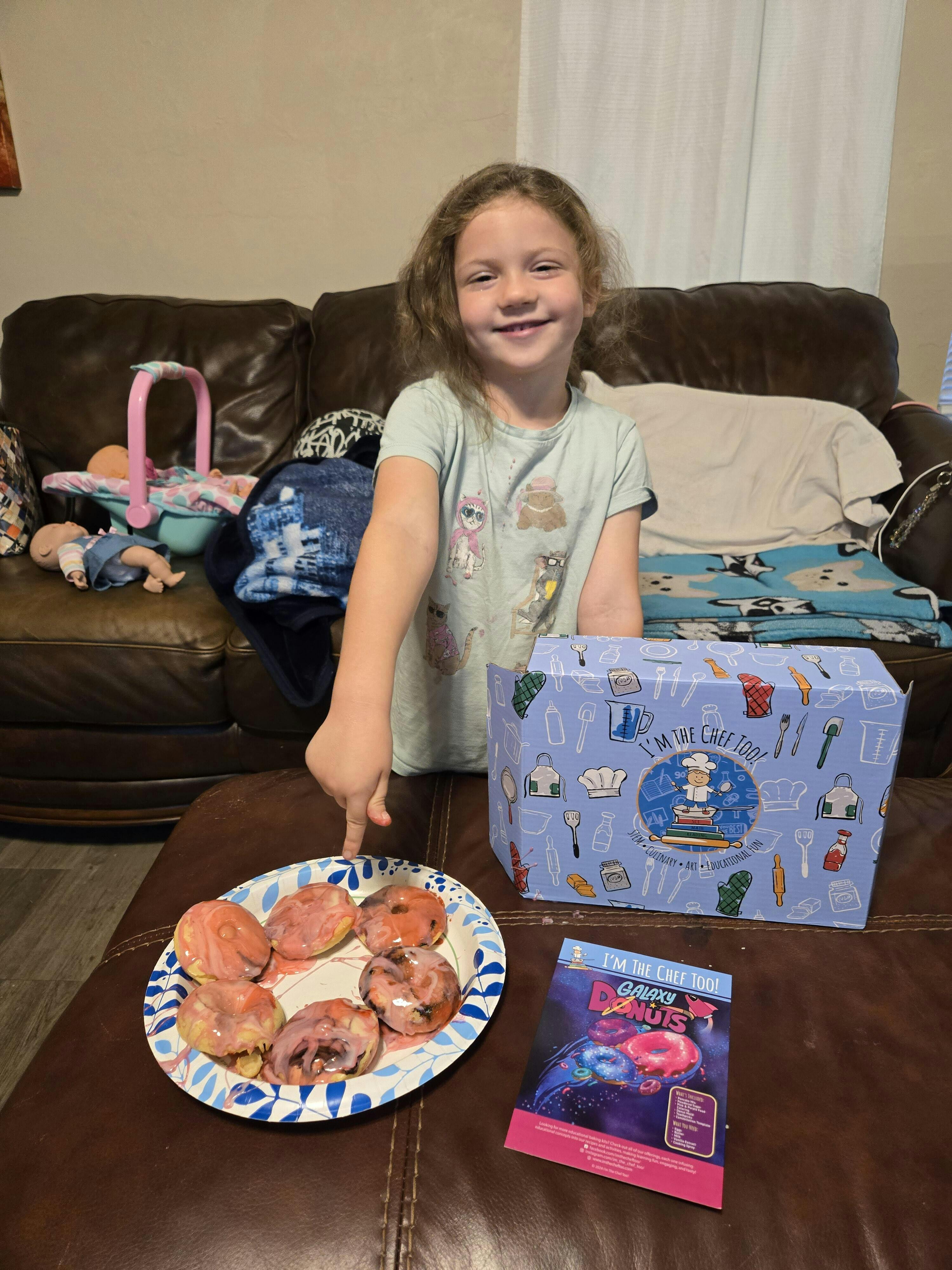
The most successful projects are those that truly interest the child. Talk about their favorite animals, natural phenomena, or everyday observations. Brainstorm ideas, but ultimately, let them choose. Their genuine enthusiasm is the most important ingredient! Our kits, like the Galaxy Donut Kit, let kids explore astronomy by creating their own edible solar system, tying a child's interest in space to a delicious, hands-on learning experience.
2. Keep it Simple and Manageable
Third graders thrive on achievable goals. Choose a project that doesn’t require overly complex procedures or expensive, specialized equipment. Simple experiments with clear variables are best. The goal is to understand the process, not to win a Nobel Prize!
3. Embrace the Scientific Method or Engineering Design Process
Gently guide them through the steps we discussed earlier. Provide prompts: "What do you think will happen?" (hypothesis), "How can we test that?" (experiment design), "What did you notice?" (observation), "What does that tell us?" (conclusion). This structured thinking is a valuable life skill.
4. Gather Materials Thoughtfully
Many excellent projects can be done with household items or recycled materials. For convenience and a complete experience, consider our I'm the Chef Too! kits. They come with pre-measured dry ingredients and specialty supplies, taking the stress out of ingredient hunting and letting you focus on the fun and learning. Join The Chef's Club for a new adventure delivered to your door every month with free shipping in the US, making project prep a breeze!
5. Emphasize Observation and Data Collection
Encourage them to write or draw what they see, even if it's just a few words or simple sketches. This helps them articulate their findings and reinforces the importance of evidence. A simple notebook or a printable recording sheet can be very effective.
6. Focus on the "Why" and the "How"
Beyond just reporting what happened, encourage them to think about why it happened and how it connects to bigger scientific principles. "Why did the bread mold faster in the dark?" "How does the balloon make the car move?"
7. Support, Don't Solve
Your role is to be a guide, facilitator, and cheerleader, not to do the project for them. Let them make mistakes and learn from them. The "aha!" moments are far more powerful when they're self-discovered. Remember, we focus on fostering a love for learning, building confidence, developing key skills, and creating joyful family memories, not guaranteeing specific educational outcomes.
8. Practice Presentation Skills
If there's a fair, help them practice explaining their project in their own words. Encourage eye contact and clear speaking. This builds confidence and communication skills, which are invaluable for any future endeavor. A simple poster board with their question, hypothesis, materials, steps, observations, and conclusion is usually perfect for this age.
9. Prioritize Safety in the Kitchen and Beyond
Especially when using kitchen ingredients or tools, adult supervision is paramount. Discuss safety rules beforehand, such as careful handling of liquids, avoiding touching hot surfaces, and cleaning up spills immediately. Our kits are designed with child safety in mind, making them a great starting point for young explorers.
The I'm the Chef Too! Approach to STEM Learning
At I'm the Chef Too!, we wholeheartedly believe that the most profound learning happens when children are actively engaged and excited. Our unique approach of teaching complex subjects through tangible, hands-on, and delicious cooking adventures is what sets us apart. Imagine exploring the science of states of matter by making ice cream, or understanding chemical reactions by baking vibrant, colorful treats. This is "edutainment" at its finest!
Our kits are meticulously developed by mothers and educators who understand the delicate balance between fun and learning. We know that busy families need convenience, which is why our Chef's Club subscriptions deliver a new, complete adventure right to your door every month, often with free shipping in the US. Each box includes pre-measured dry ingredients and specialty supplies, making it simple to dive into a creative and educational activity without the hassle of grocery shopping or elaborate prep.
We are committed to helping families create screen-free educational alternatives that spark genuine curiosity and creativity. Whether you choose a one-time adventure from our diverse collection or opt for the ongoing excitement of The Chef's Club, you’re providing an opportunity for your child to learn, grow, and bond with you over a shared, delicious experience. We don't promise your child will become a top scientist overnight, but we do promise an engaging process that fosters a love for learning, builds confidence in their abilities, develops crucial skills, and creates unforgettable, joyful family memories.
Frequently Asked Questions About 3rd Grade STEM Fair Projects
Q1: What makes a good STEM fair project for a 3rd grader?
A: A good STEM fair project for a 3rd grader is one that sparks their curiosity, is hands-on, can be completed with readily available materials (or convenient kits like ours!), and allows them to follow the steps of the scientific method or engineering design process. It should be age-appropriate, safe, and most importantly, fun! The focus should be on the learning experience, problem-solving, and communication, rather than achieving a "perfect" result.
Q2: How much parental involvement is appropriate for a 3rd-grade project?
A: Parental involvement is crucial for guiding, supervising, and facilitating the project. However, it's important to let the child take the lead on thinking, experimenting, and presenting. Your role is to ask guiding questions, help gather materials, ensure safety, and offer encouragement, rather than doing the project for them. Think of yourself as a mentor or a lab assistant!
Q3: How long should a 3rd-grade STEM fair project take?
A: The duration can vary greatly. Some projects, like a simple chemical reaction, might take an hour or two of active experimentation. Others, like growing plants or crystals, might involve observations over several days or weeks. For 3rd graders, projects that can be mostly completed within a week or two (with daily check-ins for observation-based projects) are usually ideal to maintain their interest.
Q4: My child is struggling to come up with an idea. What should I do?
A: Start by discussing their interests. Do they love animals, space, cooking, building, or nature? Connect STEM concepts to those interests. Show them examples of simple experiments (like the ones listed above). Sometimes, giving them a few options to choose from can help. Remember, our I'm the Chef Too! kits are designed to be inspiring and convenient, offering a themed starting point for a fantastic project. You can always Browse our complete collection of one-time kits for a wide array of ideas!
Q5: Do all STEM fair projects need to follow the scientific method?
A: Not necessarily. While many projects lend themselves to the scientific method (asking a question, hypothesis, experiment, conclusion), others are better suited for the engineering design process (identifying a problem, brainstorming, designing, building, testing, improving). Both are valuable STEM processes that encourage critical thinking and problem-solving.
Q6: What if my child's experiment doesn't work as expected?
A: That's a perfect learning opportunity! This is a core part of the scientific process. Encourage your child to think about why it didn't work. Did they follow all the steps? Were the measurements accurate? Did they change too many things at once? This "failure" often leads to deeper understanding and new questions, reinforcing that mistakes are valuable steps toward discovery.
Q7: How can I make the presentation part less stressful for my child?
A: Practice, practice, practice! Help them create a simple poster board that clearly outlines their project in their own words. Encourage them to speak in front of a mirror, to family members, or even pets. Focus on enthusiasm and clarity, not memorization. Remind them that they are the expert on their project and are simply sharing what they learned.
Q8: Can cooking projects really be considered STEM fair projects?
A: Absolutely! The kitchen is a natural laboratory where chemistry (reactions, states of matter), physics (heat transfer, density, force), biology (yeast, mold), and even engineering (structuring a cake, designing a perfect cookie) are at play every day. Our I'm the Chef Too! kits are specifically designed to highlight these STEM connections, blending culinary creativity with scientific inquiry in a delicious way.
Q9: Where can I find ongoing inspiration and support for STEM activities?
A: Beyond specific project ideas, integrating STEM into daily life is key. Look for opportunities to discuss science phenomena, engineering solutions, and math concepts. Reading STEM-themed books, visiting science museums, and, of course, exploring ongoing hands-on activities like those offered through The Chef's Club are fantastic ways to keep the learning momentum going. Our subscription boxes provide a convenient, fresh dose of STEM "edutainment" delivered monthly!
Conclusion: Igniting a Lifelong Spark
Engaging in STEM fair projects for 3rd graders is far more than just a school assignment; it's an opportunity to nurture an innate sense of wonder and build foundational skills that will serve them for a lifetime. By exploring everything from the fizzing wonders of chemical reactions to the ingenious designs of edible engineering, children learn to question, investigate, create, and communicate. These hands-on experiences, especially when shared with family, transform abstract concepts into tangible, memorable, and often delicious discoveries.
At I'm the Chef Too!, we are passionate about making STEM learning accessible, exciting, and screen-free. Our unique blend of cooking, STEM, and the arts creates "edutainment" that sparks curiosity and creativity, builds confidence, and fosters invaluable family bonding. We believe every child deserves the chance to experience the thrill of scientific discovery in a fun and engaging way.
Don't let the thought of planning complex projects hold you back. Let us bring the adventure to you! Give the gift of learning that lasts all year with a 3, 6, or 12-month prepaid plan, or simply start with one exciting kit. Your child's next "aha!" moment is just a box away.
Ready to embark on a new culinary and scientific adventure every month? Don't miss out on the fun and learning! Join The Chef's Club today and watch your child's curiosity (and culinary skills!) flourish with free shipping on every box.