Table of Contents
- Introduction
- The Importance of Crafting in the Great Outdoors
- Organizing Your Mobile Art Studio
- Rock and Stone Art Projects
- Masterpieces Made from Leaves and Plants
- Light the Night: DIY Lantern Projects
- Artistic Adventures with Campfire Elements
- Edible Art: Merging STEM and Snacks
- Building and Engineering in the Wild
- Why We Focus on Screen-Free Educational Alternatives
- Integrating STEM into Nature Crafts
- Creating Lasting Memories with Every Project
- Camping Art Projects for Rainy Days
- Frequently Asked Questions
- Conclusion
Introduction
Have you ever noticed how a simple, crooked stick becomes a magic wand or a mighty sword the moment it touches a child’s hand? There is something inherently magical about the great outdoors that strips away the need for flashing screens and plastic toys, replacing them with a world of infinite texture, color, and possibility. Whether you are pitching a tent in the deep woods or setting up a cozy "campsite" in your own backyard, the environment is ripe for discovery. At I'm the Chef Too!, we believe that the best learning happens when children can touch, taste, and create with the world around them. Our mission is to blend food, STEM, and the arts into one-of-a-kind "edutainment" experiences that spark curiosity and creativity.
In this post, we are going to dive deep into the world of camping art projects for kids. We aren’t just talking about simple coloring pages; we are exploring how to transform natural treasures like leaves, stones, and campfire ash into masterpieces. We will cover how to organize your supplies for a successful trip, detailed instructions for over twenty different nature-based crafts, and the secret ways these activities build essential STEM skills. By the end of this guide, you will have a toolkit of activities designed to facilitate family bonding and provide a meaningful, screen-free educational alternative. Our goal is to help you foster a love for learning and create joyful family memories that last long after the tent is packed away.
The Importance of Crafting in the Great Outdoors
When we take our little learners into nature, we are opening up a laboratory that is far more expansive than any classroom. Camping art projects for kids serve as a bridge between the physical world and a child’s imagination. Beyond just being a fun way to pass the time between hiking and roasting marshmallows, these activities offer profound developmental benefits.
First, nature provides an unparalleled sensory experience. The rough bark of a pine tree, the cool smoothness of a river stone, and the vibrant gradients of a sunset offer lessons in texture and color theory that no digital screen can replicate. When children engage in these tactile activities, they are developing their fine motor skills—the small muscle movements in their hands and fingers that are crucial for writing, buttoning clothes, and eventually, mastering more complex kitchen skills.
Furthermore, crafting outdoors builds confidence. When a child successfully builds a fairy house that stands on its own or creates a "nature mandala" from found objects, they are practicing problem-solving and engineering. They learn to adapt to their materials, finding just the right pebble to balance a twig or the perfect leaf to serve as a roof. This process of trial and error is the heart of scientific inquiry. We love seeing children realize that they can influence their environment and create something beautiful from "nothing."
Ready for a new adventure every month? Join The Chef's Club and enjoy free shipping on every box.
Organizing Your Mobile Art Studio
Success in the woods starts with preparation. Nothing dampens the creative spirit quite like a spilled bottle of glue in a sleeping bag or a missing pair of scissors. We recommend treating your camping art supplies with the same organization you’d use for your kitchen pantry.
The Art Caddy System
Consider using a stackable, clear caddy or a series of interlocking plastic bins. Transparency is key; if kids can see their "nature art supplies," they are more likely to use them. We suggest keeping a "Base Kit" that stays packed and ready for any adventure. This kit should include:
- Washable paints and brushes
- Sturdy glue (non-toxic and quick-drying)
- Child-safe scissors
- Twine or colorful yarn
- Masking tape and clear tape
- A hole punch
- A few sheets of cardstock or heavy paper
- A drop cloth (a cheap plastic shower curtain liner works perfectly)
Pre-Adventure Prep
Before you leave, talk to your children about what they might want to create. Are they interested in the stars? The local wildlife? This anticipation is part of the fun! For parents who want to ensure a steady stream of educational activities without the stress of planning every detail, giving the gift of learning that lasts all year with a 12-month subscription to our STEM cooking adventures is a fantastic way to keep the momentum going, whether you are at home or at a campsite.
Rock and Stone Art Projects
Rocks are perhaps the most versatile "canvas" found in nature. They are durable, come in endless shapes, and are easy for small hands to manipulate.
1. Painting Kindness Rocks
This is a classic activity that never gets old. Have your children scavenge for smooth, flat stones near riverbeds or trails. Once cleaned and dried, use acrylic or washable paints to decorate them. We love encouraging kids to paint uplifting messages or bright patterns.
- The STEM Connection: This is a great time to discuss geology! Why are some rocks smooth while others are jagged? You can explain how water erosion shapes the stones over hundreds of years. This hands-on exploration of earth science is similar to the way kids explore a chemical reaction that makes our Erupting Volcano Cakes bubble over with deliciousness.
2. Rock Footprints
For younger children, creating stone "footprints" is a delightful exercise in pattern recognition and size grading. Find one large, oval stone for the "sole" of the foot and five smaller pebbles for the "toes." Arrange them on the ground or glue them to a piece of bark.
- The Creative Twist: Ask your kids what kind of creature made the footprint. Is it a giant? A forest sprite? A bear? This encourages narrative storytelling and imagination.
3. Pet Rocks and Stone Critters
With a little glue and some googly eyes (or small pebbles for eyes), a rock can become a turtle, an owl, or a ladybug.
- Case Study: Imagine a 6-year-old who is a bit nervous about sleeping in a tent for the first time. Helping them create a "Guardian Rock" or a "Camp Buddy" out of a stone they found can provide comfort and a sense of security. It’s a tactile reminder of the fun they had that day.
Masterpieces Made from Leaves and Plants
Leaves offer a masterclass in biology and art. Their varied shapes, vein patterns, and seasonal colors are perfect for camping art projects for kids.
4. Leaf Rubbings: Nature’s Etchings
This is a timeless activity that reveals the hidden architecture of plants. Place a leaf (vein-side up) under a sheet of paper. Using the side of a crayon, gently rub over the paper until the image of the leaf appears.
- The Science: Discuss the "veins" of the leaf. Just like our veins carry blood, these carry water and nutrients to the plant. This is a wonderful way to introduce basic botany in a way that feels like magic.
5. Leaf Animals and Characters
Collect leaves of all different sizes and shapes. Arrange them on cardstock to create animals. A large maple leaf could be the body of a lion, while thin willow leaves could be the whiskers.
- Educational Goal: This helps with spatial awareness. Children have to visualize how different shapes fit together to create a whole.
6. Nature Mandalas
A mandala is a circular, symmetrical design. Send your kids on a "texture hunt" to find petals, acorns, pine needles, and leaves. Starting from a center point, have them lay out the items in concentric circles.
- The Value: This promotes mindfulness and patience. It’s a quiet, grounding activity that allows kids to appreciate the small details of the forest floor.
7. The Leaf Tower
Find a thin, sturdy stick and poke it through the center of several leaves, stacking them like beads on a string.
- The STEM Connection: This is an early lesson in physics and balance. How many leaves can you stack before the stick tips? Which leaves are strongest?
Find the perfect theme for your little learner by browsing our complete collection of one-time kits.
Light the Night: DIY Lantern Projects
One of the most exciting parts of camping is when the sun goes down. Creating their own light source makes the nighttime feel less intimidating and more like an adventure.
8. The Recycled Water Bottle Lantern
Don’t throw away that empty plastic bottle! Rinse it out and let your kids decorate the outside with tissue paper "rip and stick" art or permanent markers. Drop a battery-operated tea light inside, and you have a custom lantern.
- Safety Note: Always use battery-operated lights for child-led crafts to ensure safety around tents and sleeping bags.
9. Real Leaf Lanterns
For a more organic look, use clear contact paper or a little bit of non-toxic glue to attach pressed leaves to the outside of a clean glass jar or a sturdy plastic cup. When illuminated from within, the leaves glow with a warm, amber light, showcasing their intricate details.
10. Tin Can Lanterns (For Older Kids)
With adult supervision, older children can use a hammer and a large nail to punch patterns into a clean, empty tin can. Fill the can with water and freeze it first to keep the metal from denting while you work. Once the ice melts, place a light inside to see the pattern projected onto the tent walls.
Artistic Adventures with Campfire Elements
The campfire isn't just for warmth and cooking; it’s a source of unique art materials!
11. Ash Painting
Once the campfire has completely cooled and an adult has verified it is safe, gather a small amount of gray ash. Mix it with a few drops of water in a small cup to create a primitive "paint."
- The History Lesson: Explain to your kids that this is how ancient cave painters created their art. It connects them to human history and the very beginnings of creativity.
12. Charcoal Sketching
A burnt stick from the edge of the fire (again, only once cooled!) makes an excellent charcoal pencil. Use it to sketch the trees or the mountain silhouettes on paper. This tactile experience is messy but incredibly rewarding for kids who love to get their hands dirty.
Edible Art: Merging STEM and Snacks
At I'm the Chef Too!, we specialize in the delicious side of learning. Camping is the perfect venue for food-based art projects. We believe that when kids "make" their food, they are more likely to engage with the science behind it.
13. The Handprint Campfire Snack
This is a craft you can eat! Use a piece of parchment paper as your base. Have kids "trace" their hands using orange and red fruit leather or sliced peppers to represent flames. Use pretzel rods for the logs and mini marshmallows for the glowing embers.
- The "Edutainment" Factor: While they build, you can talk about the "Fire Triangle"—how a fire needs heat, fuel, and oxygen to burn. This turns snack time into a biology and physics lesson.
14. Smiley S'mores
Take the traditional s'more to the next level. Before squishing the top graham cracker down, have your child use a food-safe marker or small pieces of chocolate to give the marshmallow a face.
- Creative Play: Encourage them to make different expressions—surprised, happy, or sleepy. This helps younger children with emotional recognition and social-emotional learning.
15. Constellation Cookies
If you’ve brought along some plain round cookies, use a tube of icing and some silver sprinkles to "map" the constellations they see in the night sky.
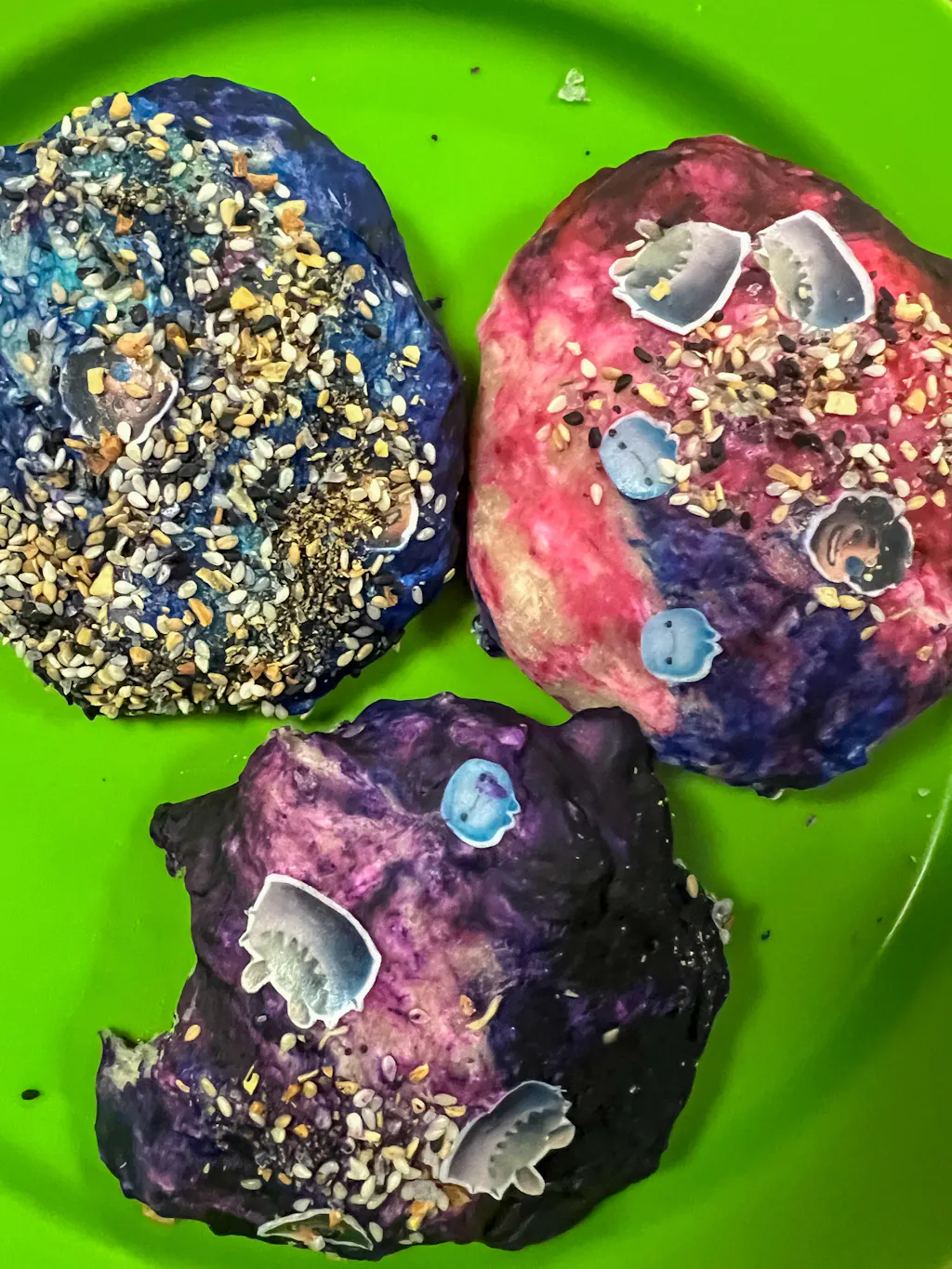
- The STEM Connection: This is the perfect lead-in to astronomy. Explore astronomy by creating your own edible solar system with our Galaxy Donut Kit, which is a wonderful way to bring the wonders of the universe right to your picnic table.
Building and Engineering in the Wild
Using larger natural materials allows kids to experiment with structure and design.
16. The Ultimate Fairy House
This is a project that can last an entire camping trip. Challenge your kids to build a small dwelling for "forest fairies" using only what they find on the ground.
- Materials: Bark for walls, moss for carpets, acorn caps for bowls, and pinecones for furniture.
- The Lesson: This is pure engineering. They have to figure out how to make a roof waterproof (using broad leaves) and how to make the structure stable against the wind.
17. Stick and String Mobiles
Find a sturdy, "Y" shaped branch. Use twine to hang various treasures from the arms—feathers, interesting rocks (wrapped in string), and dried leaves.
- Physics in Action: To make the mobile hang straight, the kids must balance the weight on both sides. This is a hands-on introduction to the concept of equilibrium.
18. Bark Boats
Can a piece of bark float? What happens if you add a "sail" made of a leaf and a small twig? Head to a safe, shallow area of a stream or a large puddle and test out different boat designs.
- The Scientific Method: Have the kids make a hypothesis. Which boat will be the fastest? Which can carry the most "cargo" (pebbles)? This is fluid dynamics for beginners!
Why We Focus on Screen-Free Educational Alternatives
In a world filled with digital distractions, the importance of screen-free time cannot be overstated. When children are engaged in camping art projects, they aren't just "keeping busy." They are experiencing "flow"—a state of deep absorption where they are fully present in the moment.
We at I'm the Chef Too! are committed to providing these types of experiences because we know they facilitate deeper family connections. When you are sitting on a log together, helping your child tie a knot in a dream catcher or debating which rock looks most like a turtle, you are building memories that a movie or a video game simply cannot provide. You are showing them that their ideas have value and that the world is a place to be explored, not just observed through a glass screen.
Ready for a new adventure every month? Join The Chef's Club and enjoy free shipping on every box.
Integrating STEM into Nature Crafts
While "art" is the primary focus, the "S," "T," "E," and "M" are always present if you know where to look. Here is how we frame these camping art projects for kids as educational milestones:
- Science (Biology & Earth Science): Identifying different tree species by their leaves, observing how insects interact with the fairy houses, and understanding the life cycle of a pinecone.
- Technology (Tool Use): Learning how to use a hole punch, a pair of scissors, or even a simple knot-tying technique are all forms of basic human technology.
- Engineering: Building structures that withstand the elements. Whether it’s a twig tent for a toy dinosaur or a leaf lantern, kids are learning about structural integrity.
- Mathematics: Counting the petals on a flower, identifying geometric shapes in a mandala, and measuring the lengths of sticks for a mobile.
Our approach is designed by mothers and educators who understand that children learn best through tangible, hands-on experiences. By incorporating these elements into your camping trip, you are fostering a love for learning that feels like play.
Creating Lasting Memories with Every Project
The beauty of these camping art projects for kids is that many of them can be brought home. A collection of painted rocks can line your garden path. A nature necklace can be hung in a bedroom. A "Camp Journal" filled with leaf rubbings becomes a cherished souvenir of a summer well-spent.
We encourage parents to lean into the mess. Let the clothes get a little dirty with ash and the fingers get a bit sticky with sap. These are the markers of a successful day of discovery. At I'm the Chef Too!, we celebrate the messy, delicious, and creative process of growing up. Our kits, like the Wild Turtle Whoopie Pies, are designed to bring that same sense of outdoor wonder into your kitchen.
Camping Art Projects for Rainy Days
Sometimes, Mother Nature has other plans, and you might find yourself stuck inside a tent or a cabin for an afternoon. Don't worry—the art doesn't have to stop!
19. The "Inside-Out" Nature Journal
If you can't go to the nature, bring a little bit of nature inside (before the rain starts!). Use your cardstock and some tape to create a journal. Kids can draw the rain falling on the leaves or sketch the view from the tent flap.
20. Pinecone "Bird Feeders"
This is a great indoor activity that yields an outdoor result. If you have some peanut butter (and no allergies!) or sunflower butter and some birdseed, kids can coat pinecones and roll them in the seed. Once the rain stops, they can hang them up and become "Wildlife Observers," a key role for any young scientist.
21. Storytelling Stones
If you've already painted your rocks, use them to tell a story. Have each family member pick a stone and add a sentence to a collaborative "Campfire Tale." This builds literacy and verbal communication skills in a fun, relaxed setting.
Frequently Asked Questions
What are the best art supplies to bring for camping?
The best supplies are those that are versatile and easy to clean. We recommend washable paints, sturdy twine, non-toxic glue, masking tape, and heavy cardstock. Avoid anything with excessive glitter or tiny plastic pieces that could be easily lost in the environment (keeping "Leave No Trace" principles in mind).
How can I make sure these projects are safe for my children?
Adult supervision is essential for all camping art projects for kids. Ensure that children understand the boundaries of the campsite, never pick plants that are unfamiliar (to avoid poison ivy or protected species), and always handle tools like scissors or hammers under your watchful eye. If using fire-related materials like ash, ensure they are 100% cooled.
What if my child isn't "artistic"?
Art in nature isn't about creating a perfect "product"; it's about the process of exploration. Focus on the "STEM" side—challenge them to build the tallest tower or the fastest bark boat. Often, the "art" happens naturally as they solve these engineering problems.
How do I incorporate "Leave No Trace" into crafting?
We are guests in the woods! Always encourage kids to use items that have already fallen to the ground (dead leaves, sticks, loose rocks) rather than picking live flowers or stripping bark from living trees. If you create something like a nature mandala, take a photo to remember it, and then consider scattering the materials back to the earth before you leave.
Can these activities be done at home?
Absolutely! Most of these camping art projects for kids can be done in a backyard, a local park, or even with materials gathered on a neighborhood walk. The goal is to connect with nature wherever you find it.
Conclusion
The great outdoors is a vast, open-ended canvas waiting for your child's unique touch. Through camping art projects for kids, we can transform a simple weekend trip into a profound educational journey. By blending the beauty of the natural world with the principles of STEM and the joy of creativity, we are helping our children build more than just crafts—we are helping them build confidence, curiosity, and a lifelong love for learning.
At I'm the Chef Too!, we are honored to be a part of your family's educational adventures. Whether you are roasting the perfect s'more or engineering a fairy house, the memories you create today are the foundation for a bright, inquisitive future. We invite you to continue the adventure every month by bringing our unique "edutainment" experiences into your home.
Ready for a new adventure every month? Join The Chef's Club and enjoy free shipping on every box.