Table of Contents
- Introduction
- What Exactly is Matter?
- The Three Main States: Solids, Liquids, Gases
- Beyond the Basics: Phase Changes in Action
- Why Hands-On States of Matter Experiments Matter for Kids
- Safety First: Essential Tips for Kitchen Science
- Exciting States of Matter Experiments for Kids
- Bringing STEM to Life with I'm the Chef Too!
- Conclusion
- FAQ: Your States of Matter Questions Answered
Imagine a world where everything around you is dancing, shifting, and transforming, even if you can’t always see it. From the chair you’re sitting on to the air you breathe, the entire universe is made up of "stuff" – and this stuff is constantly in motion, changing forms right before our eyes. We often take it for granted, but the science behind these everyday transformations is truly captivating, especially for curious young minds.
At I'm the Chef Too!, we believe that learning should be an adventure, a hands-on exploration that sparks imagination and creates lasting memories. That’s why we're diving deep into one of the most fundamental concepts in science: the states of matter. Understanding solids, liquids, and gases is a foundational step in chemistry and physics, but it doesn't have to be confined to textbooks. In this comprehensive guide, we'll explore what matter is, delve into its different states, and, most importantly, provide a treasure trove of engaging, kid-friendly experiments you can do right in your kitchen or classroom. We’ll show you how to turn everyday materials into exciting scientific discoveries, fostering critical thinking, observation skills, and a lifelong love for learning through delicious and tangible experiences. Get ready to stir up some science and ignite that inner chef and scientist in your child!
Introduction
Have you ever watched an ice cube melt into a puddle, or seen steam rise from a boiling pot? These everyday occurrences are perfect examples of the fascinating world of matter and its different states. For children, understanding that everything around them – from their juice box to the air in their balloon – is made of tiny particles in various arrangements can unlock a whole new way of looking at the world. It’s not just about memorizing definitions; it’s about experiencing the dynamic nature of our physical world through observation and hands-on discovery.
This post is designed to be your ultimate resource for exploring states of matter with kids. We’ll break down complex scientific ideas into easy-to-understand concepts, perfect for children of all ages. You’ll learn about the unique characteristics of solids, liquids, and gases, and witness the magical transformations that occur when matter changes from one state to another. Our focus is on practical, fun, and safe experiments that use common household items, making science accessible and enjoyable for everyone. We’ll also highlight how these activities connect to broader STEM principles, encouraging problem-solving, creativity, and family bonding, all while keeping screens off and engagement high. So, put on your metaphorical lab coats – or perhaps an apron! – because it's time to explore the amazing world of matter with your young scientists.
What Exactly is Matter?
Before we dive into the exciting experiments, let's establish a clear understanding of what "matter" actually is. In its simplest definition, matter is anything that has mass and takes up space. If you can touch it, hold it, smell it, or see it, it’s made of matter. This includes everything from a giant tree to a tiny speck of dust, from the water in a glass to the air you're breathing right now. Even things we can't easily perceive, like the oxygen around us, are matter!
The secret to matter lies in its fundamental building blocks: tiny, invisible particles called molecules (which are made of even tinier atoms!). These molecules are constantly in motion, even in seemingly still objects. How these molecules are arranged and how much energy they have dictates whether something is a solid, a liquid, or a gas. Think of it like a dance party:
- In a solid, the molecules are holding hands tightly and barely wiggling in place.
- In a liquid, they've let go and are gliding past each other.
- In a gas, they're zipping all over the room, bumping into everything.
This concept of constantly moving particles is crucial for understanding why matter behaves the way it does and why it can change states. Our goal at I'm the Chef Too! is to demystify these core scientific principles, turning abstract ideas into tangible experiences. When children engage with these concepts through cooking and crafting, they're not just making a snack; they're creating a model of molecular interaction.
The Three Main States: Solids, Liquids, Gases
The world around us is filled with an incredible variety of substances, but at their most basic level, almost all of them can be classified into one of three primary states: solid, liquid, or gas. Each state has distinct properties determined by how their molecules are arranged and how much energy those molecules possess. Let's break them down:
Solids: Holding Their Shape
Imagine a block of ice, a rock, or even your favorite toy. These are all solids.
- Molecular Arrangement: In a solid, the molecules are packed very tightly together in a fixed, orderly pattern. They're like a tightly formed marching band, each member having a designated spot.
- Movement: While they can't move freely past each other, the molecules in a solid aren't completely still! They vibrate constantly in their fixed positions, like tiny invisible instruments humming in place.
- Properties: Because their molecules are so tightly bound, solids have a definite shape and a definite volume. They don't change their shape to fit a container, and they maintain their size. You can pick up a solid, hold it, and it will stay the same shape.
Think of building with LEGOs – each brick is a solid, maintaining its shape no matter how you stack it. We often use solid ingredients in our kits, like flour or sugar, which keep their form until they're mixed and transformed.
Liquids: Taking the Shape of Their Container
Now, consider water, juice, or oil. These are all liquids.
- Molecular Arrangement: In a liquid, the molecules are still quite close together, but they are no longer in fixed positions. They can slide and flow past one another, much like people moving around in a crowded room.
- Movement: The molecules in a liquid have more energy than those in a solid, allowing them to move more freely.
- Properties: Liquids have a definite volume but no definite shape. They will take the shape of whatever container they are in, pouring and flowing to fill the bottom. If you pour water from a tall, thin glass into a wide, shallow bowl, the water will spread out and take the shape of the bowl, but the amount of water (its volume) remains the same.
In many of our I'm the Chef Too! recipes, we work with liquids, observing how they blend, pour, and interact with solid ingredients, such as when we mix milk and eggs for delicious baked goods.
Gases: Filling the Entire Space
Finally, think about the air you breathe, the steam from a kettle, or the helium in a balloon. These are all gases.
- Molecular Arrangement: In a gas, the molecules are very far apart from each other, with a lot of empty space in between. They are like a group of people excitedly running all over a huge, empty sports arena.
- Movement: Gas molecules have the most energy of all three states. They move rapidly and randomly in all directions, constantly colliding with each other and the walls of their container.
- Properties: Gases have no definite shape and no definite volume. They will expand to fill whatever container they are in, no matter how big, and will take on its shape. This is why a small amount of perfume can fill an entire room with its scent – the gas molecules spread out to occupy all available space.
Understanding gases can be a bit trickier because they are often invisible, but their effects are quite dramatic! We'll explore some exciting gas-producing experiments that make this invisible state wonderfully apparent.
Beyond the Basics: Phase Changes in Action
One of the most exciting aspects of studying matter is observing how it can change from one state to another. These transformations, known as phase changes or physical changes, don't alter the chemical makeup of the substance; they simply rearrange its molecules. For example, ice, liquid water, and steam are all H2O molecules – just organized differently! Temperature and pressure are the key drivers behind these changes, either adding or removing energy from the molecules.
Here are the most common phase changes your child can explore:
- Melting (Solid to Liquid): When you add heat energy to a solid, its molecules vibrate faster and faster until they break free from their fixed positions and start to slide past each other, turning the solid into a liquid. Think of an ice cube turning into water on a warm day.
- Freezing (Liquid to Solid): The opposite of melting! When you remove heat energy from a liquid, its molecules slow down and eventually settle into fixed positions, forming a solid. This is how water turns into ice in a freezer.
- Evaporation (Liquid to Gas): Adding enough heat energy to a liquid can make its molecules move so fast that they escape from the liquid's surface and float freely as a gas. The sun evaporating puddles or water boiling into steam are perfect examples.
- Condensation (Gas to Liquid): When a gas loses heat energy, its fast-moving molecules slow down and come closer together, forming tiny liquid droplets. The "sweat" on a cold glass on a humid day, or clouds forming in the sky, are examples of condensation.
- Sublimation (Solid to Gas): A less common but super cool phase change where a solid turns directly into a gas without passing through the liquid state. Dry ice is the most famous example of this.
These phase changes are not just scientific concepts; they are the foundation of many cooking processes and everyday phenomena. Exploring them through hands-on activities helps children grasp abstract ideas in a concrete way. It’s an integral part of the "edutainment" experience we champion at I'm the Chef Too!, blending the wonder of science with the joy of creating.
Why Hands-On States of Matter Experiments Matter for Kids
Why bother with all these experiments? Can't kids just read about it in a book? While books are wonderful, there’s an unparalleled magic that happens when children actively engage with scientific concepts. At I'm the Chef Too!, our mission is to blend food, STEM, and the arts into one-of-a-kind "edutainment" experiences, and states of matter experiments are a perfect illustration of this philosophy.
Here’s why these hands-on activities are so invaluable:
- Sparking Curiosity and Creativity: There’s nothing quite like the "aha!" moment when a child sees a baking soda and vinegar reaction inflate a balloon, or transforms cream into butter. These moments ignite natural curiosity and encourage creative thinking about how the world works.
- Developing Key STEM Skills: Our cooking adventures naturally foster observation, prediction, critical thinking, problem-solving, and measurement skills. Children learn to follow instructions, interpret results, and even hypothesize about what might happen next – all fundamental to scientific inquiry.
- Building Confidence: Successfully completing an experiment, even a simple one, gives children a tremendous sense of accomplishment. This boosts their self-esteem and encourages them to tackle more complex challenges, both in and out of the kitchen.
- Facilitating Family Bonding: Kitchen science is a fantastic screen-free activity that brings families together. Working side-by-side, sharing discoveries, and even enjoying the delicious results creates precious memories and strengthens connections. We believe these shared experiences are just as important as the scientific learning itself.
- Making Learning Tangible and Delicious: Abstract concepts like "gas expansion" become incredibly real when a balloon inflates before their eyes, or when they taste the creamy ice cream they just helped freeze. This tangible connection makes learning memorable and fun.
- Promoting Screen-Free Educational Alternatives: In an increasingly digital world, we are committed to providing rich, hands-on experiences that pull children away from screens and into the tactile world of creation and discovery.
While we can’t promise your child will become a top scientist overnight, we can confidently say that engaging in these types of activities will foster a love for learning, build essential life skills, and create joyful family memories that last a lifetime. Ready to bring more of this educational fun into your home? Join The Chef's Club today and get a new adventure delivered right to your door every month, complete with pre-measured dry ingredients and specialty supplies!
Safety First: Essential Tips for Kitchen Science
Before embarking on any scientific adventure in the kitchen, safety must always be our top priority. We always frame our kitchen activities with the understanding that adult supervision is essential for children of all ages. Here are some key safety guidelines to ensure a fun and secure learning environment:
- Always Supervise: Never leave children unattended during experiments, especially when heat sources, sharp tools, or chemicals (even common household ones like vinegar) are involved.
- Read Instructions Carefully: Before starting any experiment, read all steps and gather all materials. Make sure you understand the process.
- Wear Protective Gear: For some experiments, safety glasses can protect eyes from splashes. If working with anything that could irritate skin, consider gloves.
- Handle Heat with Care: When using stoves, microwaves, or hot plates, adults should always handle hot components. Teach children about the dangers of hot surfaces and steam.
- Beware of Edibles (and Non-Edibles): While many of our I'm the Chef Too! kits result in delicious treats, not all science experiments are edible. Clearly distinguish between what can and cannot be consumed. If an experiment uses non-food items (like dry ice or certain chemicals), ensure children understand not to taste them.
- Clean Up Spills Promptly: Messes are part of science, but spills can be hazardous. Have paper towels or sponges ready for quick clean-ups.
- Ventilate Properly: When working with reactions that produce gases, ensure the area is well-ventilated.
- Know Your Child's Allergies: If using food items, be mindful of any food allergies your child or others present may have.
- Wash Hands: Always wash hands thoroughly before and after experiments, especially if handling food ingredients.
By following these simple safety rules, you can create a wonderful and worry-free environment for your budding scientists to explore the wonders of states of matter.
Exciting States of Matter Experiments for Kids
Now for the fun part! Here’s a collection of hands-on experiments, categorized by the state of matter they primarily focus on, or the transformation they demonstrate. Remember, these activities are designed to be engaging and use readily available materials, bringing science to life right in your home.
Exploring Solids: Fixed Shapes, Vibrating Particles
Solids are the easiest state of matter for kids to understand because they can directly touch and manipulate them. These experiments help highlight their unique properties.
-
Matter Hunt & Sort:
- What you need: A basket or box, various household items (e.g., a spoon, a book, a toy car, a piece of fruit), and a designated area for "solids."
- How to do it: Challenge your child to find objects around the house that are solids. As they find each item, ask them to explain why it's a solid (it holds its own shape, you can pick it up). Then, have them sort the collected items into the "solid" area.
- The Science: This simple activity reinforces the definition of a solid and helps children observe that solids maintain their shape and volume regardless of where they are placed.
- Educational Connection: Encourages observation and classification skills.
-
Edible Molecule Models:
- What you need: Marshmallows (small and large), toothpicks, and a flat surface.
- How to do it: Explain that marshmallows represent molecules and toothpicks represent the bonds between them. Challenge your child to build a model of a solid. Guide them to pack the marshmallows tightly together, connecting them with toothpicks to show the fixed, orderly structure. Then, ask them to try and make the marshmallows "move" without breaking the whole structure (just vibrating in place).
- The Science: This tangible model helps visualize the tightly packed, vibrating molecular structure of solids, making an abstract concept concrete.
- Educational Connection: Develops spatial reasoning and understanding of molecular arrangement. This is a wonderful way to introduce chemistry concepts in a playful, delicious manner.
Discovering Liquids: Flowing Fun and Surface Tension
Liquids are fascinating because they adapt to their surroundings. These experiments showcase their fluidity and other cool properties.
-
Layered Liquids Rainbow:
- What you need: Tall, clear glass; corn syrup, dish soap, water, vegetable oil (each in a separate cup, optionally colored with food coloring for water); small objects to drop in (e.g., a grape, a plastic bead, a paper clip).
- How to do it: Carefully pour the liquids into the glass, one at a time, starting with the densest (corn syrup), then dish soap, water, and finally oil. Pour slowly down the side of the glass. Observe how they layer. Then, gently drop different objects into the tower and see where they stop.
- The Science: This experiment beautifully demonstrates density. Denser liquids sink below less dense liquids, creating distinct layers. The objects also settle at the layer that is denser than they are. Liquids have definite volume but indefinite shape, as they conform to the glass.
- Educational Connection: Introduces concepts of density, immiscibility, and observation.
-
Liquid Viscosity Race:
- What you need: Two or three different liquids (e.g., water, honey, dish soap, rubbing alcohol), a flat tray or cutting board, and a stopwatch.
- How to do it: Tilt the tray slightly. At the same time, release a small amount of each liquid from the top of the tray. Observe which liquid flows fastest and which is slowest. Time their races down the "slope."
- The Science: This experiment explores viscosity, which is a liquid's resistance to flow. Liquids with higher viscosity (like honey) flow slower than liquids with lower viscosity (like water).
- Educational Connection: Promotes comparative analysis, timing, and understanding of liquid properties.
Getting Gassy: Invisible Forces at Work
Gases can be tricky for kids to grasp because they are often invisible. These experiments make the presence and properties of gases wonderfully apparent.
-
Baking Soda and Vinegar Balloon Blast:
- What you need: Empty plastic bottle (e.g., water bottle), balloon, baking soda, vinegar, funnel (optional).
- How to do it: Pour about 1/4 cup of vinegar into the bottle. Using the funnel, carefully put 2-3 tablespoons of baking soda into the balloon. Stretch the balloon opening over the mouth of the bottle, being careful not to let the baking soda fall in yet. Once secure, lift the balloon, allowing the baking soda to drop into the vinegar. Watch the balloon inflate!
- The Science: This is a classic chemical reaction! Baking soda (sodium bicarbonate, a solid) reacts with vinegar (acetic acid, a liquid) to produce carbon dioxide gas. The gas molecules rapidly spread out, filling the bottle and then expanding into the balloon, proving that gas takes up space and has volume.
- Educational Connection: Introduces chemical reactions, gas production, and the concept of gas volume. This phenomenon is a key element in our Erupting Volcano Cakes Kit, where children experience a real chemical reaction that makes their delicious volcano cakes bubble over!
-
Hot and Cold Balloons:
- What you need: Two empty plastic bottles (water bottles work well), two balloons, a bowl of very warm (not boiling!) water, and a bowl of ice water.
- How to do it: Stretch a balloon over the mouth of each bottle. Place one bottle in the warm water and the other in the ice water. Observe what happens to the balloons over 10-15 minutes.
- The Science: The air inside the bottle is a gas. When heated, the gas molecules gain energy, move faster, and spread further apart, causing the balloon to inflate slightly. When cooled, the molecules lose energy, move slower, and come closer together, causing the balloon to deflate or stay flat. This demonstrates how temperature affects gas volume.
- Educational Connection: Teaches about the relationship between temperature, molecular energy, and gas expansion/contraction.
Transformative Fun: Experiments Showing Phase Changes
These experiments beautifully illustrate how matter transitions between states, often in surprising and delicious ways!
-
Ice Cream in a Bag (Liquid to Solid):
- What you need: Small Ziploc bag, large Ziploc bag, 1/2 cup half-and-half or heavy cream, 1 tbsp sugar, 1/4 tsp vanilla extract, 3 cups ice, 1/3 cup rock salt (or coarse salt), oven mitts or towel.
- How to do it: In the small bag, combine half-and-half, sugar, and vanilla. Seal tightly. In the large bag, add ice and rock salt. Place the sealed small bag inside the large bag. Seal the large bag tightly. Now, shake vigorously for 5-10 minutes, using oven mitts to protect hands from the cold. Watch the liquid cream mixture transform into solid ice cream!
- The Science: The salt mixed with ice creates a brine solution with a freezing point much lower than 0°C (32°F). This super-cold mixture draws heat rapidly out of the cream mixture in the smaller bag, causing it to freeze and solidify into ice cream. This is a fantastic example of freezing (liquid to solid) and freezing point depression.
- Educational Connection: Illustrates heat transfer, freezing point, and phase change from liquid to solid, all with a yummy reward!
-
DIY Lava Lamp (Density and Immiscibility):
- What you need: Tall, clear bottle or jar; vegetable oil, water, food coloring, Alka-Seltzer tablets.
- How to do it: Fill the bottle about two-thirds full with vegetable oil. Then, slowly pour in water until the bottle is nearly full, leaving some space at the top. Observe how the water sinks beneath the oil (they don't mix!). Add 5-10 drops of food coloring, which will pass through the oil and mix with the water. Finally, break an Alka-Seltzer tablet into a few pieces and drop them into the bottle. Watch the colorful "lava" flow!
- The Science: Water is denser than oil, so it sinks. They are also immiscible, meaning they don't mix. When Alka-Seltzer hits the water, it creates carbon dioxide gas bubbles (just like our volcano experiment!). These gas bubbles attach to the colored water, making it less dense than the oil, causing it to rise. At the top, the gas escapes, and the water becomes denser again, sinking back down. This cycle continues until the tablet is dissolved.
- Educational Connection: Explores density, immiscibility, gas production, and convection currents, all while being visually captivating.
-
Cloud in a Jar (Condensation):
- What you need: Large clear jar with a lid, hot water (adult supervision!), ice, black construction paper, a match or aerosol hairspray (adult use only!).
- How to do it: Carefully pour about an inch of hot water into the jar. Swirl it around to warm the sides. Place the black paper behind the jar for better visibility. Quickly light a match, blow it out, and drop the smoking match into the jar, then immediately put the lid on top, placing several ice cubes on the lid. Alternatively, a quick spray of hairspray (aerosol) can be used instead of a match. Watch closely!
- The Science: The hot water creates water vapor (gas). The ice on the lid cools the air at the top of the jar. When the warm, moist air meets the cold air, it cools rapidly. The smoke particles or hairspray provide tiny surfaces (condensation nuclei) for the water vapor to condense around, forming visible liquid water droplets – a cloud! This demonstrates condensation (gas to liquid).
- Educational Connection: A safe way to observe a natural phenomenon, illustrating phase change, temperature's role, and the elements of cloud formation.
-
Oobleck: The Non-Newtonian Wonder (Solid/Liquid Mystery):
- What you need: Cornstarch, water, a large bowl, food coloring (optional).
- How to do it: In the bowl, mix about 2 parts cornstarch to 1 part water. Start with 1 cup of cornstarch and gradually add about 1/2 cup of water, mixing slowly with your hands. Add food coloring if desired. Play with it! Punch it, squeeze it, then let it ooze through your fingers.
- The Science: Oobleck is a non-Newtonian fluid. It behaves like a solid when force is applied (like punching or squeezing) because the cornstarch particles jam together, preventing flow. But when no force is applied, the particles relax, and it flows like a liquid. It defies easy classification, making it a fantastic discussion starter about the properties of matter.
- Educational Connection: Challenges preconceived notions about states of matter, introduces rheology, and encourages tactile exploration.
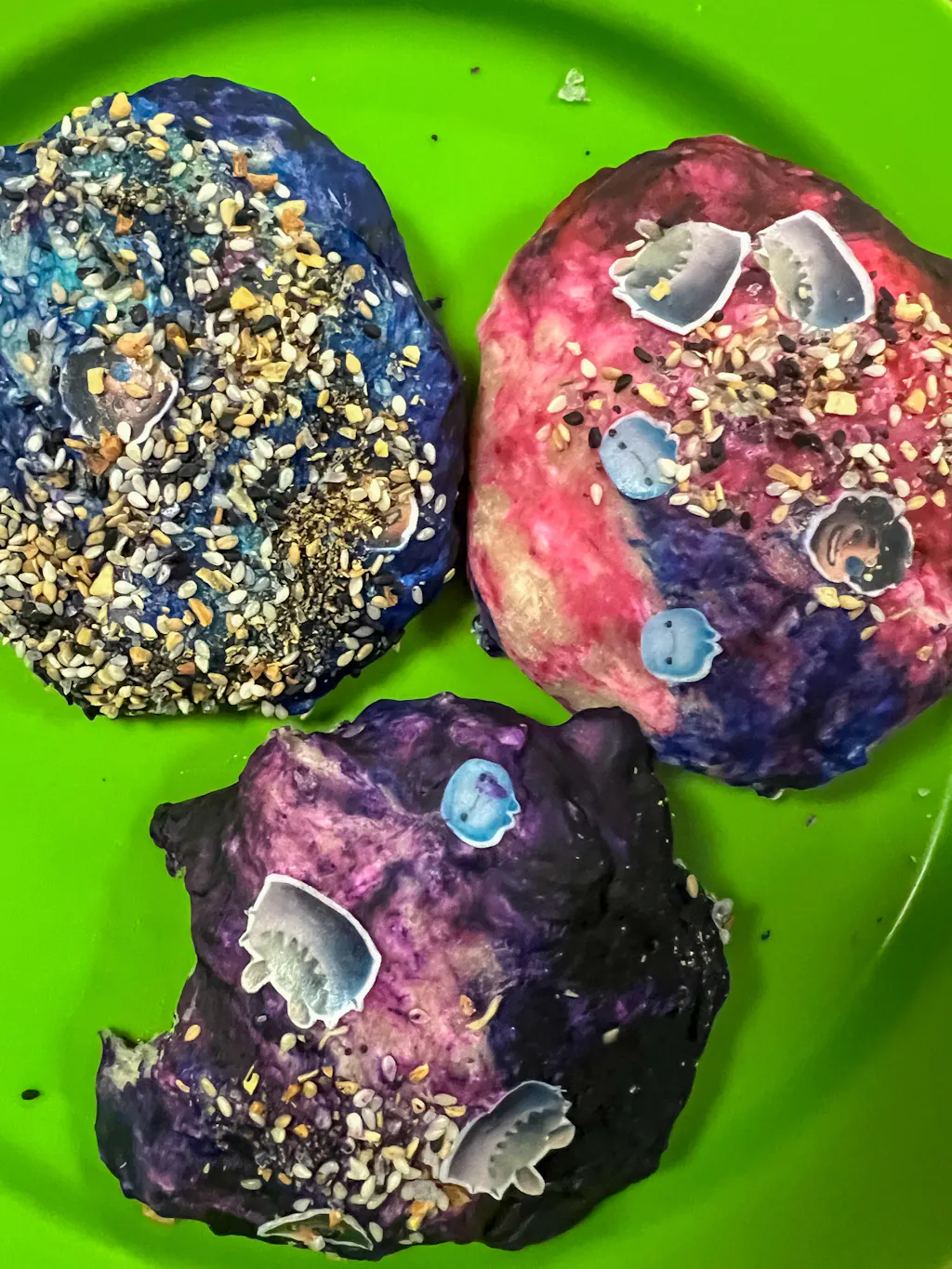
These are just a few examples of the incredible science that can happen in your own home. For more guided STEM adventures delivered right to your door, be sure to explore our full library of one-time kits in our shop! You might find a kit that perfectly matches your child's current curiosity, like our Galaxy Donut Kit which involves the science of gas expansion to create out-of-this-world treats!
Bringing STEM to Life with I'm the Chef Too!
At I'm the Chef Too!, our commitment goes beyond just providing recipes; it's about cultivating a holistic learning experience. We understand that parents and educators are constantly seeking engaging, screen-free activities that genuinely educate and entertain. Our mission is to seamlessly weave together food, STEM, and the arts, creating unique "edutainment" adventures that spark curiosity and creativity in children.
We believe that learning complex subjects doesn't have to be intimidating. By using a tangible, hands-on approach through cooking, we make science, technology, engineering, and math concepts accessible and exciting. Imagine your child learning about chemical reactions by watching our Erupting Volcano Cakes bubble, or understanding density by creating vibrant, layered beverages. These are not just fun projects; they are carefully designed educational experiences developed by mothers and educators who understand how children learn best.
Our kits provide everything you need for a complete adventure: pre-measured dry ingredients, specialty supplies, and clear, engaging instructions. This convenience means less prep time for you and more quality learning time with your child. Whether you’re looking for a delightful weekend activity or a unique gift that keeps on giving, our cooking STEM kits are crafted to foster a love for learning, build essential skills, and create joyful family memories.
Ready to embark on a continuous journey of discovery and delicious education? Join The Chef's Club today! A new, exciting kit is delivered to your door every month with free shipping in the US. Choose from flexible 3, 6, or 12-month pre-paid plans, perfect for ongoing enrichment or as a thoughtful gift. It’s the easiest way to ensure a steady stream of scientific exploration and culinary creativity in your home, all year long.
Conclusion
The world of matter is a constant source of wonder, full of invisible dances and dramatic transformations happening all around us. From the solid chair supporting us to the liquid water quenching our thirst, and the gaseous air filling our lungs, understanding the states of matter is a fundamental step in unraveling the mysteries of science. Through the simple yet profound power of hands-on experiments, we can transform abstract concepts into tangible, memorable, and often delicious, learning experiences for our children.
By encouraging observation, critical thinking, and playful exploration, we not only teach scientific principles but also foster curiosity, build confidence, and create invaluable opportunities for family bonding. At I'm the Chef Too!, we are passionate about bringing these "edutainment" experiences to your home, offering a screen-free alternative that engages both mind and palate. Every bubbling reaction, every solidifying mix, and every gas-filled balloon is a testament to the fact that science is fun, accessible, and deeply connected to our everyday lives.
Don't let the wonders of science remain in textbooks. Empower your child to explore, discover, and create with the magic of kitchen chemistry. The journey of scientific discovery is an ongoing adventure, and we're here to make it exciting and effortless for your family.
Ready to bring the joy of scientific discovery and delicious creativity to your kitchen every month? Ignite your child's passion for STEM with unique, hands-on projects delivered right to your door. Join The Chef's Club today and start your family's next great adventure in learning!
FAQ: Your States of Matter Questions Answered
We know you might have more questions about states of matter and how to explore them with your kids. Here are some common inquiries:
Q: What are the three main states of matter? A: The three main states of matter are solid, liquid, and gas. These classifications are based on how tightly packed their molecules are and how much energy those molecules possess.
Q: Why is it important for kids to learn about states of matter? A: Learning about states of matter is foundational to understanding chemistry and physics. It helps children grasp how the world around them is structured, how materials behave, and how transformations occur. It also develops essential scientific inquiry skills like observation, prediction, and critical thinking.
Q: Are changes in states of matter physical or chemical changes? A: Changes in states of matter (like melting, freezing, evaporation, and condensation) are considered physical changes. This is because the substance itself remains the same chemically (e.g., ice is still H2O, just like liquid water and steam). A chemical change would result in a new substance being formed.
Q: Does gas really take up space? How can I show my child this? A: Yes, absolutely! Gas does take up space and has mass, even though it's often invisible. The "Baking Soda and Vinegar Balloon Blast" experiment mentioned above is a fantastic way to visually demonstrate that gas fills a container and expands, proving it takes up space.
Q: What is a "non-Newtonian fluid" and why is it special? A: A non-Newtonian fluid is a fascinating substance that doesn't follow Newton's law of viscosity (which describes how most liquids flow). Instead, its viscosity changes depending on the stress or force applied to it. Oobleck (cornstarch and water) is a perfect example: it acts like a solid when you punch it or squeeze it quickly, but flows like a liquid when you let it relax. It's special because it challenges our typical understanding of solids and liquids, blurring the lines between the states of matter.
Q: How can I make these experiments safe for very young children? A: For very young children, emphasize observation and tactile exploration with simpler, non-edible experiments first. Always ensure constant adult supervision. Avoid anything involving heat, sharp objects, or small parts that could be choking hazards. Focus on simple sorting games, feeling different textures, and observing gentle changes like ice melting. Edible experiments should only be done with food-grade ingredients and under close supervision.
Q: My child loves these activities! How can we do more at home without extensive planning? A: We hear you! That's precisely why we created I'm the Chef Too! Our Chef's Club subscription delivers a new, exciting STEM cooking adventure right to your door every month. Each kit comes with pre-measured dry ingredients, specialty supplies, and easy-to-follow instructions, making it super convenient to keep the scientific and culinary fun going. It’s a fantastic way to ensure consistent, engaging, and screen-free educational activities for your child without the hassle of planning and shopping.