Table of Contents
- Introduction
- The Science of Sweetness: Why We Bake Together
- Setting the Stage for Stress-Free Baking
- Easy Cut-Out Sugar Cookies: A Holiday Essential
- Gingerbread Adventures: Spice and Science
- No-Bake Wonders: Quick and Collaborative
- Chocolate Crinkles: The "Snowy" Chemical Reaction
- Thumbprint Cookies: Making an Impression
- Reindeer and Candy Canes: Art in the Kitchen
- The Hidden Benefits: Why Baking Matters
- Allergy-Friendly Baking: Including Everyone
- Troubleshooting Common Cookie Challenges
- Making Cookies as Gifts: A Lesson in Kindness
- Deep Dive: The Science of Icing
- Creating Your Own Holiday Tradition
- Frequently Asked Questions (FAQ)
- Conclusion
Introduction
Did you know that the kitchen is actually the most advanced science laboratory in your home? Every time you measure a cup of flour or watch a cookie rise in the oven, you are participating in a complex series of chemical reactions. While the holidays often feel like a whirlwind of wrapping paper and tinsel, at I'm the Chef Too!, we believe the most meaningful moments happen when we slow down and invite our children into the "lab" to create something delicious.
Baking during the holidays is a time-honored tradition, but it can sometimes feel overwhelming for parents. We often worry about the mess, the "perfect" look of the final product, or whether the recipe is too complicated for little hands. This blog post is designed to take that stress away. We are going to explore a variety of easy Christmas cookies to make with kids, ranging from classic cut-outs to whimsical no-bake treats. Along the way, we will dive into the educational benefits of these activities—covering everything from the physics of heat to the development of fine motor skills.
Our goal is to show you that baking isn't just about the cookies; it's about fostering a love for learning, building confidence in the kitchen, and creating joyful family memories that last long after the last crumb is gone. By blending food, STEM, and the arts, we turn holiday prep into an "edutainment" experience. Whether you have a toddler who loves to stir or an elementary-aged child ready to master the art of the rolling pin, this guide will provide you with the tools, recipes, and encouragement you need for a successful holiday season. Let's get started on this sweet journey of discovery.
The Science of Sweetness: Why We Bake Together
At I'm the Chef Too!, our mission is to spark curiosity and creativity in children by teaching complex subjects through tangible, hands-on experiences. When we look at a tray of easy Christmas cookies to make with kids, we don't just see sugar and butter; we see a world of scientific inquiry.
When children help mix ingredients, they are learning about mixtures and solutions. When they see a liquid egg disappear into a dry flour mixture to form a solid dough, they are observing a change in the state of matter. These are foundational concepts in chemistry, and there is no better way to learn them than through a process that ends with a tasty reward.
Furthermore, baking is a lesson in patience and precision. Following a recipe requires reading comprehension and the ability to execute a sequence of steps. Measuring ingredients teaches fractions and volume in a way that a textbook never could. For a parent looking for a screen-free weekend activity, baking is the perfect solution. It engages all the senses: the smell of cinnamon, the feel of the dough, the sight of the changing colors in the oven, and, of course, the taste of the finished product.
If you are looking to keep this spark of curiosity alive all year round, we have just the thing. Ready for a new adventure every month? Join The Chef's Club and enjoy free shipping on every box, where we deliver complete STEM cooking kits right to your doorstep.
Setting the Stage for Stress-Free Baking
Before we dive into the recipes, we want to share our philosophy on kitchen management. The key to making easy Christmas cookies with kids—and actually enjoying the process—is preparation. In our kits, we provide pre-measured dry ingredients to make the process seamless. You can replicate this at home by practicing "mise en place," a French culinary term that means "everything in its place."
Before you call the kids into the kitchen, gather all your ingredients, bowls, and utensils. This prevents the "wait a minute" moments where children lose interest while you hunt for the baking powder.
Pro-Tip for Success:
- Embrace the Mess: Flour will get on the floor. Sprinkles will bounce. It's okay! Setting this expectation early helps keep the atmosphere light and fun.
- Age-Appropriate Tasks: Give toddlers the job of pouring (with help) and stirring. Older children can help with measuring, cracking eggs, and operating the timer.
- Safety First: Always supervise children near the oven and hand mixers. Teach them that "hot" is a boundary, and show them how to use oven mitts properly.
If you find that your child thrives with structured, theme-based activities, you might want to find the perfect theme for your little learner by browsing our complete collection of one-time kits. From geology to astronomy, we have a kit for every interest.
Easy Cut-Out Sugar Cookies: A Holiday Essential
There is perhaps no cookie more iconic than the Christmas sugar cookie. These are the "blank canvases" of the baking world. Our favorite recipe for kids is one that is forgiving, easy to handle, and doesn't require a lot of fancy equipment.
The Ingredients
To keep things simple, we use basic pantry staples:
- 2 cups all-purpose flour
- 1/2 cup sugar
- 1 teaspoon baking powder
- 1/2 cup unsalted butter (softened)
- 1/4 cup milk
- 1 teaspoon vanilla extract
- 1/4 teaspoon salt
The Process: A STEM Walkthrough
- Whisking the Dry Ingredients: This is a great time to talk about "homogenization." Why do we mix the flour, salt, and baking powder together first? It ensures the "leavening agent" (the baking powder) is evenly distributed so the cookies rise uniformly.
- Incorporating the Butter: Have your child use their clean hands to squish the softened butter into the flour. This is a fantastic sensory activity. They are creating a "short crust" by coating the flour molecules in fat, which prevents long gluten strands from forming, resulting in a tender cookie.
- The Rolling Phase: We recommend rolling the dough between two sheets of parchment paper. This prevents sticking without adding too much extra flour, which can make the cookies tough.
- The Art of the Cut: Using cookie cutters is an exercise in spatial awareness and geometry. How many star shapes can fit on this piece of dough? This is a practical application of "tessellation."
Give the gift of learning that lasts all year with a 12-month subscription to our STEM cooking adventures and discover even more ways to turn the kitchen into a classroom.
Gingerbread Adventures: Spice and Science
Gingerbread is more than just a cookie; it’s a fragrant journey through history and botany. Ginger, cinnamon, and cloves are not just flavors—they are botanical wonders. When making gingerbread, we love to talk about where these spices come from. Did you know cinnamon is actually the bark of a tree?
Gingerbread dough is sturdier than sugar cookie dough, making it excellent for kids who want to build "gingerbread people" or even simple structures.
Why Gingerbread is Great for Kids:
- Tactile Learning: The dough is darker and has a different texture than sugar cookies, providing a new sensory experience.
- Olfactory Engagement: The scent of gingerbread is chemically linked to memory. Baking these cookies helps cement the "feeling" of the holidays in a child's mind.
- Fine Motor Skills: Decorating with royal icing and small candies helps children develop the "pincer grasp," which is essential for writing.
While gingerbread is a classic, we also love exploring the animal kingdom through baking. Even beloved animals can make learning fun, like when kids make Wild Turtle Whoopie Pies, combining biology with a delicious treat.
No-Bake Wonders: Quick and Collaborative
For families with very young children or those in a time crunch, no-bake cookies are a lifesaver. These recipes often focus on the properties of temperature—watching things melt and then solidify again as they cool.
Christmas Wreaths
Using cornflakes, melted marshmallows, and green food coloring, you can create edible wreaths.
- The Science: This activity demonstrates "viscosity." As the marshmallows melt, they become a thick, sticky liquid. As they cool, they regain their solid form, acting as the "glue" for the cereal.
- The Math: Let kids count out the cinnamon candies (the "holly berries") to put on each wreath.
Peanut Butter Balls (Buckeyes)
These are a fan favorite because they taste like a famous candy bar.
- The Activity: Rolling the dough into uniform balls is a great way to practice consistency and measurement.
- The Transformation: Dipping the balls into melted chocolate and watching the chocolate set is a lesson in "exothermic" processes (where heat is released as a substance solidifies).
Chocolate Crinkles: The "Snowy" Chemical Reaction
If you want a cookie that looks like a winter wonderland, the Chocolate Crinkle is the way to go. These are rich, fudgy cookies that are rolled in powdered sugar before baking.
The Magic of the Crinkle
As the cookies bake, they expand. Since the powdered sugar doesn't expand at the same rate, it "cracks," revealing the dark chocolate cookie underneath. This is a visual representation of surface tension and expansion.
Kids love this part because:
- They get to roll the dough into balls (tactile).
- They get to "toss" the balls in a bowl of "snow" (powdered sugar).
- They get to watch the "earthquake" happen through the oven door as the cracks form.
Just like the crinkle cookies show a physical change, our kits often feature exciting transformations. For example, you can see a chemical reaction that makes our Erupting Volcano Cakes bubble over with deliciousness.
Thumbprint Cookies: Making an Impression
Thumbprint cookies are an excellent way to involve kids in the "assembly" part of baking. This recipe is simple: a basic butter cookie dough that is indented with—you guessed it—a thumb!
Educational Takeaways:
- Physics: How much pressure is needed to make a hole without breaking the dough? This teaches kids about the structural integrity of materials.
- Volume: Using a small spoon or a piping bag to fill the indent with jam is a lesson in volume. If you add too much, it overflows; too little, and the ratio of cookie to jam is off.
- Customization: Let the kids choose different colors of jam (raspberry for red, apricot for gold) to discuss color theory and fruit origins.
Reindeer and Candy Canes: Art in the Kitchen
The holidays are a time for creativity, and easy Christmas cookies to make with kids often double as art projects.
Reindeer Cookies
You can turn a simple peanut butter or chocolate cookie into a reindeer by using pretzels for antlers, chocolate chips for eyes, and a red candy for the nose.
- Creative Problem Solving: If an antler breaks, how can we "glue" it back on with icing? This encourages kids to think like engineers.
Candy Cane Twists
Take two small ropes of dough—one tinted red and one left white—and twist them together.
- The Math of Patterns: This is a physical way to learn about "A-B-A-B" patterns.
- The Science of Peppermint: Add a drop of peppermint extract to the dough and discuss how certain scents can feel "cool" even when they aren't cold.
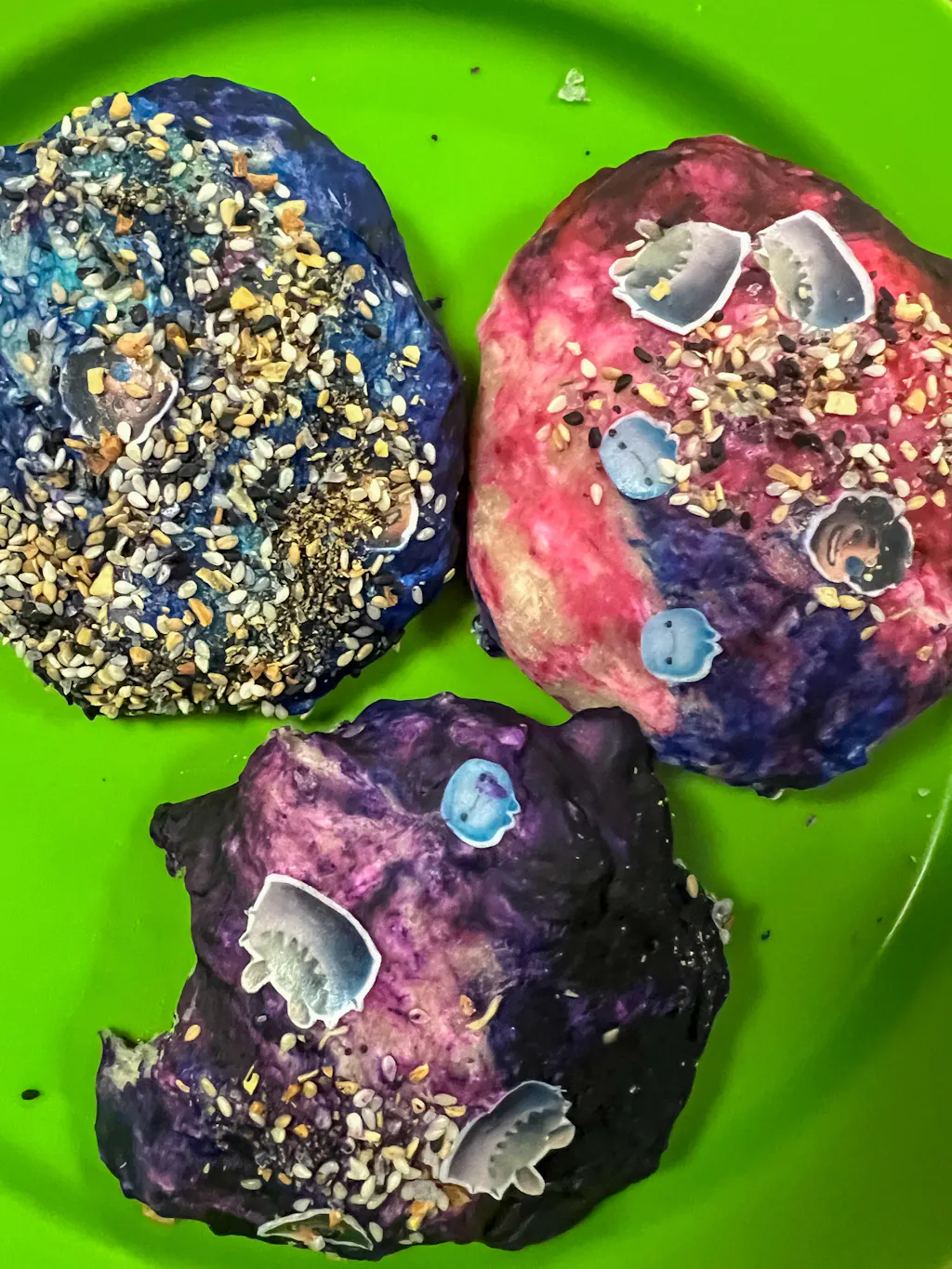
If your little one is more interested in the stars than the North Pole, they can explore astronomy by creating your own edible solar system with our Galaxy Donut Kit.
The Hidden Benefits: Why Baking Matters
At I'm the Chef Too!, we prioritize the process over the product. While the goal is to have delicious cookies, the real value lies in the development of life skills.
1. Literacy and Reading
Reading a recipe from start to finish is a functional literacy exercise. Children learn to follow multi-step directions and understand that the order of operations matters. If we add the flour before we cream the butter, what happens? (It changes the texture!)
2. Mathematics
Fractions are often the most difficult math concept for elementary students to grasp. However, when you are looking at a half-cup measuring tool versus a whole cup, it becomes concrete. Doubling a recipe? That’s mental math in action.
3. Confidence and Autonomy
There is a unique sense of pride a child feels when they serve a tray of cookies they helped make. It says, "I am capable of creating something for others to enjoy." This builds self-esteem and a "can-do" attitude that translates to school and other hobbies.
4. Family Bonding
In a world full of screens, baking requires you to be present. You are standing side-by-side, talking, laughing, and working toward a common goal. This is where the holiday magic really happens.
Ready for a new adventure every month? Join The Chef's Club and enjoy free shipping on every box to keep these bonding moments happening all year long.
Allergy-Friendly Baking: Including Everyone
We know that many families navigate food allergies. The beauty of making easy Christmas cookies at home is that you are in control of the ingredients.
- Egg-Free: Many of the sugar cookie recipes we use are naturally egg-free or can be made so by using a "flax egg" (1 tbsp ground flaxseed + 3 tbsp water).
- Dairy-Free: You can easily swap butter for coconut oil or a vegan butter stick, and use almond or oat milk instead of cow's milk.
- Gluten-Free: A "1-to-1" gluten-free flour blend usually works perfectly in cookie recipes, as cookies don't rely as heavily on gluten structure as bread does.
At I'm the Chef Too!, we are committed to providing inclusive educational experiences. Our kits are designed by mothers and educators who understand these needs. Not ready to subscribe? Explore our full library of adventure kits available for a single purchase in our shop to find the right fit for your family.
Troubleshooting Common Cookie Challenges
Even with "easy" recipes, things don't always go according to plan. Here is how to handle some common kitchen "experiments" gone wrong:
- The Dough is Too Sticky: This usually means the butter was too warm or the room is too hot. The Fix: Put the dough in the fridge for 15-20 minutes. This is a great time to talk about how temperature affects the "viscosity" of fats.
- The Cookies Spread Too Much: This happens if the dough wasn't chilled or if the baking sheet was already hot from a previous batch. The Fix: Always start with a cool baking sheet.
- The Cookies are Burnt on the Bottom: Your oven might have a "hot spot." The Fix: Try rotating the pan halfway through the baking time. It’s a lesson in "convection" and how heat moves through air.
Making Cookies as Gifts: A Lesson in Kindness
Once the cookies are baked and decorated, the fun doesn't have to end. Teaching children the joy of giving is a core holiday value.
- Packaging: Have your child decorate plain paper boxes or tins. This adds an extra layer of "art" to the STEM activity.
- Delivery: Whether it’s to a neighbor, a teacher, or a local community center, the act of giving reinforces the social-emotional learning that comes with cooking for others.
If you are looking for a gift that keeps on giving, consider a subscription. A new adventure is delivered to your door every month with free shipping in the US when you join the Chef's Club.
Deep Dive: The Science of Icing
Decorating is often the part kids look forward to the most. But even icing has its own science!
Royal Icing vs. Simple Glaze
- Simple Glaze: Made of milk and powdered sugar. It stays somewhat soft and is great for immediate eating.
- Royal Icing: Often made with meringue powder. This icing undergoes a chemical change as it dries, becoming hard and shiny.
The Experiment: Have your child paint a little bit of both on a plate and check back in an hour. Which one hardened? Why? This introduces the concept of "evaporation" and "protein structures."
Natural Dyes
Want to make it even more educational? Try making your own food coloring!
- Beet juice for red.
- Spinach juice for green.
- Turmeric for yellow.
- This turns your kitchen into a biology lab where you are extracting pigments from plants.
Creating Your Own Holiday Tradition
Every family is different, and your traditions should reflect that. Maybe your "easy Christmas cookies" aren't cookies at all—maybe they are savory cheese straws or festive muffins. The specific recipe matters less than the time spent together.
Case Study: The "Snow Day" Scientist Imagine a parent looking for a screen-free weekend activity for their 7-year-old who loves space. They decide to spend Saturday afternoon making "Galaxy Cookies" using dark cocoa and edible glitter. They talk about what makes a galaxy, why the "stars" (glitter) stay stuck to the "space" (frosting), and how the Earth revolves around the sun. By the end of the day, the child has learned about astronomy, practiced their math, and enjoyed a delicious treat. This is the essence of what we do.
For those who want this level of engagement without the stress of finding a recipe and shopping for odd ingredients, Give the gift of learning that lasts all year with a 12-month subscription to our STEM cooking adventures.
Frequently Asked Questions (FAQ)
What is the best age to start baking with kids?
Children as young as two can help with simple tasks like stirring or pouring pre-measured ingredients. By ages four or five, they can help with rolling dough and using cookie cutters. As they reach elementary school age, they can begin to lead the process with adult supervision.
How do I keep the mess under control?
We recommend using a large rimmed baking sheet for decorating. All the sprinkles and icing drips stay contained on the sheet rather than all over the counter. Also, keep a damp cloth nearby for quick hand-wiping!
How long do homemade cookies stay fresh?
Most of these recipes will stay fresh for 3–5 days in an airtight container at room temperature. You can also freeze unfrosted cookies for up to three months—just thaw them at room temperature before you start the decorating party.
Can I make the dough ahead of time?
Yes! In fact, many cookie doughs benefit from a "rest" in the fridge. You can make the sugar cookie or gingerbread dough up to 24 hours in advance. Just let it sit on the counter for a few minutes before rolling so it's not too hard.
What if I don't have cookie cutters?
No problem! You can use the rim of a drinking glass to make circles, or use a butter knife to cut the dough into squares or triangles. This is a great way to talk about different "polygons."
Why are my cookies hard?
Over-mixing the dough is usually the culprit. When you mix flour with liquid, gluten starts to develop. Too much mixing makes the gluten "tough." For soft cookies, mix until the ingredients are just combined.
Conclusion
Baking easy Christmas cookies to make with kids is about so much more than just the end result. It is a beautiful blend of art, science, and family connection. From the moment you whisk the flour to the final sprinkle of sugar, you are facilitating a learning environment that is both delicious and educational. At I'm the Chef Too!, we are honored to be a part of your family’s journey, providing the tools and inspiration to turn your kitchen into a space of discovery.
We hope this guide has given you the confidence to embrace the holiday mess and find the "teachable moments" in every batch of cookies. Remember, the goal isn't perfection; it's the joy of the process, the confidence built in your child, and the memories you create together.
Are you ready to take the guesswork out of your next kitchen adventure? Whether it's the holiday season or a rainy Tuesday in March, we are here to help. Ready for a new adventure every month? Join The Chef's Club and enjoy free shipping on every box. Let’s make learning delicious!