Table of Contents
- Introduction
- The Unexpected Power of the Humble Straw in STEM Education
- The Engineering Design Process with Straws: A Step-by-Step Approach
- Engineering Marvels: Building with Straws
- Science in Motion: Exploring Forces and Phenomena
- Math in Play: Quantifying the Fun
- Facilitating the Straw STEM Challenge: Tips for Parents and Educators
- Beyond the Build: Art, Creativity, and Storytelling
- The I'm the Chef Too! Commitment to Learning
- Conclusion
- FAQ: Frequently Asked Questions About Straw STEM Activities
What if we told you that one of the most powerful tools for sparking your child's genius might be hiding in your kitchen drawer? In an age dominated by screens, where every moment seems to offer another digital distraction, finding truly engaging, hands-on activities that ignite a child's natural curiosity can feel like an unending quest for parents and educators. We're all searching for ways to foster a genuine love for learning, develop crucial critical thinking skills, and encourage boundless creativity, all while offering a valuable alternative to constant digital engagement.
This is precisely where the magic of simple, everyday materials—like the humble drinking straw—comes into play. Forget elaborate setups, costly gadgets, or complex instructions. With just a handful of straws, some tape, and a generous dash of imagination, you can unlock a universe of exciting STEM (Science, Technology, Engineering, and Math) exploration right in your own home or classroom. These aren't just fun pastimes; they are powerful gateways to understanding fundamental principles in a way that is tangible, memorable, and incredibly rewarding.
This comprehensive guide is designed to take you on a deep dive into a multitude of exciting STEM activities you can undertake with straws. We'll meticulously break down the science, engineering, and mathematical concepts underpinning each challenge. From designing gravity-defying towers and intricate bridges to launching homemade rockets and constructing complex geodesic domes, we'll cover it all. Throughout this journey, our emphasis will remain firmly on the importance of problem-solving, iterative experimentation, and the sheer joy of discovery. Our ultimate aim is to empower you with a treasure trove of practical, valuable ideas that will transform ordinary moments into extraordinary learning adventures, unequivocally proving that stimulating a child's mind can be as simple and accessible as reaching into your kitchen drawer. Get ready to turn those innocent straws into potent catalysts for curiosity and creativity, fostering essential skills that will benefit your child for a lifetime!
Introduction
In a world that continuously accelerates, constantly demanding new skills and innovative thinking, equipping our children with a solid foundation in STEM subjects is more important than ever. However, the traditional approach to teaching science and math often falls short in capturing the imaginative spirit of young learners. Children thrive on discovery, on touching, building, and seeing concepts come alive right before their eyes. This intrinsic desire to explore and create makes hands-on STEM challenges not just beneficial, but absolutely essential for genuine learning.
The "straw STEM challenge" isn't merely a trend; it's a testament to how profoundly impactful simple materials can be in unlocking complex ideas. By manipulating straws, children aren't just playing; they are actively engaging in the engineering design process, grappling with physics principles, applying mathematical reasoning, and honing their problem-solving prowess. This direct engagement bypasses abstract theories and jumps straight to practical application, making learning intuitive and deeply satisfying. It transforms learning from a passive reception of facts into an active, iterative process of questioning, experimenting, failing, and ultimately, succeeding.
This post will serve as your ultimate resource for leveraging the extraordinary potential of straws in STEM education. We'll guide you through a diverse array of activities, from foundational structural challenges to dynamic explorations of force and motion, all while explaining the underlying principles in an easy-to-understand manner. Our goal is to provide you with actionable insights, practical tips, and creative variations that will make these challenges adaptable for various age groups and learning environments. Get ready to discover how these humble, cylindrical objects can become the cornerstone of countless hours of educational fun, sparking curiosity and creativity in your child, and laying the groundwork for a lifelong love of STEM.
The Unexpected Power of the Humble Straw in STEM Education
You might be wondering, out of all the materials available, why are straws singled out as such a fantastic medium for STEM activities? The answer lies in their unique blend of properties—they are simultaneously simple, versatile, and incredibly effective as teaching tools. This combination makes them an unparalleled resource for engaging young minds in meaningful, hands-on learning experiences.
Let's explore the attributes that elevate straws from mere drinking aids to STEM superheroes:
- Affordable and Accessible: This is perhaps their most immediate advantage. Straws are incredibly inexpensive and widely available. Whether you're a parent looking for a spontaneous weekend activity or an educator outfitting a classroom STEM corner, chances are you either already have a stash of straws or can acquire them in bulk without breaking the bank. This low barrier to entry means that meaningful STEM learning is within reach for everyone, anytime.
- Easy to Manipulate: Straws are incredibly friendly to small hands. They are simple to cut with standard scissors, easy to bend into various angles, and straightforward to connect using common household items like tape or pipe cleaners. This ease of manipulation is crucial for developing fine motor skills, enhancing hand-eye coordination, and fostering spatial reasoning without the frustration often associated with more complex tools or materials. Children can quickly translate their ideas into tangible structures, boosting their confidence and encouraging further experimentation.
- Remarkable Versatility: Their tubular shape, combined with their flexibility, makes straws incredibly versatile. They can serve as robust beams in a bridge, stable columns in a tower, rotating axles in a simple machine, conduits for air or water, or even resonant chambers for sound experiments. This adaptability means a single box of straws can fuel a vast array of engineering and scientific explorations, allowing children to apply different principles to the same basic material.
- Reusable and Eco-Friendly (with a conscious approach): While the environmental impact of plastic straws is a valid concern, these STEM challenges present a fantastic opportunity to teach children about sustainability and responsible consumption. Encourage them to carefully deconstruct their creations after an activity and save the straws in a designated bin for future projects. This practice not only reinforces environmental awareness but also extends the life and value of your materials. Alternatively, consider using paper straws or investing in a set of reusable bamboo or silicone straws specifically for STEM activities. At I'm the Chef Too!, we believe in fostering hands-on learning that simultaneously instills valuable life lessons, including the importance of mindful consumption and resourcefulness.
- Low-Risk and Forgiving: Unlike some other building materials that might be sharp, heavy, or messy, straws are inherently soft and lightweight. This makes them a safe option for children to experiment with, even with a degree of independent exploration (though, as always, adult supervision is paramount, especially when scissors or other sharp objects are in use). The low-risk nature encourages bolder experimentation, as children aren't afraid of "ruining" expensive materials or hurting themselves.
- Tangible, Hands-On Learning: Perhaps the most significant power of straws in STEM education is their ability to make abstract concepts tangible. Children aren't just reading about structural integrity; they're seeing their straw tower wobble or stand firm. They're not just hearing about air pressure; they're launching a straw rocket and observing its flight. This direct engagement allows them to form connections between cause and effect, test hypotheses, and witness immediate results, fostering a deeper, more intuitive understanding that goes far beyond rote memorization.
By consciously leveraging these simple yet powerful attributes, straws are transformed into dynamic tools for unparalleled hands-on learning. They empower children to directly engage with core scientific principles, rigorously test their hypotheses, and observe the immediate outcomes of their designs, thereby cultivating a profound understanding that extends well beyond the confines of textbooks.
The Engineering Design Process with Straws: A Step-by-Step Approach
At the heart of every successful STEM challenge is the Engineering Design Process (EDP). This cyclical, iterative method is how engineers solve problems, and it’s a natural fit for straw-based activities. By guiding children through the EDP, we’re not just helping them build; we’re teaching them a critical thinking framework that’s applicable to all aspects of life.
Here's how the EDP typically unfolds, and how easily it integrates with straw challenges:
-
Ask: Identify the Problem and Constraints.
- What is the goal? (e.g., build the tallest tower, a bridge that holds the most weight).
- What are the limitations? (e.g., specific number of straws, limited tape, time constraint).
- This initial phase encourages children to define the challenge clearly before jumping into solutions.
-
Imagine: Brainstorm Solutions.
- What are different ways to approach this?
- Encourage wild ideas, no bad suggestions.
- Look at existing structures (e.g., pictures of real bridges, buildings).
- This phase fosters creativity and divergent thinking.
-
Plan: Choose the Best Solution and Draw a Diagram.
- Select one or two promising ideas from the brainstorming session.
- Draw a detailed sketch of the design. This helps children visualize their plan, consider measurements, and identify potential issues before building.
- Discuss material allocation and step-by-step construction.
-
Create: Build a Prototype.
- Follow the plan, but be ready to adapt!
- This is the hands-on phase where ideas come to life. Children refine their fine motor skills and spatial awareness.
-
Improve: Test and Evaluate, Then Redesign.
- Does the prototype meet the challenge criteria?
- What worked well? What didn’t? Why?
- What changes could be made to make it better?
- This critical step teaches resilience, analytical thinking, and the understanding that "failure" is just an opportunity to learn and improve. The cycle then repeats, starting again from "Imagine" or "Plan" with new insights.
Straw challenges inherently lend themselves to this process because they are often open-ended, allowing for multiple solutions, and the materials are easy to modify and reconstruct. By framing activities within the EDP, children learn much more than just how to build; they learn how to think like innovators.
Engineering Marvels: Building with Straws
Engineering, at its core, is the art and science of design, construction, and systematic problem-solving. Straws provide an ideal, accessible medium for young, aspiring engineers to delve into these principles. Through building activities, children inherently learn about fundamental concepts such as structural integrity, stability, the distribution of loads, and the iterative nature of design and refinement.
Towering Achievements: The Straw Tower Challenge
Building the tallest, strongest, or most stable tower is a timeless engineering challenge that captivates children of all ages. With straws, this classic activity transforms into a fascinating, hands-on exploration of geometry and the principles of structural integrity.
-
The Tallest Tower: Challenge children to construct the tallest possible freestanding tower using a predefined, limited number of straws and connectors (which could be anything from tape to pipe cleaners, or even paper clips). They will very quickly discover a fundamental engineering principle: triangles are inherently the strongest shapes for creating rigid structures, offering unparalleled stability and resistance to deformation. They will also learn that a broad, well-distributed base is absolutely essential to prevent tipping. This activity is a powerful catalyst for creative problem-solving, as children experiment with various bracing techniques, connection methods, and overall design strategies.
- Concept Focus: This challenge vividly illustrates concepts of stability, balance, load distribution, and the practical application of geometric strength (especially triangles).
- Variations: To deepen the learning, introduce a weight-bearing component. For example, challenge them to build a tower strong enough to support a small cup at its apex, which will then be incrementally filled with pennies, marbles, or marshmallows. How much weight can their structure hold before succumbing to the forces of compression and tension? This variation directly introduces these critical forces in a tangible way.
- Parenting Tip: Encourage children to begin by drawing their intended design. This crucial "plan" phase of the Engineering Design Process helps them visualize their ideas and anticipate potential issues. After building, prompt them to reflect on what elements of their design worked effectively and what aspects might need improvement. This cultivates a habit of critical self-assessment, mirroring the reflective practices of professional engineers.
-
Ready for a new adventure every month? Imagine the joy of receiving a fresh, engaging STEM challenge delivered right to your door. Our Chef's Club brings ongoing educational fun, sparking creativity with every box. Join The Chef's Club and enjoy free shipping on every box!
Bridging the Gap: The Straw Bridge Challenge
The challenge of designing a bridge that can span a gap and support weight is a classic civil engineering problem, and straws are perfect for bringing this to life for young learners.
-
Design a Bridge: Provide children with a quantity of straws and a roll of tape. Their mission: to construct a bridge capable of spanning a predetermined gap (e.g., the space between two stacks of books, two chairs, or across a small tub). The ultimate test is how much weight their bridge can successfully support. Through this challenge, children naturally begin to explore and understand different bridge types—from simple beam bridges to more complex arch or truss designs—and learn firsthand which structural configurations most effectively distribute weight and resist external forces.
- Concept Focus: This activity directly teaches principles of load distribution, the interplay of tension and compression, the inherent strength of various beam configurations, and the overarching concept of structural integrity.
- Variations: Experiment with varying the length of the span the bridge must cover, or introduce different materials for the "decking" of the bridge (e.g., cardstock, paper, or foil) to observe how these choices impact strength and rigidity. Discuss real-world bridges: Why are they designed the way they are? What makes a suspension bridge different from an arch bridge?
- Hypothetical Scenario: Consider a family on a dreary Saturday afternoon, seeking a screen-free, engaging activity. They decide to tackle the straw bridge challenge. After several initial attempts where their creations sagged dramatically under the modest weight of a toy car, a breakthrough occurs. They realize that by incorporating diagonal braces – essentially creating a series of triangles – within their bridge structure, the entire assembly becomes significantly stronger and more stable. This hands-on discovery instantly illuminates the practical efficiency and importance of triangular truss designs in real-world engineering.
Home Sweet Straw Home: Building Houses and Structures
Moving beyond simple vertical towers, straws can be used to bring miniature architectural dreams to life, encouraging more complex spatial reasoning and design thinking.
-
Straw House Construction: Armed with straws and flexible connectors like pipe cleaners or tape, children can embark on the exciting project of building miniature houses, shelters, or even multi-room structures. They can begin by sketching floor plans, then construct walls, and finally experiment with various roof styles. Pipe cleaners are particularly effective in this challenge, as they create strong, flexible corner joints that allow for easy modifications and refinements to the design.
- Concept Focus: This activity is a wonderful introduction to architecture, enhancing spatial reasoning, understanding scale, and reinforcing principles of structural stability and effective joint design.
- Extensions: To enrich the experience, incorporate additional materials. Children can cut and attach paper or fabric to create realistic walls and roofs, decorate the interior with small drawings, or even design a multi-story dwelling. This can seamlessly transition into imaginative play, integrating elements of the arts into the STEM framework. Imagine the stories they could create with small toy figures inhabiting their custom-built straw houses!
- I'm the Chef Too! Connection: Just as designing a robust straw house demands careful planning, creative problem-solving, and precise execution, our unique cooking STEM adventures offer complete, engaging projects that guide children through a similar creative process. But with us, there's the added joy of creating something absolutely delicious at the end! Whether they're engineering a towering structure or exploring the chemistry of baking, the underlying skills of planning and creation are the same. Not ready to subscribe? Browse our complete collection of one-time kits to find the perfect theme for your little builder or budding chef!
Geodesic Domes: Geometric Puzzles
Inspired by the visionary work of architect R. Buckminster Fuller, geodesic domes are remarkable structures renowned for their incredible strength, lightweight design, and efficient use of materials, all stemming from interlocking triangular units.
-
Building a Dome: This activity introduces advanced geometric principles in an incredibly visual and tactile manner. Children connect straws into equilateral triangles, then systematically assemble these triangles into a larger, self-supporting spherical or dome shape. It's a challenging yet immensely rewarding hands-on puzzle that not only reveals the intrinsic power of geometric forms but also provides a concrete example of how mathematics underpins structural engineering.
- Concept Focus: Participants will gain practical insights into complex geometry, including tessellation (the tiling of a plane using one or more geometric shapes with no overlaps or gaps), principles of structural efficiency, and how forces and stresses are uniformly distributed across a curved surface.
- Materials Tip: For constructing intricate structures like geodesic domes, using shorter segments of straws can significantly aid in precision and stability. Small elastic bands, pipe cleaners cut into short lengths, or even tiny paper fasteners can serve as excellent connectors, allowing for flexible yet secure joints crucial for the dome's integrity.
Science in Motion: Exploring Forces and Phenomena
Straws aren't just for building static structures; they are fantastic tools for exploring the dynamic world of physics, delving into concepts related to force, motion, and aerodynamics. These activities bring abstract scientific principles to life through exciting, observable actions.
Soaring High: Straw Rockets
Simple to construct yet thrilling to launch, straw rockets offer an exciting, hands-on introduction to fundamental principles of propulsion and aerodynamics.
-
Launch a Rocket: The basic setup involves a larger-diameter straw serving as the launch tube and a smaller-diameter straw, topped with a carefully crafted paper nose cone and fins, acting as the rocket itself. Children simply blow forcefully into the larger straw, thereby generating air pressure that propels the smaller straw rocket into the air. This seemingly simple action provides a rich platform for scientific discovery.
- Concept Focus: This activity directly demonstrates principles of air pressure (how compressed air creates force), thrust (the force that propels the rocket forward), aerodynamics (how the shape interacts with air to reduce drag), trajectory (the path of the rocket through the air), and the fundamental concept of force in action.
- Variations: Encourage true scientific inquiry by having children experiment with different variables. What happens if the nose cone is pointed versus rounded? How do different fin designs (e.g., larger, smaller, more fins) affect flight distance and stability? Does the length of the rocket straw impact its flight? Make it a friendly competition: who can launch their rocket the furthest, or precisely hit a designated target? This fosters observational skills and data analysis.
- I'm the Chef Too! Connection: Understanding how forces interact and the fascinating chain reactions they create is a core component of STEM learning. This is vividly demonstrated not only by launching a straw rocket but also through the exciting chemical reactions that make our Erupting Volcano Cakes bubble over with deliciousness! It's all about observing cause and effect in a fun, tangible, and often delicious way.
Gliding Wonders: Hoop Gliders
These deceptively simple gliders are powerful tools for demonstrating complex principles of flight, lift, drag, and air resistance in a wonderfully accessible manner.
-
Construct a Glider: The construction is straightforward: attach two paper hoops (one typically smaller in diameter, the other larger) to a single straw using tape. When correctly thrown, the glider doesn't just fall; it catches the air, allowing it to soar surprisingly far and smoothly.
- Concept Focus: This activity vividly illustrates key aerodynamic concepts such as lift (the upward force that opposes gravity), drag (the resistance an object encounters as it moves through air), air resistance, and the crucial role of the glider's center of gravity in achieving stable flight.
- Experimentation: True learning comes from asking "what if?" Encourage children to become mini-engineers by experimenting with different variables. How do various hoop sizes affect flight distance and stability? What if the hoops are placed closer together or further apart on the straw? How does the weight of the paper affect performance? Each modification provides immediate, observable results, prompting further questions and investigations.
The Longest Straw Challenge: Exploring Atmospheric Pressure
Have you ever tried to drink from an impossibly long straw? This challenge isn't just a fun party trick; it's a profound, hands-on demonstration of atmospheric pressure and the limits of human lung power.
-
The Challenge: The goal is simple: connect as many straws as possible to create one mega-straw and then successfully drink through it from a glass placed on the floor. The key to success lies in creating airtight seals between each straw segment. Without a perfect seal, the delicate balance of pressure required for suction is lost.
-
Materials and Setup: You'll need plenty of straws (bendable ones can add another dimension to the experiment), scissors, tape (ensure it's good quality for airtight seals), a ruler, a drinking glass, and water or juice.
-
Prep Work: For ease of connection, an adult can help by making two small, half-inch slits across from each other at one end of several straws. These cuts allow one straw end to slip snugly over another. Tape the overlapping areas securely to ensure an airtight seal.
-
Testing and Observation: Start with just a few connected straws. Put the glass on level ground. Hold your mega-straw vertically and try to drink. Does water reach your mouth? If not, meticulously check every seal. What happens if you suck lightly versus sucking hard? Observe how high the water rises with varying effort.
-
Adding On: Keep adding more straws, testing after each addition. As the straw lengthens, you might need to stand on a chair or step stool to test it vertically. Does it become harder to suck up water as you stand higher?
-
Angles Matter: Once it becomes challenging to drink vertically, experiment with holding the straw at different angles—say, 45 degrees or even as close to horizontal as possible (you'll need to ensure the glass is full enough for this). Does the effort required to drink change with the angle, even if the total length of the straw remains the same? Why would this be the case?
-
Bends and Turns: If you're using bendable straws, explore what happens if you introduce bends and curves while keeping the overall height difference between your mouth and the glass consistent. Does the effort change, or is it primarily the vertical height that matters?
-
Concept Focus: This challenge vividly demonstrates the concept of atmospheric pressure. When you suck air out of the straw, you reduce the air pressure inside it. The higher atmospheric pressure pushing down on the surface of the water in the glass then forces the water up into the straw. The harder you suck, the greater the pressure difference, and the higher the water can rise. It also introduces the idea of a partial vacuum created by your lungs. The vertical height the water needs to overcome is the most critical factor, as atmospheric pressure can only push water up to a certain maximum height (around 30 feet at sea level, in a perfect vacuum—though human lungs are far from perfect!).
-
What Happened? Air is constantly pressing on us and everything around us. When you suck air from the straw, you create an area of lower pressure inside the straw. Because there's now less air pushing down on the water inside the straw compared to the outside, the greater atmospheric pressure on the surface of the water in the glass pushes the water up the straw until the pressure equalizes or reaches your mouth. Your lung power determines how much of a pressure difference you can create, thus dictating how high you can pull the water.
-
Ready for a new adventure every month? Keep the learning and excitement flowing with I'm the Chef Too! Our Chef's Club delivers a fresh, engaging STEM cooking adventure right to your door with free shipping in the US. Each box is packed with pre-measured dry ingredients and specialty supplies, making it effortless to spark creativity and learning. Give the gift of learning that lasts all year with a 12-month subscription to our STEM cooking adventures!
-
Straw Whistles: The Science of Sound
Sound is all around us, but how is it actually produced? Straw whistles offer a simple yet effective way to explore the physics of sound production, vibration, and pitch.
-
Make a Whistle: Take a straw and flatten one end. Use scissors to cut the flattened end into a pointed shape, like an arrow. Now, place the pointed end into your mouth, seal your lips around it, and blow. If done correctly, you'll produce a distinct whistling sound!
- Concept Focus: This activity directly demonstrates that sound is produced by vibrations. When you blow through the cut straw, the air causes the two points of the straw to vibrate rapidly against each other. These vibrations create pressure waves in the air, which our ears interpret as sound.
- Variations: Experiment with the length of the straw. What happens to the pitch of the sound if you cut the straw shorter? (It gets higher, because the column of air vibrating inside the straw is shorter.) This introduces the concept that the length of a vibrating object or air column affects the frequency (pitch) of the sound produced. You can also try cutting different shapes into the flattened end to see if it changes the timbre of the sound.
Tensile Bubbles: Geometry and Surface Tension
Bubbles are inherently fascinating, but what if they could be more than just spheres? Tensile bubbles allow children to explore the geometric properties of soap films and the principle of surface tension in a truly mesmerizing way.
-
Geometric Bubble Wands: Instead of a traditional circular wand, children can construct three-dimensional geometric shapes (like cubes, pyramids, or prisms) using straws and pipe cleaners as connectors. Once these "wands" are dipped into a bubble solution, the soap film stretches across the geometric framework, revealing flat planes and sharp corners – temporarily creating non-spherical bubbles!
- Concept Focus: This activity is a fantastic way to visualize surface tension, the cohesive force that holds liquid molecules together, allowing the soap film to stretch. It also vividly demonstrates principles of geometry (how different 3D shapes are constructed) and the concept of minimal surface area. Soap films naturally try to minimize their surface area, which is why free-floating bubbles are always spherical (a sphere has the smallest surface area for a given volume). When constrained by a wire frame, the film forms flat, angular surfaces that still represent the minimal surface area possible within those constraints.
- Extension: Discuss why free-floating bubbles are always round. (It's due to surface tension and the fact that a sphere is the shape with the smallest surface area for a given volume, which the bubble naturally tries to achieve.)
Math in Play: Quantifying the Fun
While the engineering and science aspects of straw challenges are immediately obvious, the mathematical underpinnings are just as crucial and often subtly integrated. These activities provide a natural, hands-on context for developing strong mathematical reasoning skills.
- Measurement: Almost every straw challenge involves some form of measurement. Building the tallest tower requires measuring height. Constructing a bridge involves measuring the span and often the length of individual straw segments. Designing a rocket means measuring its length and the length of its fins. Children learn to use rulers, tape measures, and even non-standard units (like "straw lengths"), fostering a practical understanding of units and dimensions.
-
Geometry: Straws are outstanding for exploring both two-dimensional and three-dimensional geometry.
- 2D Shapes: When building a tower or bridge, children quickly discover the inherent strength of triangles. They'll naturally use squares, rectangles, and other polygons in their designs.
- 3D Shapes: Constructing houses, globes, or geodesic domes forces them to think in three dimensions, understanding vertices, edges, and faces. The geodesic dome, in particular, is a masterclass in tessellation and spherical geometry.
- Angles: Manipulating bendable straws or connecting straight straws at various points allows for an intuitive exploration of angles and how they affect stability and design.
- Counting and Data Collection: Challenges often involve quantitative aspects, such as using "10 straws only" or seeing "how many pennies can it hold." This provides natural opportunities for counting, recording data, and creating simple charts or graphs to compare results between different designs or experiments.
- Comparison and Estimation: Children are constantly comparing their creations (whose tower is tallest? whose rocket flew furthest?) and learning to estimate measurements before building. This hones their ability to make informed judgments and refine their observational skills.
- Scale: When building a straw house or a model of a larger structure, children implicitly engage with the concept of scale – how their small model relates to a real-world object.
By integrating these mathematical elements naturally into the fun of building and experimenting, children develop a deeper appreciation for how math is not just an abstract subject in a textbook, but a powerful tool for understanding and shaping the world around them.
Facilitating the Straw STEM Challenge: Tips for Parents and Educators
Successfully facilitating straw STEM challenges goes beyond simply providing materials. It involves creating an environment that encourages curiosity, embraces experimentation, and supports learning through both success and "failure." Here are some essential tips to help you guide young learners through these enriching activities:
Safety First
While straws are generally safe, some activities involve tools that require careful handling.
- Scissors: Always ensure proper adult supervision when children are using scissors to cut straws. Teach them safe cutting techniques and remind them to keep fingers away from blades.
- Other Tools: If incorporating other materials like hot glue guns (for older children) or craft knives, strict adult supervision and instruction are paramount.
Embrace Open-Ended Questions, Not Answers
Resist the urge to jump in with solutions or direct instructions. Instead, guide their thinking with thoughtful, open-ended questions:
- "What do you think will happen if...?"
- "Why did that happen?"
- "How could you make it stronger/taller/fly further?"
- "What shapes do you see in strong buildings?"
- "If you could change one thing about your design, what would it be and why?" This approach encourages critical thinking and independent problem-solving.
Encourage Experimentation
The beauty of STEM challenges, especially with inexpensive materials like straws, is the freedom to try, fail, and try again.
- No "Wrong" Answers: Emphasize that there's no single "right" way to solve the challenge. The goal is to explore different ideas and learn from each attempt.
- "What If?" Scenarios: Prompt children to test different variables: "What if you used more tape? Less tape? Different type of straw? What if you tried a different base shape?"
Embrace Failure as a Learning Opportunity
In engineering, prototypes often fail. This isn't a setback; it's a crucial part of the learning process.
- The Iterative Cycle: When a structure collapses or a rocket doesn't fly as expected, help children analyze why it happened. This is where the "Improve" step of the Engineering Design Process truly shines.
- Resilience: Teach them that engineers constantly learn from their mistakes to refine their designs. This builds resilience and a growth mindset.
Resource Management and Sustainability
- Reusing Straws: After an activity, encourage children to carefully disassemble their creations and store the straws for future use. This reinforces lessons in sustainability and makes your materials go further.
- Alternative Connectors: Experiment with various connectors—tape, pipe cleaners, paper clips, string, even marshmallows or gumdrops (though these lead to sticky situations!). Each material offers different properties and challenges.
Document the Journey
- Journaling and Drawing: Encourage children to keep a "STEM journal" where they can sketch their initial designs, note down their observations during testing, and draw their improved designs. This strengthens their planning skills, observational abilities, and communication.
- Photography: Take pictures or videos of their creations at different stages. This creates a visual record of their progress and can be a wonderful way to reflect on their learning journey.
By adopting these facilitative techniques, you’ll transform simple straw activities into profound learning experiences, nurturing essential skills and a lifelong love for exploration in your child.
Beyond the Build: Art, Creativity, and Storytelling
While STEM provides a robust framework for understanding the world, true innovation often sparks when science, technology, engineering, and math intertwine with the Arts. At I'm the Chef Too!, we firmly believe in this holistic approach, turning STEM into STEAM and blending food, STEM, and the arts into one-of-a-kind "edutainment" experiences. Straw challenges are perfectly poised for this integration, adding layers of creativity, imagination, and personal expression.
Connecting STEM to the Arts (STEAM)
- Aesthetic Design: Once a straw structure is functional, challenge children to make it visually appealing. Can they decorate their straw house with colorful paper walls, a patterned roof, or even a mini-garden? This brings in elements of artistic design and personal taste.
- Sculptural Expression: Straws can be used to create abstract sculptures or representational art. The flexibility and connection points allow for intricate forms, encouraging children to think about balance, form, and composition from an artistic perspective.
- Visual Communication: The planning phase of an engineering project often involves drawing and sketching. Encourage children to develop their blueprints into detailed architectural drawings or vibrant artistic renditions of their designs.
Imaginative Play and Narrative Building
The structures children create with straws can become springboards for elaborate imaginative play, fostering language development and storytelling skills.
- Populating the World: Once a straw house is built, who lives there? What stories unfold within its walls? Children can use small toys, LEGO figures, or even paper cut-outs to inhabit their creations, developing characters and narratives.
- Creating Scenarios: A straw bridge isn't just a bridge; it's a vital link over a raging river. A straw tower isn't just tall; it's a lookout post for adventurers. Encourage children to invent stories and scenarios around their constructions, turning engineering projects into fantastical worlds.
- Role-Playing: Children can take on the roles of architects, builders, or even city planners, discussing their designs, overcoming challenges, and collaborating on larger projects. This enhances communication and teamwork skills.
By purposefully weaving in elements of art, creativity, and storytelling, we elevate the straw STEM challenge beyond mere technical skill development. We encourage children to think creatively, express themselves uniquely, and see the interconnectedness of different disciplines. It's this blended approach that makes learning truly rich and memorable.
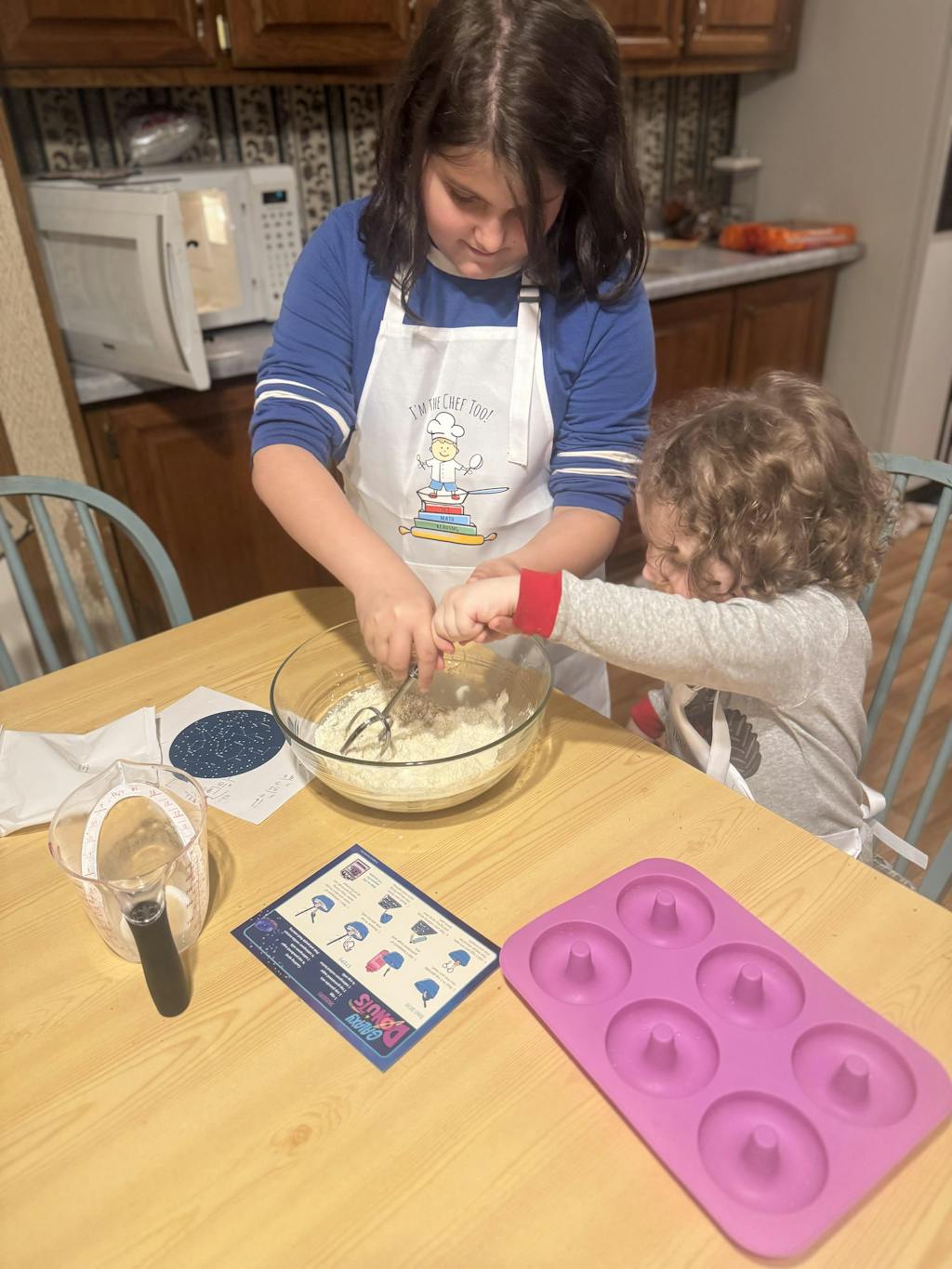
This holistic approach is central to I'm the Chef Too!'s philosophy. We are committed to sparking curiosity and creativity in children, facilitating family bonding, and providing a screen-free educational alternative. Our unique approach teaches complex subjects through tangible, hands-on, and delicious cooking adventures, all developed by mothers and educators who understand the importance of making learning joyful and relevant. Just as children use their imagination to transform straws into incredible structures, they can explore astronomy by creating their own edible solar system with our Galaxy Donut Kit, blending science with creative culinary art. It's all about making learning an adventure!
The I'm the Chef Too! Commitment to Learning
At I'm the Chef Too!, we wholeheartedly embrace the philosophy that learning should be an adventure—one that engages all the senses, sparks profound curiosity, and fosters boundless creativity. Our mission is to seamlessly blend the worlds of food, STEM, and the arts into one-of-a-kind "edutainment" experiences that captivate young minds and bring families closer together. The straw STEM challenge embodies many of the core values we hold dear: accessibility, hands-on engagement, and the power of simple materials to unlock complex concepts.
We understand the challenges modern families face in finding enriching, screen-free educational alternatives that genuinely resonate with children. That's why our unique approach focuses on teaching complex subjects through tangible, hands-on, and utterly delicious cooking adventures. Every kit we design, developed by a team of dedicated mothers and educators, is crafted to transform abstract ideas into concrete, edible realities. Just as a straw challenge allows a child to physically manipulate and understand engineering principles, our kits allow them to measure, mix, observe chemical reactions, and create edible masterpieces, all while learning valuable STEM lessons.
We believe in fostering a love for learning that lasts a lifetime, building confidence in their own abilities, developing key life skills, and creating joyful, lasting family memories around the kitchen table. We set realistic expectations, focusing on the incredible benefits of the process: the collaborative spirit, the problem-solving journey, the excitement of discovery, and the sense of accomplishment that comes from creating something with their own hands. We never suggest guaranteed educational outcomes (e.g., "your child will become a top scientist"), but rather highlight the foundational skills and positive attitudes towards learning that these experiences cultivate.
Our commitment extends to ensuring that all kitchen activities are framed with an implicit understanding of adult supervision and safety. We provide clear, easy-to-follow instructions that guide both parent and child through each step, making the learning journey enjoyable and secure for everyone involved.
Consider the simplicity and profound impact of the straw STEM challenge—it’s a perfect example of how foundational learning can happen anywhere, with anything. If you're looking for a way to bring this kind of engaging, hands-on learning into your home regularly, effortlessly delivered to your doorstep, we have the perfect solution.
Ready for a new adventure every month? Don't let the learning stop here! Our Chef's Club subscription makes it incredibly convenient to continue sparking curiosity and creativity in your child. Each month, a brand new, themed cooking STEM adventure arrives with free shipping in the US. You can choose from flexible 3, 6, and 12-month pre-paid plans, perfect for ongoing enrichment or as a thoughtful gift. Every box is a complete experience, containing all the pre-measured dry ingredients and specialty supplies needed to dive straight into the fun. Join The Chef's Club and enjoy free shipping on every box! It's the perfect way to ensure your family enjoys continuous, high-quality, screen-free learning.
Conclusion
We've journeyed through the incredible potential of the humble drinking straw, transforming it from a simple utensil into a powerful tool for STEM exploration. From engineering gravity-defying towers and robust bridges to launching straw rockets that demonstrate the principles of propulsion and exploring the geometric wonders of tensile bubbles, these challenges offer an accessible, affordable, and endlessly engaging way to introduce fundamental concepts in science, technology, engineering, and mathematics.
The core takeaway is clear: meaningful learning doesn't require elaborate labs or expensive equipment. It thrives in environments where curiosity is sparked, creativity is encouraged, and hands-on experimentation is celebrated. Straw STEM challenges naturally foster critical thinking, problem-solving skills, spatial reasoning, and the invaluable resilience that comes from iterating and improving designs. They transform abstract theories into tangible experiences, making learning intuitive, memorable, and above all, fun.
At I'm the Chef Too!, we champion this exact spirit of discovery and hands-on engagement, seamlessly integrating STEM with culinary arts to create unique educational experiences. We believe in sparking a lifelong love for learning, building confidence, and facilitating joyful family bonding away from screens. Just like the simplicity of a straw can unlock complex scientific principles, our kits transform the kitchen into a vibrant laboratory where delicious creations lead to profound educational insights.
Don't let the learning adventure end! Continue to nurture your child's innate curiosity and creativity with a continuous stream of engaging projects. Join The Chef's Club today and discover how easy and rewarding it is to bring exciting, hands-on STEM and art experiences into your home every single month. Each box is a new adventure, delivered with free shipping, ready to create lasting memories and foster a love for learning that will truly last a lifetime.
FAQ: Frequently Asked Questions About Straw STEM Activities
Q1: What age group are straw STEM challenges suitable for?
A1: Straw STEM challenges are incredibly versatile and can be adapted for a wide range of ages, generally from preschoolers (with significant adult assistance) up through middle schoolers. Younger children (ages 4-7) can focus on basic building, exploring shapes, and simple cause-and-effect with activities like building towers or launching straw rockets. Older children (ages 8+) can delve into more complex engineering principles, structural stability, geometric designs (like geodesic domes), and detailed experimentation with variables. The key is to adjust the complexity of the challenge and the level of expected independent work to suit their developmental stage.
Q2: What kind of straws should I use for these activities?
A2: The best type of straws depends on the specific challenge.
- Regular drinking straws: These are excellent for most building challenges (towers, bridges, houses) and for making straw rockets and whistles.
- Milkshake or wider straws: These are ideal for the outer "launcher" part of straw rockets, as a smaller straw can fit inside. They can also provide more rigidity for certain structural challenges.
- Bendable straws: These are fantastic for demonstrating angles in structures, creating unique joints, or exploring concepts in the "longest straw" challenge where bends can affect suction.
- Paper straws: If you're concerned about using plastic, paper straws are a good eco-friendly alternative. However, they can sometimes be less rigid and might require more tape or different connection methods for stability.
- Reusable straws (e.g., silicone, bamboo): While great for drinking, these might be too rigid or difficult to cut/tape for many STEM building challenges. We recommend keeping a separate stash of inexpensive disposable or paper straws for these activities.
Q3: How can I make straw challenges more eco-friendly?
A3: There are several ways to reduce the environmental impact of straw STEM challenges:
- Reuse, Reuse, Reuse! This is the most effective method. Encourage children to carefully deconstruct their creations and store the straws in a designated bin for future projects. Many straws can be used multiple times.
- Use Paper Straws: Opt for paper straws instead of plastic ones. While they might behave slightly differently in construction, they are biodegradable.
- Use Fewer Straws: Challenge children to achieve their goal using the minimum number of straws possible. This adds an extra layer of engineering efficiency to the problem.
- Recycle: If straws are too cut up or damaged to be reused, ensure they are disposed of properly according to local recycling guidelines (if plastic straws are accepted).
Q4: My child is getting frustrated. What should I do?
A4: Frustration is a natural part of the learning and engineering process! Here’s how to help:
- Validate Their Feelings: Acknowledge their frustration ("I see this is really challenging right now").
- Take a Break: Sometimes a short break is all that's needed to clear their head.
- Simplify the Challenge: Break the problem down into smaller, more manageable steps. If building a tall tower is too hard, focus on just building a strong base.
- Provide Inspiration, Not Solutions: Look at pictures of real-world structures together, or show them examples of different ways to connect straws. Ask guiding questions instead of giving answers.
- Collaborate: Offer to build alongside them, not for them. You can work on your own version of the challenge, or work together on a small section of their design.
- Emphasize Learning from Mistakes: Remind them that engineers constantly try new things and learn from what doesn't work. The goal isn't perfection, but progress and understanding.
- Focus on the Process, Not Just the Outcome: Celebrate their effort, their ideas, and what they've learned, even if the final structure isn't exactly what they envisioned.
Q5: How do I connect straws securely for building challenges?
A5: Secure connections are key to stable structures. Here are common methods:
- Tape: This is the most common and versatile connector. Clear tape, masking tape, or washi tape all work well. For stronger joints, wrap tape several times around the connection point.
- Pipe Cleaners: Excellent for creating flexible yet strong joints, especially for multi-directional connections like those needed for houses or domes. You can insert them into straw ends or wrap them around the outside.
- Paper Clips: Can be used to join straws, but they can be fiddly and may require children to straighten them and wrap them tightly. Tape is often more effective for younger builders.
- Small Slits: For butt joints (connecting straw end-to-end), an adult can carefully make two small slits at one end of a straw, allowing it to slide over the end of another straw for a snug fit before taping.
- Marshmallows/Gumdrops: While edible and fun, these connectors can be messy and less stable, especially as they dry out. Best for quick, temporary builds or when the edible aspect is part of the fun!
- Small Rubber Bands: Can be used for temporary connections or to reinforce taped joints, particularly in more complex structures where flexibility is needed before final taping.