Table of Contents
- Introduction
- What is STEM (and STEAM) in Early Childhood?
- Why is Early STEM Education So Important?
- Debunking Common Myths about Early STEM Education
- How to Integrate STEM into Early Childhood: Practical Strategies
- I'm the Chef Too! and STEM in Early Childhood: Our Unique Approach
- Sustaining the STEM Journey: Beyond the Single Activity
- Conclusion
- FAQ: Your Questions About Early STEM Education Answered
Imagine a toddler, eyes wide with wonder, intently watching bubbles dance and pop. Or a preschooler, utterly engrossed, attempting to stack blocks higher than their own head, only for the tower to tumble, prompting a thoughtful frown and a new strategy. These aren't just moments of play; they are profound instances of early scientific inquiry, technological exploration, engineering design, and mathematical thinking. These are the spontaneous sparks of stem education in early childhood.
Too often, we associate complex subjects like science, technology, engineering, and mathematics (STEM) with textbooks, laboratories, and older students. However, the truth is far more exciting: our youngest learners are naturally wired for STEM. They are born scientists, engineers, and mathematicians, constantly observing, experimenting, and trying to make sense of the world around them. This blog post will dive deep into why nurturing these innate abilities through early STEM education isn't just beneficial—it's essential. We'll explore what STEM truly means for young children, debunk common misconceptions, and provide practical, engaging ways for parents and educators to integrate STEM into everyday life, transforming ordinary moments into extraordinary learning adventures. Our core message is clear: embracing STEM early fosters a lifelong love for learning, builds crucial skills, and empowers children to become confident, curious explorers of their world.
Introduction
Have you ever watched a child methodically sort their toys by color, shape, or size? Or seen them excitedly push a toy car down a ramp, adjusting the incline to see how fast it goes? These seemingly simple acts are, at their heart, profound examples of stem education in early childhood in action. While the term "STEM" might conjure images of advanced robotics or complex equations, for our youngest learners, it's about fostering their innate curiosity, encouraging hands-on exploration, and laying a foundational love for discovery.
At I'm the Chef Too!, our mission is rooted in this very philosophy: to blend food, STEM, and the arts into one-of-a-kind "edutainment" experiences. We believe that learning should be as engaging as it is educational, sparking curiosity and creativity in children through tangible, hands-on activities. This post will explore the vital role of stem education in early childhood, delving into its myriad benefits, clarifying common misconceptions, and offering practical strategies for integrating STEM into daily routines. We'll show you how to transform everyday moments into powerful learning opportunities, fostering critical thinking, problem-solving, and a deep sense of wonder that will serve your child far beyond their early years.
What is STEM (and STEAM) in Early Childhood?
Before we delve into the "why" and "how," let's clarify what STEM, and its popular cousin STEAM, truly mean in the context of early childhood. It's not about forcing toddlers to recite scientific facts or preschoolers to solve calculus problems. Instead, it's an approach to learning that taps into children's natural inclination to explore, question, and create.
STEM is an acronym for:
- Science: This involves observing, questioning, predicting, experimenting, and making sense of the natural and physical world. For young children, science is about exploring textures, watching how water flows, observing insects, or understanding why a ball rolls down a hill. It's the joy of discovery, like seeing yeast activate in dough or ingredients transform when baked.
- Technology: In early childhood, technology isn't just about screens or digital devices. It encompasses tools—simple tools that extend our abilities. This could be a magnifying glass to examine a leaf, a pulley system to lift a toy, or even kitchen tools like whisks, measuring cups, and timers. It's about understanding how tools work to solve problems or make tasks easier.
- Engineering: This is the process of designing, building, and problem-solving. Children engage in engineering when they build towers with blocks, construct a fort out of blankets, or figure out how to make a ramp for their toy cars. In the kitchen, it's following a recipe's instructions to construct a cake or pie, understanding how ingredients fit together to create a desired outcome.
- Mathematics: Math in early childhood goes beyond just counting. It involves sorting, patterning, measuring, comparing quantities, understanding shapes, and recognizing numerical relationships. When a child measures ingredients for a recipe, counts how many cookies they have, or notices the symmetry in a snowflake, they are engaging in mathematical thinking.
The Shift to STEAM: Adding the "A" for Arts
Recently, there's been a growing movement to incorporate the "A" for Arts into STEM, transforming it into STEAM. This isn't about adding a separate art class, but rather integrating artistic expression, creativity, and design thinking into the STEM subjects themselves. The "A" in STEAM encourages:
- Creativity and Innovation: Thinking outside the box, coming up with unique solutions to problems.
- Aesthetics and Design: Considering how things look and feel, and how design impacts function.
- Communication and Expression: Using various forms of art (drawing, sculpting, storytelling) to represent scientific concepts or engineering designs.
For example, when children decorate a cookie they've baked, they're not just doing art; they're applying design principles, understanding colors and forms, and expressing their creativity—all while reinforcing the science and math from the baking process. This holistic approach aligns perfectly with our philosophy at I'm the Chef Too!, where we seamlessly blend food, STEM, and the arts into every delicious adventure. Our kits are designed to be "edutainment," ensuring that children learn complex subjects through tangible, hands-on, and utterly delicious experiences, all developed by mothers and educators who understand the importance of comprehensive learning.
Ultimately, whether you call it STEM or STEAM, the core idea in early childhood education is the same: it's about fostering curiosity, encouraging active exploration, and providing opportunities for children to learn by doing. It's about nurturing their natural desire to understand how the world works and how they can interact with it.
Why is Early STEM Education So Important?
The benefits of integrating stem education in early childhood are profound and far-reaching, setting a robust foundation for future academic success and lifelong learning. It's not just about preparing children for future careers; it's about developing essential skills that will serve them in every aspect of their lives.
Fostering Innate Curiosity: Children Are Born Scientists
From the moment they are born, children are natural explorers. They reach, grasp, taste, and observe everything around them. This innate curiosity is the bedrock of scientific inquiry. Early STEM education capitalizes on this natural drive, providing structured and unstructured opportunities for children to ask "why," "how," and "what if." When a child drops a toy repeatedly from their high chair, they are conducting an experiment on gravity. When they mix different colored paints, they are exploring chemical reactions and color theory. By embracing STEM early, we validate and expand this inherent curiosity, teaching children that asking questions and seeking answers is a joyful and rewarding pursuit.
Developing Critical Thinking and Problem-Solving Skills
STEM activities are inherently problem-solving endeavors. When a child tries to build a bridge for their toy car, they encounter challenges: "It's not strong enough," "It's too short." They then have to think critically, analyze the problem, and devise solutions. This iterative process of trial and error, hypothesizing, testing, and refining is central to STEM.
- Hands-On Engagement: Activities like building a fort, solving a puzzle, or even following a recipe for our Erupting Volcano Cakes require children to use their hands and minds simultaneously. They learn cause and effect, how materials behave, and how to adapt when things don't go as planned.
- Analytical Thinking: Children learn to observe details, categorize information, and draw conclusions from their experiences. This isn't about memorizing facts, but about understanding processes and relationships.
These skills are not confined to STEM subjects; they are transferable life skills essential for navigating complex situations, making informed decisions, and thinking independently.
Building Foundational Skills for Future Success
Research consistently shows that early exposure to STEM concepts, particularly math, is a strong predictor of later academic achievement.
- Early Math Prowess: Studies indicate that strong early math skills are even more predictive of future academic success than early reading abilities. When children engage in activities that involve counting, sorting, patterning, and measuring, they are building a robust mathematical foundation. For instance, portioning ingredients in a recipe or arranging cookies on a tray helps solidify numerical concepts.
- Spatial Reasoning: Activities like block play, puzzles, and even understanding how ingredients fit into a bowl to create a mixture, develop spatial reasoning—the ability to visualize and manipulate objects in space. This skill is crucial for success in engineering, architecture, and many other fields.
- Sequencing and Logic: Following a recipe step-by-step or designing a simple machine teaches children about logical sequences and the importance of order. This lays the groundwork for computational thinking and understanding algorithms.
By providing these early experiences, we aren't just teaching isolated facts; we are cultivating the cognitive frameworks necessary for more complex learning down the road.
Enhancing Language and Literacy Development
It might seem counterintuitive, but STEM education has a direct and significant impact on language and literacy skills.
- Vocabulary Expansion: When children engage in STEM activities, they encounter new vocabulary words (e.g., "dissolve," "density," "experiment," "structure," "predict," "observe"). Discussing their observations and discoveries naturally expands their lexicon.
- Communication Skills: Describing what they see, explaining their hypotheses, and sharing their findings with others strengthens their verbal communication. Collaborative STEM projects require children to articulate their ideas, listen to others, and negotiate, improving their ability to communicate effectively.
- Executive Functioning: STEM activities often require planning, remembering instructions, juggling multiple tasks, and focusing attention. These are all components of executive functioning, which is critical for reading comprehension, writing, and overall academic performance. For example, remembering the steps in a recipe from our Peppa Pig Muddy Puddle Cookie Pies kit or managing multiple ingredients simultaneously enhances these cognitive skills.
Promoting Collaboration and Communication
Many STEM challenges are best tackled in groups. When children work together to build a structure, conduct an experiment, or bake a treat, they learn invaluable social skills.
- Teamwork: They learn to share materials, assign roles, and contribute to a common goal.
- Conflict Resolution: Disagreements about how to proceed are natural, and working through them teaches negotiation and compromise.
- Peer Learning: Children learn from each other's ideas, mistakes, and successes, fostering a supportive learning environment.
These collaborative experiences are vital for success in school and beyond, as teamwork is a fundamental skill in nearly every professional setting.
Boosting Confidence and Self-Esteem
The hands-on, exploratory nature of early STEM learning allows children to take ownership of their discoveries. When a child successfully builds a stable tower, makes a delicious treat, or figures out how a simple machine works, they experience a sense of accomplishment. This success, born from their own efforts and experimentation, significantly boosts their confidence and self-esteem. They learn that they are capable problem-solvers, that their ideas have value, and that learning can be incredibly fun and rewarding. This newfound confidence can then spill over into other areas of their lives, making them more willing to take risks and embrace new challenges.
Preparing for Future Success in a Changing World
The demand for STEM-skilled professionals continues to grow exponentially. While early childhood STEM isn't about training future scientists, it is about cultivating the mindset and foundational skills that will enable children to thrive in an increasingly technology-driven world. By fostering critical thinking, adaptability, and a love for continuous learning, we are equipping them with the tools they need to succeed in whatever path they choose, whether it's a STEM field or not. They become agile thinkers, prepared to navigate and innovate in a constantly evolving landscape.
In essence, stem education in early childhood is a holistic approach that nurtures the whole child. It's about sparking joy, building resilience, and fostering a deep, abiding love for the process of discovery. For families looking to seamlessly integrate consistent STEM learning into their routine, our Chef's Club subscription offers the perfect solution, delivering a new adventure directly to your door every month.
Debunking Common Myths about Early STEM Education
Despite the overwhelming evidence supporting the importance of stem education in early childhood, several misconceptions persist. Let's address these myths head-on to ensure we're not inadvertently limiting our children's potential.
Myth 1: STEM Learning Doesn't Happen Until Children Are Older
This is perhaps the most prevalent myth. Many believe that "real" STEM learning requires advanced concepts, complex equipment, and formal instruction, making it suitable only for elementary school-aged children and beyond.
The Reality: As we've discussed, children are born scientists. Even infants systematically explore their environment, testing hypotheses about how things work. A baby dropping a toy repeatedly is conducting an experiment on gravity. A toddler stacking blocks is engaging in engineering and physics. Preschoolers observing ants or mixing colors are doing science. These are developmentally appropriate, foundational STEM activities. Ignoring or downplaying their significance in early years means missing crucial opportunities to nurture inherent capabilities and build strong cognitive pathways. Early math skills, for example, have been shown to be the strongest predictor of later academic success.
Myth 2: STEM Education Requires Expensive Equipment or More Screen Time
Some parents and educators worry that implementing STEM means investing in costly robotics kits, tablets, or specialized lab equipment, or that it will inevitably lead to more screen time.
The Reality: While technology can be a part of STEM, it is by no means the sole or primary component, especially for young children. Many of the most impactful early STEM activities are "unplugged" and can be done with everyday materials or found objects.
- Nature Exploration: Going for a "nature walk" to collect leaves, rocks, or observe insects offers endless opportunities for science (observation, classification), math (counting, comparing sizes), and even engineering (building small structures with sticks).
- Household Items: Cardboard boxes, paper towel rolls, string, water, sand, measuring cups, spoons, and even food scraps can be transformed into tools for scientific discovery and engineering challenges.
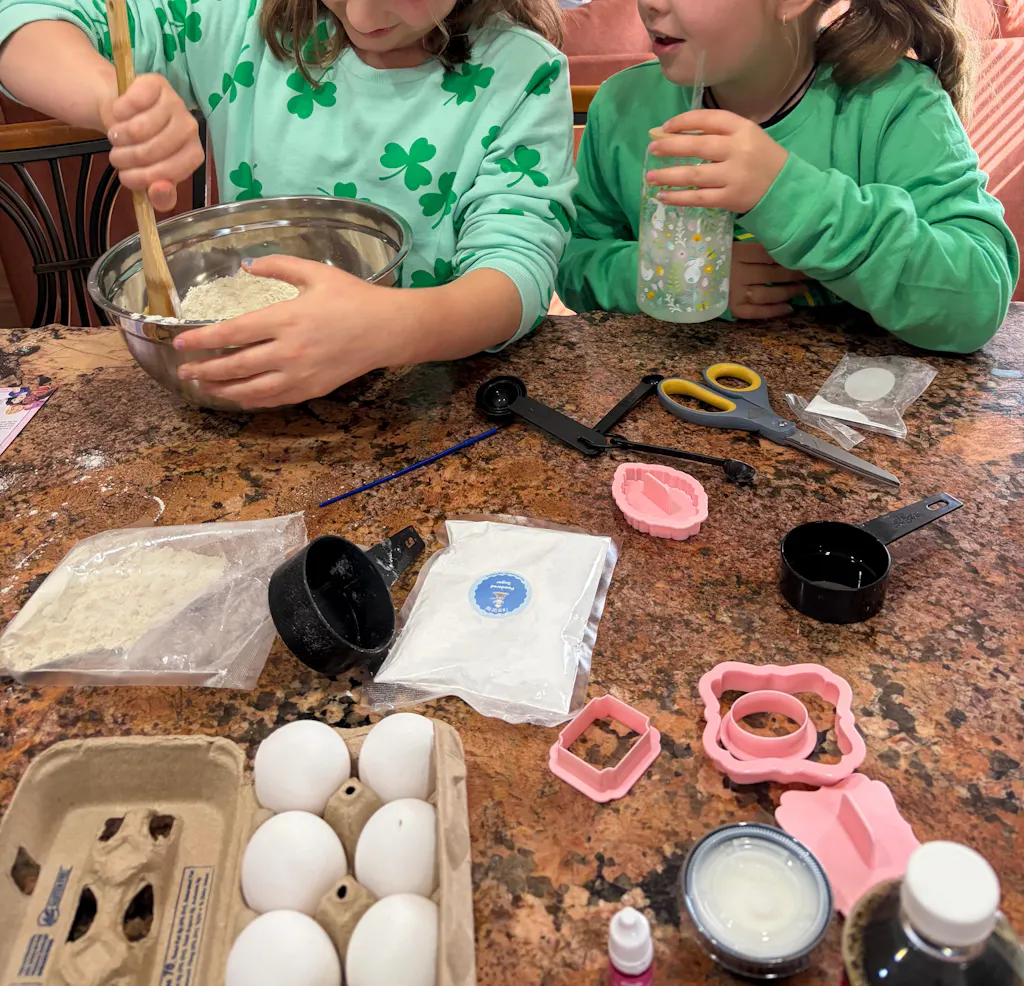
- Cooking and Baking: This is where our mission at I'm the Chef Too! truly shines. Cooking is a phenomenal, hands-on, screen-free way to explore all aspects of STEM. Measuring ingredients (math), observing chemical reactions (science), following a recipe (engineering/logic), and using kitchen tools (technology) are all integrated naturally. Our kits provide all the pre-measured dry ingredients and specialty supplies, making it easy to dive into these rich experiences without needing to buy expensive gadgets.
Myth 3: Emphasizing STEM Comes at the Expense of Other Subjects (Like Arts or Literacy)
A common concern is that focusing on STEM will sideline other vital areas of learning, such as language arts, reading, or creative arts.
The Reality: This couldn't be further from the truth. STEM, particularly when approached as STEAM (Science, Technology, Engineering, Arts, Math), promotes a holistic and interdisciplinary approach to learning.
- Integration with Literacy: Science instruction has been directly linked to improvements in literacy and language skills. Discussing scientific observations builds vocabulary and comprehension. Reading books about scientists, nature, or how things work complements hands-on STEM activities.
- Enhancing the Arts: The "A" in STEAM actively integrates creativity, design, and aesthetics. When children design a structure, they consider its appearance and function. When they decorate a baked good, they apply artistic principles. This blend fosters innovation and out-of-the-box thinking.
- Real-World Connections: STEM helps children see how all subjects are interconnected in the real world. A project on building a birdhouse might involve math for measurements, engineering for structural integrity, science for understanding birds, and art for decoration.
STEM encourages a shift away from siloed subjects towards a more integrated, project-based curriculum that sparks imagination and develops real-world skills across the board.
Myth 4: STEM is Only for "Certain" Students or Is Too Hard for Some Children
There can be outdated beliefs that STEM subjects are only for children with a particular aptitude, or that they are too challenging for some learners, especially those from underrepresented groups or with diverse learning needs.
The Reality: Every child possesses an innate capacity for STEM learning. The key is to make STEM accessible, engaging, and developmentally appropriate for all children.
- Inclusivity: Early STEM education should be designed to be inclusive, celebrating diverse perspectives and learning styles. Providing varied activities and allowing children to explore at their own pace ensures that every child can find their entry point into STEM.
- Differentiated Learning: What STEM looks like for a 2-year-old will be different from a 7-year-old. For example, a 2-year-old might explore the texture of flour, while a 7-year-old might measure it precisely for a recipe. The focus is on the process of inquiry and discovery, not on achieving a perfect result or mastering complex theories.
- Adult Attitudes Matter: A child's belief in their own STEM abilities is strongly influenced by the attitudes of the adults around them. When parents and educators believe in and support a child's STEM capacity, children are more likely to embrace these subjects and persist through challenges.
By debunking these myths, we can create a more empowering and effective learning environment for all young children, unlocking their full potential in stem education in early childhood.
How to Integrate STEM into Early Childhood: Practical Strategies
Now that we understand the profound importance of stem education in early childhood and have cleared up some common misconceptions, let's dive into practical, fun, and accessible ways to integrate STEM into your child's daily life. The good news is, you don't need to be a STEM expert, nor do you need fancy equipment. The secret lies in tapping into children's natural curiosity and providing opportunities for hands-on exploration.
1. Embrace Play-Based Learning: The Ultimate STEM Classroom
Play is a child's natural way of learning, and it's the most effective vehicle for early STEM. Through play, children experiment, problem-solve, and develop critical thinking without even realizing it.
-
Tinkering and Building: Provide open-ended materials like blocks (wooden, LEGO, magnetic), cardboard boxes, paper towel rolls, empty containers, and fabric scraps. Encourage children to build towers, ramps, bridges, or imaginative structures. Ask questions like, "How can you make it taller?" or "What happens if you use a wider base?"
- Example: A child trying to build a tall tower with blocks is engaging in engineering (design and construction) and physics (stability, balance). When it topples, they learn about gravity and structural integrity.
-
Sensory Play: Water tables, sandboxes, playdough, and even a bin of dried beans or rice offer rich sensory experiences that are inherently scientific and mathematical.
- Example: In a water table, children explore concepts like volume, displacement, floating, and sinking. They might experiment with different containers, observing which holds more water (math) or which objects float (science).
- Puzzles and Manipulatives: Jigsaw puzzles, shape sorters, and interlocking toys develop spatial reasoning, problem-solving skills, and fine motor control. These are foundational for mathematical and engineering thinking.
- Art as Science and Engineering: Encourage drawing, painting, and sculpting. Mixing colors is a chemistry experiment. Designing and building a sculpture is an engineering challenge.
2. Leverage the Power of Nature and Outdoor Exploration
The outdoors is the ultimate STEM laboratory, offering endless opportunities for observation, discovery, and physical engagement.
-
Nature Walks: Go on "detective" walks in your backyard, local park, or even just around the block. Encourage children to observe insects, plants, weather patterns, and natural phenomena.
- Science: "What kind of leaves do you see?" "How many legs does that ant have?" "Where does the rain go after it falls?"
- Math: "How many acorns can you collect?" "Which stick is longer?" "Can you find a pattern in the petals of this flower?"
- Engineering: "Can we build a tiny shelter for this bug using twigs and leaves?"
- Gardening: Planting seeds, watering plants, and watching them grow teaches about life cycles, ecosystems, and the needs of living things (biology). It also involves measurement and sequencing.
- Weather Observation: Keep a simple weather journal. Observe clouds, rain, wind, and sunshine. Discuss how the weather changes and why.
3. Transform Your Kitchen into a STEM Wonderland
The kitchen is perhaps one of the most accessible and exciting places to engage in stem education in early childhood. Every recipe is a delicious experiment waiting to happen! At I'm the Chef Too!, this is our core philosophy. We believe that blending food, STEM, and the arts creates one-of-a-kind "edutainment" experiences that children love.
-
Science in Every Bite:
- Chemical Reactions: Baking is full of them! Watch dough rise (yeast reacting with sugar), see how baking soda reacts with acid (like in our Erupting Volcano Cakes that bubble over with deliciousness), or observe how eggs change consistency when heated.
- States of Matter: Melting butter, freezing water, or boiling syrup demonstrates solids, liquids, and gases.
- Mixtures and Solutions: Stirring sugar into water, making a dressing, or kneading dough teaches about how ingredients combine (or don't!).
- Nutrition and Biology: Discuss where ingredients come from (plants, animals), why different foods are good for us, and how our bodies use them.
-
Math in the Measuring:
- Counting and Quantity: "How many scoops of flour do we need?" "Let's count the chocolate chips."
- Measurement: Using measuring cups and spoons for liquids and dry ingredients introduces concepts of volume, fractions (half a cup, quarter cup), and precision. "Is a tablespoon bigger than a teaspoon?"
- Sequencing and Time: Following recipe steps in order and understanding baking times reinforces numerical order and time concepts.
- Geometry: Identifying shapes of cookies, cakes, or even ingredients like sliced vegetables.
-
Engineering the Edible:
- Following Instructions: A recipe is essentially an engineering blueprint. Children learn to follow a sequence of steps to achieve a desired outcome.
- Design and Structure: Building a layered cake, assembling a sandwich, or decorating cookies requires planning, balance, and understanding how components fit together.
- Problem-Solving: What happens if we add too much liquid? How can we fix it? This encourages adaptability and critical thinking.
-
Technology with Tools:
- Using Kitchen Tools: Whisks, spatulas, cookie cutters, blenders, and even an oven timer are all forms of technology. Children learn their names, functions, and how to use them safely.
- Simple Machines: A whisk uses leverage, a rolling pin applies pressure. Discussing these simple mechanics introduces basic physics.
-
Arts in the Presentation (STEAM):
- Creativity and Aesthetics: Decorating cakes, cookies, or cupcakes allows children to express their creativity, explore color combinations, and understand visual balance. Our Galaxy Donut Kit isn't just about exploring astronomy; it's about creating an edible masterpiece with vibrant colors and cosmic designs. Even beloved characters can make learning fun, like when kids make Peppa Pig Muddy Puddle Cookie Pies, combining baking with imaginative play.
Cooking with children fosters not only STEM skills but also practical life skills, fine motor development, and invaluable family bonding moments. It's a screen-free alternative that delivers tangible, delicious results. Not ready to subscribe? Explore our full library of adventure kits available for a single purchase in our shop and find the perfect theme for your little learner.
4. Ask Open-Ended Questions and Encourage Investigation
Your role as an adult is not to provide all the answers, but to facilitate discovery.
- Shift from "Why" to "What": Instead of "Why does it float?" (which implies a single correct answer), try "What do you notice about how the toy is behaving in the water?" or "What do you think will happen if we put this rock in the water?" This encourages observation and prediction.
- Prompt Curiosity: "I wonder what would happen if..." "How could we make this work differently?" "What do you think is going on here?"
- Document and Discuss: Encourage children to draw their observations, talk about their experiments, or even graph simple data (e.g., how many times their tower fell before it stood).
5. Connect STEM to Real-World Experiences
Make learning relevant by linking STEM concepts to everyday life.
- Grocery Store Math: Count fruits, weigh vegetables, compare prices.
- Transportation Engineering: Observe how bridges, roads, and vehicles are designed. "How does that crane work?"
- Home "Science": Talk about how appliances work, why lights turn on, or how water comes out of the tap.
- Building a Birdhouse: This involves design (engineering), measuring (math), understanding materials (science), and perhaps even observing bird behavior (biology).
6. Provide Opportunities for Repetition and Refinement
Learning is rarely a one-shot deal. Encourage children to revisit activities, try different approaches, and refine their understanding. The child who rebuilds their block tower countless times is learning persistence and improving their engineering skills with each attempt.
Integrating stem education in early childhood is about creating an environment rich with opportunities for exploration, questioning, and hands-on engagement. It's about celebrating the process of discovery, not just the end result. By making STEM a natural part of play and daily routines, we empower children to become confident, curious, and capable learners for life. Ready for a new adventure every month? Join The Chef's Club and enjoy free shipping on every box, making consistent STEM exploration deliciously simple.
I'm the Chef Too! and STEM in Early Childhood: Our Unique Approach
At I'm the Chef Too!, our very foundation is built upon the powerful principles of stem education in early childhood, seamlessly interwoven with the magic of cooking and the boundless creativity of the arts. We understand that for young children, learning is most effective when it's engaging, hands-on, and directly connected to their world. That's why we've dedicated ourselves to creating one-of-a-kind "edutainment" experiences that blend food, STEM, and the arts into unforgettable adventures.
Our mission, crafted by mothers and educators, is born from a deep understanding of child development and a passion for making complex subjects accessible and exciting. We believe in sparking curiosity, fostering creativity, and providing a screen-free educational alternative that brings families together.
How Our Kits Bring STEM to Life in Your Kitchen:
Every I'm the Chef Too! kit is meticulously designed to be a complete, immersive STEM experience, delivered right to your door. We take the guesswork out of planning and prep, so you can focus on the fun and discovery.
- Pre-Measured Ingredients & Specialty Supplies: We include pre-measured dry ingredients and unique specialty supplies, eliminating the need for extensive grocery shopping or measuring hassles. This convenience allows you to jump straight into the learning, focusing on the process rather than the preparation. It also introduces children to precise measurement without the overwhelm.
- Hands-On, Tangible Learning: Our kits are the antithesis of passive learning. Children aren't just reading about science; they're doing science as they watch yeast activate, create chemical reactions that make our Erupting Volcano Cakes bubble over with deliciousness, or observe ingredients transform through heat. They're not just hearing about engineering; they're building and designing as they construct edible structures or follow a recipe's blueprint.
-
Integrated STEM/STEAM Concepts: Each kit is thoughtfully crafted to highlight specific STEM concepts in a fun, digestible way.
- Science: Discovering the properties of ingredients, understanding chemical changes, observing physical phenomena.
- Technology: Learning to use basic kitchen tools effectively, understanding how an oven works.
- Engineering: Following multi-step instructions, designing edible creations, problem-solving when things don't go as planned.
- Mathematics: Precise measuring, counting, understanding fractions, sequencing, and time management.
- Arts: Decorating, presenting, and expressing creativity through edible masterpieces, like creating your own edible solar system with our Galaxy Donut Kit.
- Facilitating Family Bonding: In a world increasingly dominated by screens, our kits offer a wonderful opportunity for families to connect. Cooking together fosters communication, teamwork, and creates cherished memories. It's an activity where parents and children learn and discover side-by-side.
- Sparking Curiosity and Creativity: Our unique themes, from geological explorations to astronomical adventures, are designed to ignite a child's imagination. They spark questions, encourage experimentation, and allow for personal creative expression in the finished product.
We believe that every child deserves the chance to experience the joy of discovery through hands-on learning. Our kits are more than just a box of ingredients; they are a gateway to a deeper understanding of the world, fostering critical skills and a lifelong love for learning. Whether you're dipping your toes into stem education in early childhood or looking for consistent, high-quality experiences, we're here to make it fun, easy, and delicious. Find the perfect theme for your little learner by browsing our complete collection of one-time kits in our shop.
Sustaining the STEM Journey: Beyond the Single Activity
Integrating stem education in early childhood isn't about isolated lessons; it's about fostering a consistent mindset of curiosity and exploration. The true magic happens when STEM becomes a natural, ongoing part of a child's world. While individual activities are fantastic starting points, sustaining the STEM journey requires a commitment to continuous engagement and providing varied opportunities for discovery.
Think of it like building a language: you don't learn a language from a single lesson; you learn it through consistent exposure, practice, and immersion. The same applies to STEM. Regular opportunities to observe, question, experiment, and create reinforce concepts, build confidence, and deepen a child's understanding.
Creating a Consistent Learning Environment
- Designated "Discovery" Spaces: Even a small corner with open-ended materials (blocks, art supplies, natural items) can encourage spontaneous STEM play.
- Routine Integration: Look for STEM moments in daily routines—measuring ingredients for dinner, observing the weather during your morning walk, or fixing a broken toy.
- Open-Ended Resources: Provide access to books, documentaries, and even quality educational apps that complement hands-on activities, reinforcing concepts in different contexts.
The Value of Ongoing Exposure
Consistent exposure to STEM concepts helps children:
- Solidify Understanding: Repeated experiences allow them to grasp complex ideas more thoroughly.
- Develop Persistence: When faced with a challenge, they learn that trying different approaches over time often leads to a solution.
- Build a Knowledge Base: Each new experience adds to their understanding of how the world works, creating connections between different concepts.
- Maintain Enthusiasm: Regular engagement keeps their natural curiosity alive and prevents STEM from feeling like a chore.
The Chef's Club: Your Partner in Ongoing STEM Adventures
For families seeking a simple, convenient, and effective way to ensure consistent, high-quality stem education in early childhood, our Chef's Club subscription is the ideal solution. We understand that life is busy, and finding new, engaging, and educational activities can be a challenge. That's why we've designed The Chef's Club to take the effort out of STEM planning, so you can focus on the joy of discovery with your child.
- Convenience Delivered Monthly: A new, unique STEM cooking adventure is delivered directly to your door every single month, with free shipping in the US. No more scrambling for ideas or hunting for obscure ingredients.
- Guaranteed Engagement: Each box is a complete experience, featuring a new theme that blends science, technology, engineering, math, and art into a delicious culinary project. From edible experiments to creative culinary constructions, your child will always have something exciting to look forward to.
- Flexibility for Every Family: We offer flexible 3, 6, and 12-month pre-paid plans, perfect for gifting or for long-term enrichment. This allows you to choose the commitment level that best suits your family's needs, ensuring a continuous stream of hands-on learning.
- Consistent Skill Development: With a new adventure arriving regularly, children consistently engage with measurement, chemical reactions, design thinking, problem-solving, and creative expression. This consistent practice is key to building and reinforcing foundational STEM skills over time.
By joining The Chef's Club, you're not just signing up for a box; you're investing in a continuous journey of discovery, creativity, and family fun. You're ensuring that stem education in early childhood remains a vibrant, engaging, and delicious part of your child's development, fostering a lifelong love for learning and exploration. Ready for a new adventure every month? Join The Chef's Club and enjoy free shipping on every box. Give the gift of learning that lasts all year with a 12-month subscription to our STEM cooking adventures!
Conclusion
The journey of stem education in early childhood is not a race to master complex equations or build advanced robots. Instead, it's a delightful exploration of the world through a child's naturally curious eyes. It's about nurturing their innate desire to question, experiment, and create. From the simple act of stacking blocks to the wondrous transformation of ingredients in the kitchen, every moment offers an opportunity to ignite a lifelong passion for discovery.
We've explored how early STEM fosters critical thinking, problem-solving, and foundational academic skills that are crucial for future success. We've debunked the myths that limit our perception of young children's capabilities, emphasizing that STEM is accessible, hands-on, and deeply integrated with other vital areas of learning, including the arts. Most importantly, we've highlighted how everyday activities, especially the magic of cooking, can become powerful vehicles for STEM exploration, promoting family bonding and screen-free "edutainment."
At I'm the Chef Too!, we are passionate about making stem education in early childhood not just beneficial, but truly joyful. Our unique blend of food, STEM, and the arts provides a tangible, delicious, and convenient way to spark curiosity and creativity in your child, fostering confidence and a love for learning that will last a lifetime.
Don't let the opportunity to ignite your child's inner scientist, engineer, technologist, artist, and mathematician pass by. Embrace the wonder of early STEM learning.
Ready to embark on a delicious adventure of discovery every month? Join The Chef's Club today and bring the magic of hands-on STEM cooking directly to your kitchen!
FAQ: Your Questions About Early STEM Education Answered
Q1: What age is "early childhood" for STEM education?
A1: "Early childhood" for STEM education typically refers to children from birth through age 8, encompassing infants, toddlers, preschoolers, and early elementary school students. The key is that STEM learning is developmentally appropriate, meaning it looks different for a 1-year-old than it does for a 7-year-old. For infants, it's sensory exploration and cause-and-effect. For preschoolers, it's hands-on play, simple experiments, and asking questions.
Q2: Do I need to be a scientist or engineer to teach my child STEM?
A2: Absolutely not! You don't need to be an expert. The most important thing is to be curious alongside your child. Ask open-ended questions like "What do you notice?" or "What do you think will happen?" Encourage exploration, provide materials, and celebrate their efforts and discoveries, even if things don't go as planned. It's about fostering a mindset of inquiry, not delivering facts. Our I'm the Chef Too! kits are designed to guide you and your child through engaging STEM experiences step-by-step, making it easy for any parent or educator.
Q3: How is STEAM different from STEM?
A3: STEM stands for Science, Technology, Engineering, and Mathematics. STEAM adds the "A" for Arts. The inclusion of the Arts isn't just about drawing or painting; it's about integrating creativity, design thinking, innovation, and aesthetic appreciation into the STEM fields. It recognizes that artistic expression can enhance understanding, problem-solving, and communication in scientific and technical pursuits. At I'm the Chef Too!, we wholeheartedly embrace STEAM, as cooking naturally blends scientific reactions, mathematical measurements, engineering design, and artistic presentation.
Q4: My child spends a lot of time on screens. Does that count as STEM technology?
A4: While some educational apps can offer STEM content, "technology" in early childhood STEM extends far beyond screens. It refers to any tools that help us solve problems or extend our abilities. This includes simple machines, kitchen tools like whisks and measuring cups, magnifying glasses, or even a simple pulley system. Hands-on, "unplugged" STEM activities are crucial for young children's development, as they engage more senses and develop fine motor skills. Our I'm the Chef Too! kits provide a wonderful screen-free alternative for engaging with STEM concepts.
Q5: How can I incorporate STEM if I have limited resources or space?
A5: STEM doesn't require a dedicated lab or expensive toys. You can find rich STEM opportunities in everyday life:
- Nature: Go for a walk and observe plants, insects, and weather. Collect natural items for sorting or building.
- Kitchen: Cooking and baking are packed with STEM! Using simple ingredients, measuring, and observing changes are all STEM in action. Our kits provide all the necessary ingredients and supplies.
- Household Items: Cardboard boxes, plastic bottles, paper, string, water, and sand can be used for countless engineering and science experiments.
- Everyday Routines: Discussing how appliances work, counting items during chores, or observing how water flows down the drain. The most important resource is your willingness to explore and ask questions with your child.
Q6: Will focusing on STEM make my child less creative or interested in other subjects?
A6: Quite the opposite! As discussed, early STEM, especially STEAM, actually enhances creativity and strengthens skills across all subject areas.
- Enhanced Creativity: Engineering challenges and scientific experiments often require innovative solutions and out-of-the-box thinking. The "A" in STEAM directly integrates artistic expression.
- Improved Literacy: Discussing scientific observations builds vocabulary and comprehension.
- Stronger Logic: Mathematical and engineering thinking improves problem-solving skills applicable everywhere. STEM helps children see the interconnectedness of knowledge and fosters a holistic understanding of the world.
Q7: How can I continue STEM learning consistently at home?
A7: Consistency is key!
- Make it a Habit: Look for STEM opportunities in daily routines.
- Provide Open-Ended Materials: Keep a bin of building materials, art supplies, or natural items accessible.
- Read STEM-Related Books: Visit your local library for engaging books about science, engineering, and math.
- Join a Program: For structured and convenient ongoing STEM adventures, consider a subscription box like our Chef's Club. We deliver a new, complete STEM cooking experience to your door every month, making consistent engagement effortless and fun. You can also explore our variety of one-time kits for specific interests.