Table of Contents
- Introduction
- Why Science Matters in First Grade
- Getting Started: The Junior Scientist's Toolkit
- Animal Science: Exploring the Living World
- Earth and Nature: Digging into Our Planet
- Food Science: Edible Experiments for Young Chefs
- Weather and Atmosphere: Experiments for Rainy Days
- Physics and Motion: Things That Go Zoom
- Using the Scientific Method with 1st Graders
- How I'm the Chef Too! Makes STEM Easy
- Frequently Asked Questions (FAQ)
- Conclusion
Introduction
Did you know that the average six-year-old asks upwards of 70 questions every single day? This relentless curiosity is more than just a phase; it is the spark of a natural-born scientist. At this age, children are transitionally poised between the pure play of preschool and the more structured learning of elementary school. They aren't just looking at the world anymore—they want to know how it works, why it changes, and what happens if they give it a little nudge.
At I’m the Chef Too!, we believe that this curiosity is a precious resource. Our mission is to blend food, STEM (Science, Technology, Engineering, and Math), and the arts into one-of-a-kind "edutainment" experiences. We are committed to sparking creativity in children and facilitating family bonding through activities that get kids away from screens and into the heart of discovery. Whether your little learner is fascinated by the stars or captivated by creepy crawlies, science is the bridge that connects their imagination to the real world.
In this guide, we will explore a wide variety of science projects for kids 1st grade that are designed to be simple, engaging, and deeply educational. We will cover everything from biology and earth science to the delicious world of food chemistry. By the end of this post, you will have a toolkit of activities that foster a love for learning and create joyful family memories in your very own kitchen or backyard. Ready for a new adventure every month? Join The Chef's Club and enjoy free shipping on every box.
The purpose of this blog is to provide parents and educators with practical, hands-on experiments that align with 1st-grade developmental milestones. Our main message is simple: you don't need a lab coat or expensive equipment to raise a child who loves science—you just need a little bit of wonder and the right ingredients.
Why Science Matters in First Grade
First grade is a "sweet spot" for scientific exploration. At roughly six or seven years old, children are developing better fine motor skills, longer attention spans, and a growing ability to understand cause and effect. This is the year where science moves from "magic" to "mechanism."
When we engage in science projects for kids 1st grade, we aren't just teaching facts about plants or planets. We are teaching a way of thinking. Science encourages children to:
- Observe Details: Noticing the tiny veins on a leaf or the way bubbles rise in a glass of soda.
- Ask Testable Questions: Moving from "Why is the sky blue?" to "Will this seed grow faster in the light or the dark?"
- Build Confidence: There is a unique sense of pride that comes from a child saying, "I made that happen!"
- Develop Patience: Learning that some results—like a seed sprouting—take time.
We focus on providing realistic expectations. While we don't expect every first grader to become a Nobel Prize winner overnight, we do know that these early experiences build the foundational skills necessary for future success in any field. By making science tangible and delicious, we make it unforgettable.
Getting Started: The Junior Scientist's Toolkit
Before we dive into the specific experiments, it is helpful to have a "science station" ready to go. You don't need to spend a lot of money; in fact, most of these items are likely already in your pantry or junk drawer.
Basic Supplies to Keep on Hand:
- Measuring Tools: Measuring cups, spoons, and a simple ruler.
- Clear Containers: Mason jars, plastic cups, and bowls so kids can see what’s happening from all angles.
- Magnifying Glass: To get an up-close look at textures and tiny changes.
- Safety Gear: An old t-shirt (to serve as a lab coat) and perhaps some child-sized goggles for that "official" scientist feeling.
- A Science Journal: A simple notebook where your child can draw what they see and "write" their findings.
Remember, the most important "tool" in any experiment is adult supervision. Not only does this ensure safety, but it also provides the opportunity for you to ask guiding questions like, "What do you think will happen next?" or "Why do you think it did that?"
Animal Science: Exploring the Living World
First graders are naturally drawn to animals. Biology at this age is all about classification, adaptation, and life cycles. These activities help children understand that humans are part of a much larger, interconnected ecosystem.
1. The Insect Vision Challenge
Insects don't see the world the way we do. Most have compound eyes made of thousands of tiny lenses. To help your child visualize this, you can create "Insect Goggles."
- The Activity: Take two cardboard paper towel rolls and tape them together like binoculars. Fill the ends with several plastic drinking straws cut to fit. When your child looks through the straws, the world will be broken into dozens of tiny "pixels," mimicking the multi-faceted view of a bee or a dragonfly.
- The Lesson: This project teaches children about specialized adaptations. It encourages them to think about how different creatures interact with their environment based on their physical traits.
2. Sorting the Animal Kingdom
Classification is a huge part of the 1st-grade curriculum. This can be turned into a fun game using toys your child already owns.
- The Activity: Gather a pile of toy animals. Create "sorting stations" using hula hoops or pieces of paper labeled with categories like "Mammals," "Reptiles," "Birds," or even "Land vs. Water."
- The Lesson: This helps kids notice specific features (scales vs. fur, wings vs. paws) and understand the logic scientists use to organize the natural world.
3. Camouflage Candy Hunt
Why are some animals bright and others dull? It’s all about staying hidden!
- The Activity: Take a colorful photo of a garden or a forest floor. Hide small candies (like M&Ms or Skittles) or colored beads that match the colors in the photo on top of the image. Give your child 30 seconds to "predate" (find) as many as they can.
- The Lesson: They will quickly notice that the colors that match the background are much harder to find. This is a perfect introduction to the concept of camouflage and survival. Even beloved animals can make learning fun, like when kids make Wild Turtle Whoopie Pies to explore the world of reptiles and their habitats.
Earth and Nature: Digging into Our Planet
Earth science for 1st graders covers the ground beneath our feet and the stars above our heads. These projects help make abstract concepts—like the rotation of the Earth—tangible.
4. Play Dough Earth Layers
The Earth isn't just a solid rock; it’s like an onion with layers!
- The Activity: Use different colors of play dough to represent the Inner Core (yellow), Outer Core (orange), Mantle (red), and Crust (brown/green). Roll the yellow into a ball, then wrap the orange around it, then the red, and finally the brown.
- The Lesson: Once the "Earth" is built, use a plastic knife to cut it in half. Seeing the cross-section helps children visualize the hidden structure of our planet.
5. The Fruit Solar System
Space can feel very far away, but we can bring it down to size using snacks.
- The Activity: Use different sized fruits to represent the planets. A large watermelon might be the Sun, while a tiny blueberry is Mercury. A grapefruit could be Jupiter, and a grape could be Earth.
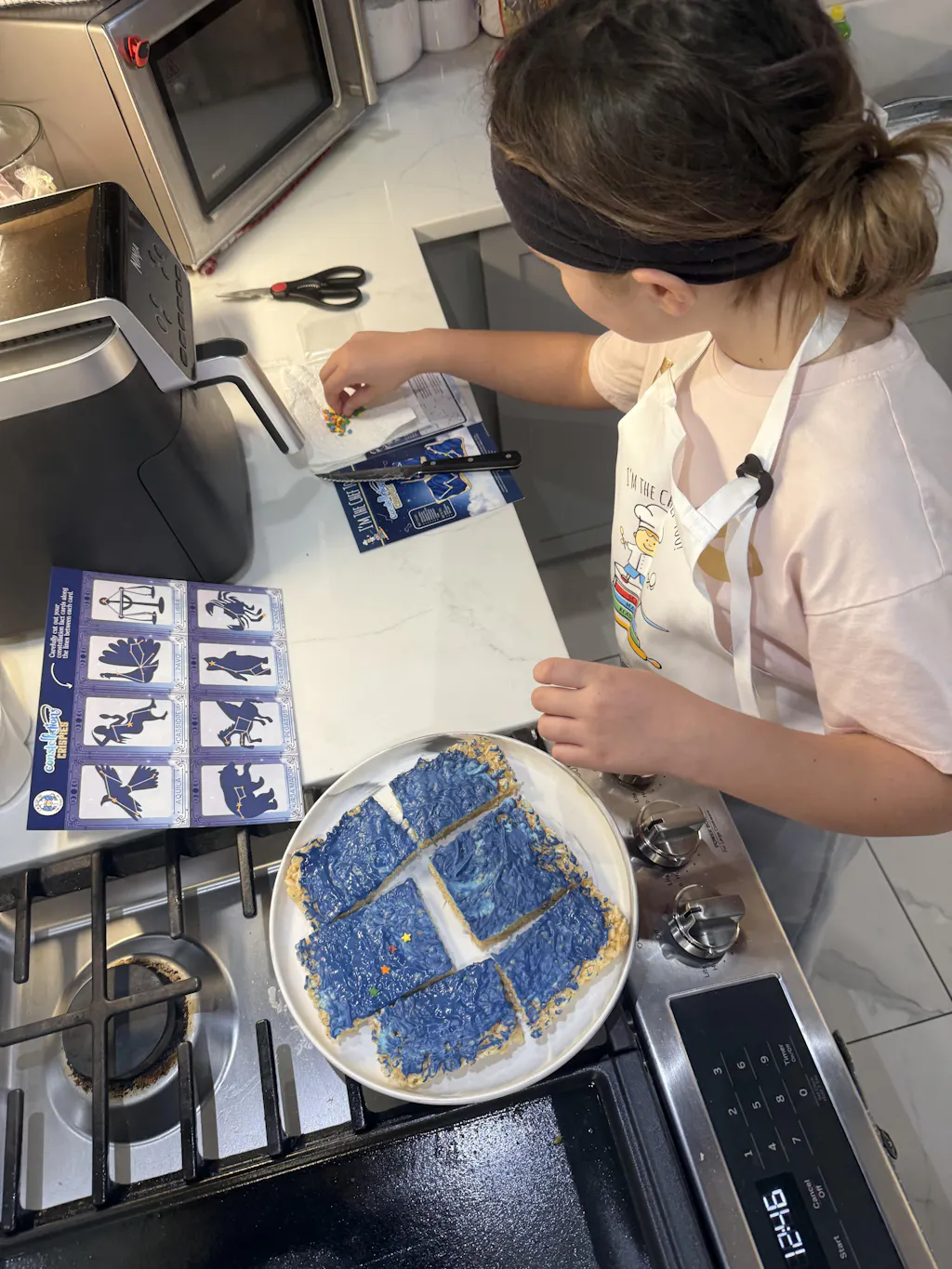
- The Lesson: Laying these out in order helps kids understand the vast difference in scale and the order of the planets. Explore astronomy by creating your own edible solar system with our Galaxy Donut Kit.
6. Plastic Bag Greenhouse
Watching a plant grow is a fundamental science experience. Using a plastic bag allows kids to see the "hidden" part of the process: the roots.
- The Activity: Place a damp paper towel and a few bean seeds inside a clear Ziploc bag. Tape the bag to a sunny window.
- The Lesson: Within a few days, the seeds will sprout. Your child can observe the roots growing downward and the stem reaching upward. This is a great way to talk about what living things need to survive: water, light, and air.
Food Science: Edible Experiments for Young Chefs
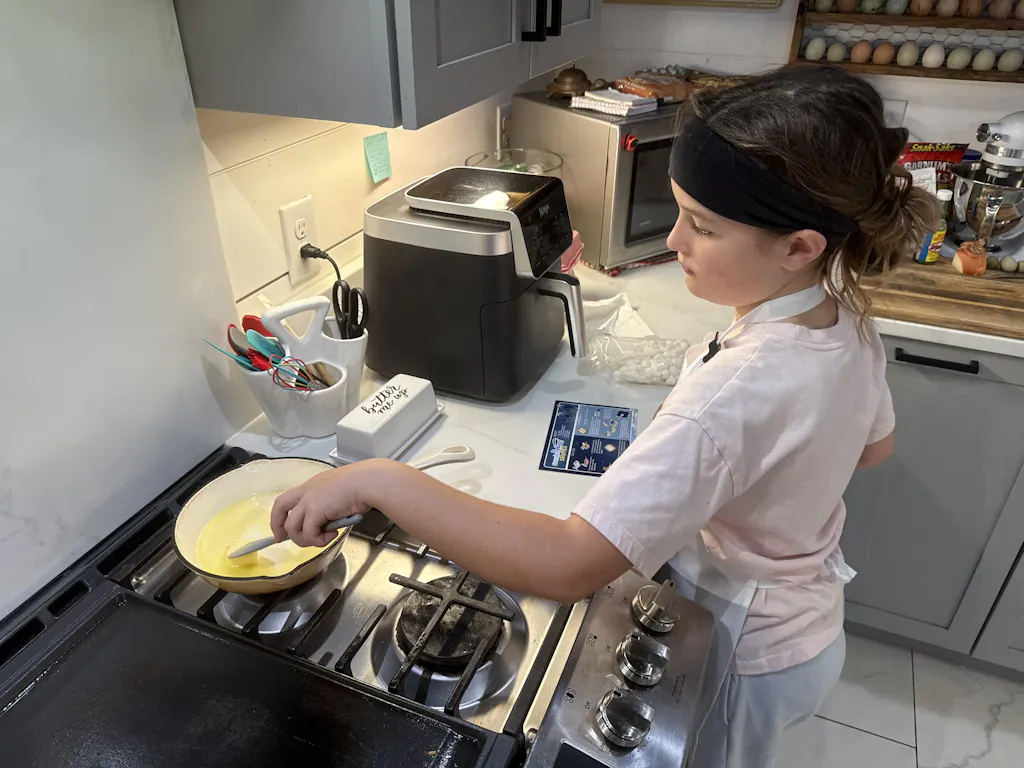
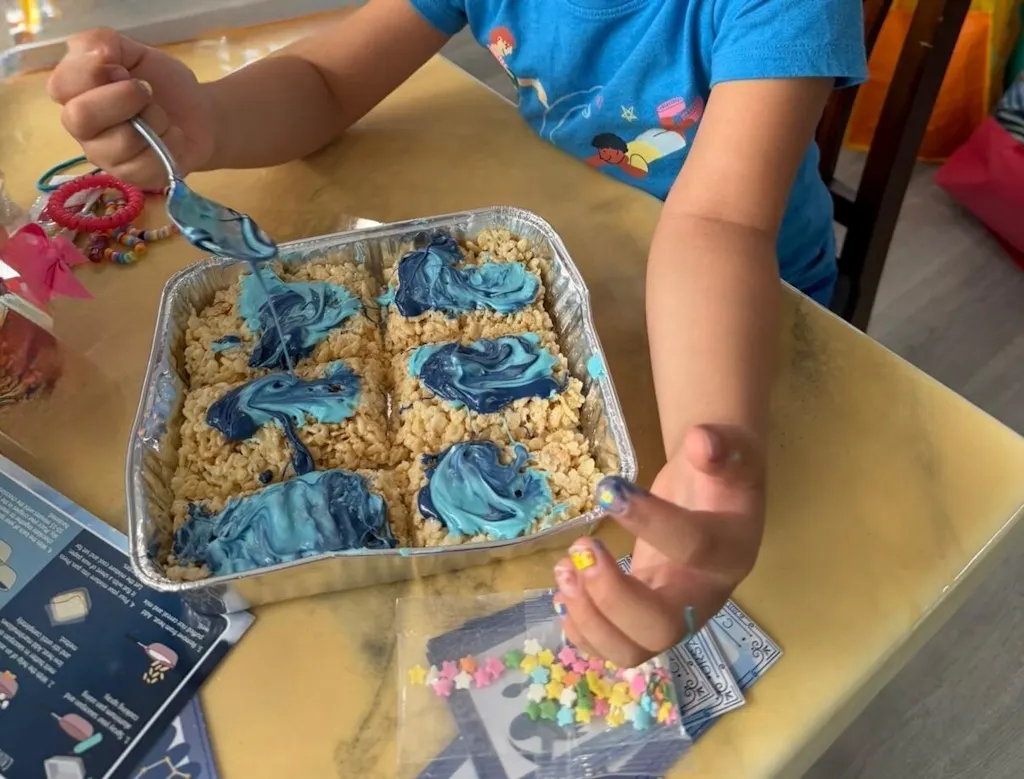
At I’m the Chef Too!, this is our favorite category! Food science is the ultimate "edutainment" because it engages all five senses—and you get a snack at the end. Find the perfect theme for your little learner by browsing our complete collection of one-time kits.
7. The Dancing Popcorn Experiment
This experiment is a fantastic way to demonstrate chemical reactions and the properties of gases.
- The Activity: Fill a jar with water and add a tablespoon of baking soda. Stir it until it dissolves. Drop in a handful of unpopped popcorn kernels. Finally, add a few tablespoons of white vinegar.
- The Lesson: The reaction between the baking soda and vinegar creates carbon dioxide bubbles. These bubbles attach to the popcorn kernels, acting like tiny life jackets that lift them to the surface. When the bubbles pop at the top, the kernels sink back down, creating a "dance."
8. Baking Soda Volcanoes (The Classic Redux)
Every child should experience the magic of a volcano at least once. It’s a classic for a reason—it’s visually stunning and perfectly demonstrates a fast chemical reaction.
- The Activity: You can build a mountain out of play dough or sand around a small plastic bottle. Put baking soda and red food coloring inside the bottle. When you're ready for the "eruption," pour in vinegar.
- The Lesson: This is a chemical reaction that makes our Erupting Volcano Cakes bubble over with deliciousness. In a culinary context, we use these same reactions to make cakes and breads rise!
9. Oobleck: Liquid or Solid?
Based on the Dr. Seuss book, Oobleck is a "non-Newtonian fluid." It’s messy, fun, and intellectually stimulating for kids and adults alike.
- The Activity: Mix two parts cornstarch with one part water. You can add food coloring for extra fun.
- The Lesson: If you poke it quickly, it feels like a solid. If you hold it gently in your hand, it flows like a liquid. This introduces the concept of states of matter and how some materials don't fit perfectly into one category.
10. Yeast Balloon Blow-Up
How does bread get so fluffy? The secret is a tiny living organism called yeast.
- The Activity: Mix a packet of yeast with warm water and a spoonful of sugar in a plastic bottle. Stretch a balloon over the mouth of the bottle.
- The Lesson: As the yeast "eats" the sugar, it breathes out carbon dioxide gas. Over about 20 minutes, that gas will fill the bottle and begin to inflate the balloon. This is a wonderful way to show that even things we can't see (like gas or microscopic yeast) can have a big impact.
Weather and Atmosphere: Experiments for Rainy Days
Weather is something children experience every day, making it the perfect subject for science projects for kids 1st grade. These experiments help explain the "how" behind the rain and the wind.
11. Water Cycle in a Bag
How does rain get up into the clouds in the first place?
- The Activity: Draw a sun and some clouds on a Ziploc bag. Fill it with a small amount of blue-tinted water. Tape it to a sunny window.
- The Lesson: As the sun warms the water, it evaporates (turns into invisible gas). When it hits the cooler plastic at the top, it condenses back into water droplets, which eventually "rain" back down into the pool at the bottom. It’s a miniature version of our planet’s water cycle!
12. Making a Sundial
Before watches and smartphones, people used the sun to tell time.
- The Activity: Poke a stick into the ground (or a bowl of sand) in a sunny spot. Every hour, on the hour, place a stone where the shadow of the stick falls and write the time on the stone.
- The Lesson: This teaches children about the rotation of the Earth and how the sun's position appears to change throughout the day.
13. Tornado in a Jar
A simple way to look at centrifugal force and weather patterns.
- The Activity: Fill a jar 3/4 full with water. Add a drop of dish soap and a pinch of glitter (the "debris"). Put the lid on tight and give it a good circular swirl.
- The Lesson: When you stop swirling, a vortex will form in the center. This helps kids visualize how wind patterns can create powerful storms like tornadoes.
Physics and Motion: Things That Go Zoom
Physics might sound like a subject for high schoolers, but for a 1st grader, physics is just "the science of moving things." These projects introduce concepts like gravity, friction, and force.
14. Balloon-Powered Rockets
How do rockets fly? It’s all about Newton’s Third Law: for every action, there is an equal and opposite reaction.
- The Activity: Thread a piece of string through a drinking straw and tie the string tightly between two chairs. Inflate a balloon but don't tie it. Tape the balloon to the straw. Let go!
- The Lesson: The air rushing out of the back of the balloon pushes the straw forward along the string. This is the basic principle of jet propulsion!
15. The Water Xylophone
Sound is actually just vibrations traveling through the air.
- The Activity: Line up several glass jars or bottles. Fill them with different amounts of water. Tap them gently with a spoon.
- The Lesson: The jars with more water produce a lower sound, while those with less water produce a higher sound. This is because the water changes how fast the glass can vibrate. This is a great way to blend science with music and the arts.
16. Toy Car Friction Race
Why do we slip on ice but not on carpet? It’s all about friction.
- The Activity: Set up a ramp using a piece of cardboard. Create two "tracks": one covered in smooth aluminum foil and one covered in rough sandpaper. Race toy cars down both.
- The Lesson: The car on the foil will go much faster because there is less friction to slow it down. This simple race helps kids understand how different surfaces interact.
Using the Scientific Method with 1st Graders
When we do science projects for kids 1st grade, we are subtly teaching them the Scientific Method. You don't need to use these big words with them yet, but you can guide them through the steps:
- Observation: "I noticed that the popcorn is just sitting at the bottom of the jar."
- Question: "What will happen if we add vinegar to the baking soda water?"
- Hypothesis (The "Guess"): "I think it will bubble up!"
- Experiment: Adding the vinegar and watching the reaction.
- Recording Data: Drawing a picture of the "dancing" popcorn in their science journal.
- Conclusion: "The bubbles made the popcorn jump!"
By following this process, we turn a simple activity into a structured learning experience. Give the gift of learning that lasts all year with a 12-month subscription to our STEM cooking adventures. This consistent approach helps children become more analytical and thoughtful in their everyday lives.
How I'm the Chef Too! Makes STEM Easy
We know that being a parent or educator is a full-time job, and sometimes the idea of gathering 15 different ingredients for a single experiment feels overwhelming. That is where we come in. At I'm the Chef Too!, we handle the heavy lifting so you can focus on the fun.
Our kits are developed by mothers and educators who understand exactly what a 7-year-old needs to stay engaged. Every box is a complete experience, containing pre-measured dry ingredients and specialty supplies. We don't just send you a recipe; we send you a themed adventure. One month you might be an astronaut exploring the galaxy, and the next, a geologist digging for "fudgy fossils."
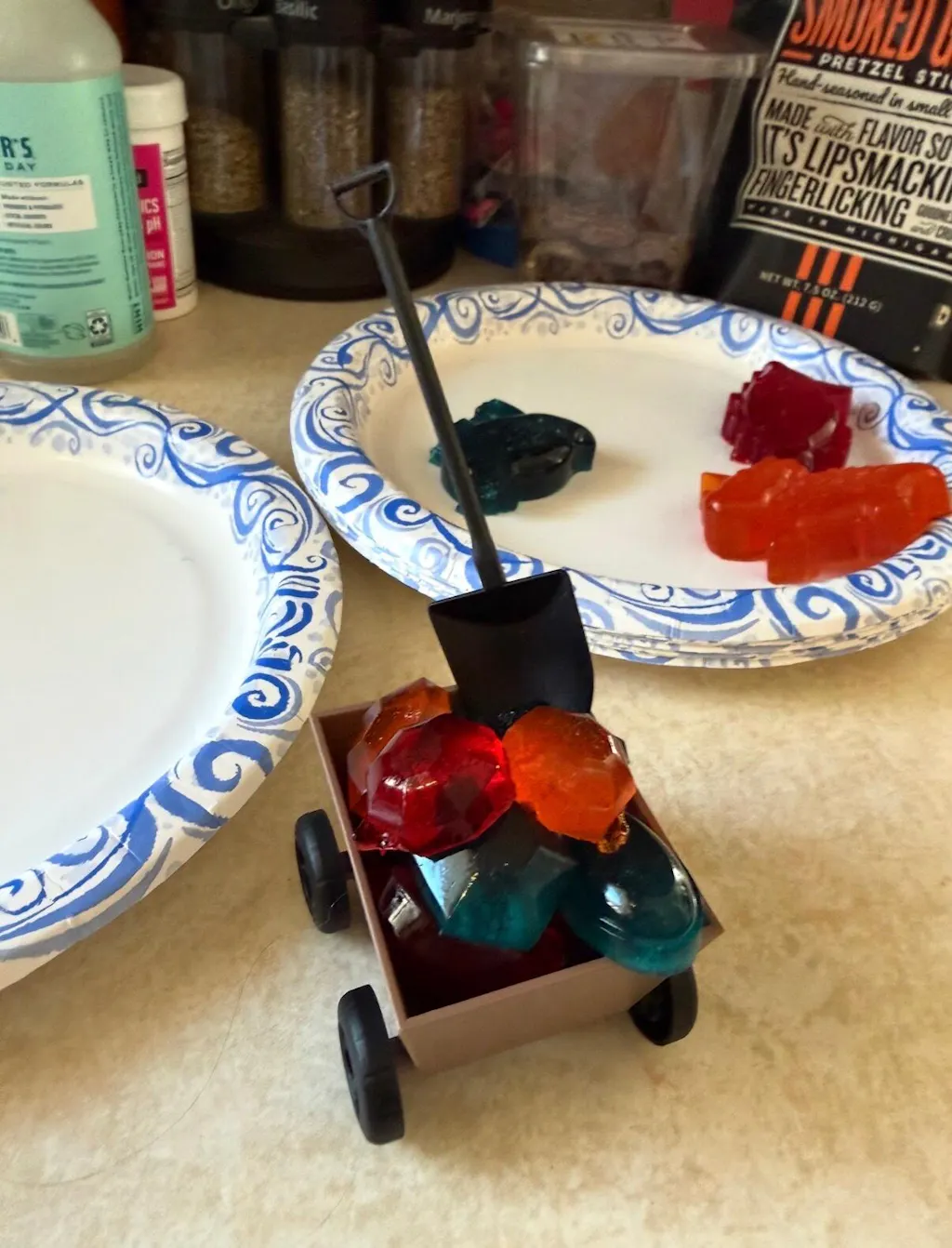
Imagine a parent looking for a screen-free weekend activity for their 7-year-old who loves dinosaurs. Instead of scrolling through Pinterest and running to three different stores, they could try our Fudgy Fossil Dig kit. It’s science, it's art, and it’s a delicious treat all rolled into one. This hands-on approach is what we call "edutainment"—where the learning is so much fun, they don't even realize they're doing it.
Give the gift of learning that lasts all year with a 12-month subscription to our STEM cooking adventures. We want to make science accessible to every family, regardless of their background or schedule.
Frequently Asked Questions (FAQ)
Q: Are these science projects safe for 1st graders to do alone? A: We always recommend active adult supervision. While many of these experiments use safe household items like vinegar and baking soda, having an adult present ensures that materials are used correctly and provides a safer, more educational environment for the child.
Q: My child gets frustrated when an experiment doesn't work. What should I do? A: This is actually one of the most important moments in science! Even professional scientists have "failed" experiments. Encourage your child to ask why it didn't work. Was the water not warm enough? Did we forget an ingredient? Reframing a "fail" as a "new puzzle to solve" is a vital life skill.
Q: We don't have a lot of time. Are there quick experiments? A: Absolutely! Many of the projects listed, like the "Dancing Popcorn" or "Oobleck," take less than 10 minutes to set up and provide immediate results. If you want something even more streamlined, our kits come with everything ready to go.
Q: How can I link these projects to what they are learning in school? A: Most 1st-grade curricula cover plants, animals, weather, and basic properties of matter. You can mention, "This is just like the life cycle you're studying in class!" or use our printable recording sheets to help them practice their writing and drawing skills.
Q: Do I need to buy a lot of expensive equipment? A: Not at all! Most 1st-grade science is about the world around us. Kitchen staples, backyard finds, and recycled materials are perfect for this age group. If you're looking for specialized tools, they are often included in our adventure kits.
Conclusion
Science is more than a list of facts in a textbook; it is a way of seeing the world with wide-eyed wonder. When you engage in science projects for kids 1st grade, you are doing more than just passing the time. You are building their confidence, nurturing their curiosity, and creating a space where "I don't know" is just the first step toward "Let's find out."
From the microscopic world of yeast to the vast reaches of our solar system, the opportunities for discovery are endless. Whether you are building a play dough Earth or watching a balloon inflate via the power of chemistry, these moments of shared discovery are the building blocks of a lifelong love for learning. We have seen firsthand how a single "aha!" moment can spark a flame that lasts for years.
At I’m the Chef Too!, we are honored to be a part of your family's educational journey. We invite you to step away from the screens, head into the kitchen, and see where your curiosity takes you. There is a world of "edutainment" waiting just outside your door—or right inside your pantry.
Ready for a new adventure every month? Join The Chef's Club and enjoy free shipping on every box. Or, if you're looking to explore a specific theme, you can browse our complete collection of one-time kits to find the perfect match for your junior scientist. Let's get cooking—and experimenting!