Table of Contents
- Introduction
- Celebrating St. Patrick's Day with Edible STEM Fun
- Spring into Action: Nature-Inspired STEM and Art
- Dr. Seuss's Birthday Bash: Imagination Meets Culinary Creativity
- Beyond the Holidays: Everyday March Adventures
- Benefits of Hands-On "Edutainment" for Children
- Practical Tips for Parents and Educators
- Conclusion
- FAQ: March Craft Activities for Kids
Do you ever find yourself caught in that peculiar space that March often brings? One day, you’re enjoying a tantalizing hint of spring warmth, with birds chirping and daffodils peeking through the soil. The next, a blustery wind reminds you winter isn't quite ready to release its grip. This seesaw of seasons can make finding engaging activities for kids a real puzzle! We know the feeling – that desire to keep little hands busy, minds engaged, and spirits bright, especially when indoor days unexpectedly return.
At I'm the Chef Too!, we believe every month is an opportunity for discovery, creativity, and delicious learning. March, with its vibrant St. Patrick's Day festivities, the whimsy of Dr. Seuss's birthday, and the promise of spring's arrival, offers a treasure trove of themes for exciting craft activities. Far from just simple arts and crafts, these activities are gateways to exploring scientific principles, artistic expression, and even mathematical concepts – all while fostering joyful family bonding. Our mission is to blend food, STEM, and the arts into one-of-a-kind "edutainment" experiences that spark curiosity and creativity, providing a much-needed screen-free educational alternative. We develop our unique cooking adventures, packed with tangible, hands-on learning, to inspire children in ways that classroom lessons alone often can't.
This post is your ultimate guide to transforming those transitional March days into memorable moments of creativity and connection. We'll dive deep into a vibrant collection of march craft activities for kids, designed to delight children of all ages, from toddlers to elementary schoolers. Get ready to explore a world of colorful rainbows, playful leprechauns, budding flowers, and imaginative characters, all while reinforcing valuable skills and making lasting family memories.
Introduction
March, a month often characterized by its unpredictable weather and a vibrant shift towards spring, presents a unique canvas for creativity and learning. One moment, you might be bundling up against a surprise chill, and the next, you're basking in the gentle warmth of an early spring sun. This variability can make it challenging to plan consistent outdoor play, pushing parents and educators to seek engaging indoor alternatives. Imagine a day when the rain starts to fall, and instead of reaching for a tablet, your child eagerly suggests creating a bubbling "volcano cake" or a shimmering "galaxy donut" right in your kitchen, inspired by the scientific wonders they're learning through hands-on activities.
This scenario isn't just a daydream; it's the heart of what we champion at I'm the Chef Too!. We understand the yearning for activities that are not only fun but also deeply enriching, fostering a love for learning without the constant glow of a screen. March, with its celebration of St. Patrick's Day, the whimsical world of Dr. Seuss, and the general awakening of nature, offers abundant themes to ignite this passion. From the chemical reactions that make our Erupting Volcano Cakes[https://www.imthecheftoo.com/collections/kits/products/erupting-volcano-cakes-kit] fizz with delicious excitement to the artistic expression in decorating a Galaxy Donut Kit[https://www.imthecheftoo.com/collections/kits/products/galaxy-donut-kit], these aren't just crafts; they're comprehensive educational adventures.
In this extensive guide, we'll journey through a diverse array of march craft activities for kids, ensuring that every family finds inspiration, regardless of skill level or available resources. Our goal is to provide practical, valuable advice and realistic expectations for integrating these "edutainment" experiences into your routine. We firmly believe that engaging children in the kitchen and through hands-on crafts is a powerful way to build confidence, develop key skills, and create truly joyful family memories. Get ready to transform your March from mundane to magnificent, one craft, one delicious recipe, and one shared laugh at a time!
Celebrating St. Patrick's Day with Edible STEM Fun
St. Patrick's Day, falling on March 17th, is synonymous with vibrant greens, lucky shamrocks, mischievous leprechauns, and, of course, the enchanting allure of rainbows. It’s a holiday rich in folklore and color, making it a perfect theme for creative march craft activities for kids that also introduce early STEM concepts. At I'm the Chef Too!, we see every holiday as a chance to turn celebration into education, and St. Patrick's Day is no exception.
The Magic of Rainbows: A Spectrum of Learning
Rainbows are a natural wonder, captivating children with their vibrant arc of colors. Beyond their beauty, they offer fantastic opportunities to explore light, color mixing, and even basic chemistry.
- Edible Rainbow Creations: Imagine creating a layered rainbow cake or colorful rainbow cookies. Each layer isn't just about mixing colors; it’s a lesson in sequencing (ROYGBIV!), precision in baking, and the science of how different food colorings interact with dough or batter. You can discuss why certain colors appear and how they combine to create new ones. For a simpler approach, make rainbow fruit skewers, discussing healthy eating while arranging the colors.
- Rainbow Science Experiments: A classic rainbow in a jar density experiment uses different sugar concentrations in water to create distinct colored layers. This is a wonderful visual demonstration of density, a core scientific concept. Kids can also explore how light refracts through a prism (or even a glass of water on a sunny day) to create a spectrum.
- Crafting Colorful Arcs: From paper plate rainbows with cotton ball clouds to yarn-wrapped rainbows and tissue paper stained-glass rainbows, these crafts hone fine motor skills, hand-eye coordination, and artistic expression. Children can cut, glue, and arrange, experiencing the satisfaction of bringing a colorful vision to life.
To bring even more excitement into your kitchen and explore themes that light up children's imaginations, consider a subscription to The Chef's Club[https://www.imthecheftoo.com/pages/subscriptions?utm_source=flyrank&utm_medium=blog&utm_campaign=content_marketing]. Each month, a new adventure is delivered right to your door, complete with pre-measured dry ingredients and specialty supplies, making it incredibly convenient for busy families to dive into creative culinary STEM projects!
Leprechaun Lore & Lucky Charms: Blending Art and Storytelling
Leprechauns, with their hidden pots of gold at the end of the rainbow, spark imagination and provide a playful narrative for crafts.
- Leprechaun Traps (Engineering Challenge): This classic St. Patrick's Day activity is a fantastic introduction to basic engineering and problem-solving. Kids design and build a trap using household items, thinking about simple machines like levers and pulleys. The goal isn't necessarily to catch a leprechaun, but to engage in the design process, test hypotheses, and adapt their creations. It teaches resilience and creative thinking.
-
Edible Leprechaun Treats: Crafting "leprechaun hat" cookies (using a marshmallow dipped in green chocolate and topped with a buckle) or "pot of gold" cupcakes (with yellow frosting and edible gold sprinkles) blends art, baking, and measurement. It’s a delightful way to practice following instructions and seeing a project through to a delicious conclusion. Even beloved characters can make learning fun, like when kids make
Peppa Pig Muddy Puddle Cookie Pies[https://www.imthecheftoo.com/collections/kits/products/peppa-pig-muddy-puddle-cookie-pies], which can be easily adapted with green frosting for a festive St. Patrick's Day treat. - Shamrock Crafts: The three-leaf clover, a symbol of luck, can be made from paper, painted onto rocks (a fun kindness project to leave for others), or even crafted from natural materials found in the garden. These crafts are excellent for developing scissor skills, pattern recognition, and an appreciation for nature. A simple construction paper shamrock craft can evolve into a lesson on symmetry.
Sensory Play with a St. Patrick's Day Twist
Sensory bins are incredible for younger children, promoting tactile exploration, fine motor skill development, and imaginative play.
- St. Patrick's Day Sensory Bins: Fill a bin with green pasta, gold coins, shamrock cutouts, and small leprechaun figures. Add scoops, cups, and tongs for pouring, sorting, and transferring. This open-ended play encourages storytelling, develops pre-writing skills, and engages multiple senses in a calming, focused activity.
Remember, the emphasis at I'm the Chef Too! is on the process of learning and creating, not just the perfect outcome. Whether your rainbow cake is a little lopsided or the leprechaun trap doesn't quite work as planned, the joy is in the exploration, the effort, and the shared experience.
Spring into Action: Nature-Inspired STEM and Art
As March progresses, the undeniable signs of spring begin to emerge. This shift from winter's dormancy to vibrant new life offers an incredible source of inspiration for march craft activities for kids. Connecting children with the natural world through creative projects not only sparks wonder but also provides tangible lessons in biology, ecology, and artistic observation. At I'm the Chef Too!, we believe in harnessing these natural curiosities, transforming them into hands-on "edutainment" experiences that nourish both mind and body.
Blooming Botanical Creations: Art and Biology
Spring is synonymous with flowers, and these beautiful blooms provide endless opportunities for crafts that teach about plant life cycles, colors, and art techniques.
- Paper Flower Gardens: Creating paper flowers of various shapes, sizes, and colors allows children to mimic nature's diversity. Use different textures of paper, practice cutting intricate shapes, and assemble them into a vibrant "garden." This activity enhances fine motor skills and artistic design, and you can even discuss the parts of a flower (petals, stem, leaves) as you craft.
- DIY Seed Bombs: This project is a fantastic blend of science and environmental awareness. Mix wild flower seeds with clay and compost, then roll them into small balls. Once dried, these can be tossed into gardens or neglected areas, eventually blooming. It's a hands-on lesson in germination, soil composition, and caring for our planet.
- Edible Spring Delights: Imagine decorating cupcakes to look like blossoming flowers or baking cookies shaped like bumblebees and butterflies. This integrates baking with artistic decoration, teaching children about measurement, following recipes, and the science behind baking ingredients. You could use natural food colorings from fruits and vegetables to dye frosting, adding another layer of scientific exploration.
- Leaf and Flower Pressing: Collect various leaves and flowers during a nature walk and then press them to preserve their beauty. This introduces children to botany, patience, and the art of preservation. The pressed items can then be used in collages, greeting cards, or bookmarks, fostering appreciation for nature's delicate artistry.
Looking for more ways to keep the learning and fun going all year? Our monthly Chef's Club[https://www.imthecheftoo.com/pages/subscriptions?utm_source=flyrank&utm_medium=blog&utm_campaign=content_marketing] delivers unique cooking adventures right to your door, each one blending STEM, food, and the arts into an unforgettable experience. With free shipping in the US, it’s the perfect way to spark ongoing curiosity!
Buzzing with Wildlife: Exploring Animal Habitats and Characteristics
The return of warmer weather brings out a host of insects and animals, offering a chance to learn about their roles in the ecosystem.
- Buggy Rock Painting: Collect smooth rocks and paint them to resemble ladybugs, bees, or caterpillars. This simple craft encourages observation of insect characteristics (number of legs, antennae, wing patterns) and develops painting skills. Placing these painted rocks around your garden or neighborhood can be a fun community activity.
- DIY Bird Feeders: Creating bird feeders from recycled materials (like milk cartons or plastic bottles) or even spreading peanut butter on pinecones and rolling them in birdseed teaches children about local bird species, their diets, and how to care for wildlife. It’s a practical application of engineering and compassion.
- Butterfly Life Cycle Crafts: From paper plate butterflies to pasta life cycle models (pasta shapes representing egg, larva, pupa, butterfly), these crafts illustrate the concept of metamorphosis in an engaging way. You can discuss the incredible transformation and the importance of butterflies as pollinators.
Weather Wonders: The Science of Spring Skies
March weather is famously unpredictable, making it a great time to observe and understand meteorology.
- Rain Cloud in a Jar Experiment: Using shaving cream and food coloring, children can simulate how clouds form and rain falls. This simple experiment visually explains condensation and precipitation, key components of the water cycle.
- Wind Chimes & Windsocks: Crafting these items from recycled materials (cans, beads, fabric scraps) or simple paper teaches about wind energy and sound. Kids can design their own patterns, choose materials that make different sounds, and observe how their creations respond to the wind, connecting art with atmospheric forces.
These spring-themed march craft activities for kids provide a rich tapestry of learning opportunities. By getting their hands dirty, observing nature, and creating art, children are not just making pretty things; they are building a deeper understanding of the world around them, developing critical thinking skills, and experiencing the joy of discovery – precisely the kind of holistic "edutainment" we champion at I'm the Chef Too!.
Dr. Seuss's Birthday Bash: Imagination Meets Culinary Creativity
March 2nd marks the birthday of Theodor Seuss Geisel, better known as Dr. Seuss. His whimsical worlds, unforgettable characters, and playful rhymes have inspired generations of readers. Celebrating Dr. Seuss's birthday throughout March is a fantastic way to infuse march craft activities for kids with a heavy dose of imagination, storytelling, and literary appreciation. At I'm the Chef Too!, we believe that learning should always be an adventure, and Dr. Seuss provides the perfect blueprint for blending creativity with delicious, hands-on fun.
Whimsical Character Creations: Bringing Stories to Life
Dr. Seuss’s characters are instantly recognizable and offer a springboard for crafts that encourage artistic expression and dramatic play.
- Cat in the Hat Crafts: From paper plate Cat in the Hats (using red and white stripes) to tall, striped hats made from construction paper, these crafts are simple yet impactful. Children can practice cutting, gluing, and coloring while bringing this mischievous character to life. You can even extend this into a dramatic play session, encouraging kids to act out scenes from the book.
- Thing 1 and Thing 2 Puppets: Using cardboard tubes, felt, or construction paper, kids can create their own Thing 1 and Thing 2 puppets. This activity fosters character development, encourages storytelling, and enhances fine motor skills as they assemble their puppets. Imagine the imaginative tales they'll weave with their new Seussian friends!
-
The Lorax and Truffula Trees: The Lorax, with its important environmental message, offers inspiring craft opportunities. Kids can create colorful, fluffy Truffula Trees using pipe cleaners and pom-poms or construction paper and cotton balls. This can be paired with discussions about caring for the environment, making a craft not just fun but also meaningful. A
Fudgy Fossil Digkit (if available) could even be adapted to look for "lost Truffula seeds," blending the fun of discovery with a nod to eco-consciousness.
Culinary Journeys to Seussville: Edible Storytelling
The vibrant colors and imaginative concepts in Dr. Seuss's books lend themselves beautifully to edible creations, making them perfect march craft activities for kids who love to cook and create.
- Green Eggs and Ham (with a Twist!): While the classic involves food coloring, you could explore naturally green options like spinach tortillas for "ham" wraps or a touch of avocado for a "green" dip. This introduces kids to new ingredients and the fun of transforming food, reinforcing the book's message about trying new things.
- One Fish, Two Fish, Red Fish, Blue Fish Snacks: Create colorful fish-shaped crackers or cookies. This is a delightful way to practice counting, color recognition, and basic baking skills. Children can use cookie cutters and decorate their "fish" with various sprinkles and icing colors, turning a simple snack into a visual and tasty learning experience.
- Whoville Who-Pudding or Who-Hash: Get creative with layered parfaits (pudding, whipped cream, sprinkles) for "Who-Pudding" or a savory hash with colorful vegetables for "Who-Hash." This teaches kids about layering, texture, and the magic of transforming simple ingredients into something extraordinary, much like Dr. Seuss transforms words into fantastical stories.
Ready for a new adventure every month? Join The Chef's Club[https://www.imthecheftoo.com/pages/subscriptions?utm_source=flyrank&utm_medium=blog&utm_campaign=content_marketing] and enjoy free shipping on every box. Each box is a complete experience, containing pre-measured dry ingredients and specialty supplies, designed by mothers and educators to spark curiosity and creativity!
Dr. Seuss STEM Challenges: Playful Problem-Solving
Beyond traditional crafts and cooking, Dr. Seuss's world is ripe for STEM challenges that encourage critical thinking and innovation.
- "Oh, the Places You'll Go!" Hot Air Balloon Design: Challenge children to design and build a miniature hot air balloon using various materials (paper, string, small baskets). This introduces concepts of buoyancy, design, and structural integrity. They can test different designs and see which one "flies" best (even if it's just a gentle lift with a hairdryer).
- "Stacking Up!" with Bartholomew and the Oobleck: After reading "Bartholomew and the Oobleck," explore non-Newtonian fluids by making Oobleck. Then, challenge kids to build the tallest tower or most stable structure using unique materials, much like Bartholomew's challenge. This is a fantastic sensory experience that also delves into material science and stability.
The beauty of Dr. Seuss-themed march craft activities for kids lies in their ability to combine pure fun with deep educational value. They encourage reading, spark imagination, and introduce foundational STEM principles in a way that feels like play. At I'm the Chef Too!, we wholeheartedly embrace this philosophy, making learning an irresistible adventure for every child.
Beyond the Holidays: Everyday March Adventures
While St. Patrick's Day and Dr. Seuss's birthday offer wonderful themes, March also provides ample opportunity for engaging march craft activities for kids that aren't tied to specific dates. The general transition of seasons, the occasional rainy day, or just the desire for screen-free engagement are all perfect reasons to dive into hands-on projects. At I'm the Chef Too!, we are dedicated to providing parents and educators with fun, educational activities that spark curiosity, build skills, and foster family bonding, all developed by mothers and educators who understand the importance of quality "edutainment."
Culinary Explorations: The Kitchen as a Classroom
Our unique approach at I'm the Chef Too! emphasizes that the kitchen is one of the best classrooms. Cooking adventures teach math, science, art, and life skills in the most delicious way possible.
-
Baking Chemistry: Every time you bake, you're conducting a chemistry experiment. Explore how yeast makes bread rise, why eggs bind ingredients, or how baking soda and vinegar create gas for leavening (like in our
Erupting Volcano Cakes[https://www.imthecheftoo.com/collections/kits/products/erupting-volcano-cakes-kit]). Discussing these concepts as you measure, mix, and bake turns a simple recipe into a fascinating science lesson. - Edible Art: Decorating cookies, cupcakes, or even pizzas provides a canvas for artistic expression. Children can experiment with colors, textures, and patterns using icing, sprinkles, and edible decorations. This develops fine motor skills, design principles, and allows for individual creativity, turning food into a visual delight.
- Global Cuisine Adventures: Choose a different country each week and cook a simple dish from its culture. This introduces children to geography, history, and diverse flavors, broadening their palate and understanding of the world. For example, making a simple pasta dish could lead to a discussion about Italy, its art, and architecture.
Not ready for a subscription? No problem! Explore our full library of adventure kits available for a single purchase in our shop[https://www.imthecheftoo.com/collections/kits?utm_source=flyrank&utm_medium=blog&utm_campaign=content_marketing]. Each kit is designed to provide a complete, hands-on "edutainment" experience, blending food, STEM, and the arts.
STEM Challenges for Curious Minds: Hands-On Problem-Solving
STEM doesn't always need a kit; many engaging march craft activities for kids can be built with household items.
- Bridge Building Challenge: Provide materials like popsicle sticks, tape, and string, and challenge children to build a bridge that can support a certain weight. This introduces concepts of engineering, structural integrity, and load-bearing capacity. They'll learn through trial and error, a crucial part of the scientific process.
- DIY Catapults: Using spoons, rubber bands, and craft sticks, kids can build simple catapults to launch cotton balls. This is a fun way to explore physics principles like force, trajectory, and potential/kinetic energy.
- Sink or Float Exploration: Gather various objects and a tub of water. Have children predict whether each item will sink or float, then test their hypotheses. Discuss why some objects float (buoyancy, density) and others sink. This simple activity is a powerful introduction to scientific inquiry.
Artistic Endeavors: Cultivating Creativity and Fine Motor Skills
Art is fundamental to development, encouraging self-expression and strengthening dexterity.
- Process Art with Everyday Objects: Instead of focusing on a specific outcome, let children experiment with different painting tools (sponges, cotton balls, forks, even toy cars) and colors. This allows for free expression and exploration of textures and patterns.
- Playdough Creations: Making homemade playdough (a simple chemistry experiment in itself!) provides a fantastic sensory experience. Children can sculpt, roll, cut, and press, strengthening hand muscles and fostering imaginative play. Add natural elements like twigs, leaves, or spices for added sensory input.
- Recycled Material Sculptures: Encourage children to create sculptures using recycled items like cardboard boxes, paper towel rolls, plastic containers, and fabric scraps. This promotes environmental awareness, creative problem-solving, and spatial reasoning as they transform ordinary objects into new creations.
Bringing Learning to Groups: School & Homeschool Programs
For educators, homeschool groups, or larger gatherings, these activities can be scaled to fit a classroom or camp setting. We understand that bringing hands-on, engaging activities to a group requires flexibility and support.
- If you're looking to bring our unique blend of food, STEM, and the arts to a larger audience,
explore our versatile programs for schools and groups[https://www.imthecheftoo.com/pages/school?utm_source=flyrank&utm_medium=blog&utm_campaign=content_marketing]. We offer options both with and without food components to suit various needs and settings, ensuring every child can experience the joy of "edutainment."
By embracing a wide array of march craft activities for kids, parents and educators can ensure that learning never stops, even on those unpredictable March days. These activities not only entertain but also lay the groundwork for a lifelong love of discovery, critical thinking, and creative expression, aligning perfectly with I'm the Chef Too!'s mission to create curious, confident learners.
Benefits of Hands-On "Edutainment" for Children
Engaging children in march craft activities for kids, especially those that blend cooking with STEM and art, offers a wealth of developmental benefits that extend far beyond simply keeping them occupied. At I'm the Chef Too!, our core philosophy revolves around these tangible advantages, developed by mothers and educators to foster holistic growth and spark genuine curiosity. We understand that while the immediate joy of creating a Galaxy Donut Kit[https://www.imthecheftoo.com/collections/kits/products/galaxy_donut_kit] is evident, the underlying learning is what truly empowers children.
Cultivating Cognitive Skills
Hands-on activities are powerful tools for cognitive development, engaging multiple brain areas simultaneously.
- Problem-Solving and Critical Thinking: Whether it's figuring out how to make a paper airplane fly further or adjusting ingredients in a recipe, children are constantly presented with challenges to solve. They learn to hypothesize, test ideas, and adapt their approach, building resilience and analytical skills.
- Following Instructions and Sequencing: Recipes and craft tutorials require children to follow steps in a specific order. This strengthens their ability to understand and execute multi-step directions, a foundational skill for academic success and everyday life.
- Mathematical Concepts: Measuring ingredients, counting craft supplies, understanding fractions in recipes, or recognizing geometric shapes in designs – these activities provide practical, real-world applications of mathematical concepts, making abstract ideas tangible and understandable.
-
Scientific Principles: Exploring the chemical reactions in baking (like how baking soda makes our
Erupting Volcano Cakes[https://www.imthecheftoo.com/collections/kits/products/erupting-volcano-cakes-kit] bubble), observing plant growth, or understanding density in a layered drink all introduce fundamental scientific concepts in an accessible and exciting way.
Enhancing Fine Motor Skills and Coordination
Many march craft activities for kids are specifically designed to hone fine motor skills, which are crucial for writing, dressing, and countless other daily tasks.
- Dexterity and Hand-Eye Coordination: Cutting with scissors, stirring batter, peeling fruit, decorating with icing, threading beads, or manipulating small craft items all require precision and coordination between what the eyes see and what the hands do.
- Strength and Control: Kneading dough, squeezing glue bottles, or tearing paper builds hand and finger strength, preparing muscles for more intricate tasks.
Fostering Creativity and Self-Expression
Art and craft activities are natural outlets for children's imaginations and emotions.
- Imagination and Innovation: When children are given open-ended materials or prompts, their imaginations soar. They learn to think outside the box, combine ideas, and invent new ways of doing things, fueling innovation.
- Artistic Expression: Choosing colors, designing patterns, or creating unique interpretations of a theme allows children to express themselves, their feelings, and their individuality. This builds confidence and a sense of personal accomplishment.
- Sensory Exploration: Engaging with different textures (smooth dough, rough sand, squishy slime), smells (spices, fresh baking), and sounds (crinkling paper, stirring spoons) stimulates the senses, enriching the learning experience.
Building Social-Emotional Development
The shared experience of "edutainment" projects also nurtures vital social and emotional growth.
- Family Bonding: Working together on a craft or a recipe creates opportunities for conversation, collaboration, and shared laughter. These moments build stronger family connections and create cherished memories, moving beyond screen time to genuine interaction.
- Confidence and Self-Esteem: Successfully completing a project, no matter how simple, gives children a tremendous sense of pride and capability. They learn that they can follow instructions, create something beautiful, and even make a delicious treat, boosting their self-confidence.
- Patience and Perseverance: Some projects require multiple steps or a waiting period (like dough rising or paint drying). Children learn to practice patience, work through challenges, and persevere until the task is complete, developing grit.
At I'm the Chef Too!, we wholeheartedly believe that these march craft activities for kids are more than just entertainment. They are carefully designed educational journeys that spark curiosity, develop essential skills, and create a loving environment for families to grow and learn together. It’s about building a foundation for a lifelong love of learning, one delicious, hands-on adventure at a time.
Practical Tips for Parents and Educators
Embarking on march craft activities for kids, especially those that involve cooking or intricate projects, can feel a little daunting. But with a few practical tips, you can transform potential chaos into calm, constructive fun. At I'm the Chef Too!, we understand the realities of busy families and classrooms because our kits are developed by mothers and educators. Our goal is to make "edutainment" accessible, enjoyable, and genuinely enriching, ensuring that every hands-on adventure is a positive one.
Preparation is Key to Enjoyment
A little foresight can go a long way in ensuring a smooth and enjoyable crafting or cooking session.
-
Gather All Supplies First: Before inviting your child to the activity, lay out all ingredients, tools, and craft materials. There’s nothing that derails momentum faster than having to hunt for a missing item mid-project. Our
Chef's Club[https://www.imthecheftoo.com/pages/subscriptions?utm_source=flyrank&utm_medium=blog&utm_campaign=content_marketing] boxes are designed with this in mind, providing pre-measured dry ingredients and specialty supplies, making prep a breeze! - Set Up Your Space: Clear a designated area that can handle a bit of mess. Cover tables with a disposable tablecloth, old newspaper, or a cutting mat. Have wet cloths or paper towels ready for quick clean-ups.
- Dress for Success (and Mess!): Encourage kids to wear old clothes or an apron. Even with the best intentions, spills and splatters are part of the fun (and learning!).
Embrace the Process, Not Just the Product
The true value of march craft activities for kids lies in the journey, not solely in the finished item.
- Focus on the Experience: Let go of perfection. The goal isn't to create a museum-worthy masterpiece or a perfectly symmetrical cake. It's about the child's engagement, exploration, and the joy of creation.
- Encourage Independence (Age-Appropriately): Allow children to do as much as they can themselves. For younger children, this might mean stirring, tearing paper, or placing stickers. Older children can handle more complex tasks like measuring, cutting, or following multi-step instructions. Offer guidance, not takeover.
- Ask Open-Ended Questions: Instead of just praising the outcome, ask questions that encourage reflection and critical thinking: "What was your favorite part of this activity?" "What did you learn about rainbows today?" "What would you do differently next time?"
Safety First, Always
Especially when involving cooking, safety must be paramount.
- Adult Supervision is Non-Negotiable: All kitchen and craft activities, particularly with young children, require constant adult supervision.
- Teach and Reinforce Safety Rules: Discuss safe handling of knives (even child-safe ones), hot ovens, and small, non-edible craft supplies. Emphasize handwashing before and after handling food.
- Age-Appropriate Tools and Materials: Ensure that any tools (scissors, knives) or materials (small beads, glues) are suitable for your child's age and developmental stage. Don't hesitate to modify materials or steps to meet specific requirements.
Adapt and Personalize
Every child is unique, and flexibility is key to successful "edutainment."
- Modify for Skill Level: If an activity seems too complex, simplify it. If it's too easy, add a challenge. For example, a simple cookie recipe can become a lesson in fractions by having older kids double or halve it.
-
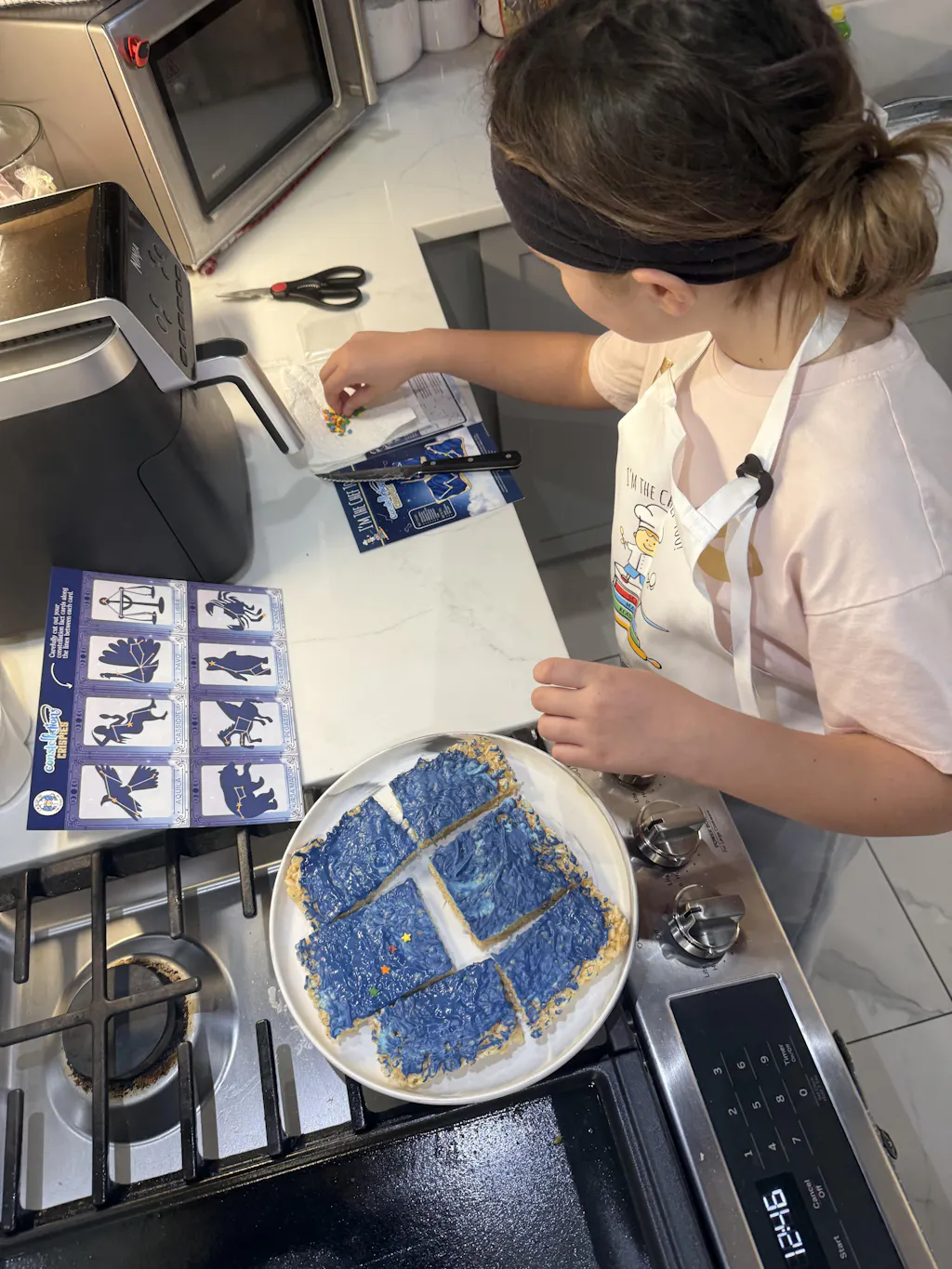
Incorporate Interests: If your child loves dinosaurs, look for ways to incorporate them into crafts, like making edible "dinosaur eggs" or creating prehistoric scenes with playdough. Our kits often come with themes like space, ocean, or geology to tap into these interests, like our
Galaxy Donut Kit[https://www.imthecheftoo.com/collections/kits/products/galaxy-donut-kit] for budding astronomers. - Utilize Available Resources: Don't feel pressured to buy expensive supplies. Many fantastic march craft activities for kids can be done with household items, recycling, or items found in nature.
By keeping these practical tips in mind, you can create a supportive and exciting environment for march craft activities for kids, ensuring that every moment spent crafting and cooking becomes a valuable learning experience. At I'm the Chef Too!, we are committed to making these moments of "edutainment" easy, enriching, and unforgettable for your entire family.
Conclusion
As we've journeyed through the vibrant possibilities of march craft activities for kids, it's clear that this transitional month offers far more than just a bridge between winter and spring. It's a prime opportunity to ignite curiosity, celebrate creativity, and strengthen family bonds through hands-on "edutainment." From the whimsical tales of Dr. Seuss to the magical lore of St. Patrick's Day and the awe-inspiring awakening of nature, March provides a rich tapestry of themes just waiting to be explored.
We've seen how a simple craft can transform into a lesson in fine motor skills, how baking can become a thrilling chemistry experiment, and how creative play can foster critical thinking and self-expression. At I'm the Chef Too!, our mission is precisely this: to seamlessly blend food, STEM, and the arts into unique, screen-free experiences that delight children and inspire a lifelong love for learning. Our kits, developed by mothers and educators, are crafted to make complex subjects tangible, engaging, and utterly delicious.
Remember, the goal isn't just to produce a perfect craft or a flawless dish; it's about the shared laughter, the concentrated effort, the trial and error, and the joyous discovery along the way. It's in these moments that confidence blossoms, skills are honed, and unforgettable family memories are made.
So, as March unfolds, don't let the changeable weather dictate your family's fun. Instead, embrace the opportunity to create, learn, and grow together. Ready to infuse your kitchen with even more excitement and educational adventure?
Give the gift of learning that lasts all year with a 12-month subscription to our STEM cooking adventures! Join The Chef's Club[https://www.imthecheftoo.com/pages/subscriptions?utm_source=flyrank&utm_medium=blog&utm_campaign=content_marketing] today and receive a new, exciting kit delivered right to your door every month with free shipping in the US. Let's make every month an adventure!
FAQ: March Craft Activities for Kids
Q1: What age group are these March craft activities for kids suitable for?
Our suggested march craft activities for kids are designed to be adaptable for a wide range of ages, from toddlers (with significant adult supervision) to elementary school children. Many activities can be simplified for younger children (e.g., tearing paper instead of cutting, pre-measuring ingredients) or made more complex for older children (e.g., designing their own projects, exploring deeper scientific concepts). Our I'm the Chef Too! kits typically specify an age range to guide you, but generally, we focus on engaging 4-12 year olds.
Q2: Do I need special supplies for these crafts?
Not necessarily! Many of the ideas discussed utilize common household items, recycled materials, or simple craft supplies you might already have, like paper, glue, markers, popsicle sticks, and kitchen staples. For specific themed cooking adventures that blend STEM and food, our I'm the Chef Too! kits, available in The Chef's Club subscription[https://www.imthecheftoo.com/pages/subscriptions?utm_source=flyrank&utm_medium=blog&utm_campaign=content_marketing] or as one-time purchases in our shop[https://www.imthecheftoo.com/collections/kits?utm_source=flyrank&utm_medium=blog&utm_campaign=content_marketing], come with pre-measured dry ingredients and specialty tools, making preparation incredibly convenient.
Q3: How can I make these activities educational and not just "play"?
The beauty of "edutainment" is that learning is disguised as fun! To enhance the educational value of these march craft activities for kids:
- Ask open-ended questions: "What do you think will happen if...?" "Why do you think this works?" "How could we make this stronger/more colorful?"
- Discuss concepts: Talk about colors, shapes, numbers (counting, measuring), scientific reactions (e.g., how yeast makes dough rise), or animal habitats while crafting.
- Read related books: Pair Dr. Seuss crafts with reading his books, or spring crafts with books about nature.
- Focus on the process: Emphasize problem-solving, perseverance, and fine motor skill development over a perfect end product.
Q4: My child gets frustrated easily. How can I keep them engaged?
The key is to set realistic expectations and adapt.
- Simplify: Break down complex steps, offer more assistance, or choose easier projects.
-
Focus on their interests: Tailor activities to what genuinely excites them (e.g., if they love space, explore our
Galaxy Donut Kit[https://www.imthecheftoo.com/collections/kits/products/galaxy-donut-kit]). - Embrace imperfections: Reassure them that it's okay if things don't look exactly like a picture. The effort and learning are what matter most.
- Short bursts: For younger children, short, focused periods of activity are more effective than prolonged sessions.
- Celebrate effort: Praise their hard work and creativity, not just the final outcome.
Q5: How can I minimize the mess?
Mess is often part of the creative process, but you can manage it!
- Prepare your space: Use a washable tablecloth, old newspaper, or an art mat.
- Wear aprons/old clothes: Accidents happen!
- Have cleaning supplies ready: Keep wet cloths or paper towels nearby for immediate spills.
- Work in designated areas: Confine messy activities to easy-to-clean spaces like the kitchen or outdoors.
- Involve kids in clean-up: Teach them that cleaning up is part of the activity, fostering responsibility.
Q6: What makes I'm the Chef Too! kits different from other craft or cooking activities?
At I'm the Chef Too!, we go beyond just providing ingredients or craft supplies. Our kits are unique "edutainment" experiences that:
- Blend Food, STEM, and Art: Each kit weaves together these disciplines in a cohesive, engaging theme.
-
Spark Curiosity: We teach complex subjects through tangible, hands-on cooking adventures. For instance, our
Erupting Volcano Cakes[https://www.imthecheftoo.com/collections/kits/products/erupting-volcano-cakes-kit] are a delicious lesson in chemical reactions. - Developed by Experts: Our kits are created by mothers and educators, ensuring they are age-appropriate, educational, and fun.
- Convenient and Screen-Free: Pre-measured dry ingredients and specialty supplies are delivered to your door, offering a wonderful alternative to screen time and facilitating family bonding.
- Focus on Process & Benefits: We aim to foster a love for learning, build confidence, develop key skills, and create joyful family memories, rather than overpromising specific academic outcomes.
Q7: Can these activities be done in a classroom or group setting?
Absolutely! Many of these march craft activities for kids are perfect for groups, fostering collaboration and shared learning. We also offer special programs for schools and groups[https://www.imthecheftoo.com/pages/school?utm_source=flyrank&utm_medium=blog&utm_campaign=content_marketing], which can be customized with or without food components to suit various educational environments and class sizes. They're ideal for homeschool co-ops, after-school programs, or classroom enrichment.