Table of Contents
- Introduction
- Understanding the Lunar New Year: A Rich Tapestry of Tradition
- Why Crafts for Lunar New Year? More Than Just Fun
- Crafting with a Purpose: Incorporating STEM & Art
- Bringing the Traditions to Life: Edible Lunar New Year Crafts
- Beyond the Kitchen: Non-Edible Lunar New Year Crafts for Kids
- Making it a Family Affair: Bonding Over Lunar New Year Activities
- The I'm the Chef Too! Philosophy: Blending Learning and Deliciousness
- Tips for a Successful Crafting Session
- Elevating the Experience: Learning Beyond the Craft
- Conclusion
- FAQ Section
As the days grow longer and a fresh beginning stirs on the horizon, many cultures worldwide prepare to welcome the Lunar New Year. This isn't just another calendar date; it's a vibrant celebration teeming with rich traditions, profound symbolism, and the promise of good fortune. For families, it’s an incredible opportunity to connect with history, culture, and each other. But how do we bring these ancient festivities to life for our children in a way that truly engages them? The answer lies in the magic of hands-on activities, particularly through creative crafting and delightful edible adventures.
This blog post will delve into the heart of the Lunar New Year, exploring its significance and how we can use a variety of engaging crafts, both edible and non-edible, to make these traditions tangible and memorable for kids. We'll explore how these seemingly simple activities transform into powerful learning experiences, fostering not just creativity but also a deeper understanding of STEM principles, cultural appreciation, and invaluable family bonding. From designing dazzling lanterns to crafting delicious dishes that tell a story, get ready to discover how to celebrate the Lunar New Year with a burst of creativity and joy, sparking curiosity in every little learner.
Introduction
Imagine the excited chatter of children, the vibrant colors of paper and paint, and the sweet aroma of special treats filling your home. This isn't just a picture of a fun afternoon; it's the essence of celebrating the Lunar New Year through the eyes of a child, a celebration often marked by a fascinating blend of ancient customs and modern joy. But for many, the richness of this tradition can feel a little distant or complex to introduce to young minds. How do we transform historical narratives and symbolic meanings into something relatable and fun for kids? The secret ingredient, as we often discover at I'm the Chef Too!, is hands-on engagement – particularly through the universal language of food and art.
This post is your guide to making the Lunar New Year an unforgettable and educational experience for your family. We'll explore why embracing Lunar New Year crafts for kids isn't just about keeping them busy, but about unlocking a treasure trove of learning opportunities that span cultural literacy, fine motor skill development, and even core STEM concepts. Our aim is to equip you with a wealth of ideas for both delicious edible crafts and captivating non-edible projects that will not only entertain but also educate, creating lasting memories and a deeper appreciation for this significant global celebration. Get ready to embark on a festive journey where every craft is a lesson, every ingredient a discovery, and every shared moment a cherished memory.
Understanding the Lunar New Year: A Rich Tapestry of Tradition
Before diving into the fun of crafting, let's take a moment to understand the rich foundation of the Lunar New Year itself. Often mistakenly referred to solely as "Chinese New Year," this significant holiday is celebrated across many Asian cultures, including Vietnamese, Korean, Tibetan, and more, each with its unique customs and traditions. What unites them is the observance of a new year based on the lunisolar calendar, signifying new beginnings, family reunions, and wishes for prosperity and good fortune.
The festivities are steeped in symbolism. Red, for instance, is a dominant color, believed to ward off evil spirits and signify prosperity and good luck. The cleaning of homes before the New Year symbolizes sweeping away ill fortune and making way for good luck. Feasts are central, with specific foods prepared and eaten for their symbolic meanings – longevity noodles, dumplings for wealth, and sweet rice cakes for a rising fortune. The tradition of giving red envelopes (hongbao) filled with money is a way for elders to pass on blessings and good wishes to the younger generation. Each year is also associated with one of the twelve animals of the Chinese zodiac, each carrying its own characteristics and predictions.
Introducing these elements to children through stories and explanations before or during craft time can elevate their understanding and appreciation. It’s not just about making a dragon; it’s about understanding why the dragon is important in the culture, what it represents, and how it’s celebrated. This holistic approach aligns perfectly with our mission at I'm the Chef Too!, where we believe in blending food, STEM, and the arts into one-of-a-kind "edutainment" experiences that spark curiosity and creativity, encouraging children to explore the "why" behind what they're doing.
Why Crafts for Lunar New Year? More Than Just Fun
Engaging children in Lunar New Year crafts offers a multitude of benefits far beyond mere entertainment. While the joy of creation is certainly a powerful motivator, these activities serve as invaluable tools for development and learning across several key areas:
- Cultural Appreciation and Global Awareness: Crafts provide a tangible link to cultural traditions. By making a paper lantern, children aren't just cutting and gluing; they're connecting to a custom observed by millions around the world, learning about diverse celebrations, and developing a broader worldview. This early exposure helps foster empathy and respect for different cultures, laying the groundwork for global citizenship.
- Fine Motor Skills Development: Many crafts, from intricate cutting to delicate painting or kneading dough, require precise hand-eye coordination and manipulation of small objects. These activities are crucial for developing fine motor skills, which are essential for tasks like writing, buttoning clothes, and using utensils.
- Creativity and Imagination: With a theme like Lunar New Year, children are encouraged to let their imaginations soar. How will their dragon look? What patterns will adorn their lucky knot? These open-ended questions foster creative thinking, problem-solving, and the ability to express themselves uniquely.
- STEM Integration: Believe it or not, many crafts naturally incorporate STEM principles. Designing a balanced lantern involves basic engineering. Mixing colors to create specific hues is a chemistry lesson. Counting out red envelopes or pieces for a zodiac animal craft introduces mathematical concepts. At I'm the Chef Too!, we are dedicated to showing that learning is all around us, especially when it's hands-on and delicious. We develop our unique kits to seamlessly weave science, technology, engineering, and math into every fun project.
- Language and Storytelling: As children engage in crafts, it's a perfect opportunity to introduce new vocabulary related to the Lunar New Year (e.g., "prosperity," "zodiac," "dumplings," "lanterns"). You can also encourage them to tell stories about their creations, enhancing their communication and narrative skills.
- Family Bonding: Crafting together creates a shared experience, fostering communication, teamwork, and precious memories. In our busy, screen-filled lives, these moments of focused, creative interaction are invaluable for strengthening family ties. Our mission at I'm the Chef Too! is rooted in facilitating just this kind of family bonding through screen-free, educational alternatives.
Ready to infuse your home with cultural richness and educational fun? Why not start your monthly adventure with us? Join The Chef's Club today and get a new themed kit delivered with free shipping!
Crafting with a Purpose: Incorporating STEM & Art
At I'm the Chef Too!, we firmly believe that every activity can be an "edutainment" experience, a delightful blend of education and entertainment. When we talk about Lunar New Year crafts for kids, we're not just suggesting ways to pass the time; we're advocating for rich, multidisciplinary learning opportunities. These crafts provide a natural bridge to understanding complex subjects through tangible, hands-on activities.
Consider the simple act of making a paper lantern. This involves principles of engineering (structural stability, folding techniques), geometry (shapes, symmetry), and even basic physics (how light interacts with different materials). When a child cuts out symmetrical patterns, they're engaging with mathematical concepts. When they choose colors and decorations, they're exploring art and cultural aesthetics.
Similarly, crafting a dragon puppet isn't just about gluing; it's an exploration of mechanics (how joints allow movement), design (creating a visually striking and culturally significant creature), and storytelling (using the puppet for imaginative play). You can discuss the science of flight (even if a puppet doesn't fly, the concept is there) or the engineering of how the parts connect to make the whole.
Our approach, developed by mothers and educators, ensures that these learning moments are organic and enjoyable. We want children to naturally discover the wonders of science and math through creative expression, without even realizing they're "learning." It’s about sparking that initial curiosity that leads to a lifelong love of exploration. For more imaginative projects that combine learning and play, you can always browse our complete collection of one-time kits and find the perfect theme for your little learner!
Bringing the Traditions to Life: Edible Lunar New Year Crafts
What better way to celebrate a holiday steeped in feasting than by creating edible crafts? This is where the I'm the Chef Too! philosophy truly shines, blending the joy of cooking with fascinating STEM lessons. Edible crafts for Lunar New Year are not only delicious but also deeply symbolic, offering a sensory and memorable way to connect with the culture.
Fortune Cookies with a Twist
Traditional fortune cookies are a beloved part of many Asian-inspired meals, and making them from scratch can be a fantastic edible craft. For kids, the real fun lies in decorating them and, of course, writing their own fortunes!
- The STEM Connection: Baking fortune cookies involves precise measurements (math), understanding the chemical reactions that cause dough to rise and crisp (chemistry), and observing heat transfer in the oven (physics). The delicate shaping of the hot cookie requires quick action and an understanding of how materials change with temperature.
- The Craft: Provide plain, freshly baked fortune cookies (or use store-bought if time is short) along with edible markers, melted chocolate, and sprinkles. Kids can decorate the outside with traditional symbols like lucky clouds, flowers, or their zodiac animal. For an extra touch, have them write "fortunes" on small strips of paper beforehand – wishes for good health, happiness, or silly predictions – and insert them into the still-warm cookies before folding.
- Cultural Significance: Discuss how fortunes symbolize hope and good wishes for the future, a key theme of the Lunar New Year.
Delicious Dumplings of Prosperity (Jiaozi)
Dumplings are a quintessential Lunar New Year food, symbolizing wealth because their shape resembles ancient Chinese gold ingots. Making them is a fantastic hands-on activity.
- The STEM Connection: Measuring ingredients for the filling and dough (math). Understanding how different ingredients interact to create texture (chemistry). The art of folding the dumplings involves basic engineering principles for creating a sealed, robust package that holds its shape during cooking.
- The Craft: You can make your own dough or use store-bought dumpling wrappers for simplicity. Prepare a simple filling (ground pork or chicken with finely chopped cabbage, ginger, and soy sauce, or a vegetarian version with tofu and mushrooms). Kids can practice spooning small amounts of filling, folding the wrappers, and crimping the edges. Even imperfect dumplings are delicious!
- Cultural Significance: Talk about how making and eating dumplings together signifies family unity and wishing for prosperity in the new year. Each dumpling eaten is a wish for more wealth!
Sweet Rice Cakes for Rising Fortune (Nian Gao)
Nian Gao, or New Year's Cake, is a sticky rice cake that symbolizes "getting higher year by year" (nian gao sounds like "year high"), signifying progress and prosperity.
- The STEM Connection: Working with glutinous rice flour introduces kids to different properties of ingredients (chemistry). Steaming the cakes involves understanding changes in states of matter and heat transfer. Cutting and shaping the steamed cakes uses geometry and fine motor skills.
- The Craft: This can be a more involved cooking project, often using glutinous rice flour, sugar, and water, steamed in a mold. Once cooled, kids can help slice the nian gao and decorate individual pieces with edible glitter, candied fruit, or simply arrange them beautifully on a platter.
- Cultural Significance: Emphasize the symbolism of "rising higher" – doing better in school, growing taller, achieving new goals.
Tangyuan: Spheres of Reunion
Tangyuan are sweet glutinous rice balls, often served in a ginger syrup, symbolizing reunion and completeness due to their round shape.
- The STEM Connection: Mixing and kneading the dough for the rice balls involves sensory exploration and understanding dough consistency (chemistry/physics). Shaping the perfect sphere is a great way to practice spatial reasoning and fine motor skills.
- The Craft: This is a fantastic craft for small hands! Provide pre-made dough (glutinous rice flour and water) or guide kids through mixing it. They can then roll small pieces of dough into balls. You can even experiment with adding natural food coloring to make vibrant tangyuan.
- Cultural Significance: Discuss how the round shape represents family togetherness and completeness, especially poignant during family reunion dinners.
Integrating these edible crafts into your Lunar New Year celebration is a powerful way to engage all senses and bring the culture to life. It’s a hands-on chemistry lesson, a delicious math problem, and a cultural journey all rolled into one. If you're looking for more exciting ways to combine food, STEM, and art into incredible learning adventures, remember that our monthly Chef's Club subscription delivers a new adventure right to your door with free shipping in the US! It's the perfect way to keep the learning and deliciousness going all year long.
Beyond the Kitchen: Non-Edible Lunar New Year Crafts for Kids
While edible crafts are a specialty for us at I'm the Chef Too!, the world of non-edible crafts for Lunar New Year is equally rich and offers its own unique learning opportunities. These crafts often involve more traditional art supplies and can be proudly displayed as festive decorations.
Dazzling Paper Lanterns
Lanterns are iconic symbols of the Lunar New Year, illuminating homes and streets with warm light. Making them is a classic and rewarding craft.
- The STEM Connection: Designing a lantern involves fundamental engineering principles: how to create a stable structure that can hold its shape. Cutting symmetrical patterns requires an understanding of geometry. Even choosing paper thickness can lead to discussions about materials science. If you incorporate a small LED tea light, you can talk about basic electricity and how light works.
- The Craft: Simple paper lanterns can be made from construction paper. Kids can fold a rectangle of paper in half lengthwise, cut strips from the folded edge to about an inch from the unfolded edge, then open it up and glue the short ends together to form a cylinder. Add a handle. For more advanced crafters, use red and gold paper, intricate cut-outs, or even incorporate clear plastic sheets for stained-glass effects. Decorate with glitter, markers, or traditional symbols.
- Cultural Significance: Explain that lanterns symbolize brightness, happiness, and guiding light into the new year, warding off bad luck.
Majestic Dragon Puppets
The dragon dance is a highlight of Lunar New Year parades, symbolizing power, good fortune, and wisdom. Crafting a dragon puppet allows kids to bring this mythical creature to life.
- The STEM Connection: Constructing a dragon puppet that moves involves elements of mechanical engineering and design. How do the body segments connect? What materials allow for flexibility? How can you create a head that can be manipulated? This encourages problem-solving and understanding of how different parts work together.
- The Craft: Use paper bags for the head (decorated elaborately with scales, eyes, and fiery breath), and accordion-folded paper or fabric scraps for the long, flowing body. Attach the body segments together with string or tape to allow for movement. Use popsicle sticks or dowels to control the head and tail. Kids can use vibrant colors, glitter, and feathers to make their dragon truly spectacular.
- Cultural Significance: Discuss the dragon's role as a benevolent creature in Chinese culture, bringing good luck and rain. Encourage kids to perform their own dragon dance!
Lucky Red Envelopes (Hongbao)
Red envelopes are a fundamental part of the Lunar New Year, given with wishes of good fortune. Crafting them is a simple yet culturally significant activity.
- The STEM Connection: Folding and measuring to create a perfectly sized envelope involves basic math and geometry. Designing the decorations on the envelope encourages artistic expression and understanding of cultural aesthetics.
- The Craft: Provide red paper, gold markers, glitter, and stickers. Kids can cut out rectangles, fold them into envelopes, and seal them with glue or tape. The real fun is in the decoration! Encourage them to draw traditional symbols like lucky clouds, coins, the Chinese character for "fortune" (福), or the current year's zodiac animal.
- Cultural Significance: Explain that red envelopes symbolize good luck and blessings. You can even put a few chocolate coins inside as a fun treat, talking about the symbolism of giving and receiving.
Intricate Lucky Knot Art
Chinese knots are decorative handicrafts that often symbolize good luck, longevity, and prosperity. While traditional knot tying can be complex, simplified versions for kids are wonderfully engaging.
- The STEM Connection: Creating knots involves understanding patterns, sequences, and spatial reasoning (math and engineering). It also heavily develops fine motor skills and patience. Exploring different knot configurations can introduce basic topology concepts in a fun, tangible way.
- The Craft: Use colorful yarn, cord, or even strips of fabric. Teach kids a simple knot like a square knot or a friendship knot, and then encourage them to create a series of them, perhaps incorporating beads. They can create decorative hangings or bracelets.
- Cultural Significance: Discuss how each knot can represent a different wish or blessing, and how they are often given as gifts.
Zodiac Animal Crafts
Each Lunar New Year is associated with one of twelve animals. Crafting the current year's animal, or even all twelve, is a fantastic way to learn about the zodiac.
- The STEM Connection: Researching the animals and their characteristics encourages biology and research skills. Drawing and shaping the animals from various materials (paper, clay, felt) develops fine motor skills, spatial reasoning, and an understanding of animal anatomy and form.
- The Craft: This is incredibly versatile. Kids can draw, paint, or make collages of the current year's animal. They could sculpt it from playdough or clay, or create puppets using paper plates and craft sticks. For example, if it's the Year of the Dragon, they could make a friendly dragon mask.
- Cultural Significance: Explain the story of the zodiac and how people are believed to inherit traits from their birth year animal. It’s a fun way to connect personal identity with cultural storytelling. Even beloved characters can make learning fun, like when kids make Peppa Pig Muddy Puddle Cookie Pies – demonstrating how imagination and specific themes can be woven into delightful culinary projects!
These non-edible crafts, when combined with stories and discussions about their cultural context, become powerful educational tools. They allow children to engage with the Lunar New Year on multiple levels, fostering creativity, developing practical skills, and building a deeper appreciation for diverse traditions. If you're looking to explore a wider range of hands-on activities that combine learning and play, don't forget to explore our full library of adventure kits available for a single purchase in our shop.
Making it a Family Affair: Bonding Over Lunar New Year Activities
The heart of the Lunar New Year is family reunion and togetherness. Integrating crafts and cooking into these celebrations naturally fosters profound family bonding moments. In an increasingly digital world, finding screen-free educational alternatives that bring everyone to the table (or the crafting station!) is more important than ever.
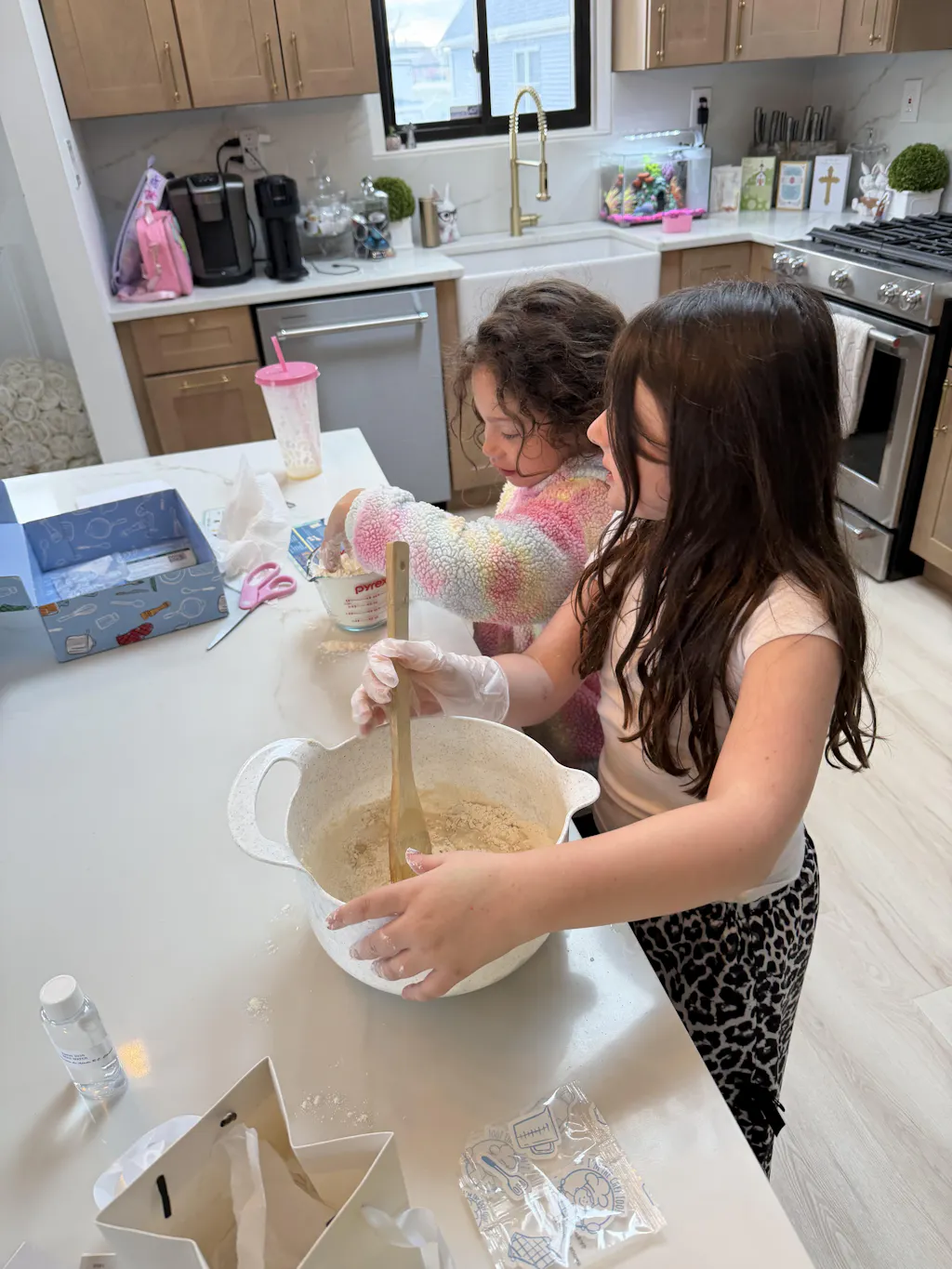
When you gather to make Lunar New Year crafts for kids, you're not just creating objects; you're creating shared experiences. Imagine the laughter as everyone tries to fold a perfect dumpling, the focused silence as tiny hands decorate a lantern, or the proud exclamations as a dragon puppet takes shape. These are the moments that truly matter, building bridges between generations and strengthening family ties.
Parents can share stories from their own childhood celebrations or research new facts about the Lunar New Year together. Older siblings can assist younger ones with cutting or gluing, practicing patience and leadership. Even grandparents can join in, sharing their wisdom and cultural insights. These intergenerational activities are incredibly enriching, teaching children about tradition, respect, and the joy of shared labor.
At I'm the Chef Too!, this emphasis on family bonding is central to our mission. We design our kits and activities to be accessible and enjoyable for a range of ages, encouraging collaborative fun and meaningful interactions. Our unique approach, developed by mothers and educators, understands the need for activities that facilitate connection while delivering valuable learning. So, this Lunar New Year, make a conscious effort to set aside time for family crafting and cooking. These are the memories your children will cherish for years to come, long after the last red envelope has been opened.
Ready to make every month a celebration of family and learning? Join The Chef's Club and discover new ways to bond over delicious and educational adventures, delivered right to your home with free shipping!
The I'm the Chef Too! Philosophy: Blending Learning and Deliciousness
At I'm the Chef Too!, our passion is to transform learning into an adventure, especially for the curious minds of children. Our core mission is to seamlessly blend food, STEM, and the arts into one-of-a-kind "edutainment" experiences. The Lunar New Year, with its rich cultural tapestry and emphasis on celebratory foods, perfectly embodies this philosophy.
We understand that parents and educators are constantly seeking engaging, effective ways to spark curiosity and creativity in children. That's why we've committed ourselves to providing screen-free educational alternatives that are both tangible and deeply rewarding. Our cooking STEM kits are not just about following a recipe; they are carefully designed journeys developed by mothers and educators to teach complex subjects through hands-on, delicious cooking adventures.
When a child measures flour for a dumpling wrapper, they're not just performing a step in a recipe; they're engaging with fractions and volume (math). When they observe dough rising or ingredients changing color in the oven, they're witnessing chemical reactions and physical transformations (science). Decorating a Lunar New Year treat isn't just art; it's cultural expression and fine motor skill development.
Our approach fosters a love for learning by making it fun, accessible, and deliciously rewarding. We don't promise that your child will become a top scientist overnight. Instead, we focus on the incredible benefits of the process: building confidence as they master new skills, developing problem-solving abilities, encouraging experimentation, and most importantly, creating joyful family memories around the kitchen table. These foundational experiences are invaluable, laying the groundwork for a lifelong love of discovery. Imagine exploring astronomy by creating your own edible solar system with our Galaxy Donut Kit – it's a perfect example of how we bring complex themes to life through delicious, hands-on fun!
We believe that learning should be an exciting exploration, not a chore. Through our kits, children learn to follow instructions, think critically, understand cause and effect, and express their creativity, all while creating something delicious they can share with pride. This Lunar New Year, let I'm the Chef Too! inspire you to turn cultural celebration into an enriching educational experience that delights the senses and nurtures young minds.
Tips for a Successful Crafting Session
To ensure your Lunar New Year craft and cooking sessions are enjoyable and stress-free for everyone, here are some practical tips:
- Preparation is Key: Gather all your materials (paper, glue, paints, ingredients, cooking tools) before you begin. This minimizes interruptions and keeps the flow of the activity smooth. Having everything ready to go will make the experience more relaxing for both you and your child.
- Safety First: Especially with cooking projects, adult supervision is paramount. Teach children about kitchen safety – proper knife handling (or using child-safe alternatives), oven safety, and avoiding hot surfaces. For crafts, ensure non-toxic materials are used, especially for younger children who might put things in their mouths.
- Embrace the Mess: Crafting and cooking with kids inevitably leads to some mess. Lay down old newspapers, a tablecloth, or a craft mat to protect your surfaces. Dress kids in old clothes or aprons. View the mess as a sign of creativity in action, not a chore. Easy cleanup means more fun!
- Keep it Age-Appropriate: Tailor the complexity of the crafts and recipes to your child's age and skill level. Younger children might enjoy simple coloring and gluing, while older children can handle more intricate cutting, folding, or cooking steps. Don't be afraid to simplify or adapt.
- Focus on the Process, Not Perfection: The goal is to have fun and learn, not to create a museum-worthy masterpiece. Encourage effort and creativity over flawless execution. Praise your child's unique ideas and attempts. This builds confidence and fosters a love for trying new things.
- Tell Stories and Explain Symbolism: As you craft, talk about the meaning behind the symbols and colors. Share stories about the Lunar New Year, the zodiac animals, or family traditions. This adds depth to the activity and enhances cultural understanding.
- Involve Kids in Every Step: From choosing colors to mixing ingredients, let children participate as much as possible. This gives them ownership of the project and makes them feel valued.
- Be Flexible: Sometimes, a craft might not go as planned, or a child might lose interest in one activity and want to switch to another. Be open to adapting. The most important thing is to enjoy the time together.
- Display Their Creations: Proudly display their finished crafts around the house. For edible creations, enjoy them together as a family. This validates their efforts and reinforces the joy of creation.
- Document the Fun: Take photos or videos of your crafting and cooking adventures. These will become cherished memories, capturing the joy and learning that took place.
By following these tips, you can ensure that your Lunar New Year crafting and cooking sessions are not just educational but also genuinely enjoyable experiences that strengthen family bonds and create lasting happy memories. Looking for more engaging and educational activities? Remember to check out our one-time kits for a wide variety of themed adventures!
Elevating the Experience: Learning Beyond the Craft
While the act of crafting is inherently educational, we can deepen the learning experience by extending the themes beyond the immediate activity. This is where truly comprehensive "edutainment" comes into play, expanding children's horizons in a natural and engaging way.
- Read Books and Watch Documentaries: Complement your hands-on activities with age-appropriate books about the Lunar New Year, its history, legends, and various cultural celebrations. Older children might enjoy short documentaries or animated stories about the zodiac animals or the Nian monster. This provides context and reinforces what they've learned through crafting.
- Explore Geography: Use a world map or globe to locate the countries that celebrate the Lunar New Year. Discuss their capital cities, flags, and other unique cultural aspects. This subtly weaves in geography lessons and broadens their global awareness.
- Learn Basic Phrases: Teach your children a few simple phrases in a language spoken during the Lunar New Year, such as "Gong Xi Fa Cai" (Happy New Year and wishing you prosperity) in Mandarin, or "Chúc Mừng Năm Mới" (Happy New Year) in Vietnamese. Learning even a few words can be a fun linguistic challenge and deepen cultural respect.
- Visit a Local Celebration: If possible, attend a local Lunar New Year parade, festival, or cultural event. Seeing the traditions come alive with music, dances, traditional attire, and dragon performances can be an awe-inspiring experience that truly cements their understanding and appreciation.
- Research Zodiac Animals: Delve deeper into the characteristics associated with each zodiac animal. Have children research their own birth year animal and discover its traits. This can lead to discussions about personality, strengths, and storytelling.
- Discuss the Importance of Community and Family: The Lunar New Year is a time for family reunions and community gatherings. Talk about why these connections are important, the role of elders, and the value of sharing and giving.
- Extend STEM Investigations: For the science-minded child, turn an edible craft into a full-blown experiment. For example, when making Nian Gao, experiment with different ratios of flour to water to see how it affects texture. For lanterns, try different light sources and observe the effects. This encourages hypothesis testing and critical thinking.
- Create a Family Time Capsule for the New Year: Have everyone write down a wish or a goal for the coming year, inspired by the themes of new beginnings. Place these in a decorative box (perhaps one of their crafted red envelopes!) and open it next year to reflect on their journey.
By taking these extra steps, you transform a craft session into a comprehensive educational unit, nurturing a well-rounded understanding of the Lunar New Year. At I'm the Chef Too!, our goal is always to inspire this kind of continuous learning, making every activity a launchpad for further exploration and discovery. We are dedicated to sparking curiosity and creativity in children, and these extended activities are perfect examples of how to do just that, fostering a love for learning that lasts a lifetime.
Conclusion
The Lunar New Year is more than just a date on the calendar; it's a vibrant, culturally rich celebration of new beginnings, family unity, and hopes for prosperity. By engaging children in Lunar New Year crafts, both edible and non-edible, we provide them with a unique opportunity to connect with these traditions in a tangible, memorable way. These hands-on activities are not only incredibly fun but also powerful educational tools, nurturing fine motor skills, sparking creativity, fostering cultural appreciation, and seamlessly integrating fundamental STEM principles.
From rolling auspicious dumplings to decorating radiant paper lanterns, each project offers a chance for discovery and strengthens the bonds within your family. We hope this guide has inspired you to bring the joyous spirit of the Lunar New Year into your home, transforming it into a hub of learning, laughter, and delicious adventures. Remember, the true magic lies in the shared experience, the stories told, and the memories created together.
Ready to embark on a journey where learning is always an adventure and every experience is truly "edutainment"? Don't let the fun stop after the Lunar New Year! Spark curiosity and creativity in your child month after month.
Join The Chef's Club today and get a new, unique STEM cooking kit delivered right to your door with free shipping in the US. It's the perfect screen-free educational alternative for ongoing family bonding and delicious discovery!
FAQ Section
Q1: What is the Lunar New Year? A1: The Lunar New Year is a significant holiday celebrated by many cultures, particularly in East and Southeast Asia, marking the beginning of a new year based on the lunisolar calendar. It's a time for family reunions, honoring ancestors, and wishing for prosperity and good fortune. It's often mistakenly referred to only as "Chinese New Year," but it's celebrated in countries like Vietnam, Korea, Tibet, and more.
Q2: What are some common symbols of the Lunar New Year? A2: Common symbols include the color red (for good luck and to ward off evil), the Chinese zodiac animals (one for each year), red envelopes (hongbao) filled with money, lanterns, and specific foods like dumplings and Nian Gao, which all carry symbolic meanings of prosperity, health, and good fortune.
Q3: How can I explain the Lunar New Year to my young child? A3: Keep it simple and focus on the fun aspects! You can explain it as a special holiday when families gather, share delicious food, wish each other good luck, and celebrate a fresh start. Introduce the concept of a new animal for each year and its associated traits. Hands-on crafts and stories are excellent ways to make it relatable.
Q4: What age groups are these crafts suitable for? A4: Many of the crafts mentioned, like simple paper lanterns or decorating red envelopes, can be adapted for toddlers with adult assistance. Older children (preschool to elementary school age and beyond) can engage more independently in tasks like folding, cutting, and following recipe steps. Always supervise and tailor the complexity to your child's developmental stage.
Q5: What are the educational benefits of Lunar New Year crafts for kids? A5: These crafts offer numerous benefits, including developing fine motor skills, sparking creativity, fostering cultural appreciation and global awareness, improving language and storytelling abilities, and integrating STEM concepts like math (measuring, geometry), science (baking reactions), and engineering (structural design). They also promote valuable family bonding.
Q6: I'm not a great cook. Can I still do edible Lunar New Year crafts with my kids? A6: Absolutely! Many edible crafts can be simplified. For example, instead of making fortune cookies from scratch, you can buy plain ones and focus on the decorating and fortune-writing. For dumplings, using store-bought wrappers makes the process much quicker. The goal is the shared experience, not culinary perfection. Our I'm the Chef Too! kits are also designed to make cooking fun and easy, with pre-measured dry ingredients and clear instructions!
Q7: How can I make these activities screen-free and engaging? A7: Set a positive tone by making it a dedicated "crafting and cooking time" with no digital distractions. Play festive music, tell stories, and encourage conversation. The tactile nature of crafts and the delicious outcomes of cooking are often inherently more engaging than screens for children. Focus on the process and the joy of creating together.
Q8: What if my child isn't interested in a particular craft? A8: Flexibility is key! Don't force it. Have a few different options ready, or encourage them to put their own spin on an activity. The aim is to spark their curiosity and creativity, not to stick rigidly to a plan. Sometimes, just observing you enjoying the activity will eventually draw them in.
Q9: Where can I find more STEM-focused cooking activities for my kids? A9: Look no further than I'm the Chef Too! We specialize in blending food, STEM, and the arts into unique "edutainment" experiences. Our monthly Chef's Club subscription delivers a new, exciting kit right to your door, complete with pre-measured dry ingredients and specialty supplies. It's an easy and fun way to keep the learning adventures going all year long!