Table of Contents
- Introduction
- Why STEM for High Schoolers Matters Now More Than Ever
- Beyond the Classroom: The Power of Hands-On Learning
- Categories of Engaging STEM Activities for High School Students
- Integrating I'm the Chef Too! Principles at the High School Level
- Structuring STEM Success: Programs and Resources for High Schoolers
- Bringing STEM Home: Activities for Parents and Families
- Inclusivity in High School STEM: Ensuring Every Student Thrives
- Conclusion
- FAQ Section
Imagine a classroom where the "test" isn't a sheet of paper, but a self-built robot navigating a maze, a sustainably designed water filter producing clean water, or a complex algorithm successfully predicting market trends. For many high school students, traditional learning can feel abstract, disconnected from the vibrant, rapidly evolving world outside the classroom walls. Yet, the challenges and opportunities of our modern era — from climate change and global health to artificial intelligence and space exploration — demand a generation of innovators, critical thinkers, and problem-solvers. This isn't just about preparing for college; it's about shaping a future workforce equipped with the ingenuity, resilience, and adaptability to thrive.
This blog post isn't just about listing activities; it's about exploring a transformative approach to education, one that fosters genuine curiosity, builds lasting skills, and prepares high schoolers not just for college, but for a lifetime of discovery and impact. We will delve into why STEM is more crucial than ever for this age group, how hands-on experiences can unlock profound understanding, and offer a wide array of activities and opportunities that go beyond the traditional classroom. Our aim is to spark a lifelong passion for learning, empowering high school students to become the innovators, thinkers, and problem-solvers of tomorrow. Just as we believe at I'm the Chef Too! that blending food, STEM, and the arts creates one-of-a-kind "edutainment" experiences for younger learners, the core philosophy of tangible, engaging discovery is equally powerful for high schoolers. We are committed to sparking curiosity and creativity in children, facilitating family bonding, and providing a screen-free educational alternative, and these values extend to fostering a love for learning that lasts through adolescence and beyond.
Introduction
In an era defined by rapid technological advancements and complex global challenges, the importance of Science, Technology, Engineering, and Mathematics (STEM) education has never been more pronounced. For high school students, this isn't just about achieving good grades or ticking off graduation requirements; it's about equipping them with the fundamental tools to understand the world, innovate solutions, and embark on fulfilling careers in fields that are shaping our collective future. Yet, the traditional classroom setting, while foundational, doesn't always fully capture the dynamic, interconnected, and intensely practical nature of STEM disciplines. Many students find themselves disengaged, viewing STEM as abstract subjects disconnected from their daily lives or future aspirations.
This blog post aims to bridge that gap, offering a comprehensive look at engaging stem projects high school students can undertake that move beyond the textbook. We will explore how hands-on, experiential learning can ignite curiosity, foster critical thinking, and build practical skills that are invaluable in any career path. From complex coding challenges and advanced robotics to environmental stewardship and applied mathematics, we'll provide a wealth of ideas designed to inspire, challenge, and excite. Our goal is to illustrate how integrating diverse STEM experiences can cultivate a deeper appreciation for these fields, setting students on a trajectory of continuous learning and innovation. We believe that by making learning tangible, exciting, and relatable, we can help nurture the next generation of scientists, engineers, technologists, and mathematicians. Ready to explore a new adventure every month, delivered right to your door? Join The Chef's Club and enjoy free shipping on every box. Our monthly subscription boxes make it easy to keep the learning and fun going all year long!
Why STEM for High Schoolers Matters Now More Than Ever
The landscape of careers and global challenges is shifting at an unprecedented pace. The jobs of tomorrow demand a workforce that is not only knowledgeable but also adaptable, innovative, and proficient in problem-solving. STEM education provides the bedrock for these essential skills.
Future Career Pathways
Consider the burgeoning fields of artificial intelligence, renewable energy, biotechnology, and space exploration. These aren't just buzzwords; they represent industries that are actively seeking individuals with strong STEM foundations. High school is a critical juncture where students begin to explore potential career paths. Engaging in diverse STEM activities exposes them to the vast array of possibilities, from becoming a biomedical engineer designing life-saving devices to a data scientist analyzing complex patterns, or an environmental scientist developing sustainable solutions. This early exposure can be pivotal in helping them discover their passions and make informed decisions about their higher education and professional journeys. It’s about more than just a job; it's about finding a calling that can contribute meaningfully to society, addressing some of humanity's most pressing concerns. With a strong foundation in STEM, students are not just prepared for jobs; they are prepared to create them.
Critical Thinking and Problem-Solving
At its heart, STEM is about asking questions, seeking answers, and solving problems. Whether it's designing an efficient bridge, debugging a complex code, or analyzing scientific data, STEM activities inherently demand critical thinking. High school students learn to break down complex problems into manageable parts, evaluate information, formulate hypotheses, and test solutions. This iterative process of inquiry, experimentation, and refinement builds analytical skills that are transferable to every aspect of life, from personal decision-making to navigating societal issues. It teaches them how to think, not just what to think. When faced with a challenging stem project high school students are encouraged to consider multiple angles, evaluate different approaches, and logically deduce the most effective path forward. This process strengthens their ability to analyze complex situations, a skill that is invaluable regardless of their chosen future field.
Developing Resilience and Adaptability
STEM projects rarely go perfectly on the first try. Experiments fail, code has bugs, designs crumble. This isn't a sign of defeat but an integral part of the learning process. High school students engaged in STEM activities learn the invaluable lesson of resilience – persevering through challenges, learning from mistakes, and adapting their approaches. They understand that failure is not the end, but a stepping stone to deeper understanding and eventual success. This mindset is crucial in an ever-changing world where adaptability is paramount. When a student's carefully constructed model rocket doesn't launch as expected, they learn to troubleshoot, adjust, and re-launch, building a mental fortitude that serves them well beyond the project itself. This iterative process of trying, failing, learning, and refining fosters a powerful growth mindset, preparing them to tackle real-world complexities with confidence.
Fostering Innovation and Creativity
While often associated with logic and precision, STEM is profoundly creative. Innovation springs from the ability to imagine new possibilities and devise novel solutions. When students design their own experiments, develop unique algorithms, or engineer new devices, they are engaging in acts of creation. These activities encourage out-of-the-box thinking, allowing students to express their ideas and translate abstract concepts into tangible realities. This blend of logical rigor and creative freedom is what drives true innovation. Consider a student designing a Rube Goldberg machine; it requires not only an understanding of physics but also immense creativity to link disparate elements into a cohesive, often whimsical, chain reaction. This is where art truly meets science, much like our mission at I'm the Chef Too! to blend food, STEM, and the arts into unique experiences that spark creativity.
Beyond the Classroom: The Power of Hands-On Learning
For high school students, the leap from theoretical knowledge to practical application can be profound. Hands-on stem projects high school provides the perfect bridge, transforming abstract concepts into tangible, memorable experiences.
Bridging Theory and Practice
Imagine learning about aerodynamics by building and testing different paper airplane designs, or understanding chemical reactions by observing them bubble and change color in a real experiment. This direct engagement makes learning more meaningful and reinforces understanding in a way that lectures or textbooks alone cannot. High schoolers can tackle more complex applications, perhaps using a 3D printer to prototype a design they sketched digitally, or extracting DNA from fruit to understand genetics firsthand. These experiences ground theoretical knowledge in real-world contexts, making it stick. For instance, a student might read about Newton's laws of motion, but only by building and launching a model rocket do they truly grasp the interplay of thrust, drag, and gravity. This tactile engagement transforms passive information into active knowledge.
Engagement Through Experiential Learning
Passive learning often leads to disengagement, especially for busy high schoolers. Experiential learning, however, demands active participation. When students are building, experimenting, coding, or problem-solving, they are fully immersed. This active engagement stimulates multiple senses, caters to different learning styles, and fosters a deeper emotional connection to the subject matter. It turns learning from a chore into an exciting exploration. This is precisely the kind of engagement we champion at I'm the Chef Too!, where our kits transform complex subjects into delightful, edible adventures, sparking joy and discovery in every young learner. For high schoolers, this could mean designing and testing a solar-powered car, not just reading about renewable energy. Such activities foster intrinsic motivation, making students eager to learn more.
The Role of Mentorship and Collaboration
Many high school STEM activities, particularly advanced ones, thrive on collaboration. Working in teams on projects like robotics competitions or environmental surveys teaches students how to communicate effectively, delegate tasks, and leverage diverse strengths. These collaborative environments also provide opportunities for peer mentorship, where students learn from and teach one another. Such interactions mirror the collaborative nature of real-world scientific and engineering endeavors, preparing them for future professional environments. Moreover, adult mentors, whether teachers, parents, or professionals in STEM fields, can guide and inspire them, offering insights and encouragement that extend beyond the technical aspects of the project. These mentor relationships can be invaluable, offering real-world perspectives and networking opportunities that shape future career decisions. For schools and larger groups interested in fostering this collaborative spirit, we offer versatile programs for schools and groups, available with or without food components, perfectly suited for engaging high schoolers in unique STEM adventures.
Making Learning Delicious: I'm the Chef Too!'s Philosophy
While our core focus at I'm the Chef Too! is on younger children, our underlying mission and values are perfectly aligned with the benefits of hands-on, engaging STEM for all ages. We believe that blending food, STEM, and the arts creates one-of-a-kind "edutainment" experiences, proving that complex subjects can be fun and accessible. This philosophy – that tangible, multisensory experiences deepen understanding and spark joy – is universal. For high school students, the principles applied in our unique cooking adventures, developed by mothers and educators, can be scaled up or adapted.
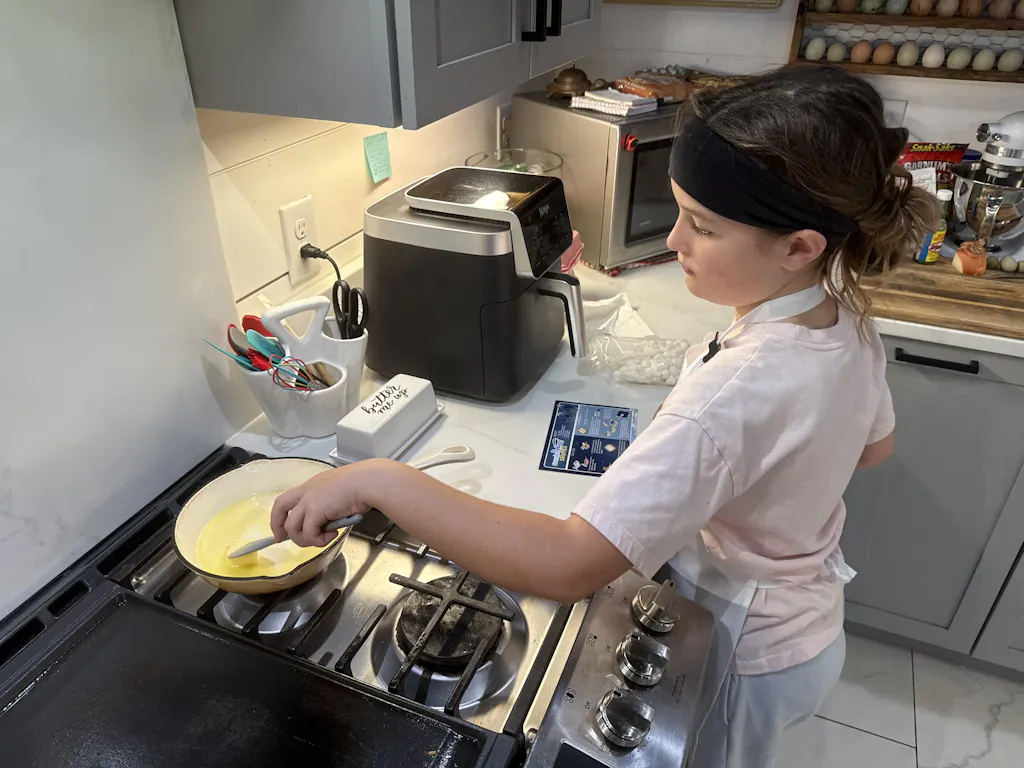
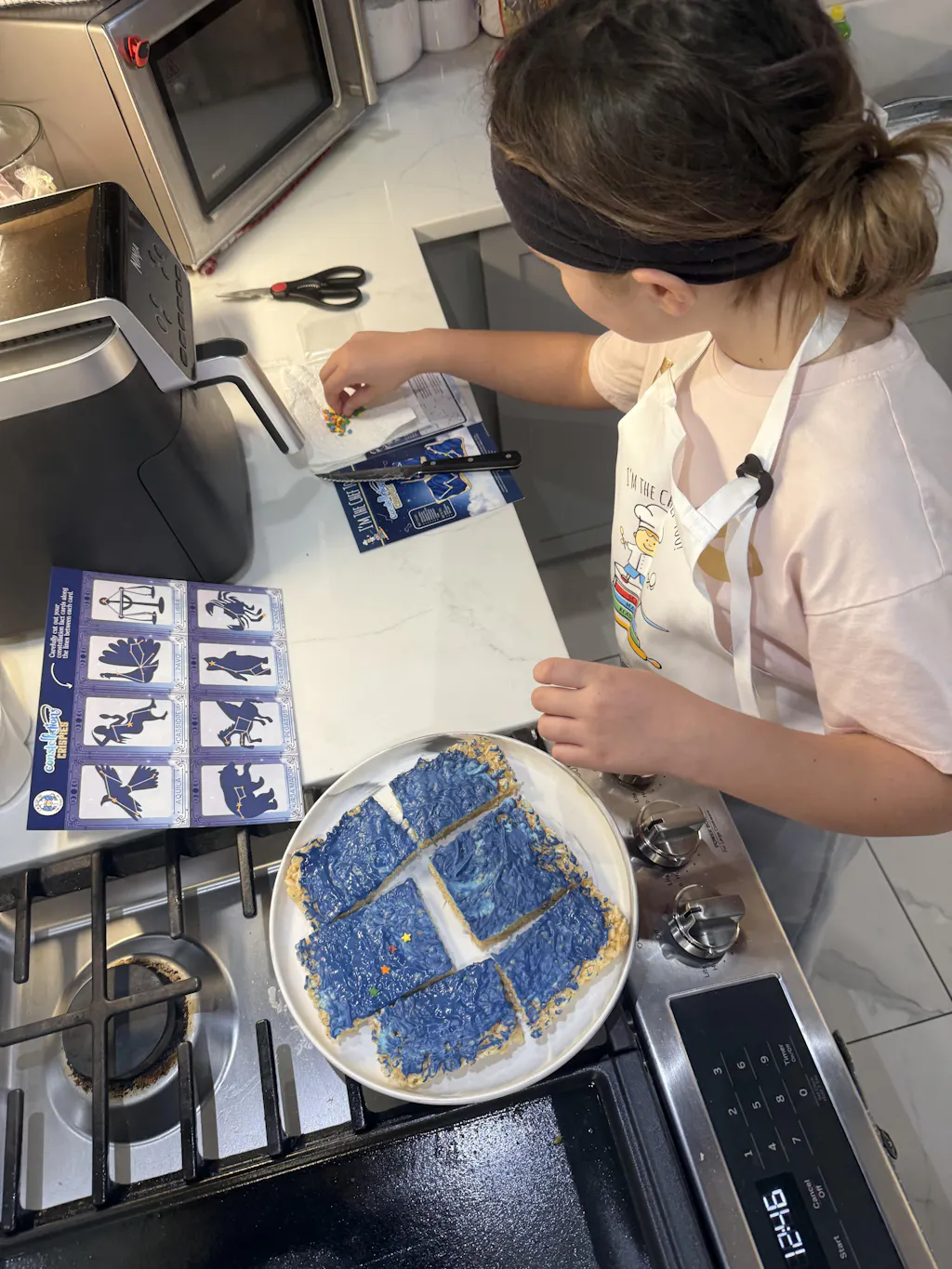
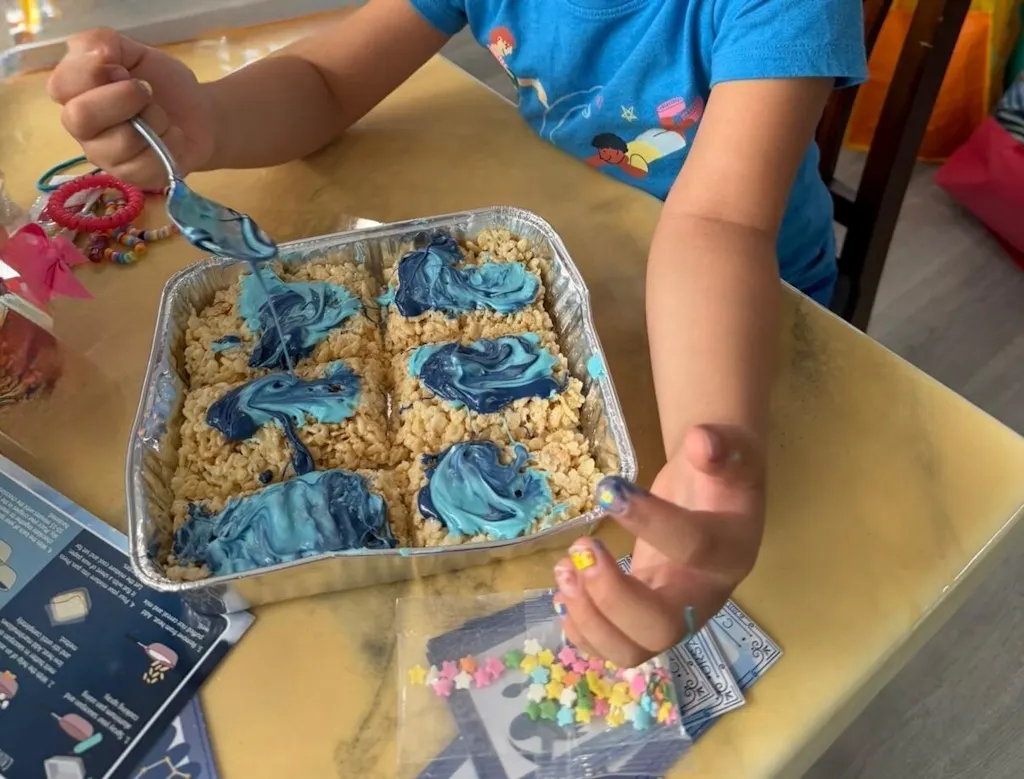
Consider how a simple baking project can demonstrate chemical reactions (leavening agents), physical changes (melting, crystallization), and even principles of measurement and ratios. Just like our Erupting Volcano Cakes kit introduces chemical reactions deliciously to younger chefs, high schoolers can explore advanced chemistry in the kitchen through molecular gastronomy, experimenting with spherification or gelification. Or, an edible solar system project, like our Galaxy Donut Kit, can spark discussions about planetary orbits and scale, even for older students. The kitchen, with its everyday ingredients and equipment, becomes an accessible and engaging laboratory. These "edutainment" experiences are designed to make learning memorable and enjoyable, proving that STEM isn't just for labs and textbooks. We believe in sparking curiosity and creativity in children, facilitating family bonding, and providing screen-free educational alternatives that transcend age.
Categories of Engaging STEM Activities for High School Students
To make STEM truly come alive, we need a diverse palette of activities that cater to various interests and learning styles. Here's a breakdown of compelling stem projects high school students can pursue, spanning various disciplines.
1. Engineering Challenges: Building, Designing, and Innovating
Engineering is all about applying scientific principles to design and build structures, machines, and systems. These projects push students to think creatively and logically to solve practical problems.
- Rube Goldberg Machine Design: Challenge students to design and build a Rube Goldberg machine, a complex contraption that performs a simple task through a series of elaborate chain reactions. This project inherently involves physics concepts like kinetic and potential energy, gravity, friction, and momentum. It also fosters immense creativity, problem-solving skills, and the ability to troubleshoot intricate systems. Students will iterate on their designs, learn from failures, and experience the satisfaction of a successful, albeit convoluted, machine.
- Bridge Building Competition: Using limited materials (e.g., popsicle sticks, spaghetti, cardboard, glue), students design and construct bridges aiming for maximum strength-to-weight ratio. This activity introduces principles of structural engineering, understanding forces like tension, compression, and shear, and the importance of load distribution. Testing the bridges to their breaking point provides immediate, tangible feedback on design effectiveness.
- Wind Turbine Design: Students research different wind turbine designs and the factors affecting efficiency (blade shape, size, angle, rotation speed). They then construct their own small-scale turbines using materials like PVC pipes, small motors, and craft supplies. Testing in varying wind conditions allows them to optimize their designs, learning about renewable energy, aerodynamics, and mechanical engineering.
- Robotics with Arduino/Raspberry Pi: This is a fantastic entry point into mechatronics and programming. Students can build a simple robot (e.g., line-follower, obstacle avoidance robot) using microcontrollers like Arduino or Raspberry Pi. They learn basic electronics (circuits, sensors, motors) and coding to program the robot's behavior. This combines mechanical design, electrical engineering, and computer science, offering a holistic STEM experience.
- 3D Printed Prosthesis Design: A more advanced project involves combining engineering and biology. Students research the biomechanics of human movement and design a simple prosthetic limb or assistive device using CAD software (e.g., Tinkercad, Fusion 360). If access to a 3D printer is available, they can print their design, experiencing the full engineering design process from conception to tangible product. This project can have a powerful social impact component.
- Model Rocketry: Students learn about propulsion, aerodynamics, and Newton's laws of motion by building and launching model rockets. Kits are readily available, but students can also design their own fins, nose cones, and recovery systems. Experimenting with different designs and engine sizes to achieve specific altitudes or stable flights provides hands-on physics and engineering lessons. Safety protocols are a critical component of this project.
2. Computer Science & Technology: Coding, Design, and Digital Innovation
In our increasingly digital world, computational thinking and coding skills are paramount. These projects introduce students to the logic and creativity of computer science.
- Mobile App Development: Challenge students to brainstorm an app idea that solves a problem, entertains, or provides a service. They can then learn to develop a basic app using platforms like MIT App Inventor (for beginners), Swift (iOS), or Java/Kotlin (Android). This covers user interface design, logical flow, and basic software architecture, culminating in a tangible product.
- Coding a Simple Game with Python: Python is an excellent beginner-friendly language. Students can write a text-based adventure game, a simple "Rock, Paper, Scissors" game, or even a graphical game using libraries like Pygame. This teaches fundamental programming concepts: variables, loops, conditionals, functions, and debugging, all in a fun, engaging context.
- 3D Modeling and Printing: While mentioned under engineering, 3D modeling has a strong computational and design component. Students learn CAD software to create digital models of objects, which can then be brought to life with a 3D printer. This develops spatial reasoning, design thinking, and an understanding of digital fabrication processes.
- Introduction to Data Science or AI: High school students can explore the basics of data science by collecting and analyzing simple datasets (e.g., sports statistics, climate data, social media trends). They can use spreadsheet software or basic Python libraries to visualize data and identify patterns. For a taste of AI, they might explore simple machine learning concepts by training a basic image classifier or a chatbot, understanding the ethical implications alongside the technical aspects. This doesn't require advanced programming but focuses on the logic and impact of these technologies.
3. Environmental & Sustainable Science: Understanding Our Planet and Finding Solutions
These projects focus on ecological principles, sustainability, and addressing environmental challenges.
- Solar Oven / Solar-Powered Car: Building a solar oven from a pizza box or a solar-powered car helps students understand renewable energy, heat transfer, and energy conversion. They can experiment with reflective materials, insulation, and design efficiency, exploring practical applications of physics and environmental science.
- Water Filtration System: Students design and build multi-layered water filtration systems using common materials like plastic bottles, sand, gravel, activated charcoal, and coffee filters. They test their systems with dirty water samples, evaluating effectiveness in removing impurities. This project teaches about environmental engineering, water quality, and the science of purification, highlighting global water issues.
- Hydroponic Garden: Constructing a hydroponic system allows students to explore plant biology and sustainable agriculture without soil. They research nutrient solutions, monitor plant growth, and experiment with different species and environmental conditions. This project teaches about plant physiology, nutrient cycling, and the benefits of resource-efficient food production.
- Algae Bioplastic Production: Inspired by advancements in sustainable materials, students can experiment with extracting polymers (alginates) from seaweed (brown algae) to create biodegradable plastics. This hands-on chemistry project explores sustainable alternatives to traditional plastics and introduces concepts of polymer science and environmental innovation.
4. Biology & Chemistry Experiments: Exploring Life and Matter
These projects delve into the fundamental sciences, offering insights into living organisms and the properties of matter.
- DNA Extraction Lab: Using simple household ingredients (dish soap, salt, rubbing alcohol), students can extract visible strands of DNA from fruits like strawberries or bananas. This engaging biology project provides a tangible understanding of genetic material and the basic building blocks of life.
- Leaf Pigment Chromatography: Students can separate the various pigments in leaves (chlorophyll, carotenoids, anthocyanins) using a simple chromatography method. This visually appealing experiment teaches about plant biology, photosynthesis, and basic chemical separation techniques.
- "Lava Lamp" Chemistry: While not a true heated lava lamp, creating a non-electric version with oil, water, food coloring, and an effervescent tablet (like Alka-Seltzer) demonstrates concepts of density, immiscibility, and chemical reactions (gas production). High schoolers can delve into the molecular explanations behind these phenomena.
- Glow-in-the-Dark Chemistry: Students can explore fluorescence by making tonic water glow under a black light. They can then experiment with common household chemicals to see how different pH levels or additives affect the glow, learning about chemical indicators and the properties of fluorescent compounds.
- Diet Coke and Mentos Reaction Exploration: Beyond the viral video, high schoolers can investigate the physical properties that cause this dramatic eruption. It's not a chemical reaction but a physical one, where the rough surface of the Mentos provides nucleation sites for carbon dioxide bubbles to rapidly form. Students can experiment with different sodas, candies, and temperatures to understand the variables at play, exploring surface tension and gas solubility.
5. Physics in Action: Forces, Energy, and Motion
Physics projects help students understand the fundamental laws governing the universe through direct experimentation.
- Simple Circuit Building: Students learn the basics of electricity by building series and parallel circuits using breadboards, LEDs, resistors, wires, and batteries. This teaches about current, voltage, resistance (Ohm's Law), and the fundamental components of electronic devices.
- Buoyancy and Boat Design: Using aluminum foil or other flexible materials, students design and build miniature "boats" and test how much weight they can hold before sinking. This activity explores Archimedes' principle, density, and the engineering challenges of buoyancy and stability.
- Catapult or Trebuchet Physics: Constructing a miniature catapult or trebuchet allows students to explore projectile motion, leverage, mechanical advantage, and the conservation of energy. They can experiment with different designs, counterweights, and launch angles to optimize distance or accuracy.
These diverse stem projects high school students can pursue offer a rich tapestry of learning experiences, encouraging exploration across various scientific and engineering domains. For those seeking even more ideas or structured learning opportunities for individual exploration or group activities, we encourage you to browse our complete collection of one-time kits. They offer a fantastic way to delve into a specific adventure!
Integrating I'm the Chef Too! Principles at the High School Level
Our mission at I'm the Chef Too! is to blend food, STEM, and the arts into one-of-a-kind "edutainment" experiences, sparking curiosity and creativity in children. While our kits are designed for younger ages, the core philosophy behind our approach — that complex subjects become approachable and exciting through tangible, hands-on, and often delicious adventures — is universally applicable and deeply relevant for high school students.
We believe that learning should be an active, multi-sensory journey. For high schoolers, this translates to:
- Experiential Learning: Moving beyond lectures to direct engagement. This could be designing a sustainable eco-project, coding an app, or conducting a sophisticated chemistry experiment in a home kitchen or lab setting.
- Interdisciplinary Connections: Just as we fuse cooking with science and art, high school projects can intentionally bridge subjects. A project designing a smart garden involves biology, engineering, and computer science. Exploring the physics of sound can lead to building musical instruments, blending science and art.
- Problem-Solving Focus: Our kits encourage children to follow instructions and observe outcomes, but also to think critically. For high schoolers, this means empowering them to identify real-world problems and design innovative solutions, fostering a genuine engineering mindset.
- Creativity and Innovation: The "art" component isn't just about aesthetics; it's about imaginative problem-solving and expressing ideas. Whether it's the elegant design of a new device or a novel approach to a scientific question, creativity is at the heart of STEM innovation.
Our unique approach of teaching complex subjects through tangible, hands-on, and delicious cooking adventures, developed by mothers and educators, demonstrates that learning can be both profound and fun. This mindset encourages high schoolers to view every challenge as an opportunity for discovery, turning every project into an adventure.
Structuring STEM Success: Programs and Resources for High Schoolers
Beyond individual projects, a supportive ecosystem of programs and resources can significantly amplify a high school student's STEM journey. These opportunities provide structure, mentorship, and a community of like-minded peers.
School Clubs and Competitions
High schools often host a variety of STEM-focused clubs that provide excellent hands-on experiences:
- Robotics Clubs (e.g., FIRST Robotics, VEX Robotics): These clubs are intense, collaborative experiences where students design, build, and program robots to compete in challenges. They learn advanced engineering, programming, and teamwork under pressure.
- Science Fair/Research Clubs: Students develop their own research questions, design experiments, collect data, and present their findings. This mimics genuine scientific inquiry and is fantastic for developing critical thinking and presentation skills.
- Math Clubs/Competitions (e.g., AMC, MathCounts): For students passionate about mathematics, these clubs offer challenges that go beyond the standard curriculum, fostering advanced problem-solving.
- Coding Clubs: Focused on various programming languages and projects, from web development to game creation.
Summer Camps and Workshops
Many universities, science museums, and private organizations offer immersive STEM summer camps and workshops specifically for high schoolers. These can range from intensive coding bootcamps and engineering design challenges to marine biology expeditions or astrophysics observation programs. They offer focused learning, exposure to cutting-edge research, and a chance to meet peers with similar interests.
Online Courses and MOOCs
For self-motivated learners, Massive Open Online Courses (MOOCs) from platforms like Coursera, edX, and Khan Academy offer college-level STEM content from leading universities. These can deepen understanding in specific subjects, introduce new fields, or allow students to explore topics not available in their high school curriculum. While these are not hands-on in the same way, they can provide foundational knowledge for independent stem projects high school students might undertake.
Mentorship Opportunities
Connecting with professionals in STEM fields can be incredibly impactful. Mentors can offer guidance on career paths, provide insights into real-world applications of STEM, and even open doors to internships or research opportunities. Teachers, family friends, or local STEM organizations can often help facilitate these connections.
Home-Based Projects and Exploration
Even without formal programs, the home can be a vibrant STEM lab. Parents and educators can encourage independent learning by:
- Providing Resources: Access to basic tools, electronics kits, chemistry supplies, or even just internet access for research.
- Encouraging DIY: Simple projects like building a circuit board, growing crystals, or coding a basic website can be highly educational.
- Leveraging Everyday Learning: The kitchen, for instance, is a fantastic place for chemistry and physics. From baking to molecular gastronomy, there are endless scientific principles to explore. If you have younger siblings, consider our monthly Chef's Club subscription – older high schoolers can even help lead these delicious adventures, honing their teaching and leadership skills while fostering family bonding!
For groups of students, perhaps a homeschool co-op or an after-school science club, our versatile programs for schools and groups, available with or without food components, can provide structured, engaging STEM learning experiences.
Bringing STEM Home: Activities for Parents and Families
Parents and guardians play a pivotal role in nurturing a love for STEM in high schoolers. While their role might shift from direct instruction to facilitation, encouragement, and resource provision, their support remains crucial. Here's how families can continue to foster STEM engagement at home:
Encourage Inquiry and Exploration
The most powerful tool for STEM learning is curiosity. Instead of providing immediate answers, encourage your high schooler to ask "why?" and "how?" When they encounter a complex phenomenon or a technical problem, prompt them to research, hypothesize, and experiment.
- Example: If they're fascinated by drones, don't just buy one; encourage them to research the physics of flight, the engineering of the motors, and even the basic coding behind its control. This natural curiosity can lead to a deeper understanding than any textbook.
Provide Resources and Support
While you don't need to be a STEM expert, you can be a facilitator.
- Access to Materials: Provide access to basic project supplies: a soldering iron for electronics, a subscription to a tech magazine, or a dedicated workspace. Consider whether a specific kit might be useful. For example, not ready for a subscription? Explore our full library of adventure kits available for a single purchase in our shop for a wide variety of hands-on activities that can spark curiosity, even for those at the high school level who might adapt elements for more complex projects, or simply enjoy a fun, creative break.
- Online Learning: Help them find reputable online courses (MOOCs) or tutorials that align with their interests.
- Library Resources: Encourage trips to the library for books on specific STEM topics, from advanced physics to coding guides.
- Emotional Support: Be there to listen when projects get frustrating, offer encouragement during setbacks, and celebrate successes. Remind them that perseverance is a key component of STEM.
Create a Dedicated Workspace
Designate a corner of the house, a workbench in the garage, or even just a clear desk where your high schooler can work on their projects without constant setup and teardown. This sends a message that their STEM pursuits are valued and provides a consistent environment for focused work. Having their tools and materials organized and readily accessible can significantly reduce barriers to starting and completing projects.
Celebrate Effort and Learning, Not Just Outcomes
High school stem projects high school students undertake can be challenging, and success isn't always immediate. Emphasize the learning process, the skills developed, and the resilience gained, rather than solely focusing on the final product or a perfect result.
- Positive Reinforcement: "I'm impressed by how you troubleshooted that code!" or "It's amazing how many different bridge designs you tried before finding one that worked." This fosters a growth mindset and encourages continued experimentation.
- Learning from Mistakes: Help them analyze why something didn't work and what they learned from the experience. Frame "failure" as "first attempt in learning."
Lead by Example (Where Appropriate)
Show your own interest in learning and problem-solving, even if it's not strictly STEM-related. Share news about scientific discoveries, discuss technological advancements, or work on a DIY project together. Family bonding over shared intellectual curiosity can be incredibly powerful. Even participating in a cooking adventure with a younger sibling can be a teachable moment, with the high schooler explaining the science behind a recipe. Remember, every month offers a new adventure delivered to your door with free shipping in the US when you join The Chef's Club! This offers a convenient, ongoing source of inspiration for family-friendly STEM fun.
Inclusivity in High School STEM: Ensuring Every Student Thrives
Ensuring that all high school students, regardless of background, gender, or perceived aptitude, feel empowered to engage with STEM is paramount. An inclusive approach enriches the field with diverse perspectives and ensures that no potential talent is overlooked.
Addressing Stereotypes and Biases
Unfortunately, outdated stereotypes about who "does" STEM still persist. Girls might be subtly discouraged from engineering, or students from underrepresented minority groups might feel STEM isn't "for them." Actively challenge these stereotypes. Highlight diverse role models in STEM careers – women engineers, minority scientists, LGBTQ+ tech innovators – to show students that STEM is a field for everyone. Emphasize that diverse teams lead to more innovative solutions.
Promoting Diversity in STEM Exposure
- Broaden Project Appeal: Offer a wide range of stem projects high school students can choose from, appealing to diverse interests. Beyond traditional robotics, include projects in environmental science, bioinformatics, sustainable design, or even the science of art and music.
- Show Real-World Impact: Connect STEM to social good and real-world problems that resonate with students. Showing how STEM can solve issues in health, climate, or community development can be a powerful motivator.
- Accessible Language: Ensure that project descriptions and teaching materials use simple, everyday language, avoiding jargon that might alienate newcomers.
Adaptive Learning and Support
Recognize that students come with varying levels of prior experience and learning styles.
- Differentiated Instruction: Offer projects with multiple entry points and varying levels of complexity, allowing students to start where they are and progress at their own pace.
- Collaborative Learning: Encourage group work where students can learn from each other's strengths. Peer mentorship can be highly effective.
- Resource Accessibility: Ensure all necessary resources, from online tutorials to physical materials, are easily accessible to every student.
Community Engagement and Outreach
Schools and educational programs can actively partner with community organizations to bring STEM opportunities to broader audiences.
- Workshops for Underserved Communities: Offer free or low-cost STEM workshops in local community centers.
- Guest Speakers: Invite STEM professionals from diverse backgrounds to speak to students about their careers and experiences.
- Family STEM Nights: Organize events that engage the whole family in hands-on STEM activities, helping to build a culture of STEM appreciation at home.
At I'm the Chef Too!, our commitment to sparking curiosity and creativity in all children drives our unique "edutainment" experiences. We believe in providing accessible, hands-on learning that bridges gaps and fosters a love for discovery. For larger groups, schools, and organizations aiming for widespread STEM engagement, we encourage you to learn more about our versatile programs for schools and groups, available with or without food components, designed to bring engaging STEM experiences to a diverse audience.
Conclusion
The high school years are a formative and exciting period, offering a unique opportunity to ignite a lifelong passion for learning and equip students with the skills they'll need to navigate a dynamic world. Engaging in meaningful stem projects high school students can pursue is not merely about accumulating knowledge; it's about cultivating critical thinking, fostering resilience, sparking innovation, and preparing them for a future where adaptability and problem-solving are paramount. From designing intricate robots to developing sustainable solutions for environmental challenges, these hands-on experiences transform abstract concepts into tangible triumphs, making learning memorable and deeply rewarding.
By embracing experiential learning, providing supportive environments, and promoting inclusivity, we empower high schoolers to become active participants in shaping their world. We believe that every student has the potential to be an innovator, a scientist, an engineer, or a technologist. It's about nurturing their innate curiosity and providing the tools and opportunities to explore, discover, and create.
At I'm the Chef Too!, our mission is rooted in this very philosophy: to blend food, STEM, and the arts into "edutainment" experiences that make learning irresistible. While our focus is on younger children, the core principles of tangible, hands-on discovery, family bonding, and screen-free education are universal. We encourage you to carry this spirit of adventure into your high schooler's journey.
Are you ready to bring continuous, exciting, and educational adventures right to your doorstep? Give the gift of learning that lasts all year with a 12-month subscription to our STEM cooking adventures! Join The Chef's Club today and enjoy free shipping on every box, making it easier than ever to spark curiosity and creativity in your family.
FAQ Section
Q1: Why are hands-on STEM projects particularly important for high school students? A1: Hands-on STEM projects bridge the gap between theoretical classroom learning and practical application. For high school students, they transform abstract concepts into tangible experiences, making learning more meaningful and memorable. These projects foster critical thinking, problem-solving skills, and resilience, which are crucial for success in college and future careers. They also provide opportunities to explore diverse STEM fields, helping students discover their passions.
Q2: How can parents encourage their high schoolers to engage in STEM projects if their child isn't initially interested? A2: Start by connecting STEM to your child's existing interests. If they love video games, explore coding or game design. If they're passionate about environmental issues, suggest projects related to sustainability. Provide resources and a supportive environment, but avoid pushing too hard. Celebrate effort and learning over perfect outcomes, and remember that consistent exposure and a positive attitude toward STEM from parents can make a significant difference. You can also explore our diverse collection of one-time kits to find a theme that might spark their interest in a fun, low-pressure way.
Q3: What are some accessible STEM projects for high school students that don't require expensive equipment? A3: Many impactful STEM projects can be done with household items or inexpensive materials. Examples include building a solar oven from a pizza box, extracting DNA from fruit, coding a simple game in Python (free software), designing a bridge with popsicle sticks, or creating a water filtration system. The key is creativity and utilizing readily available resources.
Q4: How can STEM projects help high school students with college applications? A4: Engaging in STEM projects significantly enhances college applications by showcasing genuine interest, critical thinking, problem-solving abilities, and initiative beyond the standard curriculum. They provide tangible evidence of practical skills, leadership (if working in teams), and a commitment to learning. This demonstrates to admissions officers that a student is proactive, engaged, and well-prepared for higher education in STEM fields.
Q5: Are there any STEM opportunities for high school groups or classrooms? A5: Absolutely! Many organizations, including I'm the Chef Too!, offer specialized programs for groups. Schools can establish STEM clubs (robotics, science fair, coding), participate in competitions, or organize workshops. For flexible and engaging STEM experiences, explore our versatile programs for schools and groups, available with or without food components, designed to fit various educational settings and needs.
Q6: How can I ensure that STEM projects are inclusive for all students? A6: Inclusivity in STEM involves actively challenging stereotypes, showcasing diverse role models, and offering a broad range of projects that appeal to varied interests and learning styles. Provide differentiated support, encourage collaborative learning, and ensure all resources are accessible. Connect STEM to real-world issues and social good to make it relevant to a wider audience.
Q7: What is I'm the Chef Too!'s unique approach to STEM education? A7: At I'm the Chef Too!, our mission is to blend food, STEM, and the arts into one-of-a-kind "edutainment" experiences. We believe that by transforming complex subjects into tangible, hands-on, and delicious cooking adventures, we can spark curiosity, foster creativity, and facilitate family bonding. Our kits, developed by mothers and educators, provide a screen-free educational alternative that makes learning fun and accessible for children, nurturing a love for discovery that can extend to all ages. We encourage this same spirit of joyful, tangible learning for high schoolers.
Q8: How can I keep my high schooler engaged with STEM learning consistently? A8: Consistency is key! Encourage ongoing exploration through monthly projects, visits to science museums, participation in clubs, or discussions about current scientific news. For a convenient way to keep the learning adventure going, consider our monthly Chef's Club subscription. A new box with exciting ingredients and educational activities delivered to your door every month can provide regular inspiration and hands-on fun, even if it’s an activity they do with younger siblings, taking on a mentorship role.