Table of Contents
- Why Science Experiments Matter for 3rd Graders
- The Scientific Method: A 3rd Grader's Roadmap to Discovery
- Hands-On Chemistry Adventures for Young Scientists
- Exploring Forces, Motion, and Engineering
- Marvels of Earth and Space Science
- Delving into Life Science and Biology
- Electrifying Magnetism and Electricity
- Making Science a Family Affair with I'm the Chef Too!
- Tips for Parents and Educators
- Conclusion
- Frequently Asked Questions (FAQ)
Remember that feeling of utter fascination as a child when something unexpected happened? The fizz of baking soda and vinegar, the impossible rise of a balloon, or the magical transformation of ingredients into something delicious? That spark of wonder is the cornerstone of scientific discovery, and for 3rd graders, it's a powerful gateway to understanding the world around them. At this age, children are naturally curious, brimming with questions, and eager to explore "how" and "why." Harnessing this innate drive through hands-on science experiments isn't just fun; it's a crucial step in fostering critical thinking, problem-solving skills, and a lifelong love for learning.
This comprehensive guide is designed for parents and educators looking to ignite that scientific curiosity in their 3rd graders. We'll dive deep into a variety of exciting, easy-to-do science experiments across different disciplines – from the bubbling world of chemistry to the fascinating forces of physics, the wonders of earth science, and the marvels of biology. Our goal at I'm the Chef Too! is to blend food, STEM, and the arts into one-of-a-kind "edutainment" experiences, making complex subjects tangible, hands-on, and utterly delicious. This guide embodies that mission, providing practical advice and inspiring ideas to turn your kitchen or classroom into a vibrant laboratory of discovery. So, put on your metaphorical lab coats and get ready to transform everyday materials into extraordinary learning opportunities.
Why Science Experiments Matter for 3rd Graders
Third grade is a pivotal time in a child's development. They are moving beyond simple observations and beginning to grasp more abstract concepts. This is the perfect window to introduce them to the scientific method and empower them to ask questions, form hypotheses, and test their theories in a concrete way. Engaging in hands-on science experiments offers a multitude of benefits that extend far beyond simply memorizing facts:
- Sparking Curiosity and Inquiry: Children naturally wonder. Science experiments feed this wonder by providing tangible experiences that answer "how" and "why," encouraging them to ask even more questions. This cycle of inquiry is fundamental to scientific thinking.
- Developing Critical Thinking Skills: When a child observes, predicts, and analyzes the results of an experiment, they are engaging in critical thinking. They learn to identify cause and effect, recognize patterns, and draw logical conclusions.
- Boosting Problem-Solving Abilities: Many experiments involve challenges or unexpected outcomes. Children learn to adapt, troubleshoot, and think creatively to find solutions, building resilience and ingenuity.
- Enhancing Fine Motor Skills and Coordination: Activities like measuring, pouring, stirring, cutting, and assembling components in experiments refine dexterity and hand-eye coordination – skills essential for all aspects of learning.
- Building Confidence and Independence: Successfully completing an experiment, even a simple one, gives children a sense of accomplishment. It shows them that they are capable of understanding complex ideas and making discoveries on their own (with a little adult guidance, of course!).
- Connecting Learning to the Real World: Science isn't just something in a textbook; it's everywhere! Experiments help children see the science behind everyday phenomena, from cooking to weather to how toys work. This makes learning relevant and exciting.
- Promoting Family Bonding and Screen-Free Engagement: In an increasingly digital world, hands-on activities offer a much-needed screen-free alternative. Science experiments provide a wonderful opportunity for families to learn and create together, fostering communication and shared memories. At I'm the Chef Too!, we wholeheartedly believe in facilitating family bonding through these unique "edutainment" experiences.
- Fostering a Love for STEM and the Arts: By integrating science with other disciplines, children gain a holistic understanding. For instance, designing an experiment involves artistic creativity, and measuring ingredients uses math skills. Our mission at I'm the Chef Too! is precisely this: to blend food, STEM, and the arts, showing children that these subjects are interconnected and endlessly fascinating.
By engaging in these activities, we're not just teaching children scientific principles; we're nurturing a curious mind, an adaptable spirit, and a confident learner ready to tackle future challenges.
The Scientific Method: A 3rd Grader's Roadmap to Discovery
Introducing the scientific method to 3rd graders might sound intimidating, but it's really just a formalized way of approaching their natural curiosity. It provides a structured framework for exploration, turning simple questions into thoughtful investigations. Here's a simplified breakdown that's perfect for this age group:
- Ask a Question: What do you want to find out? (e.g., "Which type of liquid will keep an apple from browning the longest?")
- Form a Hypothesis: Make an educated guess! What do you think will happen, and why? (e.g., "I think lemon juice will work best because it's acidic.")
- Experiment: Design and carry out a test to answer your question. What steps will you follow? What materials do you need? What variables will you change or keep the same? (e.g., Slice apples, apply different liquids, leave one plain, observe over time.)
- Observe and Record: Watch closely! What actually happens? Write down or draw your observations. (e.g., "The apple with lemon juice turned brown the slowest.")
- Draw a Conclusion: What did your experiment show? Was your hypothesis correct? Why or why not? (e.g., "My hypothesis was correct. Lemon juice kept the apple freshest because its acidity prevented oxidation.")
Encouraging 3rd graders to follow these steps, even in a simplified manner, empowers them to think like real scientists. It teaches them systematic investigation and the value of evidence. Remember, the "failure" of a hypothesis is still a valuable learning outcome!
Ready to embark on an exciting journey of discovery every month? Our "Chef's Club" subscription delivers new, engaging, and delicious STEM cooking adventures right to your door with free shipping in the US! It's the perfect way to keep that scientific curiosity bubbling. Join The Chef's Club today!
Hands-On Chemistry Adventures for Young Scientists
Chemistry, the study of matter and its properties, can be incredibly exciting for 3rd graders. The magic of substances changing, bubbling, and transforming right before their eyes is pure enchantment. These experiments focus on chemical reactions, density, and the properties of materials using everyday items.
1. Erupting Volcanoes: Acid-Base Reactions in Action
Concept: Acid-base reactions, gas production. Materials: Baking soda, vinegar, dish soap, food coloring, a plastic bottle, modeling clay or sand for the volcano shape, a tray. Activity: Create a volcano shape around the plastic bottle. Mix baking soda and a few drops of dish soap and food coloring in the bottle. When ready for the eruption, pour in vinegar. What they learn: The vigorous fizzing demonstrates the reaction between an acid (vinegar) and a base (baking soda), producing carbon dioxide gas, which causes the eruption. They see a classic chemical change! I'm the Chef Too! Connection: This experiment perfectly illustrates the science behind our amazing Erupting Volcano Cakes kit! Kids get to explore a chemical reaction that makes our cakes bubble over with deliciousness, proving that science can be both explosive and edible.
2. Slime Science: Exploring Polymers
Concept: States of matter, polymers, viscosity. Materials: White glue (PVA glue), liquid starch or borax solution (diluted), food coloring, mixing bowls, spoons. Activity: Combine glue and food coloring. Slowly add liquid starch while stirring until slime forms. Kids can experiment with different ratios to change the slime's consistency. What they learn: Slime is a polymer, a long chain of molecules. The liquid starch (or borax) acts as a "cross-linker," connecting the glue molecules to create a new substance with unique properties – sometimes solid, sometimes liquid! Safety Note: Always supervise children when making slime, especially with borax, and ensure they don't ingest it.
3. Layered Liquid Rainbow: Density Fun
Concept: Density, immiscibility. Materials: Tall clear glass, honey, corn syrup, dish soap, water (colored), vegetable oil, rubbing alcohol (colored differently), small objects (grape, plastic bead, coin). Activity: Carefully pour each liquid into the glass, one by one, allowing denser liquids to settle at the bottom. Start with honey, then corn syrup, dish soap, colored water, oil, and finally colored rubbing alcohol. Observe the distinct layers. Drop in small objects to see where they settle. What they learn: Different liquids have different densities (how much "stuff" is packed into a certain space). Denser liquids sink, while less dense liquids float, creating a colorful stack. This also shows immiscibility – that some liquids don't mix.
4. Skittles Rainbow Diffusion: Colorful Chemistry
Concept: Diffusion, solubility, color separation. Materials: Skittles candies, warm water, white plate. Activity: Arrange Skittles in a circle or pattern on the plate. Carefully pour warm water into the center of the plate, just enough to cover the bottom of the candies. Watch as the colors dissolve and spread. What they learn: The candy coating dissolves in the warm water (solubility), and the color molecules spread out from an area of high concentration (the candy) to low concentration (the water) – a process called diffusion. It's a beautiful way to see molecules in motion.
5. Invisible Ink Magic: Oxidation Revealed
Concept: Oxidation, chemical indicators. Materials: Lemon juice, cotton swab or paintbrush, white paper, heat source (light bulb, iron – adult supervision required). Activity: Write a secret message on paper using lemon juice and a cotton swab. Let it dry completely. To reveal the message, gently heat the paper. What they learn: Lemon juice contains carbon compounds that are invisible on paper when dry. When heated, these compounds oxidize (react with oxygen), turning brown before the paper itself does, revealing the secret message.
These chemistry experiments introduce fundamental concepts in an engaging way, turning the ordinary into the extraordinary.
Exploring Forces, Motion, and Engineering
Physics is all about how things move and interact. For 3rd graders, this means understanding gravity, friction, air resistance, and the clever mechanisms of simple machines. These experiments encourage observation, prediction, and an early introduction to engineering principles.
1. Gravity Drop: Heavier vs. Lighter
Concept: Gravity, air resistance. Materials: Various objects of different weights and shapes (e.g., a feather, a crumpled piece of paper, a smooth rock, a flat sheet of paper). Activity: Have children predict which objects will fall faster. Drop objects simultaneously from the same height. Discuss observations. Then, crumple the flat sheet of paper into a ball and drop it with the smooth rock. What they learn: While gravity pulls all objects down at the same rate, air resistance plays a significant role. The crumpled paper falls faster than the flat sheet because it has less surface area for air to push against. This introduces the concept that the shape of an object, not just its weight, can affect its fall.
2. Friction Race: Surfaces and Motion
Concept: Friction, force, motion. Materials: A smooth board or ramp, various surfaces (sandpaper, felt, foil, bare wood), small toy car or block, measuring tape. Activity: Set up the ramp. Place each different surface on the ramp, one at a time. Release the toy car from the top of the ramp and measure how far it travels off the end. What they learn: Friction is a force that opposes motion. Different surfaces create different amounts of friction. Rougher surfaces (like sandpaper) create more friction, slowing the car down, while smoother surfaces (like foil) create less friction, allowing it to travel farther.
3. Marshmallow Catapult Challenge: Simple Machines and Trajectory
Concept: Levers, potential and kinetic energy, trajectory, force. Materials: Popsicle sticks, rubber bands, plastic spoon, mini marshmallows. Activity: Challenge children to design and build a catapult using the provided materials. Once built, they can experiment with launching marshmallows, observing how the launch angle and force affect the distance. What they learn: A catapult is a type of lever, a simple machine that multiplies force. Pulling back the spoon stores potential energy, which is then converted into kinetic energy to launch the marshmallow. They also learn about trajectory and how different forces result in different flight paths.
4. Balloon-Powered Car: Thrust and Newton's Laws
Concept: Thrust, Newton's Third Law of Motion (action-reaction). Materials: Cardboard, plastic bottle caps for wheels, straws, skewers, tape, a balloon. Activity: Help children design and build a car frame from cardboard, attaching wheels with skewers and straws as axles. Tape an inflated balloon to the top of the car with a straw pointing backward. Release the air from the balloon to propel the car. What they learn: This demonstrates Newton's Third Law: as the air rushes out of the balloon (action), it pushes the car forward (equal and opposite reaction). The force that propels the car is called thrust.
5. Waterproof Roof Design: An Engineering Challenge
Concept: Engineering design, material properties, protection. Materials: Various construction materials (cardboard, plastic sheeting, aluminum foil, fabric), small block house frame (LEGOs or craft sticks), droppers, water. Activity: Challenge kids to design and build a roof for a small house frame using the provided materials. They must make it as waterproof as possible. Test their designs by dropping water onto the roofs. What they learn: This is a fantastic engineering design challenge. Children brainstorm, plan, build, and test. They learn about the properties of different materials (e.g., plastic is waterproof, cardboard absorbs water) and how design choices impact function.
These physics and engineering challenges are excellent for nurturing an understanding of how the physical world works and encouraging innovative thinking.
Not ready to subscribe for a monthly adventure? Explore our full library of exciting "edutainment" kits available for a single purchase in our shop! Find the perfect theme for your little learner and spark their curiosity today. Browse our complete collection of one-time kits!
Marvels of Earth and Space Science
Earth and space science explores the incredible planet we live on and the vast universe beyond. For 3rd graders, these topics can be awe-inspiring, fostering a sense of wonder about natural phenomena and cosmic mysteries.
1. Model Erosion: The Power of Water
Concept: Erosion, weathering, impact of vegetation. Materials: Two plastic trays or baking pans, soil, grass seeds (or turf), watering can, blocks or books to create a slope. Activity: In one tray, create a small hill of bare soil. In the second tray, create a similar hill, but cover it with grass (either by planting seeds ahead of time or using a small piece of turf). Tilt both trays slightly. Simulate rain by pouring water slowly over the top of each hill. Observe and compare the runoff. What they learn: This experiment visually demonstrates how water causes erosion, carrying away soil. It also highlights the protective role of vegetation, showing how grass roots help hold soil in place, reducing erosion.
2. DIY Water Filtration: Cleaning Our Planet
Concept: Water purification, filtration, layers, pollution. Materials: Clear plastic bottle (cut in half), cotton balls, sand, gravel (small and large), activated charcoal (optional), dirty water (soil, leaves, small debris), another clear container. Activity: Turn the top half of the plastic bottle upside down and place it in the bottom half or another container. Layer the materials inside, starting with cotton balls at the bottom, then charcoal, fine sand, coarse sand, and finally gravel. Pour dirty water slowly through the filter and observe the cleaner water collected below. What they learn: Children learn about different stages of filtration and how various materials can remove impurities from water. This connects to real-world environmental science and the importance of clean water.
3. Crayon Rock Cycle: Simulating Geological Processes
Concept: Rock cycle (sedimentary, metamorphic, igneous), weathering, erosion, heat, pressure. Materials: Old crayons (various colors), plastic knives or pencil sharpeners, aluminum foil, hot plate or warm water bath (adult supervision required), heavy book or block. Activity: * Weathering & Erosion: Shave crayons into small pieces (sediments). * Sedimentary Rock: Pile the shavings onto a piece of foil and press down firmly with a book. * Metamorphic Rock: Gently heat the pressed crayon pile on a hot plate or in a warm water bath until it softens and the colors begin to blend, then press again. * Igneous Rock: Melt the crayon completely (without burning) and allow it to cool and harden into a new, solid "rock." What they learn: This activity beautifully illustrates the three main types of rocks and the processes that transform them: weathering and erosion create sediments, compaction forms sedimentary rock, heat and pressure create metamorphic rock, and melting and cooling form igneous rock.
4. Pinecone Weather Station: Natural Indicators
Concept: Humidity, natural indicators, weather prediction. Materials: Pinecone, string, ruler. Activity: Tie a string around the base of a pinecone and hang it outdoors in a sheltered spot where it won't get wet from rain, but can react to ambient humidity. Observe the pinecone daily and record whether it is open or closed, noting the weather conditions. What they learn: Pinecones react to humidity. In dry weather, the scales open to release seeds. In damp or humid weather, they close up to protect the seeds. This demonstrates how natural elements can act as simple weather indicators.
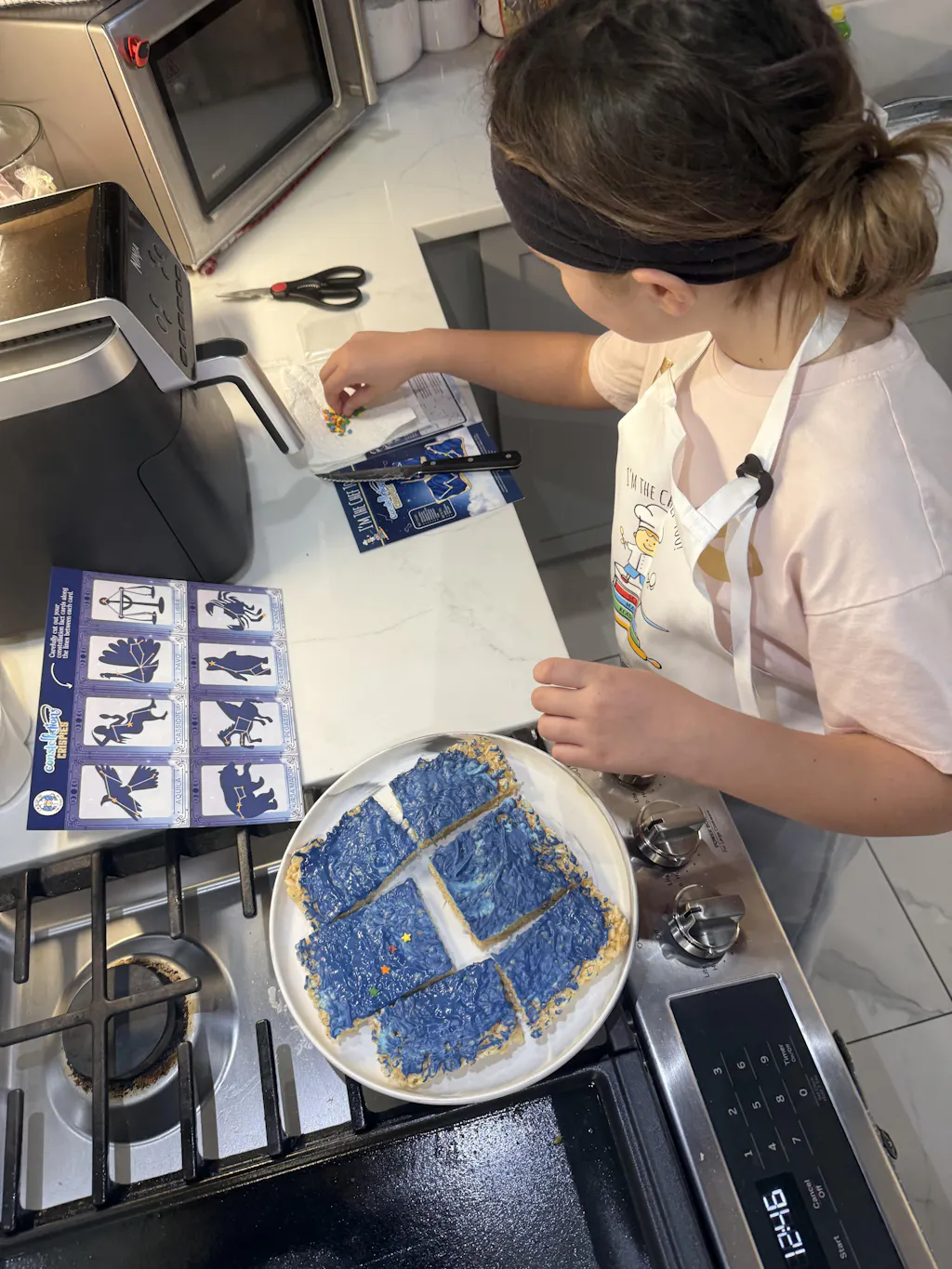
5. Edible Solar System: Astronomy & Culinary Art
Concept: Planets, relative sizes, order of planets, characteristics of celestial bodies. Materials: Various round foods (e.g., donut holes, different sized grapes, melon balls, candies, cookie dough) and icing/decorations. Activity: Research the order and relative sizes of the planets in our solar system. Then, use different foods to represent each planet, arranging them in order and decorating them to mimic their appearance. What they learn: This activity offers a delicious way to learn about astronomy, helping children visualize the solar system and remember the names and order of the planets. They can also discuss features like Jupiter's Great Red Spot or Saturn's rings while decorating. I'm the Chef Too! Connection: You can take this out-of-this-world learning adventure to the next level with our Galaxy Donut Kit, where kids explore astronomy by creating their own edible solar system. It's a fantastic blend of science and culinary creativity!
These earth and space science activities inspire a sense of wonder about our planet and the cosmos.
Looking for an easy way to bring science and culinary creativity into your home every month? The Chef's Club subscription delivers new "edutainment" kits with free shipping, pre-measured dry ingredients, and specialty supplies directly to your door. It’s perfect for fostering curiosity and creating family memories. Subscribe to The Chef's Club now!
Delving into Life Science and Biology
Life science, or biology, is the study of living things – plants, animals, and even tiny microorganisms. For 3rd graders, this can mean exploring growth, decomposition, and the amazing adaptations of living creatures.
1. Sprouting Seeds in a Bag: Observing Plant Growth
Concept: Germination, plant life cycle, conditions for growth. Materials: Ziploc bag, paper towel, various seeds (lima beans, peas, radish), water. Activity: Dampen a paper towel and place it inside the Ziploc bag. Place a few seeds on the paper towel, near the bottom of the bag. Seal the bag and tape it to a window where it will receive sunlight. Observe daily, recording changes. What they learn: Children get a front-row seat to the magic of germination, seeing roots and shoots emerge. They learn about the basic needs of plants (water, warmth, light) for growth and observe a key stage in the plant life cycle.
2. Celery & Colored Water: Plant Transpiration
Concept: Transpiration, capillary action, vascular system. Materials: Stalks of celery with leaves, clear glasses or jars, water, food coloring (various colors). Activity: Trim the bottom off each celery stalk. Fill glasses with water and add different food colors to each. Place a celery stalk in each colored water. Observe over several hours or a day. What they learn: The colored water travels up the celery stalk, coloring the leaves, demonstrating capillary action – how water moves up narrow tubes against gravity. This shows how plants absorb water and nutrients from their roots and transport them throughout their structure, a process called transpiration, similar to our own circulatory system!
3. Bread Mold Experiment: Microorganisms at Work
Concept: Microorganisms (fungi), decomposition, conditions for mold growth. Materials: Slices of bread, Ziploc bags, spray bottle with water. Activity: Take a fresh slice of bread. Moisten it slightly with the spray bottle. Place it in a Ziploc bag and seal it, leaving a little air inside. Place the bag in a warm, dark place. For comparison, you could also place a dry slice in another bag. Observe daily. What they learn: Children observe how mold (a type of fungus) grows and thrives in specific conditions (warmth, moisture, darkness). This introduces them to microorganisms and the process of decomposition. Safety Note: Do not open the bag once mold has grown, and dispose of it safely.
4. Compost Bottle: Understanding Decomposition
Concept: Decomposition, composting, nutrient recycling, microorganisms. Materials: Large clear plastic soda bottle (cut in half, top inverted), soil, various organic materials (fruit/vegetable scraps, leaves, grass clippings), water, plastic wrap. Activity: Create layers in the bottle: soil, then organic scraps, more soil, etc. Lightly moisten the layers. Invert the top half of the bottle and place it on top to create a mini ecosystem, or cover with plastic wrap. Place in a warm spot and observe over weeks, turning occasionally. What they learn: This long-term experiment allows children to see decomposition in action. They observe how organic matter breaks down over time, guided by microorganisms, and transforms into nutrient-rich compost, highlighting the natural recycling processes in an ecosystem.
5. Animal Habitats Diorama: Adaptations and Environments
Concept: Habitats, ecosystems, animal adaptations. Materials: Shoebox or cardboard box, craft supplies (construction paper, pipe cleaners, cotton balls, twigs, paint, glue, toy animals). Activity: Choose a specific animal habitat (e.g., desert, ocean, forest, arctic). Research the characteristics of that habitat and the animals that live there. Then, create a diorama inside the shoebox, building the environment and adding the animals. Discuss how the animals are adapted to survive in that specific environment. What they learn: Children gain a deeper understanding of different ecosystems and the incredible ways animals adapt to their surroundings for survival. This fosters an appreciation for biodiversity and environmental interconnectedness. Even beloved characters can make learning fun, like when kids make Peppa Pig Muddy Puddle Cookie Pies and learn about habitats and the animals that live in them.
These life science experiments provide a window into the amazing world of living organisms and natural cycles.
Electrifying Magnetism and Electricity
Magnetism and electricity are fundamental forces that shape our modern world. For 3rd graders, these concepts can seem magical, but hands-on experiments can demystify them, showing how invisible forces create observable effects.
1. Static Electricity Fun: Balloon Power
Concept: Static electricity, attraction, repulsion. Materials: Balloon, small pieces of paper, hair, wool cloth (optional). Activity: Rub an inflated balloon vigorously on your hair or a wool cloth. Then, bring the balloon close to small pieces of paper and watch them jump and stick. Try bringing the rubbed balloon near a thin stream of water from a faucet and see how it bends. What they learn: Rubbing the balloon creates static electricity, an imbalance of electrical charges. The balloon gains or loses electrons, becoming charged. This charged balloon then attracts objects with opposite charges or neutral objects (like paper and water) due to polarization.
2. Simple Circuit Building: Conductivity Test
Concept: Electric circuits, conductors, insulators, complete circuit. Materials: D-cell battery, battery holder, two alligator clips, small flashlight bulb, bulb holder, various materials to test (paper clip, plastic spoon, aluminum foil, rubber band, penny). Activity: Assemble a simple circuit by connecting the battery to the bulb using alligator clips. Show how the bulb lights up when the circuit is complete. Then, break the circuit and insert different materials between the open clips. What they learn: The bulb only lights up when electricity can flow in a complete loop (a circuit). Materials that allow electricity to flow easily are called conductors (like metal), while those that block it are insulators (like plastic or rubber).
3. Magnetic Attraction: Exploring Invisible Forces
Concept: Magnetism, magnetic fields, attraction, repulsion. Materials: Magnets (bar, horseshoe), various small objects (paper clips, coins, rubber bands, keys), sand or iron filings (optional), paper. Activity: Test which objects are attracted to a magnet. Explore how magnets can attract through other materials (like paper or a thin table). Place a magnet under a piece of paper and sprinkle iron filings on top to visualize the magnetic field lines. What they learn: Magnets create an invisible force field that attracts certain materials, primarily iron, nickel, and cobalt. They learn about magnetic poles and how opposite poles attract, while like poles repel.
These experiments provide an exciting introduction to the invisible forces of magnetism and electricity, laying the groundwork for future scientific understanding.
Making Science a Family Affair with I'm the Chef Too!
At I'm the Chef Too!, we understand the challenges of finding engaging, educational, and screen-free activities that also foster quality family time. That's why our mission is to seamlessly blend food, STEM, and the arts into one-of-a-kind "edutainment" experiences. We are committed to sparking curiosity and creativity in children, all while facilitating invaluable family bonding.
Our unique approach makes learning complex subjects accessible and fun. Imagine your 3rd grader learning about chemical reactions while baking delicious "Erupting Volcano Cakes," or exploring astronomy as they create an edible solar system with our "Galaxy Donut Kit." These tangible, hands-on, and utterly delicious cooking adventures are developed by mothers and educators, ensuring they are not only scientifically sound but also practical and enjoyable for families.
We believe in providing practical, valuable advice and setting realistic expectations. While we can't promise your child will become a top scientist overnight, we can guarantee that our kits will foster a love for learning, build confidence in the kitchen and beyond, develop key skills like following instructions and problem-solving, and most importantly, create joyful, lasting family memories. Each I'm the Chef Too! box is a complete experience, thoughtfully designed with pre-measured dry ingredients and specialty supplies, taking the guesswork out of your busy schedule.
Whether you're looking for a delightful weekend activity or a unique gift, our kits make it easy to bring STEM and culinary creativity into your home. We handle the planning and prep, so you can focus on the fun and discovery.
Ready for a new adventure delivered to your door every month? Our "Chef's Club" subscription is the ultimate solution for ongoing educational fun. With free shipping in the US, and flexible 3, 6, and 12-month pre-paid plans, it’s perfect for gifting or long-term enrichment. Give the gift of learning that lasts all year with a subscription to our STEM cooking adventures! Join The Chef's Club and enjoy free shipping on every box!
Tips for Parents and Educators
Making science experiments a regular part of a 3rd grader's learning journey is incredibly rewarding. To ensure these experiences are safe, enriching, and enjoyable, here are some key tips:
- Safety First, Always: Adult supervision is paramount for all experiments, especially those involving heat, sharp objects, or chemicals (even household ones like vinegar or dish soap). Discuss safety rules before starting, such as never tasting unknown substances unless explicitly instructed, wearing safety goggles if available, and proper handling of tools.
- Encourage Open-Ended Questions: Instead of just telling them what will happen, ask guiding questions: "What do you think will happen if...?" "Why do you think it changed?" "What could we do differently next time?" This fosters critical thinking and curiosity.
- Embrace the Mess: Science can be messy, and that's part of the fun! Lay down old newspapers, towels, or a plastic tablecloth. Consider moving outdoors for particularly messy activities. Focus on the learning, not just the spotless cleanup.
- Document Observations: Encourage your child to keep a "science journal." This can be a simple notebook where they draw their setups, record predictions, write down observations, and illustrate results. This practice strengthens literacy skills alongside scientific ones.
- Focus on the Process, Not Just the Outcome: Not every experiment will "work" perfectly, and that's okay! Emphasize that learning comes from the investigation, the problem-solving, and understanding why something didn't go as expected. These are often the most valuable lessons.
- Set Realistic Expectations: Remember, the goal is to foster a love for learning and build foundational skills, not to guarantee a future Nobel laureate. Celebrate their curiosity, effort, and discoveries, no matter how small.
- Connect to Everyday Life: Point out how the science they learned applies to things around them. "Remember how we made the volcano? That's an acid-base reaction, just like what happens when you bake a cake with baking soda!"
- Incorporate Reading: Look for books that tie into the scientific concepts you're exploring. Reading about a topic before or after an experiment can deepen understanding and ignite further interest.
- Extend the Learning: After an experiment, ask "What other questions do you have?" or "How could we change this experiment to test something new?" This encourages continuous inquiry.
- Choose Age-Appropriate Activities: While 3rd graders are capable of more complex thought, ensuring the experiments are within their developmental range will maintain engagement and prevent frustration. Our I'm the Chef Too! kits are specifically designed by educators to be age-appropriate and challenging in just the right ways.
By following these tips, you can transform simple experiments into profound learning experiences that your 3rd grader will cherish and remember.
Conclusion
Igniting a passion for science in 3rd graders is about more than just textbook knowledge; it's about fostering an inherent curiosity, nurturing critical thinking, and empowering them to explore the world with a sense of wonder. Through hands-on science experiments, children learn by doing, transforming abstract concepts into tangible, memorable experiences. From the bubbling excitement of chemistry to the fascinating forces of physics, the marvels of earth science, and the intricate world of biology, every experiment is an opportunity for discovery, problem-solving, and creative expression.
At I'm the Chef Too!, we are dedicated to making these "edutainment" experiences accessible and enjoyable for every family. Our unique blend of food, STEM, and the arts ensures that learning is always engaging, delicious, and a fantastic way to create lasting memories together. We believe that by providing screen-free, hands-on activities, we can spark a lifelong love for learning and build confidence in the next generation of innovators and thinkers.
Don't let another month go by without sparking that incredible sense of wonder in your child. The journey of scientific discovery is endless, and with I'm the Chef Too!, a new adventure is always just around the corner.
Ready to bring the magic of science and culinary creativity into your home every month? Join our family of happy scientists and foodies! Subscribe to The Chef's Club today and get a complete, delicious, and educational STEM kit delivered right to your door with free shipping!
Frequently Asked Questions (FAQ)
Q1: What age group are these science experiments best suited for?
A1: The experiments outlined in this guide are specifically curated for children in 3rd grade, typically ages 8-9. However, many can be adapted for slightly younger children with more adult assistance or for slightly older children who can delve deeper into the scientific principles. Our I'm the Chef Too! kits are designed with specific age ranges in mind to ensure optimal engagement and learning.
Q2: Do I need special equipment for these experiments?
A2: Not at all! Most of the experiments detailed here use common household items, kitchen staples, or easily found craft supplies. Our goal is to make science accessible and fun without requiring expensive or specialized equipment. For those who want a complete, ready-to-go experience, our I'm the Chef Too! kits come with pre-measured dry ingredients and specialty supplies.
Q3: How can I ensure safety during science experiments with my child?
A3: Safety is always the top priority.
- Adult supervision is essential for all experiments.
- Clearly explain and enforce safety rules before starting.
- Never allow children to taste or ingest unknown substances unless explicitly instructed and confirmed safe.
- Use safety goggles if available, especially for experiments involving reactions or potential splashes.
- Be cautious with heat sources (hot plates, ovens, irons) and sharp objects.
- Work in a well-ventilated area when needed.
- Always wash hands thoroughly before and after experiments.
Q4: My child gets easily frustrated if an experiment doesn't work. How can I handle this?
A4: It's common for experiments not to go exactly as planned, and this can actually be a valuable learning opportunity!
- Reframe "failure" as "discovery": Explain that real scientists often have experiments that don't work the first time. It's about learning why and adjusting.
- Focus on the process: Emphasize the steps of the scientific method, the observations made, and what was learned, rather than just the end result.
- Encourage problem-solving: Ask, "What do you think went wrong? What could we try differently next time?"
- Keep it fun: The primary goal is to foster curiosity and a love for learning, not perfection.
Q5: How can I make these experiments more educational and less just "fun"?
A5: While fun is key to engagement, deepening the educational value is easy:
- Ask "why" and "how": Constantly prompt your child with questions to encourage critical thinking.
- Introduce vocabulary: Use scientific terms like "hypothesis," "observe," "conclude," "reaction," "density," and explain them simply.
- Keep a science journal: Have your child record their predictions, steps, observations, and conclusions. This reinforces literacy and scientific thinking.
- Connect to real life: Discuss how the principles learned apply to everyday phenomena or larger scientific concepts.
- Extend the learning: Suggest follow-up questions or ways to modify the experiment to test new variables.
Q6: What if I don't have time to gather all the materials for these experiments?
A6: We understand that life can be busy! This is precisely why I'm the Chef Too! was created. Our "Chef's Club" subscription boxes take the hassle out of prep by delivering all the pre-measured dry ingredients and specialty supplies you need for a complete STEM cooking adventure right to your door. It's a convenient, all-in-one solution for engaging, educational, and delicious fun without the time-consuming scavenger hunt for materials. You can also explore our one-time kits if you want to try a specific theme!