Table of Contents
- Why Ice Cream Crafts Are More Than Just Fun: A STEM Perspective
- The Building Blocks of Brainy Fun: Craft Materials & Skills
- Simple Scoops of Creativity: Easy Ice Cream Craft Ideas
- Beyond the Basics: Expanding the Ice Cream Craft Experience
- Integrating Learning into Every Scoop
- Tips for a Smooth & Sweet Crafting Session
- I'm the Chef Too!: Blending Edutainment with Deliciousness
- Conclusion
- Frequently Asked Questions (FAQ)
Few things evoke the sheer delight of childhood quite like ice cream. The vibrant colors, the swirls of flavor, the anticipation of that first cool, sweet bite—it’s a universal symbol of joy and summer. But what if we told you that the magic of ice cream doesn't have to end with a melting scoop? What if it could be a gateway to sparking curiosity, nurturing creativity, and engaging in hands-on learning, all while fostering precious family moments? That's exactly what we're here to explore!
At I'm the Chef Too!, our mission is to blend food, STEM, and the arts into one-of-a-kind "edutainment" experiences, and the world of ice cream crafts offers a perfect canvas for this philosophy. This isn't just about making pretty decorations; it's about transforming simple materials into learning opportunities, exploring scientific concepts, honing fine motor skills, and encouraging imaginative play. Get ready to discover a delightful array of easy ice cream crafts that go beyond typical playtime, turning everyday materials into tools for discovery and delicious-looking art. We'll delve into various craft ideas, discuss the surprising STEM and artistic lessons hidden within each one, and provide practical tips to make your crafting sessions smooth, engaging, and genuinely educational. Let's scoop up some fun and learning together!
Why Ice Cream Crafts Are More Than Just Fun: A STEM Perspective
When we talk about "easy ice cream crafts for kids," many parents might initially think of a simple art project—a fun way to pass an afternoon. However, at I'm the Chef Too!, we see these activities through a broader lens, recognizing their immense potential as platforms for "edutainment." Our unique approach to learning, developed by mothers and educators, is built on the belief that complex subjects can be taught through tangible, hands-on, and delicious adventures. Ice cream crafts, even without actual food involved, perfectly embody this spirit, offering a delightful blend of science, technology, engineering, art, and mathematics (STEM) principles.
Think about it: every time a child selects materials, plans their design, cuts a shape, or mixes colors, they are engaging in foundational STEM processes. They're making observations (science), understanding how tools work (technology), designing and building (engineering), expressing themselves (art), and often counting, measuring, or recognizing patterns (math). These aren't just abstract lessons; they are real-world applications happening right before their eyes, sparking a natural curiosity that is crucial for lifelong learning. We are committed to fostering this innate sense of wonder, providing screen-free educational alternatives that encourage children to explore, experiment, and create.
The act of crafting also significantly contributes to a child's developmental journey. Fine motor skills, essential for writing and everyday tasks, are refined through cutting, gluing, and manipulating small pieces. Problem-solving abilities are tested as children figure out how to attach a "cherry" or make a cone stand upright. Decision-making comes into play with color choices and design elements. And, perhaps most importantly, these activities build confidence. Successfully completing a craft, especially one they've designed themselves, gives children a profound sense of accomplishment, encouraging them to tackle new challenges. We believe in providing experiences that help children develop these crucial skills, not by promising they'll become top scientists overnight, but by nurturing a love for learning and building a strong foundation for future exploration.
Ready to bring more of this hands-on, educational fun into your home every month? Join The Chef's Club today and enjoy the convenience of a new adventure delivered right to your door with free shipping in the US. It's the perfect way to keep curiosity bubbling and creativity flowing! Join The Chef's Club and enjoy free shipping on every box.
The Building Blocks of Brainy Fun: Craft Materials & Skills
One of the most wonderful aspects of easy ice cream crafts for kids is their accessibility. You don't need specialized equipment or expensive art supplies to get started. Many of the best projects can be made with items you already have around the house, making them incredibly budget-friendly and spontaneous. This resourcefulness itself is a valuable lesson, teaching children to see potential in everyday objects and think creatively about repurposing.
Let’s talk about the common materials we’ll be using and the skills they inherently encourage:
- Paper (Construction Paper, Cardstock, Scrapbook Paper): Paper is the quintessential crafting material. Working with different weights of paper introduces children to concepts of texture and durability. Cutting paper, especially along lines, significantly strengthens fine motor skills and hand-eye coordination. Folding, tearing, and curling paper also develop dexterity and spatial reasoning. Choosing colors involves basic design principles and color theory.
- Paper Plates & Bowls: These humble kitchen staples are incredibly versatile. Their circular shape is a fantastic starting point for ice cream scoops, offering a canvas for painting and decorating. Cutting them in half introduces the concept of fractions (halves) and different geometric forms. Gluing elements onto a curved surface helps children understand three-dimensional construction and spatial relationships.
- Cupcake Liners: These small, pleated papers are perfect for adding texture and dimension to flat crafts. Folding them, layering them, or fluffing them out teaches about volume, texture, and pattern creation. They’re excellent for practicing precision gluing and arranging.
- Cotton Balls & Puffy Paint: Cotton balls provide a soft, fluffy texture, perfect for simulating real ice cream. Gluing them helps with tactile exploration and fine motor control. Puffy paint, whether store-bought or homemade (with ingredients like glue and shaving cream), introduces a rudimentary form of chemistry as ingredients combine to create a new texture. Applying it with squeeze bottles or brushes refines grip strength and artistic control.
- Recycled Materials (Egg Cartons, Cardboard Boxes, Toilet Paper Rolls): Utilizing items like egg cartons for scoops or cardboard for large cones teaches children about sustainability and upcycling. Transforming these discarded items into something new fosters innovative thinking and problem-solving. Cutting and shaping cardboard develops strength and persistence, while assembling disparate parts into a cohesive whole involves fundamental engineering skills and an understanding of structure.
- Adhesives (Glue Sticks, Liquid Glue, Tape): Learning to use different types of glue teaches about their properties and appropriate applications. A glue stick is great for large surfaces, while liquid glue might be better for securing small embellishments. This practice improves hand-eye coordination and patience.
- Decorations (Pom Poms, Beads, Sequins, Glitter, Markers, Crayons, Paint): These materials offer endless possibilities for personalization. Choosing and applying them enhances creativity, color recognition, and pattern formation. Using different drawing tools (markers, crayons, paintbrushes) refines grasp and pressure control.
By focusing on the process of creation rather than solely on the final product, we empower children to experiment, make mistakes, and learn from them. This approach aligns perfectly with our belief at I'm the Chef Too! that every hands-on activity is an opportunity for growth, discovery, and building a foundation of confidence and skill.
Simple Scoops of Creativity: Easy Ice Cream Craft Ideas
Now, let's dive into some specific, easy ice cream craft ideas that promise a sprinkle of fun and a whole lot of learning. These activities are designed to be accessible for various age groups, with tips on how to adapt them for younger children or extend them for older, more experienced crafters.
Paper Plate Ice Cream Cones: A Classic with a Twist
The paper plate is a true champion of kid crafts, and it’s perfect for creating colorful ice cream cones.
How to Make It:
- Preparation: Have several paper plates, brown and colored construction paper, scissors, glue sticks, and an assortment of decorations (markers, crayons, pom-poms, glitter, small paper cut-outs) ready.
- The Cone: Take a piece of brown construction paper. Help your child draw a large triangle (or simply cut a triangle freehand). This will be their cone. For added texture, they can draw crisscross lines on it with a marker to resemble a waffle cone.
- The Scoop: Cut a paper plate in half. One half will be the base for an "ice cream scoop." Alternatively, your child can simply cut a large circle from colored paper.
- Assembly: Glue the curved edge of the paper plate half (or paper circle) onto the top of the brown paper cone.
- Decorate: Now comes the best part—flavoring and toppings! Children can paint the paper plate half with their favorite "ice cream" color. Once dry, they can add "sprinkles" using markers, small pieces of colored paper, glitter, or even tiny pom-poms for a 3D effect. A red pom-pom makes a perfect cherry!
Learning Moments:
- Shapes & Geometry: Identifying and cutting triangles and semi-circles introduces basic geometric shapes.
- Color Recognition & Mixing: Children learn about different colors and how they can be combined.
- Fine Motor Skills: Cutting paper, applying glue, and manipulating small decorative elements all enhance dexterity.
- Spatial Awareness: Understanding where to place the scoop on the cone and how to arrange decorations.
- Creative Expression: Encouraging children to imagine their favorite flavors and toppings fosters individuality.
Variations & Extensions:
- Multi-Scoop Cones: Use multiple paper plate halves, stacking and gluing them to create towering triple-scoop delights. This challenges their engineering skills in making it stable.
- "All About Me" Cones: On each scoop, children can draw or write something about themselves (favorite color, hobby, pet). This ties into self-expression and early literacy.
Cupcake Liner Sundaes: Layers of Learning
Cupcake liners, with their ruffled edges and vibrant colors, are fantastic for creating textured, multi-layered ice cream sundaes.
How to Make It:
- Materials: Gather various sizes and colors of cupcake liners, construction paper for the "bowl" or "cone," glue, scissors, and small craft items like pom-poms, sequins, glitter, or even real sprinkles (sealed under clear contact paper for durability).
- The Base: Have your child draw and cut out a simple bowl shape or a cone shape from construction paper.
- The Scoops: Flatten out several cupcake liners. Children can then fold them in half or quarters, or leave them slightly crumpled for a more realistic "scoop" effect. Layering different colors creates different "flavors."
- Assembly: Glue the cupcake liners onto the paper bowl or cone, layering them to create a full sundae.
- Toppings: Use small pom-poms as cherries, sequins as sprinkles, or draw on chocolate syrup drizzles with markers.
Learning Moments:
- Stacking & Layering: Understanding how to build up a structure, developing spatial reasoning.
- Pattern Recognition: Creating patterns with different colored liners.
- Counting: Counting the number of scoops or toppings they add.
- Texture Exploration: Feeling the different textures of the liners and other craft supplies.
Variations & Extensions:
- Fraction Sundaes: For older children, assign fractions to different colored liners (e.g., "1/2 vanilla (white liner), 1/4 chocolate (brown liner)"). This is a tangible way to introduce fraction concepts.
- Symmetry Exploration: Create sundaes where each side is a mirror image of the other, or explore asymmetrical designs.
Cotton Ball & Puffy Paint Creations: Textural Delights
This craft is a treat for the senses, combining soft cotton with the unique texture of puffy paint.
How to Make It:
- Materials: Construction paper (for cones), cotton balls, liquid glue, puffy paint (store-bought or homemade with equal parts white glue and shaving cream, plus a few drops of food coloring), and markers.
- The Cone: Draw and cut out a brown cone shape from construction paper.
- The Ice Cream: Glue several cotton balls onto the top of the cone, forming fluffy scoops of "ice cream." Children can arrange them to create a towering treat or a single, perfect scoop.
- Puffy Paint Fun: Once the cotton balls are secure, use the puffy paint to create "frosting," "syrup," or "sprinkles" directly onto the cotton. The paint will sit on top, creating a wonderful 3D effect as it dries.
Learning Moments:
- Tactile Sensory Play: Exploring the soft texture of cotton and the unique feel of puffy paint.
- Volume & Dimension: Understanding how materials can build up to create a 3D effect.
- Basic Chemistry (if homemade puffy paint): Observing how mixing ingredients (glue, shaving cream, food coloring) creates a new substance with different properties.
- Color & Texture Relationships: How different colors and textures combine to create an appealing visual.
We know how much kids love to explore textures and engage in hands-on science. Not ready to subscribe to The Chef's Club just yet? Explore our full library of adventure kits available for a single purchase in our main shop collection! You'll find a wide variety of engaging experiences that blend food, STEM, and the arts, just like these crafts. Browse our complete collection of one-time kits.
Handprint & Footprint Ice Cream Art: Personalized Memories
These crafts offer a wonderful way to capture a moment in time while creating adorable ice cream-themed keepsakes.
How to Make It:
- Materials: Washable tempera paint in various "ice cream" colors, brown construction paper, white paper, paintbrushes, markers, and baby wipes for easy clean-up.
- The Cone: Have your child draw and cut out a brown ice cream cone from construction paper, or pre-cut one for younger children.
- The Scoop (Handprint): Paint the palm and fingers of your child's hand with their chosen "flavor" color. Carefully press their hand onto the white paper, above where the cone will go. Lift gently to reveal the handprint. Repeat for multiple scoops using different colors.
- The Scoop (Footprint): For a larger, more unique scoop, paint the bottom of your child's foot and press it onto the paper. This creates a rounded, chunky scoop.
- Assembly & Decorate: Once dry, cut around the handprints/footprints and glue them onto the cone. Add sprinkles, cherries, and other details with markers. Write the child's name and the date on the back to make it a cherished memory.
Learning Moments:
- Body Awareness: Understanding their own hand and foot as tools for art.
- Sensory Exploration: The feeling of paint on their skin can be a new and exciting experience.
- Personalization: Creating a unique piece of art that reflects them.
- Memory Keeping: A tangible reminder of their size at a certain age.
Variations & Extensions:
- Ice Cream Cards: Create these on folded cardstock to make personalized greeting cards for family members.
- Growth Chart: Make a series of handprint ice creams over time to show how much your child has grown.
Recycled Material Masterpieces: Egg Cartons & Cardboard Creations
Embrace sustainability and engineering by turning household recyclables into fantastic ice cream crafts.
How to Make It:
- Materials: Empty egg cartons, cardboard (from cereal boxes or delivery boxes), scissors, glue, paint, and various decorative elements.
- Egg Carton Scoops: Cut out individual cups from an egg carton. Children can paint these cups in different "ice cream" colors. Once dry, these can be glued onto a cardboard cone, creating wonderfully textured, 3D scoops. The natural curves of the egg carton cups lend themselves perfectly to this effect.
- Cardboard Cones: Cut large triangles from cardboard. These are sturdier than paper and can support heavier "scoops." Children can draw waffle patterns on them with markers or paint.
- Giant Ice Cream Cone: For an ambitious project, use a large piece of cardboard to create a giant cone. Children can then decorate it with oversized "scoops" made from smaller cardboard pieces, crumpled newspaper, or even painted paper plates.
Learning Moments:
- Sustainability & Upcycling: Understanding the value of repurposing materials instead of discarding them.
- 3D Construction & Engineering: Learning how to assemble different shapes and materials to create a stable, multi-dimensional object. This involves thinking about balance, adhesion, and structural integrity.
- Problem-Solving: Figuring out how to attach bulky items like egg carton cups to a flat surface.
- Creative Resourcefulness: Seeing the potential for art in everyday waste.
Just like these recycled crafts teach children about construction and material properties, our kits often delve into similar STEM principles in deliciously engaging ways. For example, our Erupting Volcano Cakes Kit teaches about thrilling chemical reactions and engineering while making delicious lava cakes! It's all about hands-on discovery!
Beyond the Basics: Expanding the Ice Cream Craft Experience
Once your child has mastered the simple scoops, there are many ways to expand their ice cream crafting adventures, introducing more complex techniques and deeper learning opportunities.
Printmaking Adventures: Patterns and Repetition
Printmaking is a fantastic art form that teaches about positive and negative space, repetition, and cause and effect. Ice cream shapes lend themselves beautifully to this technique.
How to Make It:
- Materials: White paper, foam sheets (or thick cardboard, craft foam trays), pencils, tempera paint, small plates or plastic placemats for spreading paint, and a brayer (optional, fingers or a clean roller work too).
- Create Your "Stamps": Cut foam sheets into ice cream scoop shapes and cone shapes. Using a sharp pencil (adult supervision advised for younger children), gently press designs into the foam. These indentations will remain white when printed, creating patterns like sprinkles, chips, or waffle cone textures. If using cardboard, you won't get the etched patterns, but you'll still get a great shape print.
- Prepare the Paint: Squirt small puddles of tempera paint onto the plastic plates. Use different colors for different "flavors."
- Print! Roll the brayer (or use a finger/brush) to spread a thin, even layer of paint onto one of the foam "stamps." Carefully press the inked foam piece onto the white paper. Press firmly and evenly with your hands or a clean brayer, then lift to reveal your print. Repeat with different colors and shapes to build an ice cream cone or sundae scene.
Learning Moments:
- Repetition & Patterns: Understanding how a single stamp can create multiple identical images, and how to arrange them into patterns.
- Positive/Negative Space: Discovering how the carved lines on the foam create the unprinted areas.
- Cause & Effect: Observing how applying paint and pressure creates an image.
- Design & Composition: Deciding where to place each print on the paper to create an appealing image.
This printmaking activity perfectly illustrates how simple actions can yield exciting results, much like the engaging projects in our monthly subscription. Ready for a new adventure every month? Join The Chef's Club and enjoy free shipping on every box.
Ice Cream Garlands & Bunting: Decorate and Learn
Creating a garland is a fun way to extend crafting into home decoration, bringing a festive touch to any space.
How to Make It:
- Materials: Construction paper in various colors, scissors, glue, markers, string or yarn, and a hole punch.
- Craft the Shapes: Children can cut out multiple ice cream cones and scoops from different colored papers. Encourage variety in shape and size.
- Decorate: Decorate each ice cream piece with markers, glitter, or small paper cut-outs for sprinkles and cherries.
- Assemble the Garland: Use a hole punch to make two holes at the top of each "ice cream scoop" and two at the top of each "cone." Thread a long piece of string or yarn through the holes, alternating between cones and scoops to create a festive garland.
Learning Moments:
- Sequencing & Order: Deciding the order of the ice cream pieces on the string.
- Measurement: Estimating how long the string needs to be and how much space to leave between each piece.
- Spatial Arrangement: Understanding how objects look when hung together in a line.
- Fine Motor & Bilateral Coordination: Holding the paper steady with one hand while punching holes with the other, and threading the string.
Ice Cream Playdough or Slime: Sensory Science (Craft-Adjacent)
While not strictly a "craft" in the traditional sense, making and playing with ice cream-themed playdough or slime is a wonderful way to engage in sensory exploration and simple chemistry, aligning with the "food" and "STEM" aspects of I'm the Chef Too!.
How to Make It (Playdough - No-Cook Recipe):
- Ingredients: 2 cups all-purpose flour, 1/2 cup salt, 2 tablespoons cream of tartar, 2 tablespoons vegetable oil, 1.5 cups boiling water, food coloring, and optional flavoring extracts (vanilla, strawberry, peppermint).
- Mix Dry: In a large bowl, combine flour, salt, and cream of tartar.
- Add Wet: In a separate bowl, mix the oil, boiling water, and food coloring (and extract if using).
- Combine: Pour the wet ingredients into the dry ingredients and mix well with a spoon until a dough forms. Once cool enough to handle, knead until smooth.
- Play: Provide miniature ice cream scoops, small bowls, and various craft "toppings" (beads, pasta shapes, small pom-poms) for imaginative ice cream parlor play.
Learning Moments:
- Sensory Play: Engaging touch, smell, and sight. The act of kneading is therapeutic and strengthens hand muscles.
- Basic Chemistry: Observing how different ingredients combine to create a new substance with unique properties (texture, elasticity). This is an introduction to states of matter.
- Measurement: Following a recipe, even a simple one, introduces basic measurement concepts.
- Imaginative Play: Encouraging open-ended play scenarios fosters creativity and storytelling.
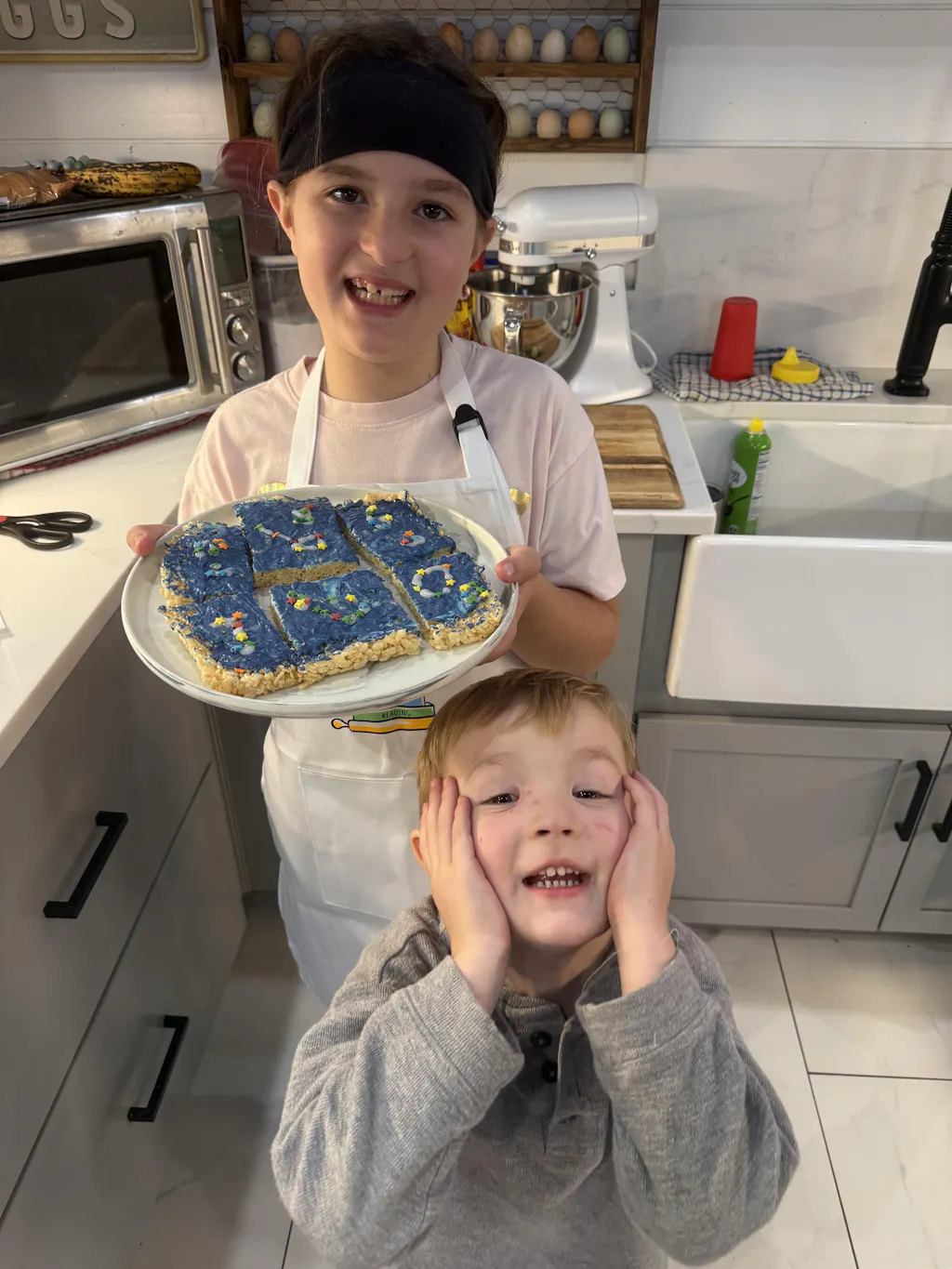
This kind of hands-on, multi-sensory exploration is at the heart of what we do at I'm the Chef Too!. Just like making ice cream playdough can introduce concepts of states of matter, our Galaxy Donut Kit explores astronomy through edible art, showing how science and creativity can beautifully intertwine in the kitchen!
Integrating Learning into Every Scoop
The beauty of easy ice cream crafts for kids isn't just in the making, but in the myriad ways they can seamlessly integrate deeper learning. These aren't just standalone activities; they are springboards for rich educational conversations and skill development. Our philosophy at I'm the Chef Too! emphasizes blending food, STEM, and the arts into holistic "edutainment" experiences, and these crafts perfectly embody that spirit, encouraging critical thinking and joyful discovery.
Math Connections
- Counting: From counting sprinkles to counting scoops on a multi-layered cone, numerical recognition and one-to-one correspondence are naturally reinforced.
- Shapes and Geometry: Identifying and cutting circles, triangles, and semi-circles. Exploring concepts like symmetry (making a perfectly balanced sundae) or asymmetry.
- Fractions: When decorating, ask children to divide their "ice cream" into sections: "Let's put chocolate syrup on one-half of the scoop and sprinkles on the other half." Or, "If we have four scoops, what fraction is vanilla?"
- Measurement: Estimating how much paper is needed for a cone, or how long a garland should be.
Language Arts
- Descriptive Language: Encourage children to describe their ice cream creations. What "flavors" did they use? What do the "toppings" feel like? What would it "taste" like? This expands vocabulary and expressive language skills.
- Storytelling: "Who is this ice cream for? What adventure did it go on?" Creating a narrative around their craft boosts imagination and oral language.
- Writing Prompts: For older children, the craft can inspire writing. "Write a 'recipe' for your unique ice cream flavor," "Describe the best ice cream parlor," or "If your ice cream could talk, what would it say?"
- Letter Recognition: For very young children, an "I is for Ice Cream" craft can reinforce letter recognition, as seen in some of the top-ranking educational resources.
Science Explorations
- States of Matter (Conceptual): While not making real ice cream, discussing the concept of melting ice cream can introduce solids and liquids. How would a real ice cream cone change if left in the sun?
- Color Theory: Exploring how different colors combine (e.g., mixing yellow and red paint to make orange "mango" ice cream). Discussing warm and cool colors.
- Material Science: Discussing the different properties of materials—why paper is good for cutting, why cotton is fluffy, why glue sticks to paper.
- Chemical Reactions (Simple): If making homemade puffy paint or playdough, observing how ingredients combine to create a new substance.
Art & Design Principles
- Composition: Deciding where to place elements on the page or structure to create a visually appealing piece.
- Texture: Deliberately incorporating different textures using cotton balls, crumpled paper, pom-poms, or drawing techniques.
- Color Palettes: Experimenting with bright, vibrant colors or creating a more muted, pastel look.
- Form & Dimension: Understanding how to create 3D effects from 2D materials (e.g., folding paper, layering).
Family Bonding & Screen-Free Fun
Beyond the academic benefits, these crafts offer invaluable opportunities for family bonding. The shared experience of creating something together, the laughter over a "mismatched" sprinkle, or the quiet focus on a tricky cut all contribute to lasting memories. At I'm the Chef Too!, we firmly believe in providing screen-free educational alternatives that bring families together, fostering connection and collaborative spirit. These ice cream crafts are a perfect example of how hands-on, tangible experiences can enrich both learning and relationships.
These ice cream crafts are more than just art projects; they are holistic learning experiences. They naturally integrate various subjects, stimulate cognitive development, and provide a fun, engaging way for children to explore the world around them. This comprehensive approach to learning is what drives every kit we create at I'm the Chef Too!, ensuring every activity is an opportunity for discovery.
Tips for a Smooth & Sweet Crafting Session
We want your ice cream crafting adventures to be as delightful and stress-free as possible. While our I'm the Chef Too! kits come with pre-measured ingredients and specialty supplies to make things super convenient, when you're crafting at home, a little preparation goes a long way. Here are some practical tips to ensure a smooth and sweet session, whether you're making a simple paper cone or an elaborate printmaking masterpiece:
- Preparation is Key: Before you invite your little chefs to the table, gather all the materials you'll need. Lay out papers, paints, glues, scissors, and decorations within easy reach. This prevents interruptions and keeps the creative flow going.
- Protect Your Workspace: Crafting can get messy, and that's part of the fun! Lay down a washable tablecloth, old newspapers, or a large plastic sheet to protect your table. Have damp cloths or paper towels readily available for quick clean-ups.
- Dress for Success (and Mess): Encourage children to wear old clothes or an art smock. This takes the pressure off worrying about stains and lets them fully immerse themselves in the creative process.
- Encourage Exploration, Not Perfection: The goal is joyful learning and creative expression, not producing a museum-worthy piece of art. Let children experiment with colors, shapes, and textures. Embrace "happy accidents" and unconventional choices. Remind them that there's no "right" or "wrong" way to create their unique ice cream. This approach helps build confidence and fosters a love for the process, which is a core value for us at I'm the Chef Too!.
-
Adapt for All Ages:
- Toddlers & Preschoolers: Focus on simple tasks like tearing paper, sticking pre-cut shapes, or finger painting. Provide larger, chunky tools. Always offer close supervision, especially with small pieces.
- Young School-Aged Children: They can handle more complex cutting, gluing, and detailed decorating. Introduce concepts like patterns, symmetry, or simple measurement.
- Older Children: Challenge them with multi-step projects, intricate designs, or encouraging them to come up with their own craft ideas. They can also take on more responsibility in gathering materials and cleaning up.
- Safety First: Always supervise children when they are using scissors or any potentially sharp tools. Ensure paints and glues are non-toxic and clearly labeled as child-safe. Teach them how to handle materials safely.
- Involve Kids in Clean-Up: Make tidying up part of the activity. Assign simple tasks like putting caps back on markers, throwing away paper scraps, or wiping down surfaces. This teaches responsibility and reinforces the idea that every part of the creative process is important.
- Celebrate Their Creations: Display their finished ice cream crafts prominently! This validates their efforts and boosts their self-esteem, showing them that their creativity is valued. Take photos to share with family or keep as memories.
Remember, the goal is to create positive, engaging experiences that spark curiosity and creativity. By following these tips, you can set the stage for many sweet and successful crafting sessions.
Looking for more diverse and exciting educational fun beyond ice cream crafts? Not quite ready for a monthly commitment? Explore our full library of adventure kits available for a single purchase in our main shop collection! Find the perfect theme for your little learner and dive into a world of "edutainment" at your own pace. Browse our complete collection of one-time kits.
I'm the Chef Too!: Blending Edutainment with Deliciousness
As we’ve explored the wonderful world of easy ice cream crafts for kids, we've seen how simple, hands-on activities can be powerful tools for learning and development. This very philosophy is at the heart of everything we do at I'm the Chef Too!. Our mission is to take the engaging, multi-sensory experience of crafting and elevate it by blending food, STEM, and the arts into unique "edutainment" adventures.
We understand that parents and educators are constantly seeking engaging, screen-free alternatives that genuinely spark curiosity and creativity in children. That's why we've committed ourselves to designing kits that do just that. Each I'm the Chef Too! box is more than just a collection of ingredients; it's a carefully curated experience, developed by mothers and educators, designed to teach complex subjects through tangible, delicious, and often surprising cooking adventures.
Imagine your child learning about chemical reactions while their cake batter bubbles, or exploring astronomical concepts as they decorate edible planets. These are the kinds of joyful, memorable experiences we strive to create. We aim to foster a love for learning, build confidence, and develop key skills, all while facilitating precious family bonding in the kitchen. We provide pre-measured dry ingredients and specialty supplies, making it convenient for families to dive right into the fun without the hassle of shopping or extensive preparation.
Just like an ice cream craft encourages creativity and fine motor skills, our kits provide a similar hands-on discovery process, often with the added bonus of a yummy treat at the end! It's all about making learning an adventure, not a chore. We believe in the power of doing, of touching, smelling, and tasting, to make educational concepts truly stick.
Are you ready to transform ordinary days into extraordinary learning adventures? Give the gift of learning that lasts all year with a 12-month subscription to our STEM cooking adventures! Join The Chef's Club and enjoy free shipping on every box.
Conclusion
The universal appeal of ice cream makes it a perfect theme for engaging children in creative and educational activities. As we've journeyed through a delightful array of easy ice cream crafts for kids, it's clear that these projects offer far more than just a fun way to pass the time. They are rich opportunities for exploring STEM principles, honing fine motor skills, fostering imaginative play, and building confidence. From the simple joy of painting a paper plate scoop to the intricate designs of printmaking, each craft acts as a stepping stone in a child's developmental journey, all while creating cherished memories.
At I'm the Chef Too!, we are passionate about sparking curiosity and creativity through tangible, hands-on experiences that blend food, STEM, and the arts. Our philosophy is rooted in the belief that learning should be an adventure—a delicious, engaging, and unforgettable one. These ice cream crafts beautifully align with our mission to provide screen-free "edutainment" that brings families together and ignites a lifelong love for discovery.
So, gather your simple supplies, choose your favorite "flavor" of craft, and prepare for a sprinkle of magic and a scoop of learning. Let your children explore, experiment, and create their own ice cream masterpieces, knowing that every glue stick swipe and every scissor snip is building foundational skills and fostering a spirit of innovation.
Don't let the learning stop here! Keep the "edutainment" coming with new, exciting adventures delivered right to your door every month. Join The Chef's Club today and embark on a continuous journey of discovery, creativity, and delicious fun with your family. Join The Chef's Club and enjoy free shipping on every box.
Frequently Asked Questions (FAQ)
What age are easy ice cream crafts suitable for?
Easy ice cream crafts are wonderfully versatile and can be adapted for a wide range of ages, from toddlers (1-3 years old) to older elementary school children (8-10+ years old). For toddlers, focus on pre-cut shapes, large pieces for gluing, and finger painting. Preschoolers (3-5 years) can handle simple cutting with safety scissors and more detailed decorating. Older children can engage in multi-step projects, intricate designs, and more independent creation. Always adjust the complexity and provide appropriate supervision based on your child's developmental stage.
What are some budget-friendly ice cream craft supplies?
Many of the best ice cream crafts can be made with items you likely already have at home! Excellent budget-friendly supplies include:
- Recycled Materials: Empty egg cartons, cardboard (cereal boxes, delivery boxes), toilet paper rolls, plastic lids.
- Paper Products: Paper plates, cupcake liners, construction paper scraps, newspaper, magazine cut-outs.
- Household Items: Cotton balls, pom-poms (if you have them), yarn scraps, dried pasta (for sprinkles), puffy paint (homemade with glue and shaving cream).
- Basic Art Supplies: Markers, crayons, tempera paint, glue sticks, liquid glue.
The key is to encourage creativity with what you have, rather than feeling the need to buy specific craft kits.
How can I make ice cream crafts educational?
Every craft offers educational opportunities! To boost the learning:
- Talk through the process: Ask "What happens if...?", "Why do you think...?", "What's your next step?"
- Incorporate STEM concepts: Count items, identify shapes, discuss colors, explore textures, talk about what materials are made of, or how glue works. For older kids, introduce simple fractions ("1/2 vanilla, 1/4 strawberry") or patterns.
- Use descriptive language: Encourage children to describe their creations using adjectives and verbs.
- Connect to stories: Read a book about ice cream beforehand or create a story about their finished craft.
- Don't over-direct: Allow for experimentation and "happy accidents" which are crucial for problem-solving and creative thinking.
What if my child isn't "good" at art?
There's no such thing as being "good" or "bad" at art, especially for children! The goal of these crafts is the process of creation, exploration, and expression, not producing a perfect masterpiece.
- Focus on the effort: Praise their creativity, their choices, and their persistence, rather than just the final product.
- Provide open-ended materials: Offer a variety of supplies and let them choose how to use them, rather than giving strict instructions.
- Lead by example: Participate alongside them, showing that adults can also enjoy the process without pressure.
- Celebrate uniqueness: Reassure them that every creation is special and unique, just like them. The joy of creating is the greatest reward.
How can I extend the learning from an ice cream craft?
Once the craft is complete, the learning doesn't have to stop!
- Display their art: Hang it up to show you value their work.
- Dramatic play: Use the finished crafts as props for an imaginary ice cream parlor.
- Write about it: Encourage older children to write a story, poem, or "menu" inspired by their ice cream.
- Research: Look up fun facts about real ice cream (history, different flavors, how it's made).
- Try a real recipe: If inspired, make some homemade ice cream together, connecting the craft to a delicious real-world experience, much like our I'm the Chef Too! kits do!