Table of Contents
- Introduction
- Why Crafts Are Essential for Child Development
- The I'm the Chef Too! Approach: Blending Food, STEM, and Art
- Getting Started: Setting Up Your Home Craft Zone
- Age-Appropriate Crafts for Every Little Creator
- Integrating STEM into Your Crafts (The I'm the Chef Too! Way)
- Low-Prep, High-Fun Craft Ideas for Busy Days
- Beyond the Craft: Extending the Learning and Fun
- Making It a Habit: Tips for Consistent Crafting Fun
- Conclusion
- FAQ: Your Crafting Questions Answered
Introduction
Imagine a quiet afternoon. The toys are scattered, the latest movie has lost its sparkle, and that all-too-familiar chorus begins: "I'm bored!" For many parents and caregivers, this is a daily challenge, a recurring puzzle of how to keep young minds engaged, curious, and away from screens. We've all been there, searching for that perfect activity that's not only fun but also genuinely enriching. The good news? The answer often lies in the simple, magical world of crafts.
Crafts for kids to do at home are more than just a way to pass the time; they are powerful springboards for learning, creativity, and development. They transform ordinary materials into extraordinary creations, turning an afternoon into an adventure. From the tactile joy of molding dough to the thrill of a bubbling science experiment disguised as a tasty treat, home crafts offer a unique blend of entertainment and education. This post will delve deep into the myriad benefits of incorporating crafts into your child's routine, provide practical tips for setting up your creative space, offer a wealth of age-appropriate ideas, and most importantly, show you how to weave STEM (Science, Technology, Engineering, and Math) learning seamlessly into every artistic endeavor. Get ready to discover how crafting can spark curiosity, build confidence, and create cherished family memories, all from the comfort of your kitchen table.
Why Crafts Are Essential for Child Development
In a world increasingly dominated by digital screens and passive entertainment, hands-on activities like crafting stand out as crucial for holistic child development. The benefits extend far beyond simply keeping kids occupied; they touch upon every aspect of a child's growth, from their physical coordination to their emotional intelligence.
Beyond Just Fun: The Deeper Impact
At I'm the Chef Too!, our mission is to blend food, STEM, and the arts into one-of-a-kind "edutainment" experiences. We believe that when learning is delicious and engaging, children naturally absorb complex concepts. Crafts, especially those with a STEM twist, perfectly embody this philosophy, offering a tangible pathway to understanding the world around us. They are a powerful tool for developing skills that will serve children throughout their lives.
Fine Motor Skills and Hand-Eye Coordination
Think about the intricate movements involved in cutting with scissors, carefully applying glue, or molding clay. These seemingly simple actions are incredibly beneficial for developing fine motor skills – the coordination of small muscles in the hands and fingers. This precision is vital for tasks like writing, buttoning clothes, and even using utensils. Simultaneously, crafts demand hand-eye coordination, as children learn to direct their hands based on what their eyes see, refining their ability to interact with their environment.
Cognitive Growth: Problem-Solving, Critical Thinking, and Following Instructions
Every craft project, no matter how simple, presents a series of mini-challenges. "How do I make these pieces stick together?" "What colors should I use?" "How do I achieve this shape?" These questions encourage critical thinking and problem-solving. Children learn to plan, execute, and troubleshoot, adapting their approach when something doesn't go as expected. Moreover, following instructions, whether from a parent or a kit, teaches sequencing, memory, and the importance of attention to detail – fundamental cognitive skills.
Creativity and Self-Expression
One of the most immediate and visible benefits of crafts is the boundless opportunity for creativity and self-expression. Children can choose their colors, design their patterns, and bring their unique visions to life. There's no "right" or "wrong" way to be creative, fostering a sense of artistic freedom and encouraging imagination to flourish. This outlet for self-expression is incredibly healthy, allowing children to communicate ideas and emotions that they might not yet have the words for.
Emotional Regulation: Patience, Perseverance, and Pride in Accomplishment
Crafts inherently teach patience. Waiting for glue to dry, carefully cutting along a line, or repeating a step until it's just right all require a degree of perseverance. Children learn to manage frustration when a project isn't perfect and experience the deep satisfaction of seeing a project through to completion. The sense of accomplishment and pride that comes from holding up a finished creation is invaluable for building self-esteem and confidence.
Sensory Exploration: Engaging All Senses
Many crafts are rich in sensory experiences. The feel of rough sandpaper, smooth paint, sticky glue, or squishy dough stimulates tactile senses. The vibrant colors of crayons and markers engage sight. And when we incorporate food into our crafts, like with our STEM cooking kits, the senses of smell and taste join the party, creating a multi-sensory learning experience that is incredibly memorable and effective.
Screen-Free Engagement: A Vital Alternative
In an age where screens often captivate children's attention for hours, providing screen-free alternatives is more important than ever. Crafts offer a tangible, interactive, and productive way to spend time, encouraging active engagement rather than passive consumption. They provide a welcome break from digital stimulation, allowing young brains to engage in different modes of thinking and creativity.
Family Bonding: Shared Experiences and Memory-Making
Perhaps one of the most heartwarming benefits of crafting is the opportunity for family bonding. Sitting together, sharing materials, offering encouragement, and celebrating achievements creates precious memories. These shared experiences strengthen relationships and provide a natural setting for conversation, laughter, and connection. Our kits at I'm the Chef Too! are specifically designed to be shared experiences, fostering togetherness as you bake, learn, and discover side-by-side. Ready for a new adventure every month delivered right to your door? Join The Chef's Club and enjoy free shipping on every box.
The I'm the Chef Too! Approach: Blending Food, STEM, and Art
At I'm the Chef Too!, we believe that learning should be an adventure, a delightful journey of discovery that engages all the senses. Our unique approach to crafts goes beyond traditional paper and glue, diving into the delicious world where culinary creativity meets scientific exploration and artistic expression. We call it "edutainment," and it's at the heart of everything we do.
Our Unique Mission: "Edutainment" at Its Best
Our mission is simple yet profound: to spark curiosity and creativity in children by blending food, STEM, and the arts into one-of-a-kind experiences. We are committed to facilitating family bonding and providing a screen-free educational alternative that truly captivates young minds. Instead of just talking about science, we invite children to bake science. Instead of just imagining art, they create edible masterpieces.
How Cooking Becomes a Craft: Science in Action, Math in Measurements, Art in Presentation
When you think about it, cooking is the ultimate STEM-infused craft. It’s a laboratory of delicious experiments!
- Science in Action: Every time you bake, you're performing chemistry. Yeast activating, baking soda reacting with acid to create bubbles, eggs binding ingredients – these are all scientific principles at play. Children observe these reactions firsthand, making abstract concepts concrete and fascinating.
- Math in Measurements: Precise measurements are crucial in baking. Children learn about fractions as they measure half a cup or a quarter teaspoon, practice counting, and understand ratios. They see how math directly impacts a successful (and tasty!) outcome.
- Art in Presentation: From decorating a cake to arranging cookies, the artistic element of food is undeniable. Children experiment with colors, shapes, and textures, learning about aesthetics and presentation. A beautifully decorated treat is a masterpiece that can be admired and then, delightfully, eaten!
Tangible Learning: From Abstract Concepts to Delicious Realities
One of the greatest strengths of our approach is how it makes complex subjects tangible. It's one thing to read about volcanic eruptions in a book; it's another to witness a chemical reaction that makes our Erupting Volcano Cakes bubble over with deliciousness. This hands-on experience solidifies understanding in a way that traditional teaching methods often cannot. Children aren't just memorizing facts; they're experiencing them through their senses, creating stronger neural connections and deeper learning.
Developed by Mothers and Educators: Designed with Real Kids and Learning in Mind
Our kits are born from the unique perspective of mothers and educators who understand both the joys and challenges of raising curious children. We know what captures a child's attention, how to simplify complex ideas, and how to make learning accessible and fun. Each kit is thoughtfully designed to be engaging, educational, and manageable for families, providing everything you need for a successful adventure, including pre-measured dry ingredients and specialty supplies.
Making Learning Fun and Delicious: The Ultimate Incentive
Let's be honest: what's more motivating than the promise of a delicious reward? Our cooking adventures leverage this natural incentive, turning learning into a highly anticipated event. Children are eager to participate because they know that at the end of their scientific exploration and artistic endeavor, there's a tasty treat waiting to be enjoyed. This makes learning an inherently positive and joyful experience.
Our approach isn't just about baking; it's about building confidence, fostering a love for learning, and creating joyful family memories that last a lifetime. We provide a complete experience in every box, ensuring that you have less to worry about and more time to enjoy with your child. Give the gift of learning that lasts all year or simply try a new adventure with a 12-month subscription to our STEM cooking adventures, and watch your child's curiosity ignite! Join The Chef's Club today!
Getting Started: Setting Up Your Home Craft Zone
Embarking on a crafting journey at home doesn't require a dedicated art studio or a massive budget. With a little planning and creativity, you can transform any space into a welcoming craft zone where imagination can flourish.
Designating a Space: Kitchen Table, Dedicated Corner, or Portable Kit
The first step is to identify where the magic will happen.
- Kitchen Table: This is often the most practical choice. It's usually durable, easy to clean, and close to water. Lay down an old tablecloth, newspaper, or a plastic mat to protect the surface.
- Dedicated Corner: If you have a spare corner in a playroom or even a living room, you can set up a small table and chair specifically for crafts. This creates a sense of routine and ownership for your child.
- Portable Craft Kit: For smaller homes or spontaneous crafting, consider a portable craft caddy or box. This allows you to bring the craft supplies to wherever the moment strikes – whether it's the backyard, a friend's house, or even a rainy-day picnic on the living room floor.
Essential Supplies: Stocking the Basics (and Beyond)
You don't need to buy everything at once. Start with a few versatile basics and expand as your child's interests grow.
- Paper: Construction paper in various colors, plain white paper (printer paper works great), cardboard from old boxes, paper plates, paper bags.
- Drawing & Coloring Tools: Crayons, washable markers, colored pencils, chalk.
- Cutting & Sticking: Child-safe scissors (age-appropriate), glue sticks, liquid school glue, tape (masking tape is great for temporary fixes and creating lines).
- Paints: Washable tempera paints are ideal for younger kids. Watercolors are also easy to manage. Paintbrushes of various sizes.
- Sensory & Textural Items: Cotton balls, pipe cleaners, pom-poms, googly eyes, yarn, fabric scraps, felt.
- Recycled Materials: This is where the real fun begins! Egg cartons, toilet paper rolls, paper towel rolls, plastic bottles, bottle caps, old magazines, newspaper, cereal boxes. Save these instead of tossing them!
Utilizing Household Items and Recyclables: Eco-Friendly Creativity
One of the most valuable lessons crafts can teach is resourcefulness. Before heading to the store, take a look around your home.
- Kitchen: Empty spice jars (cleaned), aluminum foil, plastic containers, coffee filters, food coloring (great for sensory play and edible crafts!), dried pasta, beans, rice (for sensory bins or collages).
- Bathroom: Cotton swabs (Q-tips), sponges (cut into shapes for stamping).
- Laundry Room: Lint (for fuzzy textures – yes, really!), old socks (for puppets).
- Nature: Leaves, twigs, flowers, pebbles, sand, pinecones – perfect for nature collages and sculptures.
Encourage your child to "shop" your recycling bin or explore the backyard for materials. This not only promotes eco-consciousness but also sparks their imagination as they envision new lives for everyday objects.
Organization Tips: Keeping It Tidy and Accessible
A well-organized craft space prevents chaos and encourages independent crafting.
- Clear Bins and Containers: Use clear plastic bins or shoeboxes to store different categories of supplies (e.g., "paper," "glue & scissors," "sensory bits"). Label them with words and pictures for younger children.
- Vertical Storage: Wall-mounted organizers, pegboards, or over-the-door shoe organizers can be great for storing smaller items like paintbrushes, markers, and pipe cleaners, keeping them off surfaces.
- Tray Management: Provide trays for individual projects. This helps contain messes and allows children to carry their supplies and creations safely.
- Accessibility: Store items at your child's height so they can easily access what they need and, just as importantly, put things away themselves (with guidance!).
Managing the Mess: Strategies for Stress-Free Crafting
Let's face it: crafts can be messy. But with a few proactive steps, you can minimize the cleanup and maximize the fun.
- Set Boundaries: Clearly communicate where crafting is allowed and what materials can be used in that area.
- Protect Surfaces: Use old newspapers, cardboard, plastic tablecloths, or dedicated craft mats.
- Wear Aprons/Old Clothes: This is a game-changer. An old t-shirt or a child-sized apron saves many outfits.
- Wet Wipes & Paper Towels: Keep them within arm's reach for quick cleanups.
- Designated Drying Area: Have a space where art can dry undisturbed, away from curious hands or pets.
- Cleanup Routine: Involve your child in the cleanup process. Make it part of the activity. "First, we put the caps on the markers, then we put the paper in the bin..."
Safety First: Adult Supervision, Non-Toxic Materials, and Proper Tool Use
Safety is paramount, especially when little hands are involved.
- Adult Supervision: Always supervise children, particularly with sharp objects, small parts that could be choking hazards, or during activities involving heat (like baking).
- Non-Toxic Materials: Ensure all glues, paints, markers, and other supplies are labeled "non-toxic." This is especially important for younger children who might put things in their mouths.
- Age-Appropriate Tools: Provide child-safe scissors for preschoolers and introduce sharper tools only when your child has demonstrated the maturity and control to use them safely, always with supervision.
- Read Instructions: When using craft kits, always read the instructions carefully for any specific safety warnings or guidance. This is particularly important with our STEM cooking kits, where clear baking instructions and safety notes are always provided.
By establishing a safe, organized, and inspiring craft zone, you set the stage for countless hours of creative exploration and learning. Ready to make crafting a regular, delightful part of your family's routine? Discover the convenience and joy of new adventures delivered right to your door. Join The Chef's Club today!
Age-Appropriate Crafts for Every Little Creator
Tailoring crafts to your child's developmental stage is key to keeping them engaged and fostering a love for learning. What excites a toddler might frustrate a tween, and vice versa. Here, we'll explore a spectrum of ideas, ensuring there's something wonderful for every age group.
Toddlers (1-3 years): Sensory Exploration and Simple Discovery
For toddlers, crafts are all about engaging the senses and exploring materials. The focus should be on the process of creation, not the final product. Let them squish, tear, pat, and experiment.
-
Focus: Textures, colors, tearing, squishing, simple cause and effect.
-
Ideas:
- Finger Painting: Provide large sheets of paper and washable paints. Let them explore with their fingers, hands, and even feet! This is a fantastic sensory experience.
-
Playdough Exploration: Homemade playdough (recipe below) is soft, pliable, and non-toxic. Let them squish, roll, pinch, and use simple cookie cutters. You can even add scents like cinnamon or vanilla.
-
Homemade Playdough Recipe:
- 1 cup flour
- 1/2 cup salt
- 1 tbsp cream of tartar
- 1 cup water
- 1 tbsp oil
- Food coloring (optional)
- Mix dry ingredients, then add wet. Cook over medium heat, stirring constantly, until it forms a ball. Knead when cool.
-
Homemade Playdough Recipe:
- Sensory Bins: Fill a bin with dried pasta, rice, beans, or water beads. Add scoops, cups, small toys, and natural elements like leaves or pebbles. Supervise closely to prevent ingestion.
- Tearing Paper: Provide construction paper or magazine pages and let them simply tear the paper into pieces. This builds hand strength and fine motor control. Then, they can glue the pieces onto another sheet to create a collage.
-
Emphasis: Process over product. Celebrate their effort and exploration, not just what the "art" looks like.
Preschoolers (3-5 years): Developing Dexterity and Imagination
Preschoolers are gaining more control over their hands and beginning to express their imaginations more complexly. They can follow simple instructions and enjoy crafts that tell a story or involve pretend play.
- Focus: Cutting, gluing, simple construction, storytelling, color recognition.
-
Ideas:
- Collage Making: Provide a variety of materials – paper scraps, fabric, yarn, magazine cutouts, natural items – and let them glue them onto a piece of paper. This is great for fostering creativity and using up scraps.
- Puppet Crafts: Use paper bags, old socks, or craft sticks to create simple puppets. Kids can draw faces, glue on yarn hair, and attach fabric scraps for clothes. Then, put on a puppet show!
- Nature Collages: After a nature walk, gather leaves, small sticks, petals, and pebbles. Glue these onto paper to create beautiful, textured collages.
- Simple Edible Crafts: This is where our unique approach shines! Imagine making "dirt cups" with chocolate pudding, crushed cookies, and gummy worms. It's a delicious, hands-on activity that introduces them to basic food preparation skills.
- Ready for more delicious adventures? Browse our complete collection of one-time kits for a perfect blend of fun and learning.
Early Elementary (5-8 years): Following Instructions and STEM Integration
Children in this age group are ready for more structured projects and can begin to grasp basic STEM concepts. They enjoy crafts with a clear goal and appreciate seeing their efforts result in a tangible creation.
- Focus: Project-based learning, basic science concepts, more intricate designs, fine-tuning motor skills.
-
Ideas:
- Building with Recycled Materials: Challenge them to build a robot, a car, or a house using only cardboard boxes, toilet paper rolls, plastic bottles, and tape/glue. This encourages engineering thinking.
-
Simple Science Experiments as Crafts:
- Baking Soda Volcanoes: A classic for a reason! Mold a volcano shape from clay or playdough, place a small cup inside, add baking soda, then pour in vinegar (with a drop of food coloring) for a spectacular eruption.
- Edible Chemistry: Our kits are perfectly designed for this! For example, our Erupting Volcano Cakes Kit combines the thrill of a chemical reaction with the joy of baking. Kids learn about acids and bases while making a delicious, bubbling treat.
- Paper Mache: A messy but rewarding craft. Tear newspaper into strips, dip them in a paste of flour and water, and layer them over a balloon or a cardboard form to create bowls, masks, or sculptures.
- Friendship Bracelets/Loom Bands: These crafts hone fine motor skills, pattern recognition, and patience, and create a thoughtful gift for friends.
- Our monthly adventures are designed to bring exciting STEM crafts and delicious treats right to your door. Never run out of ideas again! Join The Chef's Club today!
Upper Elementary and Tweens (9-12 years): Complex Projects and Skill Building
This age group thrives on challenges and the opportunity to develop more specialized skills. They can work more independently and are interested in crafts that have a practical application or a more polished finish.
- Focus: Independent work, multi-step projects, developing specific artistic or technical skills, detailed problem-solving.
-
Ideas:
- Advanced Baking and Decorating: Move beyond simple cookies to cupcakes with intricate frosting designs, or even a multi-layer cake. This is where the "art" of food really shines. Our kits often include advanced decorating techniques that are perfect for this age.
- Sewing Crafts: Learn basic hand stitching or simple machine sewing. Create felt animals, small pouches, or even upcycle old clothing. This teaches precision and introduces textile arts.
- Stop-Motion Animation: Using a smartphone app and simple props (LEGOs, clay figures, paper cutouts), kids can create their own animated movies. This blends art, technology, and storytelling.
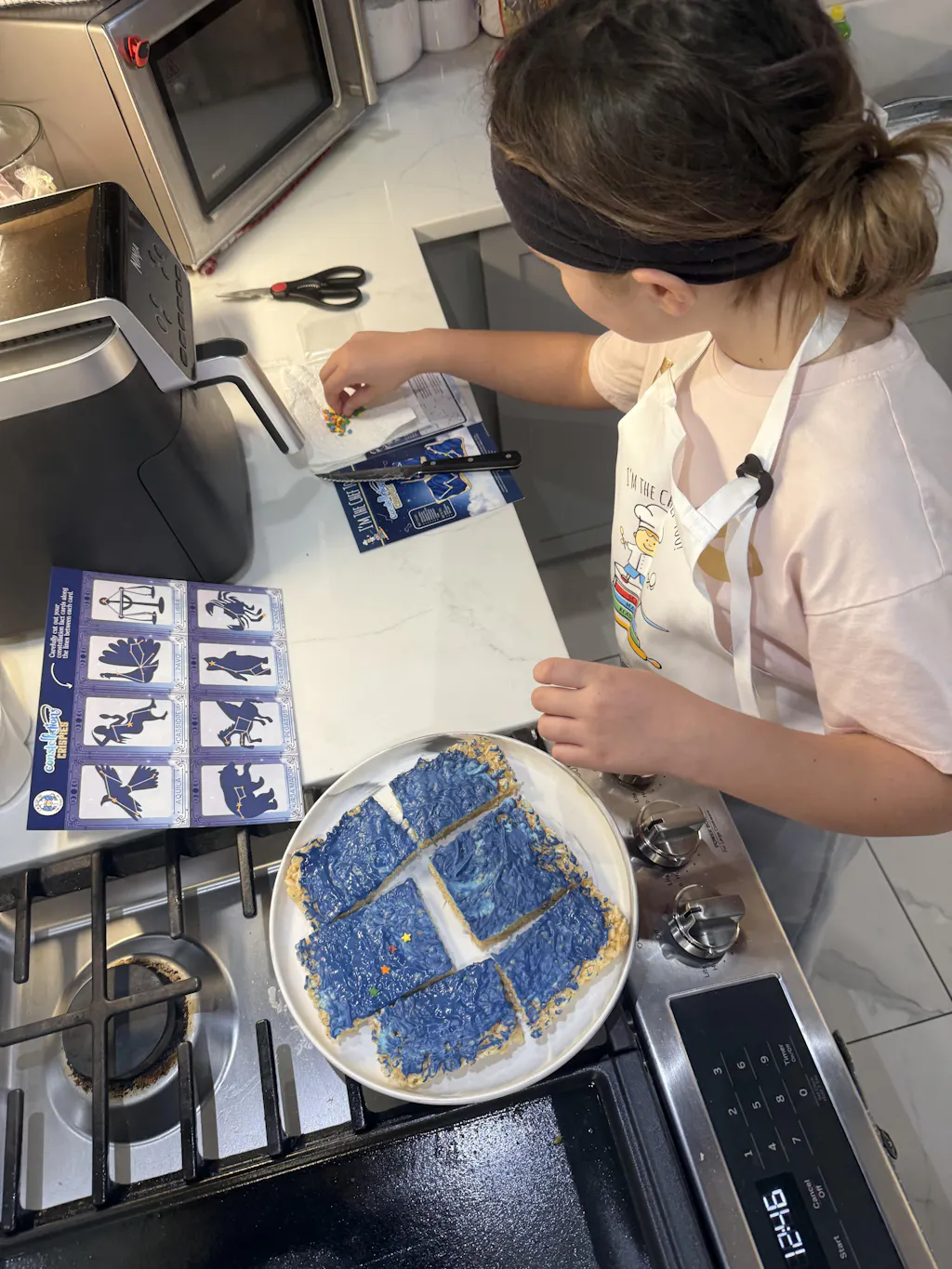
- Edible Astronomy: Explore the cosmos through food! Our Galaxy Donut Kit is a fantastic example, where children learn about planets and galaxies while decorating out-of-this-world donuts. It's a sweet way to make science memorable.
- Origami: Learn the art of paper folding. There are countless online tutorials for creations ranging from simple animals to complex geometric shapes, challenging spatial reasoning and fine motor skills.
- DIY Bath Bombs or Soaps: A fun chemistry project that results in a usable product. Kids measure, mix, and mold, understanding basic chemical reactions and properties of ingredients.
By offering age-appropriate challenges, we empower children to grow their skills, explore their interests, and build confidence in their creative abilities.
Integrating STEM into Your Crafts (The I'm the Chef Too! Way)
At I'm the Chef Too!, we firmly believe that STEM isn't just about textbooks and laboratories; it's about everyday discovery, hands-on experimentation, and understanding the world around us. Our unique approach seamlessly weaves Science, Technology, Engineering, and Math into the joyful act of crafting, especially through culinary adventures. This isn't just about making things; it's about making connections and fostering a deep love for learning.
Science in the Kitchen: Chemical Reactions, States of Matter, and Taste Science
The kitchen is a vibrant laboratory, and cooking is a series of scientific experiments.
- Chemical Reactions: When you bake, countless chemical reactions are taking place. Yeast causes dough to rise by producing carbon dioxide gas. Baking soda and baking powder react with liquids and acids to create bubbles, making cakes fluffy. Observing these changes firsthand, like when preparing our Erupting Volcano Cakes Kit, teaches children about acids, bases, and gas production in a captivating way. They see the transformation from raw ingredients to a delicious product, understanding that chemistry isn't just abstract, it's edible!
- States of Matter: Cooking regularly demonstrates changes in states of matter. Water turns to steam (liquid to gas), chocolate melts (solid to liquid), and dough bakes into a solid (liquid/solid mixture to solid). These observations help children grasp fundamental physics concepts.
- Taste Science: Why do certain flavors combine well? How do different spices alter the taste of a dish? Exploring ingredients and flavors can introduce children to the science of taste buds and the complex interplay of ingredients that create culinary harmony.
Technology in Action: Simple Machines, Coding Games, and Digital Art Integration
While our core focus is hands-on and screen-free, understanding technology can also be integrated into crafting.
- Simple Machines: Many kitchen tools are simple machines! A whisk is a lever, an egg beater uses gears, and a rolling pin is a wheel and axle. Discussing how these tools work helps children understand basic engineering principles and the technology we use every day.
- Digital Art Integration: For older children, using simple digital art tools or even a camera to document their craft process can be an introduction to technology. They can create a stop-motion animation of their baking process or design labels for their finished edible crafts.
- The Technology of Recipes: Even a recipe itself, with its precise steps and measurements, can be seen as a form of "code" – a set of instructions that, when followed correctly, produces a desired outcome.
Engineering Challenges: Building Structures, Problem-Solving Design
Engineering is all about design, construction, and problem-solving. Many crafts inherently involve these principles.
- Building Structures (Edible or Otherwise): Constructing a gingerbread house, a cake in a specific shape, or even a tower out of marshmallows and toothpicks involves fundamental engineering concepts. Children must consider stability, balance, and design to ensure their creation stands tall. "How do I make this structure strong enough to hold the frosting?" is a classic engineering question.
- Problem-Solving Design: When a craft doesn't turn out as expected, it's an opportunity for engineering design. "What went wrong? How can I fix it? How can I improve my design next time?" This iterative process is at the heart of engineering.
Math Made Delicious: Measuring, Fractions, Geometry
Math is woven into every aspect of cooking and crafting.
- Measuring: Exact measurements are crucial for successful baking. Children learn about quantities, units, and precision as they scoop, pour, and level ingredients. They count spoons, measure milliliters, and understand the importance of accuracy.
- Fractions: Baking is a fantastic way to teach fractions in a practical context. Half a cup, a quarter teaspoon, dividing a cake into equal slices – these real-world applications make abstract fraction concepts concrete and understandable.
- Geometry: Cutting shapes, creating patterns, understanding symmetry in decorations, or even calculating the circumference of a pizza all involve geometry. Our Galaxy Donut Kit, for instance, encourages children to think about spherical planets and circular orbits as they decorate.
Hypothetical Case Study: The Smith Family's STEM Baking Adventure
Imagine the Smith family, with 7-year-old Maya and 9-year-old Leo. They receive their monthly I'm the Chef Too! box. This month, it's the "Cosmic Cookie Adventure." As they open the box, they find pre-measured ingredients for star-shaped cookies and colorful edible glitter.
- Science: While mixing, Maya observes the dough change texture. Leo asks, "Why do we use baking soda?" Their parent explains the chemical reaction that makes cookies rise.
- Math: They carefully measure flour and sugar, discussing fractions as they halve the recipe for a smaller batch. They count out star cookie cutters.
- Engineering: When decorating, they decide to build a "cookie constellation." They brainstorm how to arrange the stars so they don't crumble when moved.
- Art: They experiment with different colored icings and edible glitter to create unique cosmic designs, discussing patterns and aesthetics.
The result? Delicious cookies, a deeper understanding of STEM concepts, and a wonderful afternoon of family bonding. This kind of tangible, hands-on learning is exactly what we aim for with every I'm the Chef Too! kit. Ready for adventures just like this? A new, exciting kit is delivered to your door every month with free shipping in the US. Join The Chef's Club and embark on your own culinary STEM journey!
Low-Prep, High-Fun Craft Ideas for Busy Days
Life gets hectic, and sometimes the thought of gathering a dozen supplies for an elaborate craft project can feel overwhelming. But busy doesn't mean boring! There are plenty of fantastic crafts for kids to do at home that require minimal setup and offer maximum engagement. These low-prep ideas are perfect for those spontaneous moments of "I'm bored!" or when you only have a short window for creativity.
When Time is Short, But Creativity Calls
The beauty of low-prep crafts is their accessibility. You don't need a perfectly stocked craft room; often, the items you need are already lying around your house or backyard. The goal is to encourage quick, spontaneous bursts of creativity rather than multi-hour commitments.
Nature Scavenger Hunt & Art: Gathering Leaves, Twigs, Stones
- Prep Time: 5 minutes (to grab a bag and glue)
- Activity: Take a walk around your yard, a local park, or even just your street. Give your child a bag or basket and challenge them to find natural treasures: interesting leaves, small twigs, smooth stones, fallen petals, acorns, or pinecones.
- Craft: Once back inside, provide paper and glue. Let them arrange their collected items into a nature collage or create "nature creatures" by adding googly eyes and pipe cleaners to stones or leaves. This connects children with the outdoors and transforms found objects into art.
Drawing Prompts & Storytelling: "Draw a creature that lives on the moon."
- Prep Time: 1 minute (to grab paper and drawing tools)
-
Activity: Provide a simple, imaginative drawing prompt. Instead of saying, "Draw whatever you want" (which can sometimes be overwhelming), give them a starting point:
- "Draw a creature that lives on the moon and eats stardust."
- "Imagine a secret garden and draw what you would find there."
- "Draw a robot that helps with chores, but always gets something wrong."
- "Create a map of a fantastical land where only dragons live."
- Craft: The drawing itself is the craft, but the storytelling element adds another layer of engagement. Ask them questions about their drawing: "What's its name? What does it do all day? What's its favorite food?" This boosts creativity, language skills, and imagination.
DIY Playdough or Slime: Quick and Engaging
- Prep Time: 10-15 minutes (for making the dough/slime), minimal for subsequent play
- Activity: While making playdough from scratch (see recipe in the Toddler section) takes a few minutes, once it's made, it provides hours of open-ended play. Similarly, a basic slime recipe (glue, baking soda, contact lens solution) can be mixed quickly.
- Craft: Once the dough or slime is ready, the "craft" is the manipulation itself. Children can squish, roll, stretch, cut, and mold. Add small toys, cookie cutters, or plastic knives for extra fun. This offers rich sensory input and develops fine motor skills without a rigid end goal.
Cereal Box Creations: Transforming Trash into Treasure
- Prep Time: 2 minutes (to grab an empty cereal box, scissors, and tape/glue)
- Activity: Instead of tossing that empty cereal box, encourage your child to transform it!
-
Craft: They can cut it, fold it, tape it, and decorate it to become:
- A miniature house for small toys.
- A robot or monster.
- A car or spaceship.
- A treasure chest.
- A puppet theater.
- This promotes resourceful thinking and engineering design with readily available materials.
These low-prep options prove that you don't need elaborate plans or expensive supplies to ignite a child's creativity. Sometimes, the simplest ideas yield the greatest joy and learning. And for times when you do want a complete, guided adventure without the hassle of shopping for ingredients, remember that our one-time kits are packed with everything you need for a unique cooking STEM experience. Find the perfect theme for your little learner by browsing our complete collection of one-time kits.
Beyond the Craft: Extending the Learning and Fun
The moment a craft project is "finished" isn't necessarily the end of the learning or the fun. In fact, some of the richest educational experiences happen after the glue has dried or the last crumb has been devoured. Extending the activity maximizes the benefits, reinforces learning, and further encourages creative thinking.
Displaying Artwork: Boosting Confidence and Valuing Effort
- Encouragement: Proudly display your child's creations! Whether it's on the refrigerator, a dedicated art wall, or even a digital photo album, showing off their work validates their effort and boosts their self-esteem.
- Discussion: Talk about their art. "Tell me about this picture." "What was your favorite part of making this?" "How did you choose these colors?" This encourages reflection and verbal expression. Avoid judgment; simply listen and appreciate their perspective.
Storytelling with Creations: Developing Language Skills and Imagination
- Give it a Narrative: Many crafts lend themselves naturally to storytelling. If they've made a puppet, encourage a puppet show. If they've drawn a creature, ask them about its adventures.
- Build a World: If they've built a house out of cardboard, ask who lives there and what they do. This integrates language arts, expands vocabulary, and strengthens imaginative play.
- Even beloved characters can make learning fun, like when kids make Peppa Pig Muddy Puddle Cookie Pies, where they can tell stories about Peppa's adventures while baking!
Gift-Giving: Teaching Generosity and Thoughtfulness
- Personalized Presents: A handmade craft makes a incredibly thoughtful gift for grandparents, teachers, or friends. This teaches children the joy of giving, the value of handmade items, and the effort involved in creating something special for someone else.
- Wrapping and Cards: Extend the activity by having them wrap their gift and create a homemade card, further practicing fine motor skills and creative expression.
Reflection and Discussion: What Did We Learn? What Was Challenging?
-
Post-Activity Debrief: Take a few moments after a craft to talk about the experience.
- "What was something new you learned today?"
- "Was there anything that was tricky or frustrating?" (This validates their feelings and teaches resilience.)
- "What would you do differently next time?" (Encourages critical thinking and iterative design, a core STEM concept.)
- "What scientific principles did we see in action while baking?" (Reinforces the STEM learning from our kits!)
- Connecting to Real Life: Help them see how the skills they used in crafting (measuring, planning, problem-solving) apply to other areas of life.
Adapting for Different Learning Styles: Visual, Kinesthetic, Auditory
Children learn in diverse ways. Crafts can be adapted to cater to these different styles:
- Visual Learners: Focus on color, patterns, shapes. Provide examples or visual steps.
- Kinesthetic Learners: Emphasize the hands-on, tactile aspects – squishing clay, mixing ingredients, cutting paper. Our cooking kits are particularly strong for kinesthetic learners.
- Auditory Learners: Explain instructions verbally, tell stories while crafting, encourage discussion throughout the process.
Embracing Imperfection: The Joy of Process Art
It's easy for children (and adults!) to get caught up in making something "perfect." However, focusing too much on the flawless end product can stifle creativity and create anxiety.
- Celebrate the Process: Encourage your child to enjoy the act of creating, the exploration of materials, and the journey itself. Remind them that art is about expression, not perfection.
- "Happy Accidents": Point out how mistakes can sometimes lead to interesting discoveries or new ideas. This fosters resilience and flexible thinking.
By intentionally extending the learning and fun, you transform simple craft activities into richer, more meaningful educational experiences that nurture a child's entire development.
Making It a Habit: Tips for Consistent Crafting Fun
To truly reap the benefits of crafting, it's helpful to make it a regular part of your family's routine. Consistency doesn't mean every day has to be a grand project; even small, spontaneous moments of creativity can add up to significant developmental gains. Here’s how to integrate crafts seamlessly into your home life.
Schedule It: Regular "Craft Time" (or "Adventure Time")
- Designated Slot: Just like reading time or snack time, carving out a specific "craft time" can make it a consistent habit. This could be once a week, every Saturday morning, or even for 15-20 minutes after school on certain days.
- Flexibility: Don't let the schedule be rigid. If a beautiful day calls for outdoor play, swap craft time for a nature art session. The goal is routine, not rigidity.
- Anticipation: Announcing "It's almost craft time!" can build excitement and help children transition from other activities.
Keep Supplies Handy: Easy Access Encourages Spontaneity
- Accessible Storage: As discussed, storing craft supplies at your child's eye level and in easily identifiable containers makes a huge difference. If they have to ask for permission or wait for you to dig out supplies, the moment of inspiration might pass.
- "Ready-to-Go" Bins: Consider having a small bin of basic, low-mess craft supplies (paper, crayons, glue sticks, stickers) that's always accessible for independent exploration.
Rotate Activities: Keep It Fresh and Exciting
- Variety is Key: While having favorite crafts is great, rotating the types of activities and materials keeps things fresh. If you did painting last week, try building with recyclables this week, or an edible science adventure next.
- Seasonal Themes: Incorporate seasonal or holiday themes into your crafts. This provides natural inspiration and connects learning to the world around them.
- Our Chef's Club Subscription is perfect for this! A new, exciting, and unique STEM cooking adventure arrives at your door every month, ensuring a fresh and engaging activity is always at hand, eliminating the need for you to constantly seek out new ideas.
Involve Kids in Planning: Ownership and Enthusiasm
- Choice and Voice: Let your children have a say in what crafts they do. "Do you want to paint today, or build something?" "Which of our I'm the Chef Too! kits should we tackle next?"
- Gathering Supplies: Involve them in gathering materials. "We need some blue paper and maybe some glitter for our sky scene." This teaches planning skills and makes them feel invested in the project.
Lead by Example: Join in the Fun!
- Show, Don't Just Tell: Children learn by observing. If they see you enjoying creative activities, they'll be more inclined to participate.
- Collaborate: Sit down and work on a project with them, or even start your own parallel craft. This models creative thinking, problem-solving, and makes it a shared, bonding experience. Remember, at I'm the Chef Too!, our kits are designed for family bonding, encouraging you to cook, learn, and explore together.
Making crafts a consistent and joyful part of your family life enriches everyone involved. It's a commitment to fostering curiosity, creativity, and connection in a meaningful, screen-free way. If you’re looking for convenient and exciting ways to introduce new crafts for kids to do at home, consider exploring our extensive array of options. Not ready to subscribe? Explore our full library of adventure kits available for a single purchase in our shop and find the perfect hands-on experience for your child.
Conclusion
The journey through the world of crafts for kids to do at home reveals a landscape rich with opportunity – not just for fun, but for profound developmental growth. We've explored how simple materials and imaginative ideas can ignite fine motor skills, sharpen cognitive abilities, foster creative expression, and nurture emotional well-being. We've seen how crafts provide a vital screen-free alternative, offering tangible, hands-on engagement that digital experiences simply cannot replicate. And most importantly, we've highlighted the immense power of shared creative moments to strengthen family bonds and create treasured memories that last a lifetime.
At I'm the Chef Too!, our passion lies in making this journey accessible, exciting, and incredibly educational. By blending the delicious art of cooking with the wonders of STEM, we provide unique "edutainment" experiences that transform abstract concepts into tangible, tasty realities. Our kits, developed by mothers and educators, are thoughtfully designed to spark curiosity and creativity, making learning an adventure your child will eagerly anticipate. We provide the pre-measured dry ingredients and specialty supplies, so you can focus on the joy of discovery and the delight of creating something wonderful together.
Don't let the quest for engaging, educational activities be a source of stress. Embrace the magic of home crafts, especially those that come with a delicious, STEM-infused twist. Foster a love for learning, build confidence, and create unforgettable family moments, one delicious experiment and artistic masterpiece at a time.
Ready to bring the excitement of discovery and the joy of creation right to your kitchen? Make every month an adventure in "edutainment." Join The Chef's Club today and get a new, unique STEM cooking kit delivered free to your door, perfectly curated for curious minds!
FAQ: Your Crafting Questions Answered
Q1: What are the best crafts for a 2-year-old to do at home? A1: For 2-year-olds, focus on sensory exploration and process art. Great options include finger painting (with washable, non-toxic paints), playing with homemade playdough, tearing paper to create collages, or exploring a sensory bin filled with dried pasta or rice (under close supervision). The emphasis should be on the experience and exploration of materials, not a perfect final product.
Q2: How can I make crafts educational without making them feel like schoolwork? A2: The key is to integrate learning seamlessly and naturally. At I'm the Chef Too!, we do this by blending food, STEM, and art. For example, when baking, discuss the chemical reactions (science) that make cakes rise, measure ingredients (math), follow recipe steps (sequencing/engineering), and decorate (art). Ask open-ended questions like "What do you think will happen if we add more water?" or "Why did the dough get so fluffy?" This makes learning a natural part of the fun, rather than a separate lesson.
Q3: What are some good craft ideas using household items or recyclables? A3: Repurposing household items is fantastic for fostering creativity and eco-consciousness! Some ideas include: creating robots or animals from cardboard boxes and toilet paper rolls, making collages from old magazines, building structures with plastic bottles and bottle caps, designing paper plate masks, or creating nature art from found leaves, twigs, and pebbles. The possibilities are endless when you look at "trash" as potential treasure.
Q4: How do I manage the mess that comes with crafting? A4: Mess management is key to stress-free crafting! Start by designating a specific craft zone (like the kitchen table) and protecting surfaces with old newspapers, a plastic tablecloth, or a dedicated craft mat. Have children wear old clothes or an apron. Keep wet wipes or paper towels handy for quick cleanups. Involve your child in the cleanup process, making it part of the activity, and establish clear rules about where materials can and cannot go.
Q5: My child gets frustrated if their craft isn't "perfect." How can I help them? A5: It's common for children to strive for perfection, but it can hinder creativity. Focus on celebrating the process of creation rather than just the final product. Praise their effort, their ideas, and their persistence. Remind them that art is about expressing themselves, and there's no "right" or "wrong" way to be creative. Encourage "happy accidents" and the idea that mistakes can lead to new discoveries. Participating alongside them and modeling an acceptance of imperfection can also be very helpful.
Q6: What's the benefit of subscription craft kits like The Chef's Club? A6: Subscription craft kits offer unparalleled convenience and consistent engagement. With The Chef's Club, you get a new, unique, and complete STEM cooking adventure delivered to your door every month. This means less planning and shopping for you, and more screen-free, educational fun for your child. Our kits include pre-measured dry ingredients and specialty supplies, ensuring every experience is exciting, successful, and fosters a love for learning in a delicious way. It's an easy way to ensure a fresh, stimulating activity is always available.