Table of Contents
- Introduction
- Understanding the Heart of STEM: More Than Just Science
- The Scientific Method: Your Child's Roadmap to Discovery
- Stellar STEM Fair Project Ideas to Ignite Young Minds
- Choosing the Perfect STEM Fair Project Idea
- Beyond the Experiment: Presentation and Communication
- The I'm the Chef Too! Approach to STEM Learning
- Nurturing the Future: Why STEM Skills Matter
- Frequently Asked Questions About STEM Fair Projects
- Conclusion
Have you ever found yourself staring at a blank calendar, wondering how to fill a weekend with something genuinely engaging and educational for your children? Or perhaps a school announcement for the annual science fair has landed in your inbox, immediately conjuring images of complex diagrams, last-minute trips to specialty stores, and the pressure of finding that "perfect" project? It’s a common experience for many parents and educators. The idea of a STEM fair can feel daunting, but it doesn't have to be. In fact, it's a fantastic opportunity to ignite a lifelong love for learning, critical thinking, and hands-on discovery.
At I'm the Chef Too!, we wholeheartedly believe that learning should be an adventure – one that's messy, delicious, and incredibly fun. Our mission is to blend food, STEM, and the arts into one-of-a-kind "edutainment" experiences, proving that the most complex subjects can be understood through tangible, hands-on, and utterly delicious cooking adventures. We understand the challenges of finding activities that truly spark curiosity and creativity in children while also fostering meaningful family bonding and providing a much-needed screen-free educational alternative. That's why we're committed to helping you turn those "what should we do?" moments into joyful learning experiences. This guide is designed to empower you with a wealth of innovative and engaging STEM fair project ideas that leverage everyday materials, often found right in your kitchen, ensuring that your child's journey into science, technology, engineering, and math is not just educational, but also unforgettable. We’ll dive deep into project concepts, exploring the "why" behind the "what," and provide practical tips to make the entire process enjoyable for everyone involved.
Introduction
The mere mention of "STEM fair project ideas" can often send a shiver of dread down a parent's spine. Visions of elaborate contraptions, obscure scientific principles, and competitive pressures might quickly cloud the potential for genuine learning and fun. But what if we told you that the key to a truly successful and enriching STEM fair experience isn't about winning a prize, but about sparking genuine curiosity, fostering problem-solving skills, and creating lasting memories? Imagine your child, beaming with pride, explaining a scientific concept they’ve explored themselves, perhaps even with an edible demonstration!
This blog post is your comprehensive guide to navigating the exciting world of STEM fair projects. We're here to transform that initial apprehension into enthusiastic anticipation. We’ll explore a diverse array of project ideas that are not only fascinating but also accessible, using materials often found around your home. Our focus is on making STEM engaging, approachable, and, yes, even delicious. We'll delve into projects that encourage hands-on experimentation, critical thinking, and creative expression, all while aligning with our philosophy at I'm the Chef Too! – where we believe that the best learning happens when children are actively involved, building, testing, and tasting their way through discovery. From the bubbling excitement of chemical reactions to the precision of engineering, we'll cover ideas suitable for a range of ages and interests, always emphasizing the process of learning over the pressure of perfection. So, let’s roll up our sleeves and discover how to make this year's STEM fair an adventure in "edutainment" that your child will cherish!
Understanding the Heart of STEM: More Than Just Science
Before we jump into specific projects, it’s crucial to understand what STEM truly embodies. STEM is an acronym for Science, Technology, Engineering, and Mathematics. It's not just a collection of subjects; it's an interdisciplinary approach to learning that encourages critical thinking, problem-solving, innovation, and creativity. A great STEM fair project doesn't just demonstrate a scientific fact; it invites inquiry, experimentation, and design.
- Science: The systematic study of the natural and physical world through observation and experimentation. Projects often involve forming hypotheses, collecting data, and drawing conclusions.
- Technology: The application of scientific knowledge for practical purposes. This isn't just about computers; it's about tools, techniques, and processes designed to solve problems or improve efficiency.
- Engineering: The creative application of scientific principles to design, build, and maintain structures, machines, and systems. Engineering projects often involve designing solutions to real-world problems.
- Mathematics: The language of STEM, providing the tools for analysis, measurement, and problem-solving across all disciplines.
By embracing this holistic view, we can help children see the interconnectedness of these fields and how they shape our world. At I'm the Chef Too!, we take this a step further by integrating the Arts (STEAM) into our experiences, recognizing that creativity and aesthetic understanding enhance the learning process, particularly when it comes to designing and presenting projects!
Ready to spark that curiosity and creativity month after month? Join The Chef's Club today and enjoy free shipping on every box, bringing new adventures right to your door!
The Scientific Method: Your Child's Roadmap to Discovery
Regardless of the project chosen, guiding your child through the scientific method is perhaps the most valuable lesson they’ll learn. It’s a structured way of thinking and experimenting that mirrors how real scientists work.
- Ask a Question: What do you want to find out? (e.g., "Which type of fruit juice is the best conductor of electricity?")
- Do Background Research: What do you already know about this topic? What have others discovered? (e.g., "Electricity flows through liquids with ions. Citrus fruits are acidic...")
- Form a Hypothesis: Make an educated guess about what you think will happen, and why. (e.g., "I hypothesize that lemon juice will be the best conductor because it has the highest acidity, meaning more free ions.")
- Design and Conduct an Experiment: How will you test your hypothesis? What materials will you need? What steps will you follow? What are your variables (independent, dependent, controlled)?
- Collect and Analyze Data: Record your observations and measurements. Organize your data (charts, graphs). What patterns do you see?
- Draw a Conclusion: Was your hypothesis supported or rejected by your data? Why do you think that happened?
- Communicate Results: Share what you learned! This is where the STEM fair presentation comes in.
This iterative process fosters critical thinking and helps children understand that failure isn't an endpoint, but a stepping stone to further learning. It teaches perseverance and the value of refining ideas.
Stellar STEM Fair Project Ideas to Ignite Young Minds
Now, let's explore some exciting stem fair project ideas that are hands-on, engaging, and perfect for young learners. Many of these can be adapted to incorporate a delicious, edible element, staying true to the I'm the Chef Too! spirit!
1. The Power of Yeast: Edible Chemical Reactions (Science & Biology)
Chemical reactions are everywhere, and what better way to explore them than by baking? Yeast, a single-celled fungus, is a marvel of biology and chemistry.
- Project Idea: The Great Yeast Experiment: What Feeds Our Bread Best?
- Concept: Explore how different sugars (glucose, sucrose, fructose – think table sugar, honey, fruit juice) or even different temperatures affect yeast activity (carbon dioxide production).
- What kids learn: Fermentation, gas production, role of microorganisms, variables in experiments, measurement, data recording.
- Materials: Yeast, warm water, different types of sugar (or no sugar for a control), clear bottles or jars, balloons (to capture gas), measuring cups/spoons, thermometer.
- Process: Mix yeast and warm water in several bottles. Add a different sugar to each bottle (and one with no sugar). Place a balloon over each bottle opening. Observe which balloon inflates the most and the fastest. This demonstrates how much CO2 the yeast produces, indicating its activity.
- I'm the Chef Too! Connection: This project is a perfect lead-in to understanding how ingredients react to create delicious outcomes, much like the amazing transformations we see in our kits. Imagine combining this learning with a baking project like making your own bread or pizza dough from scratch!
- Hypothetical Case Study: A parent looking for a screen-free weekend activity for their 8-year-old who loves baking could try comparing different types of sweeteners (sugar, honey, maple syrup) in simple yeast dough. They could measure how high each dough rises, bake them, and then enjoy their experimental deliciousness!
2. Edible Geology: Creating "Rocks" and "Volcanoes" (Science & Engineering)
Geology can be abstract, but when you can eat your experiments, it becomes incredibly tangible!
- Project Idea: Layered Earth: Edible Sedimentary Rocks.
- Concept: Model the formation of sedimentary rocks by layering different edible ingredients, then applying pressure.
- What kids learn: Geological processes, different rock types, pressure, compaction, stratification.
- Materials: Crushed cookies, granola, chocolate chips, dried fruit, honey/corn syrup (as "cement"), clear plastic cups, heavy objects for pressure.
- Process: Layer the different "sediments" in a cup, adding a little "cement" between layers. Apply pressure (e.g., stack books on top) over a few days. Then, carefully cut the "rock" to see the distinct layers.
-
Variations:
- Volcanoes! No discussion of geology is complete without an erupting volcano! Our own Erupting Volcano Cakes Kit is a fantastic example of a chemical reaction that makes cakes bubble over with deliciousness. It’s a hands-on way to explore acids and bases while creating an exciting, edible eruption. This kit provides a fun, contained way to learn about geological forces and chemical reactions, making it perfect for your child's next STEM fair project or just a fun afternoon.
- Crystal Caves: Grow edible sugar crystals (rock candy) to demonstrate crystallization.
3. Kitchen Physics: Building Strong Structures (Engineering & Math)
Engineering is all about design and stability. The kitchen provides excellent materials for exploring these principles.
- Project Idea: Spaghetti Bridge Challenge: How Much Weight Can It Hold?
- Concept: Design and build a bridge using only uncooked spaghetti and marshmallows (or gumdrops) as connectors. Test its load-bearing capacity.
- What kids learn: Structural integrity, tension, compression, geometric shapes (triangles are strong!), force distribution, measurement, weight.
- Materials: Uncooked spaghetti, mini marshmallows or gumdrops, weights (coins, small toys), ruler.
- Process: Build different bridge designs (e.g., truss, arch, beam) and test which one can hold the most weight before collapsing. Measure the weight and compare designs.
- I'm the Chef Too! Connection: This project perfectly embodies the engineering principles we encourage in our kits, where children learn to assemble, build, and create while understanding the underlying structure and design. It’s all about hands-on creation and discovery!
4. Plant Power: Green Thumbs and Green Energy (Biology & Technology)
The natural world is full of amazing stem fair project ideas. Plants offer endless opportunities for observation and experimentation.
- Project Idea: The Amazing Lemon Battery: Powering a Clock with Fruit.
- Concept: Discover how chemical energy in fruits and vegetables can be converted into electrical energy.
- What kids learn: Electrochemistry, circuits, conductors, voltage, energy conversion.
- Materials: Lemons (or potatoes, apples), copper wires (or pennies), zinc galvanized nails (or paper clips), small LED light or a low-voltage digital clock.
- Process: Insert a copper wire and a zinc nail into a lemon, ensuring they don't touch. Connect several lemons in a series using wires. Connect the circuit to the LED or clock and observe it light up! Experiment with different fruits or vegetables, or vary the number of lemons.
- I'm the Chef Too! Connection: This project highlights how everyday items can be used for amazing scientific discoveries, much like our kits transform common kitchen ingredients into educational adventures. This experiment demonstrates a simple form of "green" technology using natural resources.
5. Sweet Science: Molecular Gastronomy Made Simple (Science & Chemistry)
Molecular gastronomy might sound fancy, but it’s essentially applying scientific principles to food. It’s a delicious field for stem fair project ideas!
- Project Idea: Spherification Sensations: Edible Juice Droplets.
- Concept: Use a chemical reaction to transform liquids into small, spherical "caviar" that bursts in your mouth. This technique is often used by high-end chefs.
- What kids learn: Chemical reactions, polymers, surface tension, density, food science.
- Materials: Calcium chloride, sodium alginate, fruit juice (or flavored water), syringes or droppers, two bowls of water.
- Process: Dissolve sodium alginate into juice. In a separate bowl, dissolve calcium chloride in water. Using a syringe, carefully drop the juice mixture into the calcium chloride bath. Watch as the droplets form perfect spheres! Rinse them in plain water.
- I'm the Chef Too! Connection: This is a perfect example of how our "edutainment" approach can make complex chemistry concepts, like the formation of polymers and gels, accessible and exciting through food. It's a fantastic visual and taste-based learning experience that sparks incredible "aha!" moments.
6. The Science of the Senses: Taste, Sight, and Smell (Biology & Psychology)
Our senses are incredible tools, and exploring how they work makes for fascinating stem fair project ideas.
- Project Idea: Blind Taste Test: Does Color Influence Flavor Perception?
- Concept: Investigate whether the color of a food or drink affects how we perceive its taste.
- What kids learn: Sensory biology, psychology of perception, data collection, statistical analysis (even simple counts).
- Materials: Identical clear drinks (e.g., clear soda, water, white grape juice), food coloring, small cups, blindfolds, willing participants, data sheet.
- Process: Prepare several cups of the same clear drink, but color them differently (e.g., red, blue, green, and one clear). Have participants, blindfolded, taste each one and describe its flavor. Then have them taste without the blindfold. Compare the descriptions.
- I'm the Chef Too! Connection: This project emphasizes how our brains interpret sensory information, connecting biology to our everyday experiences with food. It's a great way to show how seemingly simple things have complex scientific explanations, much like how we explore different textures and flavors in our kits.
7. Astounding Astronomy: Bringing the Cosmos to Your Kitchen (Science & Math)
Space is endlessly captivating for children, and there are wonderful ways to explore astronomical concepts with everyday items.
- Project Idea: Edible Solar System: Scale Models of Planets and Distances.
- Concept: Create a scale model of the solar system using different sized edible spheres (or 2D cutouts) to represent planets, and then calculate scaled distances.
- What kids learn: Planetary sizes, orbital distances, scale, proportions, ratios, understanding vastness of space.
- Materials: Different sized candies, fruits, or baked goods (e.g., a watermelon for the sun, a pea for Mercury, a grape for Earth), string or measuring tape, calculator.
- Process: Assign a scale (e.g., 1 foot = 1 million miles). Research actual planetary diameters and distances from the sun. Calculate scaled sizes and distances. Arrange your edible planets according to your scale.
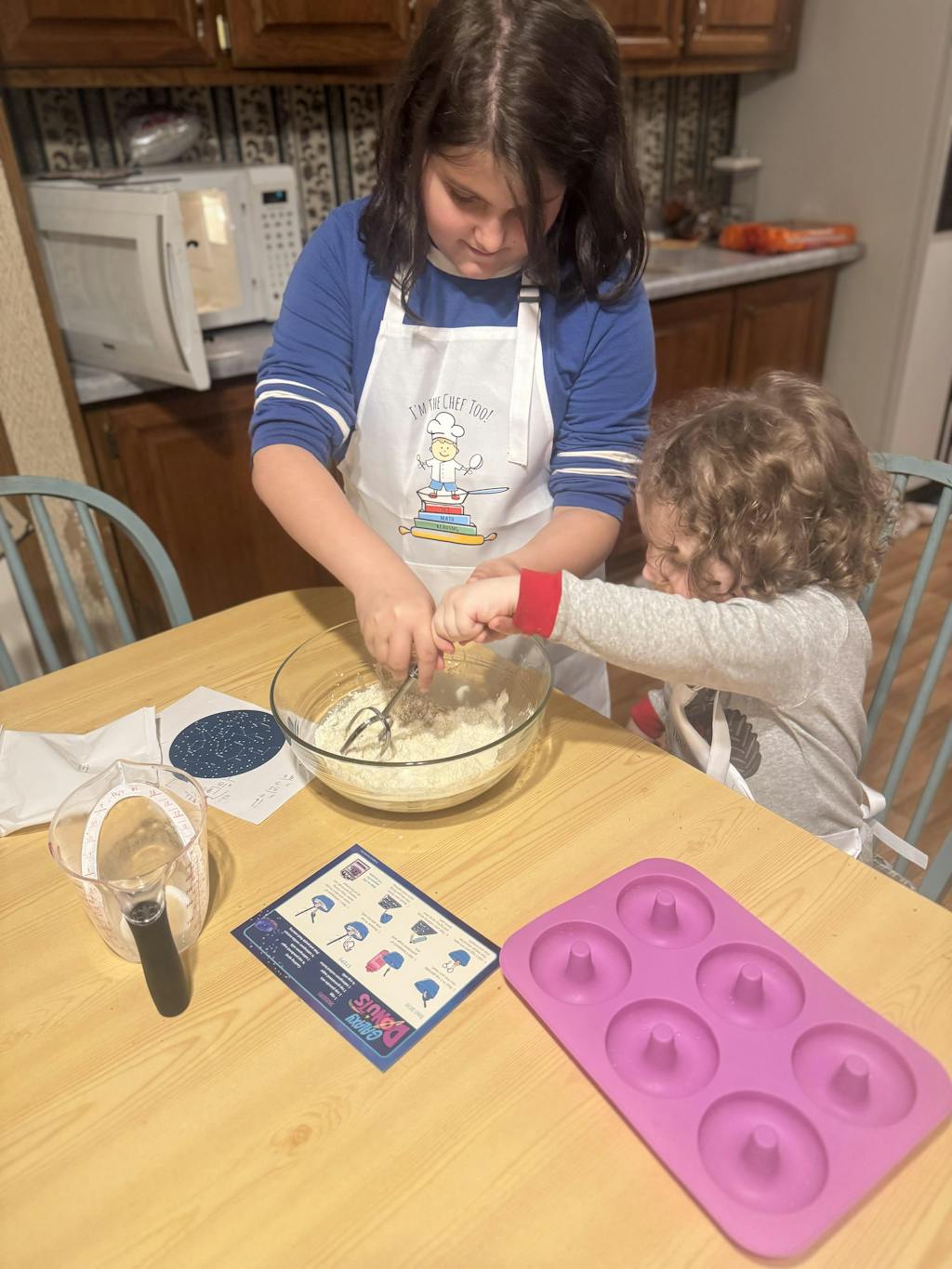
- I'm the Chef Too! Connection: This is exactly the kind of hands-on learning that our Galaxy Donut Kit embraces! Imagine making your own edible solar system with vibrant, delicious donuts, learning about planets and space while you decorate. It's an out-of-this-world way to combine science and art with a tasty reward.
Our Chef's Club brings fresh, exciting projects right to your home every month. It’s a convenient, flexible, and value-packed way to keep the learning and fun going. Discover our 3, 6, or 12-month prepaid plans and give the gift of ongoing discovery! Join The Chef's Club today!
8. Environmental Engineering: Everyday Solutions (Engineering & Science)
Helping children understand and address environmental challenges through hands-on projects is incredibly impactful. These stem fair project ideas can inspire future innovators.
- Project Idea: DIY Water Filter: Cleaning Up "Dirty" Water.
- Concept: Design and build a multi-layered water filtration system using common materials to remove impurities from dirty water.
- What kids learn: Filtration, purification, material science, environmental impact, engineering design process.
- Materials: Plastic bottle (cut in half), coffee filters, gravel, sand (fine and coarse), activated charcoal (from pet store), "dirty" water (soil, leaves, food coloring).
- Process: Layer the materials inside the inverted top half of the bottle (with cap removed), starting with cotton/coffee filter at the bottom, then charcoal, fine sand, coarse sand, and gravel. Pour "dirty" water through and observe the filtered water. Experiment with different layers or materials.
- I'm the Chef Too! Connection: This project encourages children to think like engineers and problem-solvers, designing solutions for real-world issues. It's about using available resources creatively to achieve a practical goal, much like how our kits guide children to transform simple ingredients into complex creations.
9. Robotics & Simple Machines: Moving Parts and Mechanical Wonders (Technology & Engineering)
Exploring the basic principles of mechanics doesn't require complex electronics. Simple machines are a great entry point for stem fair project ideas in technology and engineering.
- Project Idea: Leverage Power: Building a Candy Catapult.
- Concept: Design and build a simple catapult using levers to launch small objects (like marshmallows or gummy bears) and investigate factors affecting trajectory and distance.
- What kids learn: Levers, fulcrums, force, trajectory, potential and kinetic energy, measurement, optimization.
- Materials: Craft sticks, rubber bands, plastic spoon, small items to launch, ruler/measuring tape.
- Process: Assemble a basic craft stick catapult. Experiment with changing the length of the lever arm, the tension of the rubber bands, or the angle of launch. Measure how far the "ammo" flies.
- I'm the Chef Too! Connection: This project showcases the fun side of engineering and physics, where children build a functional device from simple materials. It's a fantastic hands-on way to understand how things work and to design for a specific purpose, echoing our own approach to hands-on learning.
10. The Magic of Magnets: Invisible Forces (Physics)
Magnetism is a fundamental force with everyday applications, and its invisible pull and push make for captivating stem fair project ideas.
- Project Idea: Magnetic Slime: Making Materials Respond to Magnets.
- Concept: Create a slime that reacts to a magnet, exploring the properties of magnetism and non-Newtonian fluids.
- What kids learn: Magnetism, ferrofluids (basic concept), material properties, states of matter, polymers.
- Materials: White glue, liquid starch (or borax solution), iron filings (from a hardware store or art supply), strong magnet (neodymium is best).
- Process: Make basic slime. Gradually knead in iron filings until they are well distributed. Bring a strong magnet near the slime and watch it "dance" and stretch towards the magnet.
- I'm the Chef Too! Connection: This project demonstrates fascinating material science and physics in a playful, sensory way. It's a great example of how simple ingredients can yield surprising scientific phenomena, much like the exciting transformations children discover in our unique cooking STEM kits.
11. Understanding Absorption: Paper Towel Challenge (Science & Engineering)
Everyday items offer a wealth of simple scientific inquiries. The humble paper towel is a fantastic example!
- Project Idea: The Ultimate Absorbent: Which Paper Towel Reigns Supreme?
- Concept: Test the absorbency of different brands of paper towels, exploring capillary action and material properties.
- What kids learn: Capillary action, material science, variables, controlled experiments, data collection, measurement.
- Materials: Several brands of paper towels, water, measuring cups, trays or plates, stopwatch.
- Process: Cut equal-sized pieces of each paper towel. Pour a measured amount of water onto a tray. Place one paper towel into the water for a set time, then remove and measure the remaining water to determine how much was absorbed. Repeat for all brands. You could also see how much weight a wet paper towel can hold before tearing.
- I'm the Chef Too! Connection: This project demonstrates the scientific method with common household items, emphasizing observation and precise measurement. It’s about understanding the properties of materials we interact with daily, just as we explore the properties and functions of food ingredients in our kits.
Want to browse more exciting projects? Explore our full library of adventure kits available for a single purchase in our shop. You're sure to find a theme that sparks joy! Browse our complete collection of one-time kits.
12. Aerodynamics: Paper Planes and Projectile Motion (Physics & Engineering)
The principles of flight can be explored with just a sheet of paper and a little imagination.
- Project Idea: Paper Plane Power: Designing for Maximum Flight.
- Concept: Experiment with different paper airplane designs (wing shape, fold patterns, weight distribution) to see which factors affect flight distance and duration.
- What kids learn: Aerodynamics, lift, drag, thrust, gravity, engineering design, iterative improvement, measurement.
- Materials: Various types of paper, ruler, stopwatch, measuring tape, clear throwing area.
- Process: Research common paper airplane designs. Fold several planes, varying one aspect at a time (e.g., wing width, nose weight). Launch each plane multiple times, measuring distance and hang time. Analyze which design performed best and hypothesize why.
- I'm the Chef Too! Connection: This engineering design challenge involves iterative testing and refinement, skills that are transferable to many creative and problem-solving tasks, including those found in our hands-on kits where children learn to assemble and perfect their culinary creations.
13. Light and Optics: Bending and Blending (Physics)
Light is fundamental to our perception of the world. Simple experiments can reveal its fascinating properties.
- Project Idea: Rainbow in a Jar: Exploring Light Refraction and Density.
- Concept: Create a layered rainbow effect in a jar using different liquids of varying densities and observing how light interacts with them.
- What kids learn: Light refraction, density, immiscible liquids, color spectrum.
- Materials: Clear tall glass or jar, corn syrup, dish soap, water, vegetable oil, rubbing alcohol, food coloring, spoon, flashlight.
- Process: Carefully layer the liquids, starting with the densest (corn syrup) at the bottom and gradually adding less dense liquids, coloring each layer distinctly. Shine a flashlight through the jar to observe how light bends and separates into colors.
- I'm the Chef Too! Connection: This project is a visually stunning way to demonstrate physical properties like density and how light behaves. It combines scientific inquiry with artistic presentation, much like how our kits merge the science of cooking with creative culinary arts.
14. Sweet Biology: The Science of Crystals (Chemistry & Math)
Growing crystals is a classic and visually rewarding stem fair project idea that combines chemistry with patience.
- Project Idea: Sugar Crystal Gardens: What Makes the Best Rock Candy?
- Concept: Grow sugar crystals (rock candy) by supersaturating water with sugar and allowing it to cool slowly, observing how crystal size and formation are affected by variables.
- What kids learn: Supersaturation, crystallization, solutes and solvents, temperature effects, patience, observation skills.
- Materials: Sugar, water, pot, stove (adult supervision!), string, pencil, clear jars, food coloring (optional).
- Process: Boil water, then add sugar a little at a time, stirring until no more dissolves (supersaturated solution). Pour into jars, suspend a string from a pencil into the solution, and let it cool slowly over several days. Observe crystal growth. Experiment with different temperatures or types of sugar.
- I'm the Chef Too! Connection: This project is a perfect marriage of chemistry and deliciousness, a core principle of I'm the Chef Too!. Children learn about solution chemistry and the fascinating process of crystal formation, leading to an edible, sparkling reward. It truly embodies our "edutainment" philosophy.
15. The Science of Cleaning: Soap & Germs (Biology & Chemistry)
Understanding hygiene is crucial, and a STEM project can make it fun and memorable.
- Project Idea: Germ-Busting Power: Which Soap Is Most Effective?
- Concept: Compare the effectiveness of different types of soap (antibacterial vs. regular, liquid vs. bar) or hand sanitizers in inhibiting germ growth.
- What kids learn: Microorganisms, hygiene, antiseptics, controlled experiments, culturing (safe way), data analysis.
- Materials: Agar plates (can be purchased online), cotton swabs, various soaps/sanitizers, permanent marker, incubator (or warm, dark place).
- Process: Swab different surfaces (before and after washing hands with different soaps, for example). Gently rub the swab onto an agar plate. Label and incubate. Observe and compare bacterial growth after a few days. (Ensure proper safety, dispose of plates safely, and emphasize not opening the plates after incubation).
- I'm the Chef Too! Connection: This project connects directly to health and everyday life, demonstrating the practical applications of science. It encourages careful observation and comparison, vital skills fostered through our hands-on culinary explorations.
Choosing the Perfect STEM Fair Project Idea
With so many exciting stem fair project ideas, how do you pick the right one? Here’s a guide to help you and your child choose:
- Spark Interest: What genuinely excites your child? Is it space, animals, cooking, building, or explosions (safe ones, of course!)? A project they are passionate about will lead to deeper engagement and learning.
- Age Appropriateness: Consider your child's developmental stage. Younger children need simpler projects with fewer variables and direct results. Older children can handle more complex investigations requiring detailed data collection and analysis.
- Available Resources: Can you find the materials easily and affordably? Many of our suggested stem fair project ideas use common household or kitchen items.
- Time Commitment: How much time do you have? Some projects might take a few days for observations (like crystal growth), while others can be completed in an afternoon.
- Safety First: Always prioritize safety. Ensure adult supervision, especially with heat, sharp objects, or chemicals. Many of the projects we've highlighted are very safe for young scientists with appropriate guidance.
- Connection to Real-World Phenomena: Projects that relate to everyday life (like cooking, cleaning, or weather) often resonate most deeply with children, as they can see the direct relevance of their learning.
Not ready to subscribe for a monthly adventure but still eager to dive into a specific theme? Browse our complete collection of one-time kits and find the perfect hands-on learning experience for your child!
Beyond the Experiment: Presentation and Communication
The experiment is only half the battle! Communicating findings is a critical part of the scientific process and a key component of any STEM fair. Encourage your child to:
- Create a Visually Appealing Display Board: This should clearly outline their question, hypothesis, materials, procedure, data (charts, graphs!), conclusions, and future research ideas.
- Practice Their Presentation: Help them articulate their project in their own words. Encourage them to explain why they chose their project, what they did, what they learned, and what they would do differently next time. This builds confidence and public speaking skills.
- Be Prepared for Questions: Judges will ask questions! This is an opportunity for your child to demonstrate their understanding and critical thinking.
Remember, the goal isn't just to win a ribbon; it's to foster a love for learning, build confidence, develop key skills, and create joyful family memories through shared discovery.
The I'm the Chef Too! Approach to STEM Learning
At I'm the Chef Too!, our unique approach to education goes hand-in-hand with making STEM fair projects enjoyable and impactful. We truly believe in the power of "edutainment" – where learning is disguised as fun. Our kits are developed by mothers and educators who understand the importance of making complex subjects accessible and engaging for children.
- Hands-On Learning: Every I'm the Chef Too! kit is designed for tactile, immersive experiences. We know that children learn best by doing, whether it's measuring ingredients, observing chemical reactions, or building edible structures. This directly translates to the spirit of a successful STEM fair project.
- Sparking Curiosity: Our goal is to ignite a child's natural curiosity. By asking "what if?" and providing the tools to explore, we empower them to become little scientists and engineers in their own kitchens.
- Family Bonding: We are passionate about creating opportunities for families to connect and learn together, screen-free. STEM fair projects can be wonderful family endeavors, fostering teamwork and shared discovery.
- Real-World Connections: We use food as a medium to teach a vast array of STEM concepts, making abstract ideas tangible and relatable. When children see how baking a cake involves chemistry or how building a pizza involves geometry, they begin to understand that STEM is all around them. Even beloved characters can make learning fun, like when kids make Peppa Pig Muddy Puddle Cookie Pies – exploring properties of dough and gravity with a beloved friend!
- Building Confidence: Successfully completing a project, no matter how simple, builds immense self-esteem and encourages children to tackle new challenges.
Our approach isn't about creating future scientists (though that's a wonderful outcome if it happens!), but about instilling a love for learning and equipping children with critical thinking and problem-solving skills that will serve them well in any path they choose.
Nurturing the Future: Why STEM Skills Matter
In an increasingly complex world, the skills honed through STEM education are more vital than ever. Encouraging participation in STEM fairs, even with simple stem fair project ideas, helps children develop:
- Critical Thinking: The ability to analyze information, evaluate arguments, and form judgments.
- Problem-Solving: Learning to identify problems, brainstorm solutions, test them, and iterate.
- Creativity and Innovation: Thinking outside the box to come up with new ideas and approaches.
- Collaboration: Working with others (parents, siblings, classmates) to achieve a common goal.
- Resilience: Learning that not all experiments work out perfectly the first time, and that perseverance is key.
- Data Literacy: Understanding how to collect, interpret, and present data.
These aren't just academic skills; they are life skills that empower children to navigate challenges and contribute meaningfully to the world around them. When you guide your child through a STEM fair project, you're not just helping them earn a grade; you're investing in their future capabilities and confidence.
For ongoing inspiration and convenience, remember that a new adventure is delivered to your door every month with free shipping in the US when you subscribe to The Chef's Club. It's the perfect way to keep the STEM learning journey exciting and fresh!
Frequently Asked Questions About STEM Fair Projects
Q1: How do I help my child choose a good STEM fair project idea?
A1: Start by observing your child's interests. What topics do they ask questions about? What activities do they enjoy? Browse online resources, science books, and even our I'm the Chef Too! kits for inspiration. Encourage them to pick something they're genuinely curious about, as enthusiasm is key to engagement. Remember, the simpler the better for younger children; they can always expand on it in future years.
Q2: My child is young (pre-K/early elementary). Are there suitable STEM fair projects for them?
A2: Absolutely! For younger children, focus on observation and simple cause-and-effect. Projects like the Magic Milk experiment (observing how dish soap breaks surface tension and fat), the "Which objects float/sink?" challenge, or growing a plant from a seed and observing its growth are perfect. The emphasis should be on hands-on discovery and using their senses, rather than complex data analysis. Adult supervision and assistance will be more involved, turning it into a great bonding experience.
Q3: How can I make a STEM fair project affordable?
A3: Many of the best projects use everyday household items! Think kitchen ingredients, recycled materials (cardboard, plastic bottles), and simple craft supplies. Our blog post highlights many such ideas. Before buying anything, look around your home. Sometimes the most creative solutions come from limited resources. If you're looking for curated, all-inclusive kits that save you time and trips to the store, our I'm the Chef Too! single-purchase kits are a great option for specific themes like the Galaxy Donut Kit or the Erupting Volcano Cakes Kit.
Q4: How much parent involvement is appropriate?
A4: The goal is for the child to do the learning, but parental guidance is crucial. For younger children, you might be very hands-on, guiding every step. For older children, your role shifts to facilitator – asking guiding questions, helping with research, ensuring safety, and providing encouragement. Avoid doing the project for them; instead, empower them to lead the process, even if it's a bit messy or imperfect. Remember, the learning is in the journey, not just the perfect outcome.
Q5: What if the experiment doesn't work as expected?
A5: This is a golden learning opportunity! In real science, experiments often don't go as planned. Teach your child that this isn't a "failure," but a chance to learn why it didn't work. Discuss potential reasons, what variables might have been overlooked, and how they could modify the experiment next time. This fosters resilience and true scientific inquiry. They can even present their unexpected results and their analysis of why they think it happened.
Q6: How can I connect STEM fair projects to I'm the Chef Too!'s mission?
A6: Many STEM fair projects naturally align with our mission of blending food, STEM, and the arts. When selecting a project, consider ideas that involve cooking, baking, or using food items (like the edible geology or spherification projects). Emphasize the screen-free, hands-on nature of the activity and how it brings the family together. Discuss how the culinary arts involve chemistry, physics, and math, just like the experiments you're doing. Our kits are designed to do exactly this, making these connections explicit and delicious!
Q7: What are some common pitfalls to avoid with STEM fair projects?
A7: A few common challenges include choosing a project that's too complex or dangerous, starting too late, not clearly defining variables, or focusing too much on flashy results over genuine inquiry. Avoid projects that simply demonstrate something without an actual experiment or question. Also, ensure your child understands why they are doing each step, rather than just following instructions blindly.
Q8: How can I make the presentation part of the STEM fair fun for my child?
A8: Turn it into a storytelling opportunity! Help your child tell the "story" of their experiment: their initial question, their adventure in finding answers, what surprised them, and what they learned. Encourage them to use visuals, props, and even an edible demonstration if appropriate. Practice in front of family members or friends to build confidence and refine their narrative. The more they own their story, the more engaging it will be.
Conclusion
Embarking on a STEM fair project doesn't have to be a source of stress; it's an incredible opportunity to spark wonder, foster critical thinking, and create cherished memories with your child. By choosing engaging stem fair project ideas that align with their interests, focusing on the journey of discovery, and embracing the scientific method, you're not just helping them complete an assignment—you're nurturing a lifelong love for learning. Whether they're exploring the chemistry of baking, the physics of flight, or the biology of plant growth, every hands-on experiment builds confidence and problem-solving skills that are invaluable in school and beyond.
At I'm the Chef Too!, we are dedicated to making learning an adventure through our unique blend of food, STEM, and the arts. We believe that the kitchen is a fantastic laboratory, and delicious discoveries are often the best teachers. So, as you consider your next family activity or that upcoming STEM fair, remember the joy of hands-on "edutainment."
Ready to infuse your home with monthly doses of curiosity, creativity, and delicious learning? Join The Chef's Club today! Give the gift of learning that lasts all year with a 12-month subscription to our STEM cooking adventures, and let us help you spark endless possibilities, one delicious experiment at a time.