Table of Contents
- Introduction
- The Magic of the Speckled Banana
- Why Baking is the Ultimate STEM Activity
- Preparing Your Toddler-Friendly Kitchen Laboratory
- Our Favorite Banana Bread Recipe: Toddler-Friendly Edition
- Developing Skills in the Kitchen
- Nutritional Benefits of Banana Bread for Toddlers
- Making it Your Own: Creative Variations
- The Social-Emotional Aspect of Baking
- Troubleshooting Common Banana Bread Challenges
- Storage and Serving Suggestions
- Bringing the Classroom to the Kitchen
- The Importance of Screen-Free Time
- A Note on Safety
- Why "Chef's Club" is the Next Step
- Conclusion
- Frequently Asked Questions
Introduction
Have you ever looked at your kitchen counter and spotted a cluster of bananas that have seen better days? You know the ones—they’re covered in dark brown speckles, looking a little soft, and definitely not the first choice for a quick snack. Before you think about tossing them into the compost bin, we want to share a little secret: those overripe bananas are actually gold mines for flavor and "edutainment." At I'm the Chef Too!, we believe that every "old" ingredient is an invitation for a new discovery. Those brown bananas are the perfect starting point for a banana bread recipe toddler friendly enough for even the littlest kitchen helpers to master.
In this blog post, we are going to dive deep into the world of baking with toddlers. We will share a delicious, lower-sugar, nutrient-dense banana bread recipe that focuses on simple ingredients and big flavors. But more than just a recipe, we’re going to explore the "why" behind the baking. We’ll look at the STEM concepts hidden in your mixing bowl—from the chemical reactions that make bread rise to the biology of how fruit ripens. We’ll also provide practical tips on how to manage the mess, what tasks are age-appropriate for your little ones, and how to turn a simple baking session into a lasting family memory.
Our mission at I'm the Chef Too! is to blend food, STEM, and the arts into one-of-a-kind experiences that spark curiosity and creativity. We know that as a parent, you’re looking for screen-free ways to engage your child's mind while also having a bit of fun. Baking banana bread is more than just making a snack; it’s an opportunity to facilitate family bonding through a tangible, hands-on, and delicious adventure. By the end of this guide, you’ll see that your kitchen is the ultimate laboratory for learning, and that even a humble loaf of bread can be a masterpiece of science and art.
The Magic of the Speckled Banana
Why is it that we wait for bananas to turn brown before we bake with them? It’s a question that curious kids ask all the time! This is a fantastic "teachable moment" right at your kitchen island. As bananas ripen, the starches inside the fruit break down into sugars. This process, driven by a natural gas called ethylene, makes the banana softer and much sweeter. For our banana bread recipe toddler friendly version, this means we can use less added sugar because the fruit is doing the heavy lifting for us.
When we teach children about ripening, we are introducing them to biology and chemistry. You can explain that the banana is "pre-digesting" its own starches to become a sweet treat for us. At I'm the Chef Too!, we love these types of connections because they make the world feel a little more magical and understandable. Ready for a new adventure every month? Join The Chef's Club and enjoy free shipping on every box.
Using overripe bananas also teaches children about sustainability and reducing food waste. Instead of throwing away something that looks "bad," we are transforming it into something wonderful. This mindset of creativity and resourcefulness is at the heart of everything we do. Whether we are baking bread or helping kids explore astronomy by creating your own edible solar system with our Galaxy Donut Kit, we want children to see the potential in everything around them.
Why Baking is the Ultimate STEM Activity
You might think of baking as a chore or a hobby, but from an educator's perspective, it is a comprehensive STEM (Science, Technology, Engineering, and Math) laboratory. When you set out to make a banana bread recipe toddler friendly, you are engaging your child in several high-level concepts without them even realizing they are "learning."
- Mathematics and Measurement: Following a recipe requires precision. When a toddler helps you fill a measuring cup or count out three bananas, they are practicing early math skills. They learn about fractions (1/2 cup vs. 1 cup), volume, and sequence.
- Chemical Reactions: Why do we add baking soda? This is where the chemistry comes in! When baking soda (a base) meets an acid (like the natural acids in bananas or a splash of lemon juice), it creates carbon dioxide gas. These little bubbles get trapped in the batter, which is what makes our bread fluffy and light instead of a dense brick. It’s the same type of reaction that makes our Erupting Volcano Cakes kit bubble over with deliciousness.
- Physics and Heat Transfer: As the bread sits in the oven, heat moves from the outside in. This change of state—from a liquid batter to a solid loaf—is physics in action.
- Sensory Integration: For toddlers, the kitchen is a playground for the senses. They feel the mushy texture of the bananas, smell the aromatic cinnamon, and hear the Whisk clicking against the bowl. This sensory play is vital for brain development and helps build confidence in new environments.
Preparing Your Toddler-Friendly Kitchen Laboratory
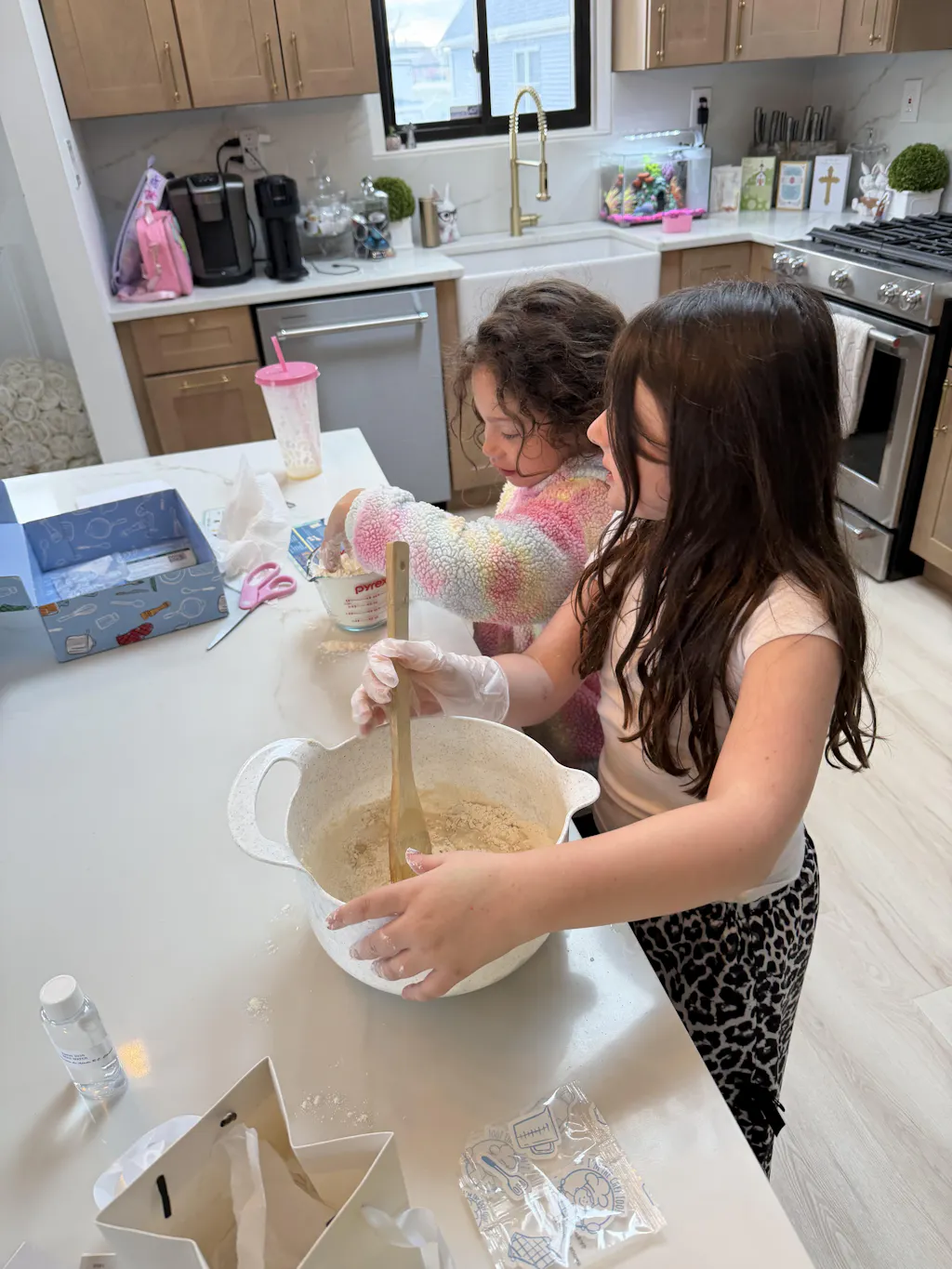
Before we get to the ingredients, it’s important to set the stage for success. Baking with a two or three-year-old can be chaotic if you aren't prepared, but with a few simple steps, you can keep the experience joyful and educational.
First, consider the "Mise en Place." This is a French culinary term that means "everything in its place." For a toddler, this means having all the ingredients pre-measured or at least pulled out and placed on the counter before you invite them to join you. This prevents the "waiting game," which is often when toddlers lose interest or start exploring the flour bag on their own.
Second, create a dedicated "Toddler Station." If your child is small, a sturdy kitchen helper stool or a cleared-off kitchen table is better than a high counter. Make sure they have tools that fit their hands—a small silicone spatula, a plastic bowl that won't break if it hits the floor, and a dull fork for mashing.
Lastly, embrace the mess! At I'm the Chef Too!, we believe that some of the best learning happens when things get a little sticky. Flour on the nose and batter on the fingers are just signs of a successful "edutainment" session. We focus on providing a screen-free educational alternative that encourages kids to get their hands dirty and their minds working.
Our Favorite Banana Bread Recipe: Toddler-Friendly Edition
This recipe is designed to be simple, forgiving, and much lower in sugar than your average store-bought loaf. We’ve combined the best elements of healthy comfort food to ensure it’s a hit with both kids and adults.
The Ingredients
- 3 Large Overripe Bananas: The darker the better! These provide the moisture and natural sweetness.
- 1/2 Cup Unsalted Butter: Melted and cooled slightly. Butter adds that classic richness, but if you prefer, you can use melted coconut oil or even plain Greek yogurt for a protein boost.
- 1/2 Cup Honey or Maple Syrup: Instead of refined white sugar, we use natural sweeteners that offer a more complex flavor profile.
- 1 Large Egg: This acts as the "glue" that holds our structure together.
- 1 Teaspoon Vanilla Extract: For that wonderful home-baked aroma.
- 1 Teaspoon Baking Soda: Our leavening agent for that all-important chemical reaction.
- 1 Teaspoon Ground Cinnamon: Adds warmth and a touch of spice.
- 1/2 Teaspoon Salt: To balance the sweetness.
- 1 3/4 Cups Flour: You can use all-purpose, or a mix of half all-purpose and half whole wheat for extra fiber.
Step-by-Step Instructions for the Whole Family
Step 1: The Mash-Up (Toddler's Favorite Part!) Peel the bananas and place them in a large bowl. Hand your toddler a fork or a potato masher and let them go to town. This is a great way to develop fine motor skills and hand-eye coordination. Don't worry if there are a few lumps; they add great texture to the finished bread.
Step 2: The Wet Mix Add the melted butter and honey to the mashed bananas. Have your child help you crack the egg into a small separate bowl first (to catch any stray shells!) before adding it to the mix. Stir in the vanilla extract.
Step 3: The Science Addition Sprinkle the baking soda, cinnamon, and salt over the wet mixture. This is a great time to talk about the "white powder" (baking soda) and how it’s going to help the bread grow tall in the oven. Stir it all together until well combined.
Step 4: The Flour Fold Slowly add the flour. Instead of vigorous stirring, show your child how to "fold" the flour in. We want to be gentle so we don't overwork the gluten, which can make the bread tough. Stop as soon as you can't see any more white streaks of flour.
Step 5: The Bake Pour the batter into a greased 9x5-inch loaf pan. Smooth the top with a spatula. Bake at 325°F (165°C) for about 50 to 60 minutes. You’ll know it’s done when a toothpick inserted into the center comes out clean and your house smells like a cozy bakery.
Developing Skills in the Kitchen
When you use a banana bread recipe toddler friendly approach, you aren't just making food; you're building a foundation for life skills. Here is a breakdown of what children are learning at different stages of this process:
For the Young Toddler (Ages 1-2)
At this age, it’s all about the sensory experience. They can help with:
- Peeling the bananas (great for pincer grasp development).
- Feeling the different textures of the ingredients.
- Moving pre-measured ingredients from a small cup into the big bowl.
- Wiping down the table with a damp cloth (yes, cleaning is part of the fun!).
For the Older Toddler and Preschooler (Ages 3-5)
This age group is ready for a bit more responsibility:
- Mashing the bananas independently.
- Cracking eggs with assistance.
- Using a whisk or spoon to mix the batter.
- Counting out the number of bananas needed.
- Learning about "safety zones" (understanding that the oven is hot and they must stay back).
For School-Aged Children (Ages 6+)
If you have older siblings helping out, they can take the lead on:
- Reading the recipe out loud.
- Measuring the ingredients using the "spoon and swoop" method for flour.
- Setting the timer and checking the internal temperature of the bread.
- Exploring the chemistry further—perhaps by trying a variation with an alternative flour.
If your child finds they have a passion for this kind of "edutainment," you might want to find the perfect theme for your little learner by browsing our complete collection of one-time kits. These kits are specifically designed by educators to take these kitchen lessons to the next level.
Nutritional Benefits of Banana Bread for Toddlers
We know that parents are always looking for snacks that aren't just "filler" calories. This banana bread recipe toddler friendly version is packed with goodness:
- Potassium: Bananas are famous for this essential mineral, which supports heart and muscle health.
- Fiber: If you use whole wheat flour or oats, you’re adding fiber that helps with digestion—a common concern for parents of toddlers!
- Healthy Fats: Using grass-fed butter or coconut oil provides the fats necessary for brain development in young children.
- Reduced Sugar: By relying on the natural sweetness of ripe fruit and a bit of honey, we avoid the "sugar crash" that often follows more processed snacks.
Parent Tip: If you have a particularly picky eater, try cutting the banana bread into fun shapes using cookie cutters. A "banana bread dinosaur" or a "star" is always more exciting to eat than a plain square! Even beloved animals can make learning fun, like when kids make Wild Turtle Whoopie Pies.
Making it Your Own: Creative Variations
Once you’ve mastered the basic banana bread recipe toddler friendly style, it’s time to get creative! At I'm the Chef Too!, we encourage children to be the "artists" of their own culinary creations. Here are a few ways to customize your loaf:
- The "Geology" Loaf: Stir in 1/2 cup of chopped walnuts or pecans. Talk to your kids about how these represent the "rocks" in the earth's crust. It’s a delicious way to introduce basic geology concepts.
- The "Galaxy" Loaf: Add a handful of dark chocolate chips and a swirl of blueberry jam. As the bread bakes, the colors will swirl together like a nebula in deep space.
- The "Tropical" Loaf: Add 1/4 cup of shredded coconut and a few pieces of crushed pineapple. This is a great way to talk about different climates and where food comes from.
- The "Power" Loaf: Mix in a tablespoon of chia seeds or flax seeds. These "tiny powerhouses" add omega-3s and a nice little crunch.
No matter which variation you choose, the goal is to keep the experience engaging. Not ready to subscribe? Explore our full library of adventure kits available for a single purchase in our shop.
The Social-Emotional Aspect of Baking
Beyond the STEM and the nutrition, baking with your child fosters significant social-emotional growth. In a world full of screens, the kitchen offers a rare opportunity for undivided attention.
- Patience: Baking takes time. Waiting for the oven timer to ding is a practical lesson in delayed gratification.
- Confidence: There is a immense sense of pride when a child sees a loaf of bread they helped create come out of the oven. This "I did it!" moment builds self-esteem that carries over into other areas of their life.
- Collaboration: Working together on a recipe teaches children how to take turns, follow directions, and communicate effectively with others.
- Resilience: Sometimes an egg shell falls in, or a little flour spills on the floor. These small "mistakes" are opportunities to show your child how to solve problems calmly and keep going.
At I'm the Chef Too!, our mission is rooted in these moments of family bonding. We want to provide the tools that allow you to create joyful memories while your children develop key skills. Whether you're making this banana bread or diving into a monthly adventure through The Chef's Club Subscription, the focus is always on the process, not just the product.
Troubleshooting Common Banana Bread Challenges
Even with a perfect banana bread recipe toddler friendly approach, things can sometimes go slightly awry. Here’s how to handle common baking hiccups:
My bread is too dark on top but raw in the middle! This often happens if the oven is too hot or the pan is too dark. If you notice the top browning too quickly, loosely "tent" a piece of aluminum foil over the loaf for the last 15 minutes of baking. This allows the middle to catch up without burning the top.
The bread is really dry. This usually happens if the flour was packed too tightly into the measuring cup. Next time, use the "spoon and level" method: spoon the flour into the cup until it’s overflowing, then level it off with the back of a knife. Also, make sure you aren't over-baking! Every oven is different, so start checking your bread about 5 minutes before the timer is set to go off.
My toddler lost interest halfway through! This is completely normal! Toddler attention spans are short. If they want to go play with their blocks while the bread is in the oven, let them. You can always call them back for the "big reveal" when the bread comes out. The goal is to keep it a positive experience, not a chore.
Storage and Serving Suggestions
This banana bread is so delicious it rarely lasts long, but if you do have leftovers, here is how to keep them fresh:
- Room Temperature: Store in an airtight container for up to 3 days.
- Refrigerator: Wrap tightly in plastic wrap and store for up to a week. This is actually a great way to make the bread easier to slice!
- Freezer: Banana bread freezes beautifully. Slice the loaf first, place parchment paper between the slices, and store in a freezer bag for up to 3 months. You can pull out a single slice and pop it in the toaster for a quick, healthy breakfast on a busy morning.
Serving Ideas:
- The Classic: Toasted with a little bit of grass-fed butter.
- The Protein Boost: Topped with a smear of almond butter or peanut butter.
- The "Fancy" Breakfast: Served alongside a dollop of Greek yogurt and a few fresh berries.
- The Dessert: Warmed up with a tiny drizzle of maple syrup.
Bringing the Classroom to the Kitchen
If you are a homeschooler or an educator, you know that finding ways to make lessons "stick" is the ultimate goal. A banana bread recipe toddler friendly project is the perfect example of how to integrate multiple subjects into one activity.
For example, you can turn this into a Literacy Lesson by having your child "write" their own recipe card using drawings. You can turn it into a Geography Lesson by looking at a map and seeing where bananas are grown (like Ecuador or Costa Rica). You can even make it a History Lesson by talking about how "quick breads" like this became popular during the Great Depression when families needed to use every scrap of food they had.
At I'm the Chef Too!, we are committed to providing these kinds of multi-layered educational experiences. We believe that when children can touch, smell, and taste their lessons, they are much more likely to remember them. Bring our hands-on STEM adventures to your classroom, camp, or homeschool co-op by learning more about our versatile programs for schools and groups.
The Importance of Screen-Free Time
In today's world, it is easier than ever to hand a child a tablet or turn on the TV. While technology has its place, there is no substitute for the cognitive and emotional benefits of hands-on play. Baking requires focus, physical movement, and social interaction. It engages the brain in a way that passive consumption of media simply cannot.
When you spend an hour in the kitchen with your toddler, you are giving them the gift of your presence. You are showing them that learning is an adventure and that they are capable of creating something beautiful from scratch. This is the core of our educational philosophy. We strive to provide high-quality, "edutainment" alternatives that make it easy for parents to choose active learning over screen time.
A Note on Safety
While we want children to be involved, safety is always our top priority. When following this banana bread recipe toddler friendly guide, please keep the following in mind:
- Adult Supervision: Never leave a toddler unattended in the kitchen.
- Heat Awareness: Keep little hands away from the oven, the stove, and hot pans.
- Sharp Objects: Handle all knives and graters yourself, or use child-safe nylon knives for soft tasks.
- Cleanliness: Teach your child to wash their hands before and after handling food—another great lesson in hygiene and biology!
Why "Chef's Club" is the Next Step
If your child loved making this banana bread, they are ready for a bigger adventure. Our Chef's Club Subscription is designed to keep that spark of curiosity alive month after month. Each box is a complete, themed experience that arrives right at your door, filled with pre-measured dry ingredients, specialty supplies, and a detailed activity guide that explains the STEM concepts behind the recipe.
Whether they are becoming "Kitchen Chemists," "Edible Engineers," or "Pastry Paleontologists," your child will be exploring the world through the lens of food and science. It’s a convenient, flexible, and high-value way to ensure your child has access to quality educational activities that the whole family will enjoy. Plus, with free shipping in the US and flexible 3, 6, and 12-month plans, it makes the perfect gift for birthdays or holidays.
Conclusion
Baking a banana bread recipe toddler friendly version is about so much more than just a snack. It’s about the look of wonder on a child’s face when they see a liquid batter turn into a golden loaf. It’s about the giggles while mashing mushy bananas and the pride of serving a slice to Grandma or a sibling. At I'm the Chef Too!, we are honored to be a part of these moments.
We’ve explored the biology of ripening, the chemistry of leavening, and the math of measurement. We’ve discussed how to foster social-emotional growth and how to turn your kitchen into a safe, screen-free learning lab. Most importantly, we’ve shared a recipe that is as healthy as it is delicious.
We hope this guide inspires you to head to your kitchen, grab those speckled bananas, and start your next "edutainment" adventure. Remember, the goal isn't to bake the perfect loaf; it's to foster a love for learning, build confidence, and create joyful family memories that will last a lifetime.
Ready to start your journey? Join The Chef's Club today and get a new STEM cooking adventure delivered to your door every month!
Frequently Asked Questions
Can I make this banana bread vegan?
Yes! You can easily adapt this banana bread recipe toddler friendly version to be vegan. Replace the butter with melted coconut oil or a plant-based butter alternative. Instead of a chicken egg, use a "flax egg" (1 tablespoon of ground flaxseed meal mixed with 3 tablespoons of water, let it sit for 5 minutes until thickened). Finally, ensure you use maple syrup instead of honey.
What if my bananas aren't ripe enough?
If you're craving banana bread but your bananas are still yellow, don't worry! You can ripen them quickly in the oven. Place the unpeeled bananas on a baking sheet and bake at 300°F (150°C) for 15-20 minutes until the skins turn black. Let them cool completely before peeling and mashing.
Can I use a different type of flour?
Absolutely. While we recommend a mix of all-purpose and whole wheat, you can use a 1:1 gluten-free baking flour blend if your family has gluten sensitivities. You can also use spelt flour or oat flour, though the texture may vary slightly (it might be a bit more dense).
How can I get my toddler to help with the cleanup?
Make it a game! We often find that toddlers love bubbles, so giving them a small basin of soapy water and a sponge to "wash" their plastic bowls is a big hit. You can also have a "race" to see who can put the most ingredients back in the pantry. Teaching that cleanup is part of the cooking process is a valuable life skill.
Is it safe for toddlers to eat honey?
According to pediatric guidelines, honey should not be given to infants under the age of 12 months due to the risk of botulism. For toddlers over the age of one, honey is generally considered safe. If your child is younger or you have concerns, simply substitute the honey with maple syrup or agave nectar.
Can I make muffins instead of a loaf?
Yes! This batter works perfectly for muffins. Simply grease a muffin tin or use liners and fill each cup about 3/4 full. Bake at 350°F (175°C) for 18-22 minutes. Muffins are often a great choice for toddlers because they are already portion-controlled and easy for small hands to hold.
Why did my banana bread sink in the middle?
This usually happens for one of two reasons: either the bread was taken out of the oven too early, or too much baking soda was used. Make sure to use the toothpick test—if it comes out with wet batter on it, the bread needs more time. Also, be sure to measure your baking soda accurately; too much can cause the bread to rise too fast and then collapse.
How do I involve a toddler who is a "picky eater"?
The kitchen is actually the best place for picky eaters! When children are involved in the process of making food, they feel a sense of ownership over it. They are much more likely to try a bite of something they helped mash, stir, and pour. Don't pressure them to eat it; just let them explore the ingredients and enjoy the "edutainment" of the process. Often, the curiosity will eventually lead to a taste!