Table of Contents
- Introduction
- Why Toddler Mini Banana Muffins are a Kitchen Staple
- The STEM Behind the Batter: Science in the Kitchen
- The Educational Value of Measuring and Mashing
- Our Master Recipe for Toddler Mini Banana Muffins
- Variations for Every Diet
- Boosting Nutrition with Creative Add-ins
- Storage and Meal Prep Tips for Busy Families
- How Cooking Fosters Lifelong Skills
- Making it an Experience with I'm the Chef Too!
- Conclusion
- FAQs
Introduction
Have you ever noticed how a toddler’s eyes light up the moment they see something made specifically for their small hands? There is a certain magic in the "mini" version of things. Whether it is a tiny toy car or a small stool, toddlers crave independence and a sense of ownership over their environment. This is especially true in the kitchen. If you have ever tried to share a full-sized muffin with a two-year-old, you know the result: a crumbly mess on the floor and a half-eaten snack. But when you introduce toddler mini banana muffins, the game changes entirely. These bite-sized treats are more than just a convenient snack; they are a gateway to culinary curiosity and a celebration of sensory learning.
At I'm the Chef Too!, we believe that the kitchen is the ultimate laboratory for young minds. We often hear from parents who are looking for ways to engage their children in activities that don't involve a tablet or a television. Our mission is to blend food, STEM (Science, Technology, Engineering, and Math), and the arts into one-of-a-kind "edutainment" experiences. We are committed to sparking curiosity and creativity in children, facilitating family bonding, and providing a screen-free educational alternative. Baking a batch of muffins might seem like a simple Saturday morning task, but through the eyes of a child, it is an experiment in chemistry, a lesson in precision, and a triumph of creation.
In this post, we are going to dive deep into the world of toddler mini banana muffins. We will explore why these tiny treats are the perfect first recipe for your little one, the scientific principles hiding in your mixing bowl, and, of course, a reliable, delicious recipe that uses pantry staples you likely already have. We will also discuss how to adapt these muffins for various dietary needs and how to use the baking process to build confidence and fine motor skills in your child.
Our goal is to show you that cooking isn't just about the final product; it’s about the joy of the process. By the end of this guide, you’ll see how a humble overripe banana can become a catalyst for a lifelong love of learning and a way to create joyful family memories. Ready for a new adventure every month? Join The Chef's Club and enjoy free shipping on every box.
Why Toddler Mini Banana Muffins are a Kitchen Staple
When we talk about "kid-friendly" food, bananas are often at the top of the list. They are naturally sweet, easy to chew, and packed with nutrients. But why focus on the "mini" muffin specifically? For a toddler, a mini muffin represents the perfect "unit" of food. It fits comfortably in their palm, requires just a few bites to finish, and provides a sense of accomplishment when they finish the whole thing.
From a parental perspective, these muffins are a lifesaver. They are the ultimate "use it or lose it" recipe for those bananas sitting on your counter that have turned more black than yellow. As we will discuss later, those brown spots are actually a sign of the fruit’s starch converting into sugar, making them perfect for natural sweetening.
At I'm the Chef Too!, we emphasize that every kitchen task can be an educational moment. Making these muffins allows you to practice "edutainment"—where the entertainment of cooking meets the education of STEM. You aren't just making a snack; you are exploring the biology of fruit and the physics of heat. If your little one loves the idea of things rising and changing shape in the oven, they might also love seeing a chemical reaction that makes our Erupting Volcano Cakes Kit bubble over with deliciousness.
The STEM Behind the Batter: Science in the Kitchen
You might not think of a muffin tin as a piece of scientific equipment, but that is exactly what it is. Baking is chemistry, and when you are making toddler mini banana muffins, you are performing a series of complex reactions. At I'm the Chef Too!, we love helping children see the "why" behind the "how."
The Biology of Ripening
Why do we use brown bananas? As a banana ripens, enzymes break down complex starches into simple sugars (like fructose and glucose). This is why a green banana tastes starchy and "dry," while a brown one is incredibly sweet and soft. When your toddler helps you peel a very ripe banana, they are observing a biological process. You can explain that the "spots" are like a secret code telling us the banana is ready to be turned into a treat!
The Chemistry of Leavening
Most muffin recipes call for baking soda or baking powder. These are leavening agents. When baking soda (a base) meets an acid (like the natural acids in bananas or perhaps a splash of yogurt), it creates carbon dioxide gas. This gas gets trapped in the batter, creating those little air pockets that make the muffins fluffy. This is a perfect example of a chemical reaction. As the muffins bake, the heat causes the gas to expand even more, making the muffins "grow."
The Physics of Heat Transfer
Why do mini muffins cook faster than a loaf of banana bread? It comes down to surface area and volume. In a mini muffin, the heat from the oven can reach the center of the batter much faster because there is less distance to travel. This is a great way to introduce the concept of timing and temperature to your child.
If your child is fascinated by the way ingredients change and form new structures, they can continue their exploration of the physical world with our Galaxy Donut Kit, where they can explore astronomy by creating their own edible solar system.
The Educational Value of Measuring and Mashing
At I'm the Chef Too!, we are proud that our kits are developed by mothers and educators. We understand that a toddler’s development is multifaceted. Cooking toddler mini banana muffins is a workout for both the brain and the body.
Fine Motor Skills and Sensory Play
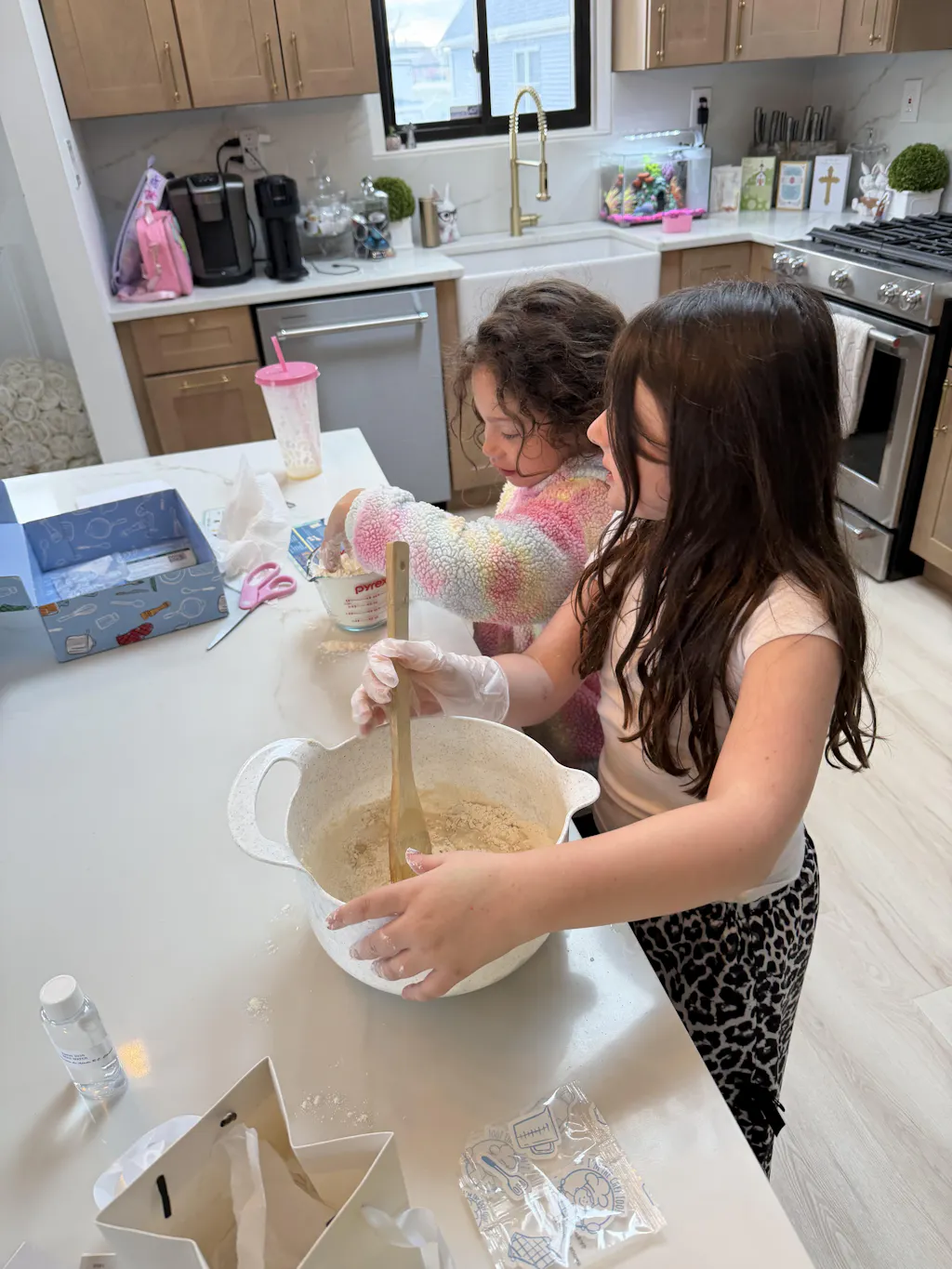
Mashing bananas is perhaps the best sensory activity a toddler can do. It requires hand-eye coordination and grip strength. Whether they use a fork or a potato masher, they are learning how to apply force to change the texture of an object.
Then there is the pouring and stirring. These actions help develop the small muscles in the hands and wrists, which are essential for learning to write later on. The different textures—the grittiness of the flour, the stickiness of the banana, the smoothness of the melted butter—provide a rich sensory experience that helps build neural connections in a young child’s brain.
Early Math Concepts
"Can you help me count three bananas?" "We need one big scoop of flour." These are the beginnings of mathematical literacy. Measuring ingredients introduces toddlers to the concepts of volume and quantity. Even if they don't understand fractions yet, they are seeing that different sizes of measuring cups hold different amounts. This tangible, hands-on approach to learning is at the heart of our philosophy.
Our Master Recipe for Toddler Mini Banana Muffins
This recipe is designed to be simple, forgiving, and focused on wholesome ingredients. It uses the "one-bowl" method to keep cleanup easy, because we know that when you're cooking with a toddler, the mess can escalate quickly!
Ingredients Spotlight
Before we get to the steps, let's look at what we are using and why:
- Ripe Bananas (2-3 medium): These are our primary sweetener and moisture source.
- Whole Wheat Flour (1 cup): We like using whole wheat because it adds fiber and a nutty flavor, but all-purpose flour works perfectly too.
- Melted Butter or Coconut Oil (1/3 cup): This provides the "fat" needed for a tender crumb.
- Egg (1 large): This acts as the "glue" or binder that holds our structure together.
- Maple Syrup or Honey (1/4 cup): To enhance the sweetness without using refined white sugar. (Note: Do not give honey to infants under one year old).
- Baking Soda (1 teaspoon): Our chemical leavener.
- Cinnamon and Vanilla (1 teaspoon each): For that classic, warm aroma that makes the whole house smell like a bakery.
- Pinch of Salt: To balance the flavors.
Step-by-Step Instructions
1. Set the Stage: Preheat your oven to 350°F (175°C). This is a great time to talk about "preheating" and why the oven needs to be hot before the food goes in. Grease your mini muffin tin or use small paper liners.
2. The Great Mash: In a large mixing bowl, have your toddler mash the bananas. Aim for a smooth consistency, but a few lumps are perfectly fine—they just add little pockets of sweetness!
3. Combine the Wet Ingredients: Add the melted butter (make sure it’s not too hot!), the egg, maple syrup, and vanilla extract. Let your child help stir these together. Watch as the different colors and textures blend into one.
4. Introduce the Dry Ingredients: Sprinkle the cinnamon, salt, and baking soda over the wet mixture. Finally, add the flour. Crucial Tip: Stir only until the flour disappears. Over-mixing can lead to "tough" muffins because it develops too much gluten. Tell your little chef we are "folding" the ingredients together gently, like tucking them into bed.
5. Fill the Tin: Use a small spoon or a 1-tablespoon cookie scoop to fill the muffin cups about 3/4 full. This is a great exercise in precision and patience.
6. Bake to Perfection: Bake for 10-12 minutes. You’ll know they are done when they spring back when lightly touched or a toothpick comes out clean.
While your muffins are baking, it’s the perfect time to clean up together or talk about what happened to the batter. If you want to keep the adventure going every month, our Chef's Club subscription ensures you always have a new, exciting project ready to go when the baking timer dings.
Variations for Every Diet
We know that every family has different needs. One of the best things about toddler mini banana muffins is how adaptable they are. Here is how you can tweak the recipe to suit your household.
Gluten-Free Options
If your family avoids gluten, you can easily substitute the flour with a 1:1 gluten-free baking blend. Alternatively, some parents have success using oat flour (simply blend rolled oats in a blender until they reach a flour-like consistency). Because bananas provide so much moisture, gluten-free versions usually stay very soft and delicious.
Dairy-Free and Vegan Swaps
To make these muffins dairy-free, simply use melted coconut oil or a mild olive oil in place of the butter. If you want to make them vegan, you can replace the egg with a "flax egg" (1 tablespoon ground flaxseed meal mixed with 3 tablespoons water, let sit for 5 minutes) or 1/4 cup of plain unsweetened applesauce.
Refined Sugar-Free
If your bananas are extremely ripe (almost completely black), you can often omit the maple syrup or honey entirely. The natural sugars in the fruit will provide a subtle sweetness that is perfect for younger toddlers who are just starting to explore different flavors.
Boosting Nutrition with Creative Add-ins
While the base recipe is healthy, you can always treat the batter as a canvas for extra nutrition. At I'm the Chef Too!, we love encouraging kids to "customize" their creations. This gives them a sense of agency and makes them more likely to try new foods.
- Hemp or Chia Seeds: Stir in a tablespoon for a boost of Omega-3 fatty acids and protein.
- Finely Grated Carrots or Zucchini: This is a classic "stealth health" move. Just make sure to squeeze the excess moisture out of the veggies before adding them to the batter.
- Blueberries: A few fresh or frozen blueberries in each muffin add antioxidants and a fun "pop" of color.
- Nut Butters: Swirl a teaspoon of creamy peanut butter or almond butter into the top of each muffin before baking for extra healthy fats and protein.
For more inspiration on how to make food both fun and functional, you can find the perfect theme for your little learner by browsing our complete collection of one-time kits.
Storage and Meal Prep Tips for Busy Families
One of the reasons toddler mini banana muffins are so popular is that they are the ultimate meal-prep food. A single batch usually makes about 24-30 mini muffins, which is plenty for a week of snacks.
How to Store
- Room Temperature: Store in an airtight container for up to 2 days. Because they are so moist, they can become sticky if left out longer.
- Fridge: They stay fresh in the refrigerator for up to 5 days. We recommend lining the container with a paper towel to absorb any excess moisture.
- Freezer: This is our favorite method! These muffins freeze beautifully. Place them on a baking sheet in the freezer for an hour (this prevents them from sticking together), then transfer them to a freezer-safe bag. They will last for up to 3 months.
How to Reheat
To serve, you can simply let a muffin thaw on the counter for about 20 minutes, or pop it in the microwave for 10-15 seconds. Serving them slightly warm makes them taste just like they came out of the oven!
How Cooking Fosters Lifelong Skills
At I'm the Chef Too!, we don't just teach kids how to follow a recipe; we help them build a foundation for life. When you spend time in the kitchen making toddler mini banana muffins, you are fostering skills that go far beyond the kitchen counter.
Confidence and Autonomy
When a child sees a bowl of mushy bananas transform into a delicious muffin that the whole family enjoys, their confidence soars. They learn that they are capable of contributing to the household. This sense of "I can do it" is vital for their emotional development.
Patience and Delayed Gratification
In a world of instant downloads, baking is a lesson in patience. You have to wait for the oven to preheat. You have to wait for the muffins to bake. And, most difficult of all, you have to wait for them to cool down before you can take a bite! These moments of waiting are valuable opportunities to practice mindfulness and self-control.
Following Directions and Sequential Logic
A recipe is essentially an algorithm—a set of steps that must be followed in a specific order to achieve a result. Understanding that "Step A" must happen before "Step B" is a key component of logical thinking and even early computer programming concepts.
Even beloved animals can make learning fun, like when kids make Wild Turtle Whoopie Pies, another great way to practice following steps to create something adorable and edible.
Making it an Experience with I'm the Chef Too!
We know that as a parent, you want to provide the best experiences for your child, but life is busy. That is why we created our monthly subscription box. We handle the planning, the measuring of dry ingredients, and the curriculum development, so you can focus on the fun part: the bonding.
Every one of our kits is a complete experience. We don't just give you a recipe; we give you a theme, a story, and a scientific concept to explore. Whether you are building a "Fossil Dig" out of brownies or exploring the "Physics of Pizza," we ensure that every moment in the kitchen is an adventure. We believe that by making education "tangible, hands-on, and delicious," we can spark a curiosity in children that lasts a lifetime.
If you aren't ready for a full subscription yet, you can always explore our full library of adventure kits available for a single purchase in our shop. It's a great way to try out our unique approach to "edutainment."
Conclusion
The journey of making toddler mini banana muffins is a perfect microcosm of what we stand for at I'm the Chef Too!. It begins with a simple, natural ingredient—a banana—and transforms through science, art, and a little bit of hard work into something that brings joy to the table. We’ve seen how mashing, stirring, and measuring can turn a regular morning into a classroom experience without the need for a single screen.
We’ve explored the chemistry of leavening, the biology of ripening, and the math of measuring. We’ve looked at how to make these treats work for every dietary need and how to store them for those busy weekday mornings. But most importantly, we’ve highlighted the value of the time spent together. When you bake with your child, you aren't just making muffins; you are building their confidence, their fine motor skills, and their love for learning.
Our goal isn't to guarantee that your child will become a world-renowned scientist or a professional chef. Instead, we want to focus on the beauty of the process: fostering a love for learning, building confidence, developing key skills, and creating joyful family memories that will be cherished for years to come.
If you’re ready to take the next step in your family’s culinary and educational journey, we invite you to join our community. Let’s make the kitchen the heart of your child’s learning adventure. Join The Chef's Club today and start receiving a new adventure delivered to your door every month with free shipping in the US. We can't wait to see what you and your little chef create next!
FAQs
What if my toddler won't eat the muffins?
It is very common for toddlers to be "picky" or hesitant with new foods. One of the best ways to overcome this is to involve them in the cooking process. When a child helps mash the bananas and stir the batter, they feel a sense of ownership over the food, which often makes them much more willing to try it. You can also try adding a few "mini" chocolate chips on top to make them more enticing!
Can I make these in a regular-sized muffin tin?
Absolutely! If you don't have a mini muffin tin, you can use a standard 12-cup muffin pan. Just increase the baking time to 18-22 minutes. The muffins will still be delicious, though they might be a bit more of a handful for a very small child.
Why did my muffins turn out dense?
The most common reason for dense muffins is over-mixing the batter. Once you add the flour, stir only until the white streaks disappear. Another reason could be using baking soda that is past its prime. To check if your baking soda is still active, drop a teaspoon of it into a little bit of vinegar. If it bubbles vigorously, it’s good to go!
Are these muffins safe for babies?
If you are practicing Baby-Led Weaning (BLW), these muffins can be a great option. However, for babies under 12 months, ensure you omit any honey (use maple syrup or just the bananas) and ensure the muffins are soft enough for them to gum. Always supervise your child while they are eating.
How can I make these "extra" healthy?
You can substitute half of the butter with plain Greek yogurt for extra protein, or add a tablespoon of ground flaxseed or chia seeds. Using 100% whole wheat flour also increases the fiber content significantly compared to all-purpose flour.
Can I use frozen bananas?
Yes! Frozen bananas are excellent for baking. Just let them thaw completely in a bowl before mashing. They will release some liquid as they thaw—make sure to include that liquid in your batter, as it contains a lot of the concentrated sugar and flavor!
My toddler wants to do EVERYTHING. How do I keep them safe?
Kitchen safety is all about boundaries and supervision. Give your toddler a "safe zone" (like a sturdy learning tower or a chair away from the stove). Let them handle the cold, soft ingredients like the bananas and the flour, while an adult handles the oven and the melted butter. Teaching them that "the oven is hot" is an important safety lesson in itself.