Table of Contents
- Introduction
- Why Participation is the Secret Ingredient
- The STEM Lab in Your Kitchen
- Creating the Best Dinner for Kids: Top Meal Categories
- Strategies for Handling Picky Eaters
- Making Dinner Screen-Free and Meaningful
- Safety First: Developing Kitchen Skills by Age
- The Role of Educators and Group Learning
- Practical Recipes for the Best Dinner for Kids
- Beyond the Main Course: Learning with Dessert
- The Convenience of a Subscription
- Setting Realistic Expectations
- Tips for a Stress-Free Kitchen
- The Long-Term Benefits of Cooking with Kids
- FAQs
- Conclusion
Introduction
Have you ever found yourself standing in the middle of your kitchen at 5:30 PM, staring into the refrigerator, wondering how to transform a few random ingredients into a meal that won't result in a chorus of "I don't like that"? Every parent knows the struggle of the dinner hour. It is that "witching hour" where energy is low, hunger is high, and the pressure to provide something nutritious yet appealing can feel overwhelming. But what if we told you that the secret to the best dinner for kids isn't found in a complex recipe book, but in the experience of creating the meal itself?
At I'm the Chef Too!, we believe that dinner time is about much more than just refueling. It is a prime opportunity to spark curiosity, facilitate family bonding, and sneak in a little "edutainment." When we involve children in the process of cooking, we aren't just making a meal; we are building their confidence, teaching them the foundations of STEM (Science, Technology, Engineering, and Math), and creating memories that last far longer than the food on the plate.
In this blog post, we are going to explore how to create the best dinner for kids by focusing on engagement, nutrition, and education. We will cover the psychological benefits of involving kids in the kitchen, provide actionable tips for dealing with picky eaters, and share creative meal ideas that double as science experiments. Our mission is to help you turn the daily chore of cooking into a delightful adventure for the whole family. By the end of this guide, you’ll see that the best dinner for kids is one where they are the stars of the show.
Why Participation is the Secret Ingredient
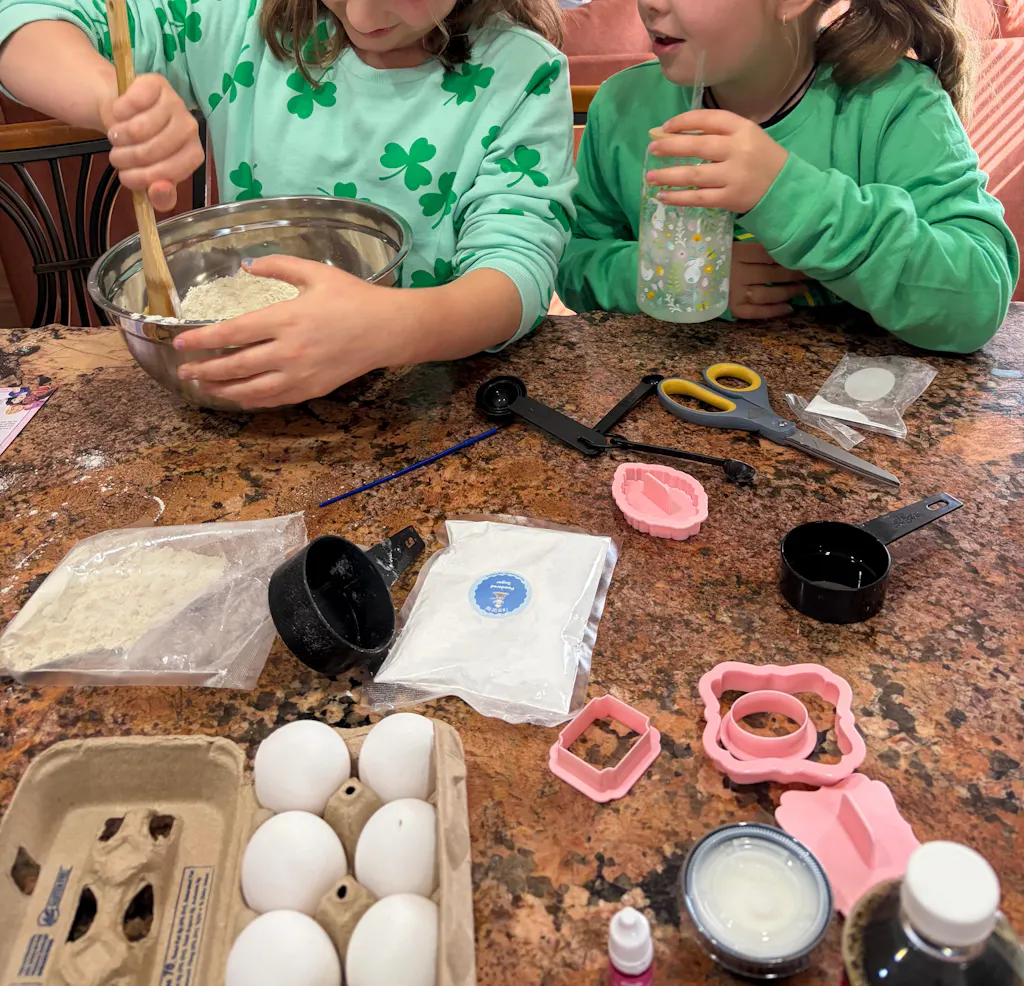
When we talk about the best dinner for kids, we have to look at the psychology of the plate. Children are naturally curious, but they also crave a sense of autonomy. When a plate of food is simply "placed" in front of them, they have no investment in it. However, when they help stir the sauce, sprinkle the cheese, or measure the flour, they develop a sense of ownership over the meal.
Research often shows that children who participate in meal preparation are more likely to try new foods, including vegetables. This is because the kitchen acts as a safe space for exploration. In our experience, we’ve seen that a child who might refuse to eat a raw carrot will happily munch on one they’ve helped "engineer" into a decorative garnish.
At I'm the Chef Too!, our mission is to blend food, STEM, and the arts into one-of-a-kind experiences. We’ve found that when kids understand the why behind their food—the science of why bread rises or why purple cabbage changes color—they become much more adventurous eaters. If you're looking to start this journey with your little ones, you might want to Join The Chef's Club and enjoy free shipping on every box, ensuring a new educational cooking adventure arrives at your door every single month.
The STEM Lab in Your Kitchen
Every time you boil water, bake a loaf of bread, or emulsify a salad dressing, you are performing a scientific experiment. The kitchen is quite literally a laboratory. By framing dinner as a "STEM project," you shift the focus from "you have to eat this" to "look what we created!"
The Chemistry of Cooking
Think about the last time you made pancakes or a cake. That fluffy texture is the result of a chemical reaction between an acid (like buttermilk or cream of tartar) and a base (baking soda). Explaining this to a child turns a mundane task into a "magic trick."
For example, a parent looking for a screen-free weekend activity for their child who loves earth science could explain geology through food. You could talk about how heat changes the state of matter, much like how a chemical reaction makes our Erupting Volcano Cakes Kit bubble over with deliciousness. This kind of hands-on learning makes the concepts stick because they are tangible and, ultimately, tasty.
Math and Measurement
Fractions come to life in the kitchen. Is a 1/2 cup bigger than a 1/4 cup? Letting a child use measuring spoons to determine the answer provides a visual and tactile lesson in mathematics. Scaling a recipe up or down teaches multiplication and division in a way that a worksheet never could.
If you aren't ready to dive into a full curriculum, you can always Explore our full library of adventure kits available for a single purchase in our shop. Each kit comes with pre-measured dry ingredients, which is a great way to introduce these concepts without the stress of a messy kitchen scale.
Creating the Best Dinner for Kids: Top Meal Categories
To help you plan, we’ve broken down the best dinners for kids into four categories that emphasize interaction and education.
1. The "Build-Your-Own" Bar
Autonomy is a powerful tool. When kids have the power to choose their own toppings, they feel in control. This reduces the "power struggle" that often occurs at the dinner table.
- Taco Bar: Provide small bowls of colorful vegetables, lean proteins, and cheeses. Discuss the different food groups and how they help our bodies grow.
- Personal Pizzas: Use whole-wheat pita or English muffins as the base. This is a great time to talk about "edible art." Can they make a face out of olives and bell peppers?
- Baked Potato Bar: A great way to use up leftover veggies.
2. Breakfast for Dinner
There is something inherently "rebellious" and fun about having breakfast for dinner. It breaks the routine and usually involves ingredients that kids already love.
- Scientific Smoothies: Talk about biology and nutrition by blending different fruits. Explain how the fiber in the fruit helps our digestion.
- Oatmeal Artists: Use nuts, seeds, and berries to create "landscapes" in a bowl of warm oats.
3. Global Flavor Journeys
The best dinner for kids can also be a geography lesson. Pick a country and research one simple dish from that culture.
- Italy: Make homemade pasta. This is a fantastic engineering challenge! How do you make the dough strong enough to hold its shape?
- Japan: Try "Candy Sushi" first to get them used to the rolling technique, then move on to real vegetable rolls.
4. The "Edutainment" Experience
This is where we really thrive. By combining a theme—like outer space or dinosaurs—with a meal, you engage a child's imagination. You can explore astronomy by creating your own edible solar system with our Galaxy Donut Kit, which serves as a wonderful dessert or a special "sweet dinner" treat that teaches kids about the stars and planets while they glaze and decorate.
Strategies for Handling Picky Eaters
We know that even with the best intentions, some children are simply more hesitant than others. Here are some educator-approved strategies to help make the best dinner for kids a success for everyone.
Take the Pressure Off
The more we push, the more they pull away. Try to maintain a neutral attitude toward food. Instead of saying, "You have to eat your broccoli," try "This broccoli is like a little tree in our forest. I wonder if it’s crunchy or soft?" Framing it as a sensory exploration rather than a requirement can lower their defenses.
The Power of "Food Exposure"
It can take up to 15 exposures to a new food before a child decides they like it. Don't give up! Even if they just look at it, touch it, or smell it, that counts as progress. In our cooking kits, we focus on the process. We want kids to develop a love for learning and building confidence. When they spend an hour "working" with an ingredient in a kit, that counts as high-quality exposure.
Use the "One Bite Rule" (With a Twist)
Instead of a "must eat" rule, try a "scientific taster" rule. Ask them to describe the texture or the flavor using "scientist words." Is it sweet, salty, bitter, or sour? This engages the analytical part of their brain and moves them away from the emotional "I don't like it" response.
Making Dinner Screen-Free and Meaningful
In today's world, it is so easy to let a tablet or a television become a dinner guest. However, the best dinner for kids is one where the family connects. We are committed to providing screen-free educational alternatives that keep hands busy and minds active.
When children are involved in the kitchen, they aren't looking for a screen. They are focused on the task at hand—whether it's cracking an egg (physics!), whisking flour (mechanics!), or decorating a cupcake (art!). To keep this momentum going, you can Give the gift of learning that lasts all year with a 12-month subscription to our STEM cooking adventures. Each month, a new theme arrives, providing a structured way to enjoy screen-free time together.
Safety First: Developing Kitchen Skills by Age
When planning the best dinner for kids, it is important to match the tasks to their developmental stage. Always remember that adult supervision is required for all kitchen activities.
Toddlers (Ages 2-4)
At this age, it’s all about sensory play and fine motor skills.
- Tasks: Washing vegetables, tearing lettuce, stirring cool liquids, and "painting" with yogurt or sauces.
- Learning: Basic colors, shapes, and the names of different foods.
Preschoolers (Ages 4-6)
Kids in this age group are ready for a bit more responsibility.
- Tasks: Using a dull nylon knife to cut soft fruits, measuring dry ingredients, and greasing pans.
- Learning: Counting, basic measurements, and following simple two-step instructions.
School-Aged Kids (Ages 7-10)
This is where the STEM concepts really start to shine.
- Tasks: Reading recipes, using a whisk or hand mixer (with supervision), and helping at the stove (with strict guidance).
- Learning: Fractions, chemical reactions, and the biology of how heat affects proteins and starches.
For parents of school-aged children, our kits are specifically designed by educators to hit these developmental milestones. If you're looking for a one-time project, you can Find the perfect theme for your little learner by browsing our complete collection of one-time kits.
The Role of Educators and Group Learning
Cooking isn't just for the home kitchen; it's a powerful tool for the classroom as well. Educators and homeschool co-ops often use cooking to teach everything from history to physics. If you are part of a school or a large group, you can bring our hands-on STEM adventures to your classroom, camp, or homeschool co-op. We offer versatile programs that fit different needs, whether you want to include food or focus purely on the STEM and art components.
Practical Recipes for the Best Dinner for Kids
Let’s get down to some specifics. Here are three dinner ideas that are "best" because they are healthy, interactive, and educational.
1. The Solar System Stir-Fry
- The Concept: Use different colored vegetables to represent the planets.
- The Science: Discuss how heat softens the cell walls of vegetables (biology) and how the "wok hei" (breath of the wok) creates flavor through the Maillard reaction (chemistry).
- Engagement: Have your child arrange the vegetables in "orbital order" before they go into the pan.
2. Geometry Gnocchi
- The Concept: Make simple potato gnocchi and cut them into various geometric shapes.
- The Science: Talk about starch. When we boil potatoes, the starch granules swell and burst. This is why the texture changes.
- Engagement: Use a fork to create ridges. Explain that these ridges are "engineered" to hold more sauce—a lesson in surface area!
3. Structural Sandwich Towers
- The Concept: Instead of a flat sandwich, build a tall one using toothpicks and various layers.
- The Science: This is a pure engineering challenge. How high can you go before the "building" topples over? What makes a strong foundation?
- Engagement: Use healthy "bricks" like cheese cubes, cucumber slices, and whole-grain bread squares.
Beyond the Main Course: Learning with Dessert
While we focus a lot on dinner, desserts are often the most "scientific" part of the meal because baking requires such precision. Integrating learning into the final course of the night is a great way to wrap up the day.
For instance, even beloved animals can make learning fun, like when kids make Wild Turtle Whoopie Pies. This kit teaches kids about wildlife and biology while they work with textures and flavors. It’s a perfect example of how the best dinner for kids (or the best dessert!) can be a multi-sensory educational experience.
The Convenience of a Subscription
We know that life is busy. You want to provide these experiences for your children, but sometimes the planning, shopping, and measuring feel like one more thing on an already long to-do list. This is why we created our subscription service.
When you Ready for a new adventure every month? Join The Chef's Club and enjoy free shipping on every box. We take the guesswork out of the equation. Each box is a complete experience, containing pre-measured dry ingredients and specialty supplies. It’s a way to ensure that you are consistently providing "edutainment" without the stress of extra prep. Whether you choose a 3, 6, or 12-month plan, you are making a commitment to quality family time and hands-on learning.
Setting Realistic Expectations
At I'm the Chef Too!, we want to be clear: the goal isn't to turn your child into a world-class chef or a top-tier scientist overnight. Instead, we focus on the beauty of the process. The best dinner for kids is one that fosters a love for learning, builds confidence, and creates joyful family memories.
Sometimes the cake will flop. Sometimes the sauce will be too salty. And that's okay! In fact, those "failures" are some of the best teaching moments. They allow us to ask, "What happened? Why did it turn out this way? What can we try differently next time?" This is the heart of the scientific method and a vital life skill for any child.
Tips for a Stress-Free Kitchen
To make your journey toward the best dinner for kids successful, keep these practical tips in mind:
- Prepare for Mess: Cooking with kids is messy. It’s a fact of life. Lay down some newspaper or have a "cleanup crew" game ready for afterward.
- Read the Recipe First: Before you bring the kids into the kitchen, read the entire recipe yourself. This prevents mid-cooking panic.
- Start Small: You don't have to make a five-course meal. Start with one task, like tossing the salad or measuring the water for rice.
- Make it a Tradition: Maybe Sunday nights are your "STEM Kitchen" nights. Having a set time reduces the pressure of daily meal prep.
The Long-Term Benefits of Cooking with Kids
When we look back at our childhoods, we often don't remember the specific taste of the food we ate, but we remember how we felt. By creating the best dinner for kids through engagement and learning, you are giving your child:
- Confidence: The "I made this!" feeling is incredibly powerful for a child's self-esteem.
- Life Skills: Knowing how to feed oneself is a fundamental skill for independence.
- Academic Support: Seeing math and science in the "real world" makes school subjects feel more relevant and less intimidating.
- Bonding: The kitchen is a place for conversation. Away from screens, you can talk about their day, their dreams, and their discoveries.
If you’re looking to start this tradition in your home, consider how a monthly subscription to our Chef's Club can provide a consistent framework for these valuable moments.
FAQs
What age is best to start involving kids in the kitchen?
You can start as early as age two! Toddlers can help with simple tasks like washing fruit or stirring batter. The key is to match the task to their fine motor skills and always provide close supervision.
How can I make dinner fun without it taking hours?
Focus on one "interactive" element. It doesn't have to be the whole meal. For example, if you're serving spaghetti, let them be in charge of "engineering" the perfect cheese-to-pasta ratio or choosing the "best" shape of noodle.
My child is a very picky eater. Will this really help?
While every child is different, involving them in the process reduces the "fear of the unknown." When they see the ingredients in their raw state and help transform them, they are often more curious to taste the result. It’s about building a positive relationship with food over time.
Are your kits safe for children with allergies?
Each of our kits lists all ingredients clearly. While we provide many of the dry ingredients, you typically provide the fresh items like eggs or milk, allowing you to substitute with allergy-safe alternatives (like oat milk or flax eggs) as needed.
Do I need special equipment to cook with my kids?
Most of our kits and these recipe ideas use standard kitchen tools. However, some of our kits do include specialty supplies to make the "edutainment" even more exciting. For the daily "best dinner for kids," a sturdy stool and a sense of adventure are your most important tools.
How does cooking teach STEM?
Cooking is a series of scientific and mathematical events. You use math for measuring and scaling recipes. You use science to understand heat transfer, chemical reactions (like leavening), and the biological properties of ingredients. It’s hands-on learning at its best.
What if I'm not a good cook myself?
That’s the best part! You and your child can learn together. Our kits are developed by educators and mothers to be easy to follow, ensuring a successful and fun experience for everyone, regardless of your skill level in the kitchen.
Conclusion
Creating the best dinner for kids isn't about finding the most expensive ingredients or the most complicated recipes. It is about transforming a daily necessity into a moment of connection and discovery. By embracing the kitchen as a place for "edutainment," you are fostering a love for learning that extends far beyond the dinner table.
At I'm the Chef Too!, we are honored to be part of your family’s journey. Whether you are exploring the stars through a donut kit, eruption through a cake, or biology through a whoopie pie, you are providing your child with a screen-free, hands-on adventure that builds skills and memories.
We invite you to take the next step in this delicious journey. Ready for a new adventure every month? Join The Chef's Club and enjoy free shipping on every box. Let us help you turn every dinner into the best dinner for kids—one filled with curiosity, creativity, and a whole lot of fun. Happy cooking!