Table of Contents
- Introduction
- The Science of Green: Natural Dyes and Chlorophyll
- Lucky Charms Pancakes: A Lesson in Chemistry
- Building a Rainbow Waffle Charcuterie Board
- Shamrock Avocado Toast: Geometry and Nutrition
- Boxty: A Taste of Irish History and Geography
- Green Eggs and Hash: Exploring Protein Denaturation
- The "Pot of Gold" Smoothie: Physics of Density
- Kitchen Math: Measuring the Magic
- Screen-Free Bonding: The Heart of the Holiday
- Setting the Scene: Arts and Crafts
- Safety First: A Note for Grown-Ups
- Why Choose I’m the Chef Too! for Your Educational Journey?
- Encouraging a Lifelong Love for Learning
- Recipe Ideas Summary for Your St. Paddy’s Morning
- Beyond the Breakfast Table: Group Learning
- The Role of Art in STEM (STEAM)
- Hypothetical Case Study: The Weekend Explorer
- Conclusion
- Frequently Asked Questions
Introduction
Have you ever wondered if a tiny, mischievous leprechaun might visit your kitchen while your family sleeps? Imagine the look of pure wonder on your child’s face when they walk into the kitchen on March 17th to find the milk has turned green, the table is covered in "gold" coins, and a rainbow of delicious scents is wafting from the griddle. St. Patrick’s Day is a magical time for children, filled with folklore, vibrant colors, and the promise of a hidden pot of gold. But beyond the glitter and the green hats lies a wonderful opportunity for "edutainment"—the perfect blend of education and entertainment that we champion here at I’m the Chef Too!.
The goal of this post is to provide you with a treasure trove of creative, STEM-focused, and absolutely delicious ideas for a st patricks day breakfast for kids. We believe that the kitchen is the best classroom in the home. It’s a place where chemistry, biology, math, and art collide in a way that kids can actually taste. Throughout this guide, we’ll explore how to turn a simple morning meal into a hands-on learning adventure. We’ll cover everything from the science of why pancakes fluff up to the artistic expression found in a rainbow-themed charcuterie board.
At I’m the Chef Too!, our mission is to spark curiosity and creativity by blending food, STEM, and the arts into one-of-a-kind experiences. We are committed to facilitating family bonding through screen-free educational alternatives that keep little hands busy and little minds growing. By the end of this post, you’ll have a full menu of ideas and a deeper understanding of how to make holiday traditions both meaningful and educational. Our thesis is simple: when we involve children in the process of creating their own festive breakfast, we aren't just feeding their bellies; we are nourishing their confidence and love for learning.
The Science of Green: Natural Dyes and Chlorophyll
Before we flip our first pancake, let’s talk about the most iconic element of any st patricks day breakfast for kids: the color green. While a drop of food coloring is an easy shortcut, there is a fascinating world of biology behind why things are green in nature. This is a perfect "teachable moment" for your little learners.
Plants are green because of a pigment called chlorophyll. Chlorophyll is essential for photosynthesis, the process by which plants turn sunlight into energy. You can explain to your children that by eating green foods like spinach, kale, or kiwi, they are essentially eating "sun power"! If you want to take a more natural approach to your breakfast, you can create your own green "dye" by blending a handful of spinach with a little bit of the liquid (milk or water) required for your recipe. The spinach adds a vibrant green hue and a boost of nutrients without changing the flavor of sweet treats like pancakes or waffles.
For families who love diving into the "why" behind the "how," this experiment in natural coloring mirrors the type of hands-on discovery we build into our monthly kits. If your child is fascinated by how different ingredients interact, they might be ready for a new adventure every month. You can Join The Chef's Club and enjoy free shipping on every box to keep that scientific curiosity alive all year long.
Lucky Charms Pancakes: A Lesson in Chemistry
Pancakes are a staple of the American breakfast table, but they are also a fantastic example of a chemical reaction in action. When you make green pancakes filled with Lucky Charms marshmallows, you are performing a series of scientific steps.
The Rise of the Bubbles
The "magic" that makes pancakes fluffy isn't magic at all—it's chemistry! Most pancake mixes use a combination of baking powder (a base and an acid) and heat. When you mix the wet and dry ingredients, a chemical reaction begins, creating carbon dioxide gas. These tiny bubbles get trapped in the gluten structure of the batter. As you heat the pancake on the griddle, those bubbles expand, causing the pancake to rise.
The Marshmallow Melt
Adding "dehydrated" marshmallows—like the ones found in Lucky Charms—introduces a lesson in textures. These marshmallows are crunchy because the water has been removed. However, once they hit the heat of the griddle inside the batter, they begin to rehydrate and melt, creating pockets of gooey sweetness.
Pro-Tip for Parents: To make this even more engaging, have your child sort the marshmallows by shape and color before adding them to the batter. This builds early math skills like categorization and counting. If your 6-year-old loves sorting and creating, they might also enjoy exploring astronomy by creating their own edible solar system with our Galaxy Donut Kit, which uses similar concepts of shapes and colors in the vastness of space.
Building a Rainbow Waffle Charcuterie Board
If you’re looking for a breakfast that doubles as an art project, a waffle charcuterie board is the way to go. This "self-serve" style breakfast empowers children to make their own choices, which is a key part of developing confidence in the kitchen.
Color Theory on a Plate
A rainbow board is the perfect way to discuss color theory. You can arrange fruits in the order of the rainbow (Red, Orange, Yellow, Green, Blue, Indigo, Violet).
- Red: Strawberries or raspberries
- Orange: Mandarin oranges or cantaloupe
- Yellow: Pineapple or bananas
- Green: Green grapes or kiwi
- Blue/Violet: Blueberries and blackberries
By placing these next to green waffles, you’re creating a visual masterpiece. We often use these artistic principles in our kits to make food look as good as it tastes. For example, a child who enjoys decorating their waffle board with patterns would likely find great joy in the intricate designs of our Galaxy Donut Kit.
Sensory Exploration
Encourage your kids to describe the textures. Are the waffles "crispy"? Is the whipped cream "airy"? Are the grapes "juicy"? This vocabulary building is an essential part of early childhood development. When we frame cooking as a sensory adventure, we help children connect more deeply with the world around them.
Shamrock Avocado Toast: Geometry and Nutrition
For a healthier take on a st patricks day breakfast for kids, look no further than the humble avocado. Avocado toast is not only trendy but also packed with healthy fats that help with brain development.
The Geometry of a Shamrock
You can turn a simple piece of whole-grain toast into a shamrock using a cookie cutter or some clever knife work (performed by an adult, of course!). By cutting three or four heart shapes out of toast and arranging them with their points meeting in the center, you create a perfect shamrock.
This activity teaches children about "composite shapes"—how smaller shapes (hearts) can come together to form a larger, recognizable image (a shamrock). It’s a foundational geometry concept taught in a delicious way.
The "Egg in a Basket" Twist
To add protein, you can do an "egg in a basket." Cut a shamrock shape out of the center of a slice of bread using a cookie cutter. Place the bread in a buttered skillet, crack an egg into the shamrock-shaped hole, and cook until the egg is set. The result is a beautiful, green-rimmed (if you spread avocado on top later) breakfast that looks like it came from a professional café.
Boxty: A Taste of Irish History and Geography
While green pancakes and Lucky Charms are fun, incorporating traditional Irish recipes like "Boxty" adds a layer of cultural education to your morning. Boxty is a traditional Irish potato pancake. The name comes from the Irish phrase arán bocht tí, meaning "poor house bread."
The Science of the Potato
When making Boxty, you use a mix of grated raw potatoes and mashed cooked potatoes. This provides a great opportunity to talk about starch. You can show your kids how the raw potato releases a milky liquid (starch) when squeezed. This starch acts as a natural binder that helps hold the pancake together.
Cultural Connection
Talking about the history of Ireland and why potatoes were so important to the Irish people helps children develop empathy and a broader perspective on the world. You can look at a map together and find Ireland, discussing how its rainy climate makes it the perfect place for lush green grass (hence the nickname "The Emerald Isle").
If you find your family loves these deep dives into different cultures and themes, you might want to give the gift of learning that lasts all year with a 12-month subscription to our STEM cooking adventures. It’s a great way to travel the world (and even the galaxy) from your own kitchen.
Green Eggs and Hash: Exploring Protein Denaturation
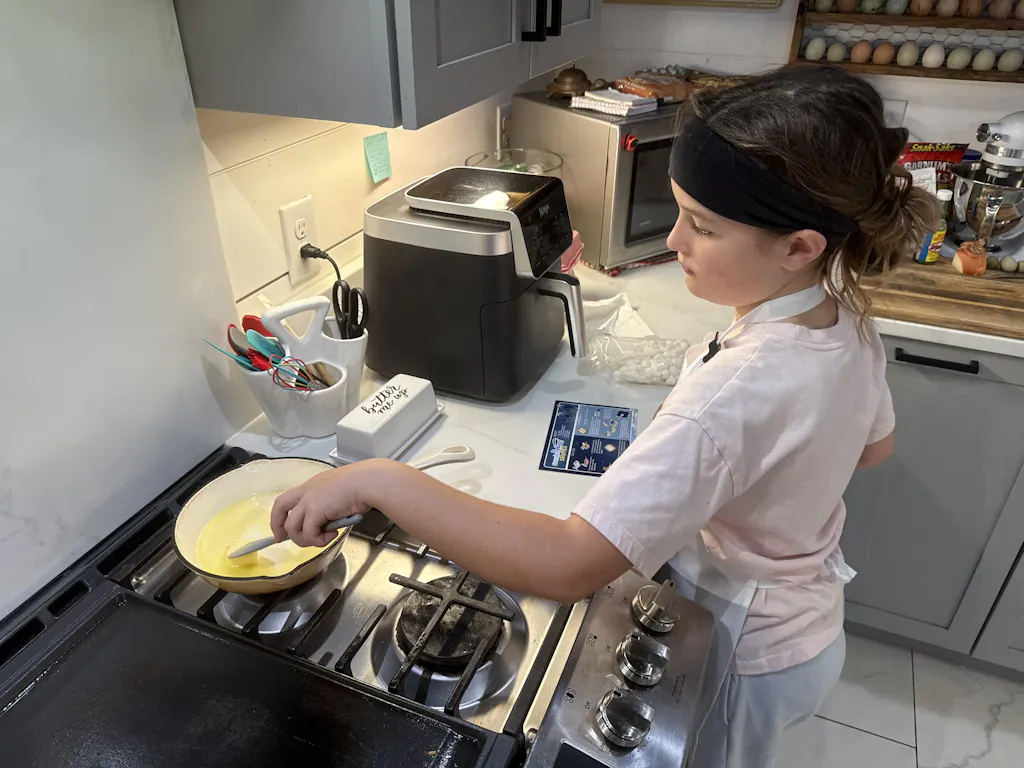
"I do not like green eggs and ham!" Your kids might disagree after they try this festive version. You can create green eggs naturally by whisking a small amount of pesto or finely chopped spinach into your eggs before scrambling them.
What Happens to an Egg?
When you cook an egg, you are witnessing "protein denaturation." Explain to your kids that eggs are full of long strings of protein. When they are cold and raw, those strings are all curled up. When we add heat from the stove, those strings uncurl and then get tangled up with each other, turning the liquid egg into a solid. It’s a permanent change—you can’t turn a cooked egg back into a raw one!
Making it "Hash"
Pair your green eggs with a corned beef hash. If you have leftovers from a traditional St. Patrick’s Day dinner, this is a lesson in sustainability and food waste. Using what we have to create something new is a valuable life skill.
The "Pot of Gold" Smoothie: Physics of Density
Every st patricks day breakfast for kids needs a refreshing drink. A "Pot of Gold" smoothie is a vibrant yellow (using mango, pineapple, and banana) topped with a "cloud" of whipped cream and a sprinkle of gold sugar or yellow sprinkles.
Layering and Density
If you want to get really fancy, you can try a layered smoothie. Put a green layer (spinach and pineapple) at the bottom and a yellow layer (mango) on top. To keep the layers from mixing, the bottom layer needs to be thicker (more dense) than the top layer. This is a classic physics experiment.
Ask your child: "Why do you think the yellow stayed on top of the green?" It’s because the green layer has more "stuff" (density) packed into it, so it stays at the bottom. This type of hands-on experimentation is exactly what we facilitate in our kitchen adventures. To explore more kits that focus on these kinds of cool reactions, you can find the perfect theme for your little learner by browsing our complete collection of one-time kits.
Kitchen Math: Measuring the Magic
One of the most practical benefits of preparing a st patricks day breakfast for kids is the opportunity to practice math. Measuring out 2 cups of flour or 1 teaspoon of vanilla extract is "functional math" at its best.
Fractions in Action
When you cut a waffle into quarters or halves, you are teaching fractions. "If we have four people and one giant waffle, how many pieces do we need to cut so everyone gets an equal share?" These real-world applications help math feel less like a chore and more like a tool for success.
At I’m the Chef Too!, we ensure all our kits include pre-measured dry ingredients to make the process smoother, but we always encourage parents to talk through the measurements with their children. This builds "number sense"—an intuitive understanding of how quantities work.
Screen-Free Bonding: The Heart of the Holiday
In today’s world, it’s easy for everyone to retreat to their own screens. A festive holiday breakfast is the perfect "screen-free" alternative that brings the family together. The act of whisking, pouring, and decorating requires focus and teamwork.
Building Confidence
When a child successfully flips a pancake or mashes an avocado, they feel a sense of accomplishment. This confidence spills over into other areas of their life, from schoolwork to sports. We focus on the benefits of the process: fostering a love for learning and creating joyful family memories.
Consider a parent looking for a screen-free weekend activity for their 7-year-old who loves mythology and stories. They could start with a St. Patrick's Day breakfast and then move on to one of our thematic kits later in the month. If your child is ready for a new adventure every month, Join The Chef's Club and enjoy free shipping on every box.
Setting the Scene: Arts and Crafts
The "edutainment" experience doesn’t stop at the food. You can extend the learning by having your kids help with the table decorations.
Rainbow Napkins and Shamrock Straws
Have your children create rainbow patterns on white paper napkins using markers. This is a great way to practice fine motor skills. You can also have them cut out shamrocks from green construction paper to use as "confetti" for the table.
The "Trap" for the Leprechaun
Many families have a tradition of building a "leprechaun trap" the night before. This is an incredible engineering challenge! Kids have to think about structural integrity, bait (usually something shiny!), and how to trigger the trap. On St. Paddy's morning, even if the trap is empty (leprechauns are very fast!), the breakfast table serves as the reward for their hard work and creativity.
Safety First: A Note for Grown-Ups
While we love getting kids involved, safety is our top priority. Cooking involves heat and sharp tools, so adult supervision is always a must.
- Heat Safety: Teach children to stay back from the "hot zone" of the stove.
- Knife Skills: Use nylon safety knives or butter knives for soft foods like avocados and bananas.
- Cleanliness: Remind your little chefs that "a clean chef is a happy chef!" Washing hands before and after handling food is a lesson in hygiene and microbiology.
Why Choose I’m the Chef Too! for Your Educational Journey?
Our blog is filled with ideas to get you started, but we know that busy parents often want a "done-for-you" solution that still provides high-quality educational value. That’s where our kits come in. Developed by mothers and educators, our adventures are designed to be tangible, hands-on, and delicious.
Whether it’s understanding geology through erupting cakes or exploring biology through animal-themed treats, we make sure every box is a complete experience. We provide the specialty supplies and pre-measured ingredients so you can focus on what matters most: spending quality time with your children.
If you’re not ready to commit to a subscription just yet, you can explore our full library of adventure kits available for a single purchase in our shop. It’s a great way to try out our unique approach to learning.
Encouraging a Lifelong Love for Learning
The most important thing to remember about a st patricks day breakfast for kids is that it’s not about perfection. It’s about the "luck" of being together and the joy of discovery. If a pancake comes out a little wonky or the green dye is a bit too bright, that’s okay! These are the moments your children will remember.
By framing kitchen activities as adventures, you are teaching your child that learning is something to be relished, not feared. You are showing them that they have the power to create, to experiment, and to succeed. This is the foundation of a "growth mindset," where challenges are seen as opportunities to learn something new.
Recipe Ideas Summary for Your St. Paddy’s Morning
To help you plan, here is a quick reference list of the ideas we’ve discussed:
- Green "Sun Power" Pancakes: Use blended spinach or green food gel for a vibrant color. Add Lucky Charms for a lesson in rehydration.
- Rainbow Fruit Board: Arrange fruit in Roy G. Biv order around a pile of golden-brown waffles.
- Shamrock Avocado Toast: Use heart-shaped cutouts to teach composite geometry.
- Traditional Irish Boxty: Grate potatoes to learn about starch and Irish history.
- Green Eggs & Hash: A lesson in protein denaturation and sustainability.
- Pot of Gold Smoothies: Explore density by layering different colored fruit blends.
Each of these activities is a stepping stone to a broader understanding of the world. They bridge the gap between abstract concepts in a textbook and the real, tangible world. For even more ways to bring these concepts to life, Join The Chef's Club and enjoy free shipping on every box.
Beyond the Breakfast Table: Group Learning
If you are an educator or a homeschool co-op leader, these activities are perfect for a classroom setting. Cooking in a group teaches collaboration, communication, and patience. Sharing a meal that you’ve prepared together is a powerful way to build a community.
We offer versatile programs for schools and groups that can be adapted to various ages and settings. Whether you want a full food-based experience or a version focused more on the STEM components, we have options to suit your needs.
The Role of Art in STEM (STEAM)
You may have noticed that we often mention "the arts" alongside STEM. This is because we believe in STEAM (Science, Technology, Engineering, Arts, and Math). The "A" is crucial because it represents creativity.
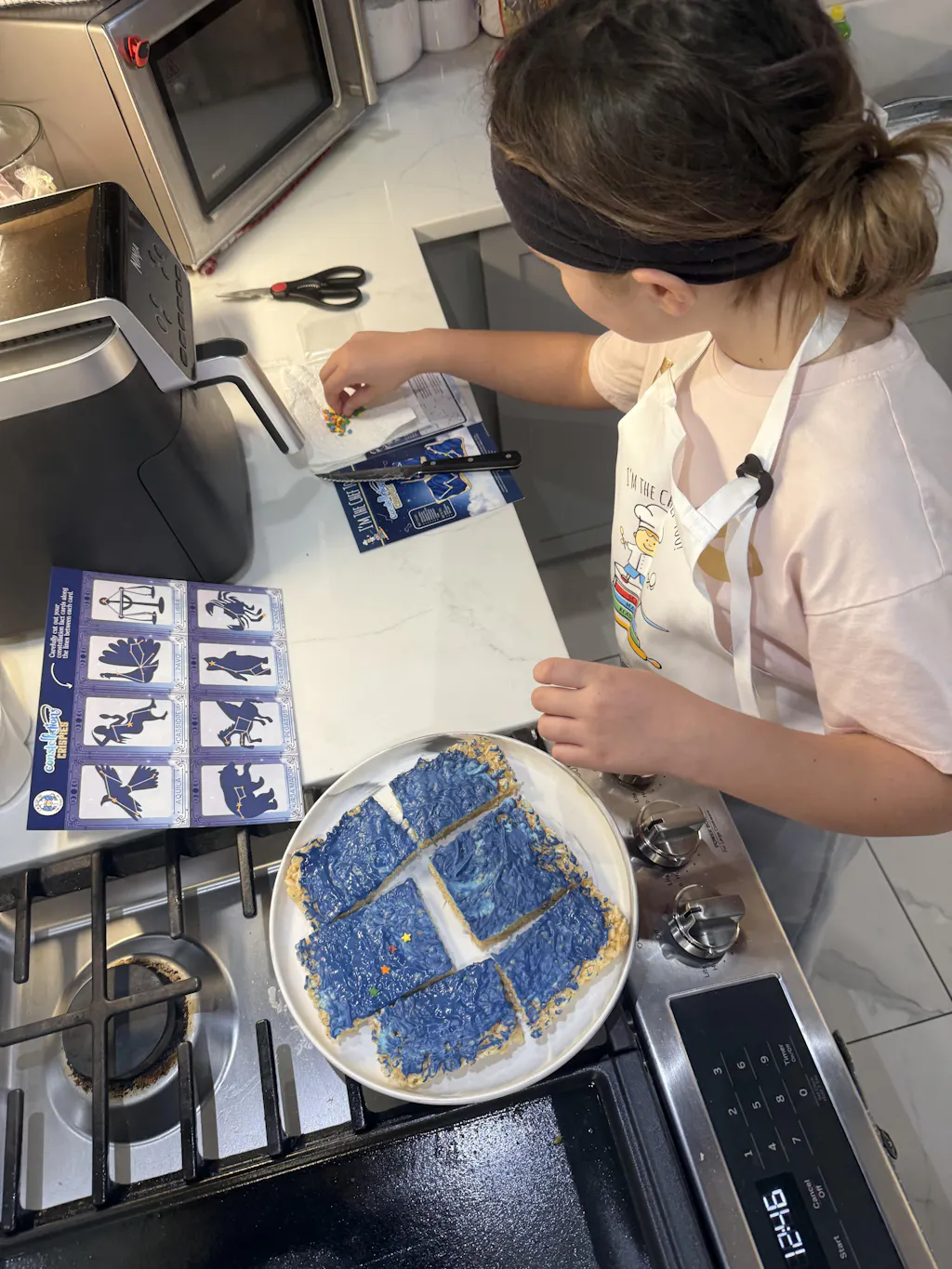
In the kitchen, art is everywhere—from the way you plate a dish to the colors you choose for a frosting. When a child decorates a "Galaxy Donut," they aren't just learning about space; they are using their imagination to interpret what a nebula looks like. This creative thinking is what allows scientists and engineers to solve complex problems in the real world.
By encouraging your child to be creative with their st patricks day breakfast for kids, you are nurturing the next generation of innovators.
Hypothetical Case Study: The Weekend Explorer
Let's imagine a family—the Millers. They have an 8-year-old daughter, Chloe, who is fascinated by volcanoes and a 5-year-old son, Sam, who loves animals. Mrs. Miller wants a way to engage them both without turning on the TV.
On St. Patrick's Day, they start with green pancakes. Chloe explains the "acid-base" reaction to Sam as the bubbles form. Later that afternoon, they dive into a kit they ordered from the I'm the Chef Too! shop. They might choose the "Erupting Volcano Cakes" to satisfy Chloe’s interest in geology. While they wait for the cakes to bake, they talk about the wildlife of Ireland, perhaps even making a mental link to our "Wild Turtle Whoopie Pies" kit.
This seamless transition from holiday fun to deep-dive educational kits is what makes our approach so effective. It keeps the momentum of learning going throughout the day.
Conclusion
St. Patrick’s Day is more than just a day for wearing green; it’s a golden opportunity to spark a child’s imagination and curiosity. By creating a festive st patricks day breakfast for kids, you are setting the stage for a day filled with learning, laughter, and love. We’ve explored the chemistry of pancakes, the biology of chlorophyll, the geometry of shamrocks, and the cultural history of the Irish potato.
At I’m the Chef Too!, we are honored to be a part of your family's educational journey. Our mission remains to provide you with the tools to turn your kitchen into a place of wonder and discovery. We hope these ideas inspire you to start a new tradition this year—one that values the process of learning as much as the delicious results.
Remember, every month can be an adventure. If you want to keep the "edutainment" going long after the leprechauns have gone home, we invite you to join our community. Give your child the gift of discovery, confidence, and screen-free fun.
Ready for a new adventure every month? Join The Chef's Club and enjoy free shipping on every box. Let’s make learning delicious together!
Frequently Asked Questions
1. How can I make my breakfast green without using artificial food coloring?
You can easily use natural alternatives! Blending spinach or kale into your pancake or waffle batter provides a bright green color without a strong vegetable taste. Other options include matcha powder (for older kids who like the earthy flavor) or even spirulina.
2. What are some age-appropriate tasks for toddlers during breakfast prep?
Toddlers can help with many "safe" tasks! They can pour pre-measured dry ingredients into a bowl, help stir the batter (with supervision), sort Lucky Charms marshmallows by shape, or place fruit on the rainbow waffle board. These activities help develop their fine motor skills and ability to follow simple directions.
3. My child has a gluten allergy. Can I still do these activities?
Absolutely! Most of these ideas—like avocado toast, smoothies, and eggs—can be made with gluten-free substitutes. There are many excellent gluten-free pancake and waffle mixes available that will still react with the same "bubble-making" chemistry we discussed.
4. How do I prevent the Lucky Charms marshmallows from burning on the griddle?
The trick is to fold the marshmallows into the batter just before pouring it onto the heat. Try to ensure the marshmallows are "tucked" inside the batter rather than sitting directly on the hot surface of the pan. This allows them to melt into gooey pockets rather than charring.
5. What is the best way to explain "STEM" to a young child?
You can tell them that STEM is like a superpower that helps us understand how the world works. "Science" is asking why things happen, "Technology" is using tools to help us, "Engineering" is building things, and "Math" is using numbers to measure our success. In the kitchen, we use all of these superpowers to make something yummy!
6. Do the I'm the Chef Too! kits come with everything I need?
Our kits are designed to be a complete experience! They include all pre-measured dry ingredients and specialty supplies (like cookie cutters, molds, or lab equipment). You will usually just need to provide a few fresh "wet" ingredients from your fridge, like eggs, milk, or butter.
7. Can these activities be used for a St. Patrick’s Day party?
Yes! A waffle charcuterie board is especially perfect for a group because it allows guests to customize their own plates. It’s a great way to handle different tastes and dietary preferences while keeping the theme festive and fun.