Table of Contents
- Introduction
- Understanding the "Why" Behind Picky Eating
- Strategy 1: The Power of "Mini"
- Strategy 2: Sneaking in Nutrition with "Stealth Health"
- Strategy 3: Autonomy Through Topping Stations
- Sweet Breakfast Ideas That Win Every Time
- Savory Breakfasts: Breaking the Cereal Cycle
- The STEM Connection: Why Cooking with Your Kids Matters
- Non-Traditional Breakfasts for the Ultimate Picky Eater
- Make-Ahead and Freeze: Saving the Morning Rush
- Engaging the Senses: Food Art and Creativity
- Practical Advice for Parents: Setting Realistic Expectations
- Using STEM to Conquer the "Yuck" Factor
- The Role of Consistency and Routine
- Case Study: The Dinosaur Lover
- Tips for School and Group Settings
- Summary of Key Takeaways
- FAQ
- Conclusion
Introduction
Does the sound of a cereal box hitting the table trigger a morning standoff in your household? If you have ever spent thirty minutes meticulously cutting crusts off toast only to have it rejected because the "texture feels weird," you are not alone. For many families, the breakfast table is a place of high stakes and even higher emotions. At I’m the Chef Too!, we understand that feeding a picky eater can feel like a full-time job. We also know that these early morning hours are a precious opportunity to connect, learn, and set the stage for a day of curiosity and growth.
The struggle is real, but so is the solution. Our goal today is to transform your morning routine from a battle of wills into a delicious journey of discovery. In this guide, we will explore a variety of kids breakfast ideas for picky eaters that go beyond the standard bowl of sugar-laden flakes. We’ll dive into the psychology of why kids refuse certain foods, provide practical strategies to introduce new flavors, and offer a wealth of recipes that are as nutritious as they are enticing. From "hidden-veggie" muffins to interactive topping stations, we are going to cover everything you need to know to fill those bellies without the stress.
At I’m the Chef Too!, our mission is to blend food, STEM, and the arts into one-of-a-kind "edutainment" experiences. We believe the kitchen is the ultimate laboratory, and breakfast is the perfect first experiment of the day. By the end of this post, you will have a toolkit of ideas to spark creativity in your child, facilitate family bonding, and provide a screen-free educational alternative to the morning cartoons. Our thesis is simple: when we involve children in the process and make food fun, even the pickiest eaters can find joy in a healthy breakfast.
Understanding the "Why" Behind Picky Eating
Before we dive into the recipes, it is essential to understand why children become picky eaters in the first place. For many kids, pickiness isn't just about being "difficult." It is often a developmental stage related to their need for autonomy and control. As toddlers and school-aged children grow, they begin to realize they have a say in their environment. What they put in their mouths is one of the few things they can truly control.
Texture, smell, and color also play massive roles. A child might have a heightened sensory response to the "mushiness" of oatmeal or the "crunch" of a raw carrot. There is also the "neophobia" factor—the natural fear of new things. Evolutionarily, being cautious of new foods kept our ancestors from eating poisonous berries. In the modern kitchen, that same instinct might make your seven-year-old suspicious of a blueberry.
By shifting our perspective from "my child is being stubborn" to "my child is exploring their senses and seeking independence," we can approach breakfast with more empathy. This is where our educational philosophy comes in. We use food to teach complex subjects through tangible, hands-on adventures. If a child understands the science of how an egg changes from liquid to solid, they might be more inclined to try a bite. Ready for a new adventure every month? Join The Chef's Club and enjoy free shipping on every box.
Strategy 1: The Power of "Mini"
There is something inherently less intimidating about a small version of a food. When a child sees a giant plate of pancakes, it can feel like a mountain they aren't ready to climb. However, "mini" foods feel like snacks—and almost every kid loves snacks.
Mini Pancake Bites
Instead of making dinner-plate-sized flapjacks, use a tablespoon to drop tiny dots of batter onto the griddle. These silver dollar pancakes are easy for little hands to pick up and dip. You can even thread them onto a blunt skewer with pieces of fruit for "breakfast kabobs." This adds an element of play and art to the meal, which we highly encourage.
Muffin Tin Everything
The muffin tin is your best friend when looking for kids breakfast ideas for picky eaters. You can bake almost anything in a mini muffin tin.
- Egg Bites: Whisk eggs with a little cheese and finely diced ham.
- Oatmeal Cups: Bake oatmeal with mashed bananas and a few chocolate chips in the tin.
- Pancake Muffins: Pour pancake batter into the tins and bake at 350°F until golden.
By making things bite-sized, you reduce the perceived "commitment" to the meal. If they don't like one bite, it’s not a big deal. But often, the novelty of the size is enough to get them to take that first, crucial taste.
Strategy 2: Sneaking in Nutrition with "Stealth Health"
We are firm believers in being honest with kids about what they are eating, but sometimes a little "stealth health" is necessary to bridge the gap while their palates develop. The goal isn't to trick them forever, but to provide the nutrients they need to stay focused at school.
The Magic of the Blender
Smoothies are the ultimate vehicle for hidden nutrition. If your child loves strawberries, a red smoothie is an easy sell. You can easily add a handful of mild baby spinach or some frozen riced cauliflower into a strawberry and banana blend. The fruit’s sweetness masks the veggies, and the blender ensures the texture remains perfectly smooth—a major win for kids who hate "lumps."
Veggie-Infused Baked Goods
Muffins and quick breads are another fantastic way to incorporate vegetables. Zucchini, carrots, and even sweet potatoes can be grated or pureed and added to batter.
- Zucchini Chocolate Chip Muffins: The zucchini adds moisture, while the chocolate provides the flavor they crave.
- Pumpkin Banana Bread: High in fiber and Vitamin A, this feels like a treat but eats like a meal.
When children help grate the carrots or mash the bananas, they are engaging in a tactile STEM lesson. They see how solid objects can be transformed and incorporated into a new substance. Find the perfect theme for your little learner by browsing our complete collection of one-time kits.
Strategy 3: Autonomy Through Topping Stations
If the root of picky eating is a desire for control, let's give it to them! Topping stations are a brilliant way to make breakfast interactive. Instead of serving a finished product, serve a "base" and let your child be the architect.
The Yogurt Bar
Provide a bowl of plain or vanilla Greek yogurt and several small cups filled with options:
- Fresh berries
- Granola
- Dye-free sprinkles
- Chia seeds
- A drizzle of honey
The Toast Canvas
Give them a piece of whole-grain toast and a few "paints":
- Nut butter or sunflower butter
- Cream cheese
- Smashed avocado
- Sliced bananas
By letting them choose, you are fostering a love for learning and building confidence. They aren't just eating; they are creating. This mirrors the experiences we provide in our kits, where kids are the lead chefs in their own culinary adventures.
Sweet Breakfast Ideas That Win Every Time
Most picky eaters lean toward sweet flavors because they are familiar and safe. We can use this preference to our advantage by creating sweet breakfasts that are packed with whole grains and protein.
1. Two-Ingredient Banana Pancakes
This is a classic for a reason. Mash one ripe banana and whisk it with two eggs. That’s it! Fry them in a little butter or coconut oil. They are naturally sweet, gluten-free, and full of protein and potassium. For a kid who loves science, you can explain how the proteins in the egg "denature" or change shape with heat to hold the banana together. It’s a chemical reaction that makes our Erupting Volcano Cakes Kit bubble over with deliciousness, and it’s the same principle that makes these pancakes work!
2. "Ice Cream" Breakfast Bowls
If you tell a child they can have ice cream for breakfast, you’ve already won. "Nice cream" is made by blending frozen bananas until they reach a soft-serve consistency. Top it with a few nuts or some granola, and you have a breakfast that feels like a dessert but is actually just fruit and fiber.
3. DIY Breakfast Parfaits
Layering is an art form. Use clear glasses so kids can see the different "strata" of their breakfast. This is a great time to talk about geology—just like the earth has layers, so does their yogurt. Start with yogurt, add a layer of fruit, then a layer of oats or granola.
Savory Breakfasts: Breaking the Cereal Cycle
While many kids prefer sweet, savory breakfasts often provide more sustained energy through protein and healthy fats. The key is to make savory foods familiar and fun.
4. Breakfast Quesadillas
If your child likes grilled cheese or tacos, a breakfast quesadilla is a natural transition. Fold scrambled eggs and a little shredded cheddar into a whole-wheat tortilla and crisp it up in a pan. You can even cut them into fun shapes using cookie cutters.
5. "Egg in a Hole" (The Bird’s Nest)
Use a small circular cutter to remove the center of a slice of whole-wheat bread. Place the bread in a buttered skillet and crack an egg into the center hole. It’s visually interesting and gives the egg a different texture than a standard scramble.
6. Breakfast Fried Rice
Who says you can't have dinner for breakfast? If your picky eater loves rice, try a breakfast version with scrambled eggs, peas, and a little bacon or ham. It’s a great way to use up leftovers and provides a solid mix of carbs and protein.
The STEM Connection: Why Cooking with Your Kids Matters
At I’m the Chef Too!, we believe that when children understand the how and why behind their food, they become more adventurous eaters. Cooking is a multidisciplinary subject.
- Math: Measuring ingredients, halving recipes, and timing the oven.
- Science: Observing state changes (liquid to solid), chemical leavening (baking powder), and heat transfer.
- Art: Plating, color coordination, and decorating.
When a child is a "Scientist" or an "Artist" in the kitchen, the pressure to eat disappears. They are too busy observing the bubbles in the pancake batter or the way the purple cabbage juice turns blue when mixed with an acid. This shift in focus often leads to "accidental" tasting. They might lick the spoon or try a piece of the fruit they are using as a decoration. Give the gift of learning that lasts all year with a 12-month subscription to our STEM cooking adventures.
Non-Traditional Breakfasts for the Ultimate Picky Eater
Sometimes, the traditional "breakfast" label is the problem. If your child hates eggs, cereal, and pancakes, stop serving them! There is no rule that says you can't have a turkey sandwich or a bowl of pasta at 7:00 AM.
7. The Snack Plate (Charcuterie for Kids)
A "deconstructed" breakfast is often very successful for picky eaters who don't like their foods touching. Use a divided plate or a muffin tin and fill the sections with:
- A hard-boiled egg (cut into wedges)
- A few slices of deli turkey or ham
- Some cheese cubes
- A handful of grapes
- A few whole-grain crackers
8. Leftovers Reimagined
If they loved last night's chicken and sweet potatoes, serve them again! The goal is to get nutrients into their system and provide a positive start to the day. If they aren't "breakfast people," don't force the "breakfast menu."
9. Energy Balls
These are essentially "no-bake" cookies made with healthy ingredients. Mix oats, nut butter, honey, and a few mini chocolate chips or flax seeds. Roll them into balls and keep them in the fridge. They are easy to eat on the way to school and feel like a treat.
Make-Ahead and Freeze: Saving the Morning Rush
One of the biggest hurdles to a healthy breakfast is time. When we are rushed, we are more likely to settle for the "easy" box of cereal. By preparing ahead of time, you can have high-quality kids breakfast ideas for picky eaters ready in seconds.
Freezing Pancakes and Waffles
Make a double batch of pancakes or waffles on the weekend. Once they cool, flash-freeze them on a baking sheet for 30 minutes (so they don't stick together) and then toss them into a freezer bag. On weekday mornings, pop them in the toaster or microwave. They taste much better than the store-bought versions and you control the ingredients.
Breakfast Burritos
Roll up scrambled eggs, cheese, and cooked sausage in tortillas. Wrap each one in foil and freeze. These are the ultimate "grab and go" meal for older kids and teens who are always running late.
Overnight Oats
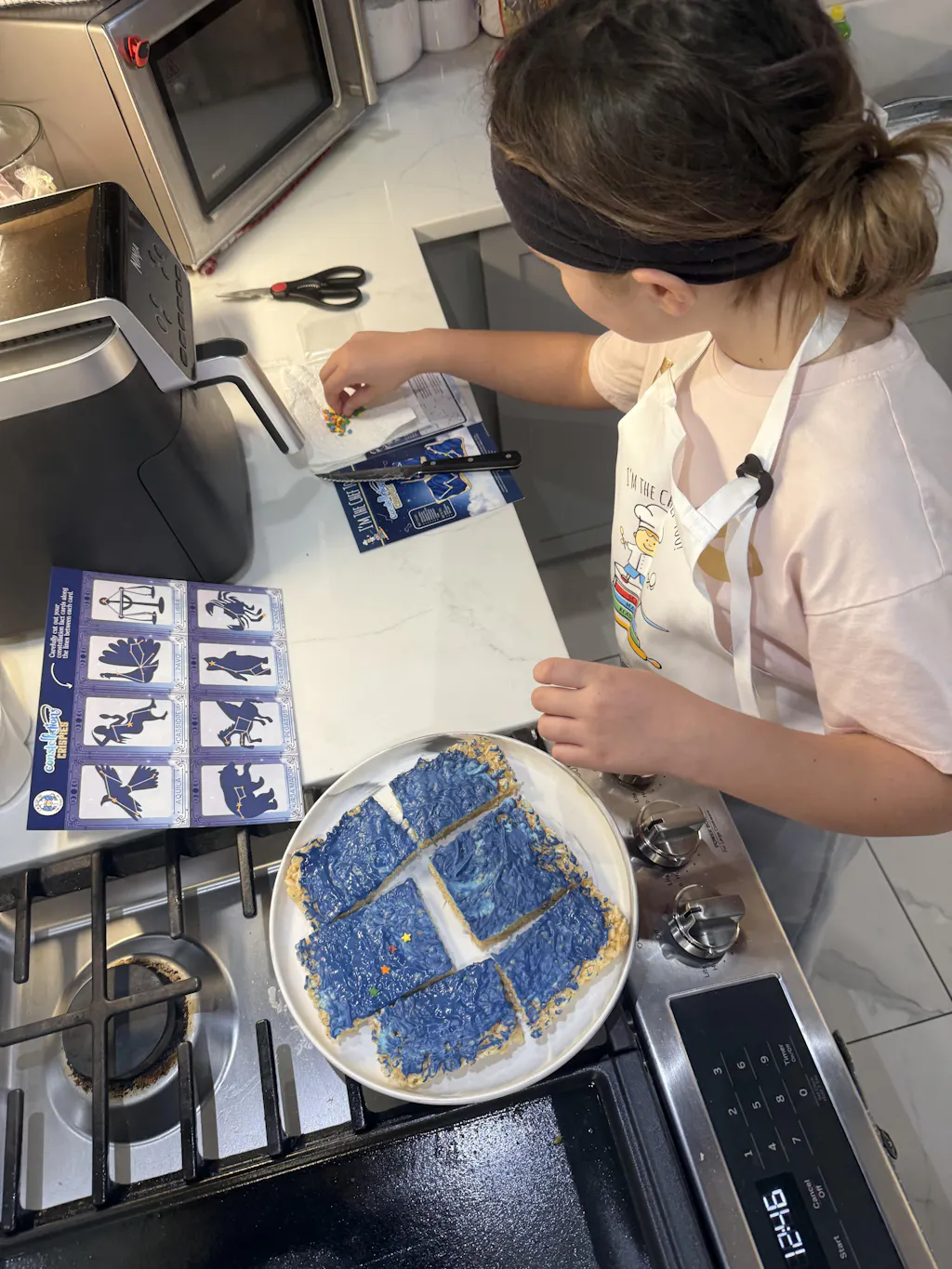
This is a "set it and forget it" breakfast. Mix equal parts oats and milk (or a dairy alternative) in a jar. Add a spoonful of chia seeds and a little maple syrup. By morning, the oats have absorbed the liquid and become soft and creamy. You can even explore astronomy by creating your own edible solar system with our Galaxy Donut Kit and then use the leftovers to talk about the milky way while eating your oats!
Ready for a new adventure every month? Join The Chef's Club and enjoy free shipping on every box.
Engaging the Senses: Food Art and Creativity
Since we blend food and the arts, we love encouraging parents to make food look like something else. This isn't about being a "Pinterest Mom" or "Instagram Dad"—it's about making the food approachable.
Animal Faces
A bowl of oatmeal can easily become a bear with two banana slices for ears and three blueberries for eyes and a nose. A piece of toast can become an owl with apple-slice wings. When food is an animal, it’s a friend, not a foe. Even beloved animals can make learning fun, like when kids make Wild Turtle Whoopie Pies.
Color-Themed Days
"Tomorrow is Green Day!" This might mean green smoothies, avocado toast, or even eggs scrambled with a little pesto. Making it a theme takes the focus off the specific food and puts it on the "game."
Practical Advice for Parents: Setting Realistic Expectations
It is important to remember that progress isn't linear. Your child might love the "Bird’s Nest" egg on Tuesday and refuse it on Wednesday. That’s okay! Our mission isn't to create overnight food critics; it's to foster a love for learning and create joyful family memories.
- Adult Supervision is Key: Always ensure an adult is present for any kitchen activity involving heat, sharp tools, or appliances. Safety first makes for a more relaxed environment.
- Don't Force the Clean Plate: Forcing a child to finish every bite can create negative associations with food. Encourage "one adventurous bite" instead.
- Be a Role Model: If you are eating a variety of healthy foods and enjoying them, your child is watching.
- Keep it Screen-Free: Breakfast is a great time to talk about the day ahead. By removing the distraction of tablets or TV, kids can focus on the sensory experience of their food.
Using STEM to Conquer the "Yuck" Factor
We often find that children who are "picky" are actually very observant. They notice the tiny green fleck of parsley or the way the milk makes the cereal soggy. We can harness this power of observation.
Invite your child to be a "Food Scientist." Give them a notebook and ask them to rate their breakfast on a scale of 1 to 10 based on:
- Crunch Factor
- Color Brightness
- Smell-o-meter
- Taste-tastic Score
When they are "analyzing" the food, they are engaging their prefrontal cortex rather than their "fight or flight" response to a new flavor. This is the heart of "edutainment." We aren't just feeding them; we are teaching them how to think and explore.
The Role of Consistency and Routine
Picky eaters thrive on routine. While we want to introduce new things, having a "predictable" element to breakfast can help. Maybe Monday is always "Muffin Monday," but the type of muffin changes. This provides the safety of the familiar with the excitement of the new.
Our Chef's Club Subscription is designed with this exact balance in mind. Every month, a new adventure arrives at your door. The routine of the box arriving provides comfort, while the contents spark new curiosity. It’s a complete experience, containing pre-measured dry ingredients and specialty supplies, making it easy for busy parents to provide high-quality educational fun without the stress of a long grocery list.
Case Study: The Dinosaur Lover
Imagine a parent looking for a screen-free weekend activity for their 7-year-old who loves dinosaurs but refuses to eat anything green. Instead of forcing a salad, they could try a "Prehistoric Breakfast." They use our one-time kits to explore fossils, and then apply that knowledge to breakfast. They make "Dino Eggs" (hard-boiled eggs with the shells slightly cracked and soaked in beet juice to create a marbled effect). They serve "Trees" (steamed broccoli trees) with a "Lava" dip (mild salsa or red pepper hummus). Because the theme aligns with the child’s passion, the "scary" green food becomes part of the adventure.
Tips for School and Group Settings
If you are an educator or a homeschool co-op leader, these kids breakfast ideas for picky eaters can be scaled for a classroom setting. Cooking in a group often encourages kids to try things they wouldn't try at home because they see their peers doing it.
Our programs are versatile and can be used in classrooms or camps. We offer options with and without food components to suit different needs and allergy requirements. Bring our hands-on STEM adventures to your classroom, camp, or homeschool co-op. Learn more about our versatile programs for schools and groups.
Summary of Key Takeaways
To recap, finding kids breakfast ideas for picky eaters doesn't have to be a chore. It’s an opportunity for:
- Creativity: Making food art and using topping stations.
- Autonomy: Giving kids choices and control over their meals.
- STEM Learning: Exploring the science and math of the kitchen.
- Family Bonding: Spending screen-free time together in the morning.
By focusing on "mini" portions, hidden nutrition, and interactive experiences, you can slowly but surely expand your child's palate. Remember to be patient, keep the atmosphere light, and celebrate the small wins—like that one adventurous bite of a blueberry.
FAQ
How do I handle a child who refuses to eat anything at all in the morning?
Some children (and adults!) simply aren't hungry right when they wake up. If that’s the case, try a "liquid breakfast" like a protein-packed smoothie. Alternatively, pack a "second breakfast" that they can eat once they get to school or after their first class. A small container of energy balls or a breakfast burrito is perfect for this.
My child has food allergies. Can these ideas still work?
Absolutely! Most of these ideas are easily adaptable. Swap peanut butter for sunflower butter, use gluten-free oats or flour, and choose dairy-free milk or yogurt. Our kits also provide flexibility, and we offer school programs without food components for high-allergy environments.
What if I don't have time for a "topping station" on a Tuesday?
Keep it simple! You can prep the toppings on Sunday. Put them in a divided container so you just have to pull one thing out of the fridge. Even a two-choice option ("Do you want blueberries or strawberries on your yogurt?") provides that sense of autonomy without taking extra time.
How can I get my child interested in the "science" of food?
Start with questions. "Why do you think the eggs turned from clear to white?" or "What happened to the baking powder when we added the milk?" You don't need to have all the answers—you can look them up together! This turns you into a co-explorer rather than just a teacher.
Are these ideas suitable for older kids?
Yes! While toddlers love "mini" things, older kids often enjoy the "Deconstructed" plates or the more complex "STEM" side of cooking. Teens might appreciate the "make-ahead" breakfast burritos that they can grab on their way out the door.
Conclusion
The journey of a picky eater is one of discovery, not just for the child, but for the parent as well. By shifting the focus from "eating" to "experiencing," we can take the pressure off the breakfast table and put the joy back into our mornings. We’ve explored how the power of "mini," the art of the topping station, and the science of the kitchen can transform the most important meal of the day into a one-of-a-kind edutainment experience.
At I’m the Chef Too!, we are committed to sparking curiosity and creativity in every child. We want to help you build your child's confidence, develop their key skills, and create joyful family memories that last a lifetime. Whether you are baking a batch of veggie-infused muffins or exploring the stars with a donut, every moment in the kitchen is an opportunity to learn.
Ready for a new adventure every month? Join The Chef's Club and enjoy free shipping on every box. We’ll deliver a world of discovery right to your doorstep, making it easier than ever to bring STEM, art, and delicious food together for your little ones. Let's make every breakfast an adventure!