Table of Contents
- The Magic of Edutainment in the Holiday Kitchen
- Setting the Stage: Safety and Preparation
- The Classic No-Fail Christmas Sugar Cookie
- Gingerbread Adventures: Shapes, Sizes, and Smells
- No-Bake Wonders for Little Hands
- Chocolate Crinkles: The Snowy Cookie
- Artistic Decorating: The Grand Finale
- Why Baking is the Ultimate STEM Activity
- Troubleshooting Common Cookie Challenges
- Creating a Gifting Tradition
- Beyond Cookies: Exploring Other Holiday STEM Adventures
- Encouraging a Love for Learning
- Frequently Asked Questions (FAQ)
- Conclusion: A Season of Joy and Discovery
The kitchen during the holidays is a place of pure magic, filled with the scent of warm cinnamon, the soft glow of oven lights, and the inevitable dusting of flour on every available surface. Do you remember the first time you were allowed to crack an egg or use a cookie cutter? For many of us, those early moments in the kitchen weren't just about the treats; they were about the connection, the curiosity, and the joy of creating something from scratch. At I’m the Chef Too!, we believe these moments are the foundation of lifelong learning and family bonding.
In this guide, we are going to explore a variety of delicious and educational Christmas cookies with kids recipes that prioritize fun and simplicity. From classic cut-out sugar cookies to whimsical no-bake wreaths, we’ve gathered the best ways to turn your holiday baking into a hands-on "edutainment" experience. We will cover essential safety tips, the science behind why cookies rise, and step-by-step instructions for recipes that even the littlest elves can master. Our goal is to help you create joyful family memories while fostering a love for learning through the delicious world of STEM (Science, Technology, Engineering, and Math).
By the end of this post, you'll have a complete toolkit for a festive baking season that is as educational as it is sweet. Whether you are looking for a screen-free afternoon activity or a way to teach your child about measurements and chemical reactions, we have you covered.
The Magic of Edutainment in the Holiday Kitchen
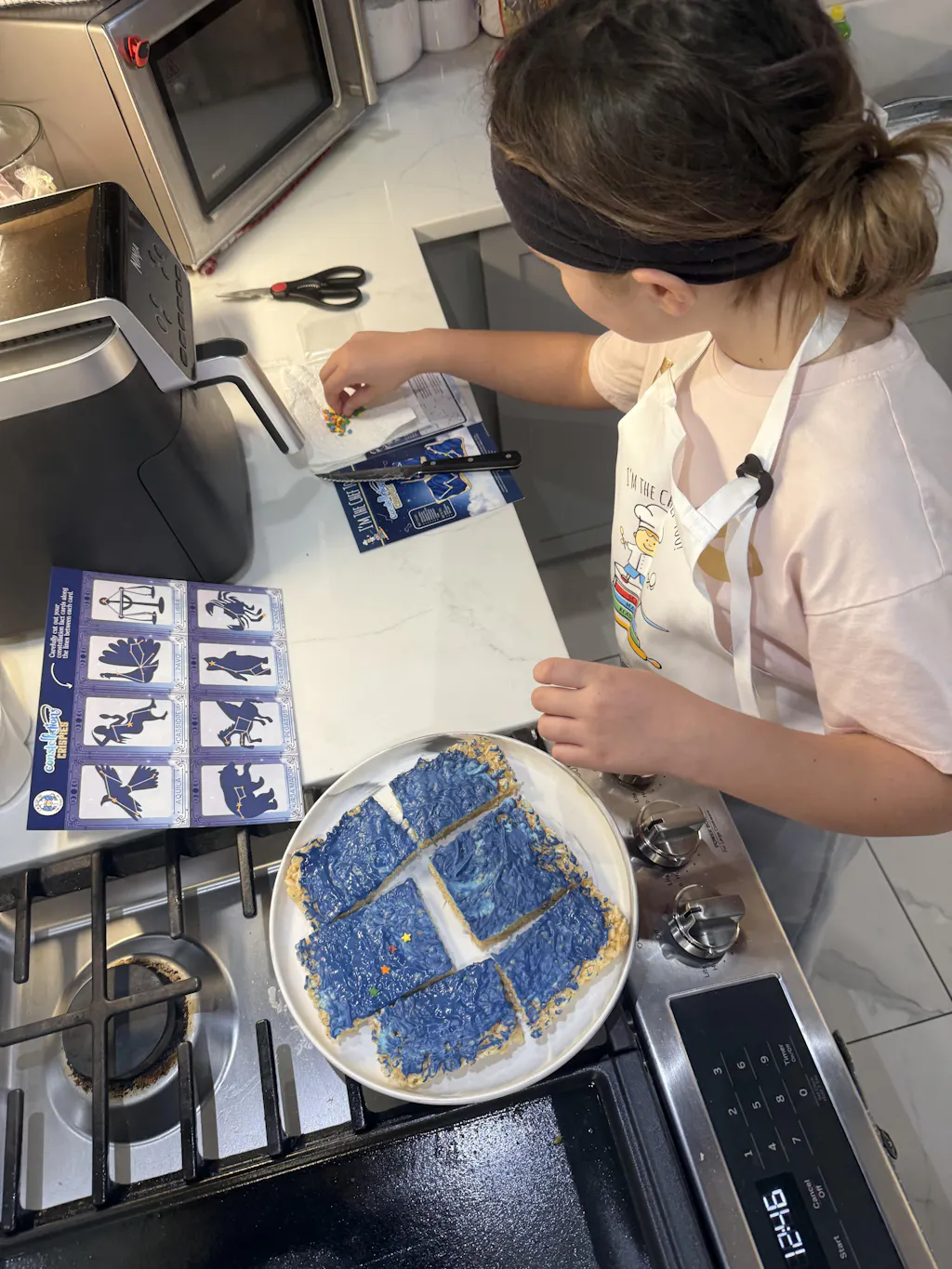
At I’m the Chef Too!, our mission is to blend food, STEM, and the arts into one-of-a-kind experiences. We call this "edutainment." It’s the idea that children learn best when they are actively engaged, using their hands, and—most importantly—having fun. Baking is the perfect medium for this. When you follow a recipe for Christmas cookies with kids, you aren't just making a snack; you are conducting a chemistry experiment, practicing math through measurements, and exploring engineering through cookie structures.
For example, a parent looking for a screen-free weekend activity for their 7-year-old who loves astronomy could explore the stars while baking, much like how kids explore astronomy by creating their own edible solar system with our Galaxy Donut Kit. The kitchen is a living laboratory where curiosity is sparked and creativity is allowed to run wild.
When we bake together, we are also facilitating deep family bonding. In our fast-paced lives, the act of slowing down to roll out dough or wait for the oven timer to beep provides a rare opportunity for conversation and connection. We are committed to providing these screen-free educational alternatives that keep kids' minds and hands busy in the best possible way. Ready for a new adventure every month? Join The Chef's Club and enjoy free shipping on every box.
Setting the Stage: Safety and Preparation
Before we dive into the recipes, it is important to set the stage for a successful baking session. Kitchen activities should always be framed with adult supervision and safety at the forefront. Depending on the age of your children, their roles will vary, but everyone can contribute.
Age-Appropriate Tasks
- Toddlers (Ages 2-4): They love sensory play! Let them help pour pre-measured ingredients, stir the batter (with a little help), and—their favorite part—add sprinkles.
- Young Children (Ages 5-7): This age group can begin to practice measuring dry ingredients, cracking eggs into a separate bowl (to catch shells!), and using cookie cutters.
- Older Kids (Ages 8+): They can start to read the recipe aloud, manage the kitchen timer, and learn how to safely use a hand mixer or even help slide baking sheets into the oven under close supervision.
Preparation is Key
To keep the experience stress-free, we recommend the "Mise en Place" approach—a French culinary term meaning "everything in its place." Before inviting the kids into the kitchen, gather all your ingredients, bowls, and tools. This prevents the "wait, where is the baking powder?" panic while a toddler is already elbow-deep in flour.
Pro Tip: If you want a completely stress-free experience where everything is already measured for you, give the gift of learning that lasts all year with a 12-month subscription to our STEM cooking adventures. Our boxes come with pre-measured dry ingredients, so you can jump straight to the fun!
The Classic No-Fail Christmas Sugar Cookie
No list of Christmas cookies with kids recipes would be complete without the iconic cut-out sugar cookie. This recipe is a favorite because the dough is forgiving, doesn't require a fancy mixer, and provides the ultimate canvas for artistic expression.
Ingredients
- 2 cups all-purpose flour
- 1/2 cup sugar
- 1 teaspoon baking powder
- 1/4 teaspoon salt
- 1/2 cup unsalted butter (softened)
- 1/4 cup milk (whole or 2%)
- 1 teaspoon vanilla extract
The STEM Lesson: The Power of Leavening
While you stir the dry ingredients, explain to your child that baking powder is a "leavening agent." This is a fancy word for something that makes the cookie rise. When it hits the wet ingredients and the heat of the oven, it creates tiny bubbles of carbon dioxide gas. This is a chemical reaction, much like the reaction that makes our Erupting Volcano Cakes Kit bubble over with deliciousness!
Step-by-Step Instructions
- Mix the Dry Ingredients: In a large bowl, whisk together the flour, sugar, baking powder, and salt. This is a great task for young children to practice their stirring skills.
- Incorporate the Butter: Add the softened butter. Use clean hands to "squish" the butter into the flour until it looks like coarse crumbs. This tactile experience is excellent for sensory development.
- Add the Liquids: Pour in the milk and vanilla. Keep mixing by hand until a dough ball forms. If it’s too crumbly, add an extra tablespoon of milk.
- Chill and Roll: Wrap the dough in parchment paper and let it rest in the fridge for about 15-20 minutes. This makes it easier to handle. Once chilled, roll it out between two sheets of parchment paper to about 1/4 inch thickness.
- Cut and Bake: Use your favorite holiday shapes! Re-roll the scraps until all the dough is used. Bake at 375°F (190°C) for 8-10 minutes, or until the edges are just barely golden.
- Cooling: Let them cool completely on a wire rack before decorating. This is the hardest part for kids, but it’s a great lesson in patience!
Gingerbread Adventures: Shapes, Sizes, and Smells
Gingerbread cookies offer a different sensory experience. The smell of ginger, cloves, and molasses is synonymous with the holidays. These cookies are sturdier than sugar cookies, making them perfect for "engineering" gingerbread people or even small houses.
The Math of Shapes
As your kids use gingerbread man cutters, talk about geometry. Are the arms symmetrical? How many circles (buttons) can we fit on his coat? Measuring the molasses—which is thick and slow-moving—is also a great way to talk about viscosity, another cool science concept!
If your child loves learning about animals through baking, they might also enjoy exploring biology. Even beloved animals can make learning fun, like when kids make Wild Turtle Whoopie Pies with our specialized kits.
Gingerbread Recipe Highlights
For a kid-friendly gingerbread, we suggest a recipe that uses plenty of ginger for flavor but keeps the dough pliable.
- The "Snap" Factor: Explain that the longer you bake them, the "snappier" they get. If you want soft gingerbread men, pull them out a minute early. This is a lesson in how heat transfer affects the texture of food.
No-Bake Wonders for Little Hands
Sometimes, the best Christmas cookies with kids recipes don't require an oven at all. No-bake recipes are fantastic for toddlers and preschoolers because they offer instant gratification and remove the danger of hot baking sheets.
Festive Cornflake Wreaths
These are a holiday classic that kids absolutely adore.
- Melt: An adult can melt butter and marshmallows in a large pot.
- Color: Add a few drops of green food coloring. This is a great time to talk about color mixing!
- Mix: Fold in cornflakes until they are completely coated in green "goo."
- Shape: Drop spoonfuls onto parchment paper. Kids can use their (buttered) fingers to poke a hole in the middle to make a wreath shape.
- Decorate: Add red cinnamon candies or sprinkles for "holly berries" while the mixture is still tacky.
Peanut Butter "Snowballs"
These are often called Buckeyes or Peanut Butter Balls.
- Mix peanut butter, butter, and powdered sugar.
- Roll them into balls (perfect for developing fine motor skills).
- Dip them in melted chocolate.
- This recipe teaches kids about "states of matter"—how chocolate goes from a solid bar to a liquid when heated, and back to a solid when cooled.
Chocolate Crinkles: The Snowy Cookie
Chocolate crinkles are a visual treat. They are dark, fudgy cookies that are rolled in powdered sugar before baking. As they expand in the oven, the sugar cracks, creating a beautiful "snow-covered" effect.
The Science of Expansion
Ask your kids: "Why do you think the sugar cracks?" As the cookie dough heats up, it spreads and rises. The powdered sugar on the outside doesn't stretch, so it breaks apart to reveal the dark chocolate underneath. This is a wonderful way to visualize what is happening inside the oven.
Artistic Decorating: The Grand Finale
Decorating is where the "Art" in our STEM+Arts mission truly shines. It’s an opportunity for children to express their creativity and take pride in their work.
Easy Icing for Kids
A simple glaze is often easier for kids to manage than thick buttercream. Mix 1 cup of powdered sugar with 1-2 tablespoons of milk and a dash of vanilla. It should be thick enough to stay on the cookie but thin enough to spread.
Decorating Stations
To keep the mess contained (mostly!), set up decorating stations:
- The Painter: Give them clean, food-safe paintbrushes to "paint" the icing onto the cookies.
- The Sprinkler: Place the cookies inside a shallow baking pan before letting them go wild with sprinkles. The edges of the pan will catch the strays!
- The Detailer: Use small plastic bags with a tiny corner cut off to pipe simple lines or dots.
Remember, the goal isn't a Pinterest-perfect cookie. The goal is the joy on your child's face when they show you the "reindeer" they made (even if it looks a bit more like a potato with antlers). These moments are the heartbeat of our community at I'm the Chef Too!.
Why Baking is the Ultimate STEM Activity
We often get asked how cookies can possibly be "educational." The truth is, the kitchen is the most accessible lab in your home.
- Mathematics: When you ask a child to find the 1/2 cup measuring tool and the 1/4 cup measuring tool, you are teaching them about fractions. Asking them to double a recipe is a lesson in multiplication.
- Science: We’ve discussed leavening and states of matter, but there is also biology! Discussing where cinnamon comes from (bark!) or how vanilla beans grow introduces them to the natural world.
- Engineering: Building a gingerbread house or even stacking "sandwich" cookies requires an understanding of balance and structural integrity.
- Literacy: Following a recipe from start to finish builds reading comprehension and the ability to follow multi-step instructions.
Troubleshooting Common Cookie Challenges
Even with the best Christmas cookies with kids recipes, things sometimes go awry. Here is how to handle common kitchen hiccups with a smile:
My Dough is Too Sticky!
If the dough is sticking to the rolling pin or the counter, don't panic. This usually happens if the butter has gotten too warm. Simply pop the dough back into the fridge for 10-15 minutes. You can also lightly flour your rolling pin or roll the dough between two sheets of parchment paper.
The Cookies Spread Too Much
This often happens if the dough was too warm when it went into the oven, or if there was too much butter. Next time, try chilling the cut-out shapes on the baking sheet for 5 minutes before sliding them into the oven.
They Are Burnt on the Bottom
Oven temperatures can vary. If your cookies are browning too fast, try moving the oven rack to a higher position or using a silicone baking mat, which provides a bit of insulation. Always frame these moments as "experiments." Sometimes experiments have unexpected results, and that is how scientists learn!
Creating a Gifting Tradition
One of the most beautiful parts of the holiday season is teaching children the joy of giving. Homemade cookies make wonderful, heartfelt gifts for teachers, neighbors, and local heroes like firefighters or librarians.
Packaging with Love
- Cookie Tins: Find some festive tins at a local shop and line them with parchment paper.
- Mason Jars: For smaller cookies, like "snowball" pecans, a clear jar tied with a red ribbon is simple and elegant.
- Homemade Labels: Let your kids draw and cut out labels. They can write "Made with love by [Child's Name]" and perhaps even list one "secret ingredient" (like extra hugs!).
By involving kids in the gifting process, we help them develop empathy and a sense of community. Find the perfect theme for your little learner by browsing our complete collection of one-time kits.
Beyond Cookies: Exploring Other Holiday STEM Adventures
While cookies are the star of the show, there are so many other ways to bring STEM into your holiday celebrations.
- Holiday "Potions": Mix cranberry juice, sparkling water, and a bit of lime to see how the bubbles (carbon dioxide) react.
- Candy Cane Dissolving Race: Place candy canes in cold water, warm water, and vinegar to see which one dissolves the fastest.
- Marshmallow Towers: Use toothpicks and marshmallows to build the tallest "Christmas Tree" structure.
At I’m the Chef Too!, we love these types of activities because they foster a love for learning without feeling like "schoolwork." If you’re looking for a way to keep this spirit alive all year long, The Chef's Club Subscription is a complete experience, containing pre-measured dry ingredients and specialty supplies. It’s the ultimate way to ensure your kitchen remains a place of discovery every single month.
Encouraging a Love for Learning
As we wrap up our festive baking journey, it’s important to remember that perfection isn't the goal. Whether the cookies are slightly lopsided or the icing is a bit too bright, the value lies in the process. We are fostering confidence in children when we let them take the lead in the kitchen. We are building their fine motor skills, their ability to solve problems, and their curiosity about how the world works.
Every time you bake Christmas cookies with kids, you are planting a seed. You are showing them that they are capable of creating something wonderful. You are teaching them that science isn't just in a textbook—it's in the bowl, the oven, and the very food they eat.
Frequently Asked Questions (FAQ)
What are the best cookies for toddlers to help with?
No-bake recipes like Cornflake Wreaths or Peanut Butter Balls are excellent for toddlers. They involve lots of "smashing" and "rolling," which toddlers love, and there's no risk of them touching a hot oven. They also offer immediate results, which is great for shorter attention spans.
How can I make Christmas cookies healthier for kids?
You can easily swap half of the all-purpose flour for whole wheat pastry flour to add a bit of fiber. Reducing the sugar by about 25% often goes unnoticed, especially if you are adding icing on top. You can also use natural dyes like beet juice for red icing or spinach juice for green icing!
Can I make the cookie dough in advance?
Absolutely! Most cookie doughs, including sugar cookie and gingerbread dough, can be made and stored in the refrigerator for up to 3 days. You can also freeze the dough for up to 3 months. This is a great way to break up the baking process if you have very young children.
How do I keep the kitchen from becoming a disaster zone?
The "Mise en Place" method mentioned earlier is your best friend. Also, keep a damp cloth nearby for quick wipedowns. Assigning a "clean-up" job can also be part of the fun—many kids love playing with soap and water in the sink!
What if my child has a food allergy?
Many of our favorite recipes can be adapted. For egg-free cookies, the sugar cookie recipe provided in this post is a great option. For dairy-free, substitute coconut oil or a vegan butter stick. For gluten-free needs, look for a high-quality 1:1 gluten-free baking flour. Our school and group programs also offer versatile options with and without food components to accommodate different needs.
Conclusion: A Season of Joy and Discovery
The holidays are a time for tradition, but they are also a time for growth. By inviting your children into the kitchen to bake Christmas cookies, you are giving them much more than a sweet treat. You are giving them the gift of your time, the excitement of discovery, and the foundation of a "can-do" attitude.
We’ve explored how a simple sugar cookie can become a chemistry lesson, how gingerbread can teach geometry, and how no-bake treats can illustrate the states of matter. We’ve shared tips for staying safe and keeping the focus on fun. At I’m the Chef Too!, we are so proud to be a part of your family’s journey toward becoming lifelong learners and creative thinkers.
As you move through this holiday season, we hope your home is filled with laughter, the smell of fresh cookies, and plenty of "Aha!" moments. Remember, the most important ingredient is always the love and curiosity you share.
Are you ready to keep the adventure going long after the holiday decorations are put away? Join The Chef's Club today and get a brand-new STEM cooking adventure delivered to your door every month. Let’s make every month a season of discovery!