Table of Contents
- Introduction to the Magic of Making
- Why Simple Arts and Crafts Matter: Beyond Just Fun
- The I'm the Chef Too! Approach: Blending Art, STEM, and Deliciousness
- Getting Started: Setting Up Your Crafting Space
- Simple Arts and Crafts Ideas for Toddlers (Ages 2-4)
- Creative Adventures for Preschoolers (Ages 4-6)
- Engaging Crafts for School-Aged Kids (Ages 6-10+)
- The Art of Edible Crafts: A Delicious Twist on Learning
- Tips for Parents and Educators: Fostering a Creative Environment
- Seamlessly Integrating STEM with Arts and Crafts
- Conclusion
- FAQ Section
Do you ever find yourself gazing at your child, perhaps engrossed in a screen, and wish for a magical way to ignite their imagination, develop crucial skills, and create cherished memories, all while keeping things simple? You’re not alone. In a world brimming with digital distractions, the timeless appeal and profound benefits of simple arts and crafts for kids often get overlooked. It's not about elaborate projects that require specialized tools or endless hours; it's about the joy of creation, the wonder of discovery, and the tangible satisfaction of making something with their own hands.
This post is your friendly guide to unlocking that creative potential. We'll explore why hands-on artistry is more important than ever for a child's holistic development, provide a treasure trove of easy-to-implement craft ideas suitable for various age groups, and offer practical tips for making crafting a regular, delightful part of your family routine. From the cognitive leaps to the emotional expression, you'll discover how these seemingly small activities contribute to big growth. And here at I'm the Chef Too!, we believe that learning should always be an adventure, blending food, STEM, and the arts into one-of-a-kind "edutainment" experiences that perfectly complement these simple art endeavors. We're committed to sparking curiosity and creativity in children, facilitating family bonding, and providing a screen-free educational alternative, making sure every creation is not just fun, but also a delicious journey of discovery.
Introduction to the Magic of Making
Remember the pure delight of creating something from scratch as a child? The sticky fingers from glue, the vibrant streaks of paint on paper, the crumpled masterpiece proudly presented to a parent. These aren't just fond memories; they're moments of profound learning and development. In our increasingly digital world, the importance of tactile, hands-on experiences cannot be overstated. Simple arts and crafts for kids offer a much-needed counterbalance, pulling children away from screens and into a world where their hands, minds, and imaginations are fully engaged.
This blog post aims to be your go-to resource for igniting that spark of creativity. We will delve into the myriad benefits that simple arts and crafts provide, from boosting cognitive skills and fine motor development to fostering emotional expression and nurturing patience. We’ll offer practical advice on setting up an inviting craft space and then share a wealth of easy, accessible, and incredibly fun craft ideas tailored for toddlers, preschoolers, and school-aged children. Furthermore, we’ll explore how these artistic pursuits naturally intertwine with STEM concepts, showcasing how even the simplest projects can lay the groundwork for a deeper understanding of science, technology, engineering, and mathematics. At I'm the Chef Too!, our mission is exactly this: to blend food, STEM, and the arts into unique "edutainment" experiences, proving that learning can be both tangible and deliciously fun. We're dedicated to helping you facilitate family bonding and provide a screen-free educational alternative that sparks curiosity and creativity in every child. So, get ready to unleash a wave of creativity in your home – it's simpler and more rewarding than you might think!
Why Simple Arts and Crafts Matter: Beyond Just Fun
While the immediate joy on a child's face when they complete a craft project is priceless, the benefits of simple arts and crafts extend far beyond mere entertainment. These activities are powerful tools for holistic development, shaping young minds and fostering essential life skills.
Cognitive Development: Building Brainpower
Engaging in arts and crafts challenges children to think, plan, and problem-solve. When they decide which colors to use, how to cut a shape, or how to combine different materials, they're engaging in critical thinking. They learn about cause and effect, spatial reasoning, and sequence. For instance, understanding that cutting a larger piece of paper might mean they need more glue for their collage, or that mixing blue and yellow paint creates green, is a practical lesson in chemistry and logic. These seemingly small decisions contribute significantly to their cognitive growth, preparing their brains for more complex challenges in school and life.
Fine Motor Skills & Hand-Eye Coordination: Dexterity in Action
Many simple crafts, such as cutting with scissors, drawing, gluing small items, or even manipulating playdough, are fantastic exercises for developing fine motor skills. These are the small, precise movements involving the hands and fingers that are crucial for tasks like writing, buttoning clothes, and eating independently. As children practice these actions, their hand muscles strengthen, and their coordination improves. The ability to control a paintbrush or carefully place a sticker directly translates to better control over a pencil in the classroom.
Emotional Expression & Regulation: A Creative Outlet
Arts and crafts provide a safe and constructive outlet for children to express their feelings, both positive and negative. A child might draw a bright, sunny picture when they're happy, or use darker colors and bold strokes to convey frustration or sadness. This non-verbal communication is vital, especially for younger children who may not yet have the vocabulary to articulate complex emotions. The act of creating can also be incredibly calming and therapeutic, helping children to regulate their emotions and manage stress. It teaches them that there are healthy ways to process their inner world.
Patience & Persistence: The Art of Sticking With It
Not every craft project goes perfectly on the first try. A paper might tear, colors might bleed, or a design might not turn out as imagined. Simple arts and crafts offer valuable opportunities for children to practice patience and persistence. They learn to try again, to adjust their approach, and to keep working towards a goal, even when faced with minor setbacks. This resilience is a critical life skill that extends far beyond the crafting table, teaching them not to give up when challenges arise.
Imagination & Creativity: Unleashing Inner Worlds
Perhaps the most obvious benefit, arts and crafts are a direct channel for imagination and creativity. Children are encouraged to think outside the box, to invent, and to bring their unique ideas to life. There's no single "right" way to create, which empowers them to experiment and trust their own artistic instincts. Whether they're building a spaceship from a cardboard box or designing a fantastical creature with pipe cleaners, they're developing their capacity for innovative thinking – a skill highly valued in every field.
Screen-Free Engagement & Family Bonding: Moments That Matter
In an age dominated by screens, simple arts and crafts offer a refreshing, screen-free alternative that engages children meaningfully. These activities provide a fantastic opportunity for quality family bonding. When parents and children craft together, they're not just making art; they're conversing, collaborating, and sharing laughter. These shared experiences create lasting memories and strengthen family connections. At I'm the Chef Too!, we wholeheartedly embrace this philosophy. We understand the power of hands-on, screen-free engagement, and that's why our cooking STEM kits are designed to bring families together around a delicious, educational project. Ready to embrace more of these enriching moments? Discover how easy it is to bring monthly "edutainment" right to your doorstep by joining The Chef's Club today!
The I'm the Chef Too! Approach: Blending Art, STEM, and Deliciousness
At I'm the Chef Too!, we believe that learning should be an adventure – a multi-sensory journey that sparks curiosity and leaves a lasting impression. Our unique "edutainment" philosophy bridges the gap between fun and education, seamlessly blending food, STEM, and the arts into captivating experiences. We take the essence of simple arts and crafts and elevate it by adding the delicious dimension of cooking, transforming every activity into a tangible, hands-on lesson.
Imagine a world where creating a bubbling, colorful potion isn't just an art project, but also an introduction to chemical reactions, or where decorating a galaxy-themed treat teaches basic astronomy. This is the heart of what we do. Our kits are meticulously developed by mothers and educators who understand both the joys and challenges of parenting, ensuring that each activity is engaging, educational, and accessible for families. We're passionate about providing a screen-free educational alternative that encourages children to explore complex subjects through exciting, delicious cooking adventures.
When children engage in edible crafts with I'm the Chef Too!, they're not only exercising their artistic muscles by decorating and assembling; they're also delving into foundational STEM concepts. Measuring ingredients introduces basic math, observing how mixtures change with heat demonstrates chemistry, and following step-by-step instructions builds problem-solving skills – all while creating something yummy. It’s a holistic approach that appeals to different learning styles and makes abstract concepts concrete and relatable. Our mission is to spark curiosity, foster creativity, and facilitate invaluable family bonding moments.
Our cooking STEM kits take the stress out of planning and prepping, delivering pre-measured dry ingredients and specialty supplies right to your door. This convenience ensures that you can focus on the fun and learning, rather than the shopping list. Whether you're looking for a one-time adventure or ongoing enrichment, we have options to suit every family. For those ready for a new surprise every month, offering continuous excitement and educational growth, consider joining The Chef's Club. It’s the perfect way to keep the learning and laughter flowing!
Getting Started: Setting Up Your Crafting Space
Before diving into the wonderful world of simple arts and crafts, a little preparation can go a long way in making the experience enjoyable for everyone. A well-organized, accessible craft space can transform potential chaos into creative calm.
Choosing a Dedicated Spot
You don't need a dedicated art studio to enjoy crafts. A corner of the kitchen table, a cleared-off desk in a bedroom, or even a protected floor space can work perfectly. The key is to have a consistent spot, if possible, so children know where to go for creative time. Lay down an old tablecloth, newspaper, or a reusable mat to protect surfaces from spills and stains. This simple step can alleviate a lot of parental stress about mess!
Essential Supplies: Low-Cost and Readily Available
The beauty of simple arts and crafts lies in their accessibility. You don't need expensive supplies to get started. Here's a basic starter kit that's budget-friendly and versatile:
- Paper: Construction paper, printer paper, cardboard scraps, old magazines, paper plates.
- Coloring Tools: Crayons, washable markers, colored pencils, tempera paint.
- Adhesives: Glue sticks, liquid white glue (PVA glue), masking tape.
- Cutting Tools: Kid-safe scissors.
- Recycled Materials: Toilet paper rolls, paper towel rolls, cereal boxes, plastic bottles, bottle caps, fabric scraps, yarn.
- Nature Finds: Leaves, small sticks, pebbles, feathers.
- Bonus: Googly eyes, pipe cleaners, pom-poms, cotton balls, glitter (use sparingly!).
Many of these items you might already have around the house, making it incredibly simple to kickstart your crafting adventures without a special trip to the store. For even more curated and engaging experiences, you can always Browse our complete collection of one-time kits for a specific theme that sparks your child's interest.
Organization Tips: Keeping it Manageable
Good organization doesn't just make cleanup easier; it also empowers children to access materials independently and fosters a sense of responsibility.
- Clear Bins & Containers: Use clear plastic bins, shoe boxes, or even repurposed food containers to store different craft supplies. Label them clearly with pictures for younger children.
- Vertical Storage: A wall-mounted organizer or a rolling cart can keep supplies within reach but off your main surfaces.
- "Inspiration Station": Keep a small box or basket filled with interesting bits and bobs – fabric scraps, buttons, yarn ends – that children can rummage through for spontaneous projects.
- Easy Access: Store frequently used items like paper and crayons where children can easily reach them, encouraging independent creative play.
Safety First: Adult Supervision is Key
While we focus on "simple" and "kid-friendly" crafts, adult supervision is always an implicit understanding, especially with younger children.
- Scissors: Always teach proper scissor safety and supervise their use.
- Small Parts: Be mindful of choking hazards for toddlers (googly eyes, beads, buttons).
- Non-Toxic Materials: Ensure all paints, glues, and markers are non-toxic and washable.
- Hot Glue Guns: These are for older children and adults only, with strict supervision.
By creating a safe, organized, and inviting craft space, you're setting the stage for countless hours of creative exploration and learning. It’s an investment in your child’s development and a gateway to wonderful, shared experiences.
Simple Arts and Crafts Ideas for Toddlers (Ages 2-4)
Toddlers thrive on sensory experiences and open-ended play. The crafts for this age group should focus on exploration, texture, and color, with very little emphasis on a finished product. Embrace the mess and celebrate the process!
-
Finger Painting Fun:
- What you need: Washable tempera paint (or even yogurt mixed with food coloring for an edible option!), large sheets of paper, a plastic tablecloth.
- How to: Let your little one spread, swirl, and mix colors with their fingers directly on the paper. This is fantastic for sensory development and emotional expression. For an extra touch of fun, you can offer edible finger paints made from yogurt or pureed fruits.
-
Playdough Sculpting & Exploring:
- What you need: Homemade or store-bought playdough, cookie cutters, plastic knives, rolling pins, small toys.
- How to: Encourage squishing, rolling, flattening, and cutting. Playdough is incredible for strengthening hand muscles and developing fine motor skills. You can even make your own simple playdough recipe at home using flour, salt, water, and food coloring!
-
Sticker Art Adventures:
- What you need: Large stickers (easy for tiny fingers to peel), paper.
- How to: This simple activity is a powerhouse for fine motor development and hand-eye coordination. Let them stick stickers randomly, create patterns, or even try to tell a story with their sticker placements.
-
Rip and Stick Collages:
- What you need: Old magazines, construction paper, glue sticks.
- How to: Toddlers love tearing paper! Let them rip colorful pages from magazines or construction paper into pieces. Then, show them how to apply glue to a larger sheet of paper and stick their torn pieces down to create a unique collage. It’s great for fine motor skills and understanding textures.
-
Water Painting Wonders:
- What you need: A bucket of water, a paintbrush, a large outdoor surface (like a sidewalk, fence, or patio).
- How to: This mess-free (and free!) activity is pure magic. Children can "paint" pictures with water that disappear as they dry, only to be repainted again. It’s calming, focuses on large motor movements, and allows for endless creativity without any permanent cleanup.
These activities are perfect for fostering curiosity and introducing the joy of creation. They require minimal setup and provide maximum engagement for young children. If you're looking to expand beyond traditional crafts into fun, edible projects, remember that our unique "edutainment" experiences blend food, STEM, and the arts perfectly. You can Browse our complete collection of one-time kits to find a themed cooking adventure that’s just right for your little learner!
Creative Adventures for Preschoolers (Ages 4-6)
As children grow, their fine motor skills improve, and their imaginations become even more vivid. Preschoolers are ready for crafts that involve a few more steps, allow for more detailed expression, and can often be tied to imaginative play.
-
Paper Plate Crafts:
- What you need: Paper plates, paint, markers, construction paper, glue, kid-safe scissors, googly eyes.
- How to: The versatility of a paper plate is incredible! Turn them into animals (lions, frogs, fish), masks, or even a flying saucer. Cut, paint, glue on ears, eyes, and other features. This encourages imaginative play and teaches basic cutting and gluing skills.
-
Sponge Painting Scenes:
- What you need: Sponges (cut into different shapes if desired), washable paint, paper plates (for paint), large paper.
- How to: Instead of brushes, sponges offer a different texture and way to apply paint. Children can dab, swipe, and create unique patterns or even paint entire scenes. It’s excellent for exploring texture and cause-and-effect with color application.
-
Nature Collages: Art from the Outdoors:
- What you need: A nature walk to collect leaves, small twigs, flowers, grass, pebbles, glue, paper or cardboard.
- How to: After collecting natural treasures, children can arrange and glue them onto paper to create beautiful, textured collages. This activity connects them with nature, encourages observation, and uses found objects in a creative way.
-
Crayon Rubbings: Uncovering Textures:
- What you need: Paper, crayons (without paper wrappers), various textured objects (leaves, coins, bumpy surfaces, textured fabrics).
- How to: Place a textured object under a sheet of paper. Lie the crayon flat on its side and rub it over the paper, revealing the hidden texture underneath. This is a magical way to explore the world around them and create interesting patterns.
-
Simple Weaving/Lacing Cards:
- What you need: Cardboard, a hole punch, yarn or shoelaces.
- How to: Cut shapes out of cardboard and punch holes around the edges. Children can then "weave" yarn or laces through the holes, practicing their fine motor skills, hand-eye coordination, and understanding of patterns. You can even draw a picture on the cardboard before punching holes to make it a "lacing picture."
These activities build on the foundational skills developed during toddlerhood, adding layers of complexity and imaginative engagement. They’re perfect for preschoolers who are starting to develop more control and have a clearer vision for their creations.
Engaging Crafts for School-Aged Kids (Ages 6-10+)
For school-aged children, crafts can become more intricate, allowing for greater detail, longer attention spans, and opportunities to learn new techniques or delve into specific interests. This is an age where art can naturally blend with science, history, and other subjects.
-
DIY Bookmarks: Personalizing Reading:
- What you need: Cardstock, markers, colored pencils, stickers, yarn, ribbon, scissors, glue.
- How to: Let children design their own bookmarks, perhaps inspired by their favorite books or characters. They can draw, decorate with glitter, add tassels made from yarn, or even laminate them for durability. This encourages reading and provides a useful, personalized item they can cherish.
-
Rock Painting: Spreading Kindness and Creativity:
- What you need: Smooth river rocks, acrylic paints, paintbrushes, clear sealant spray (optional).
- How to: Children can paint designs, mandalas, animals, or positive messages on rocks. Once dry, they can be placed in gardens, parks, or around the neighborhood for others to find, spreading joy and art. This activity connects art with community and outdoor exploration.
-
Friendship Bracelets: Tiny Weaving Projects:
- What you need: Embroidery floss in various colors, scissors.
- How to: Learning basic knotting techniques to create friendship bracelets is a classic activity that develops fine motor skills, pattern recognition, and patience. There are many simple tutorials online for beginners, and the reward is a tangible gift for a friend.
-
Origami Basics: The Art of Paper Folding:
- What you need: Origami paper or any square paper.
- How to: Introduce children to simple origami folds to create basic shapes, animals (like cranes or frogs), or practical items like boxes. Origami teaches precision, following instructions, spatial reasoning, and can be a very calming, meditative activity.
-
Building with Recycled Materials: Engineering Through Art:
- What you need: Cardboard boxes of various sizes, toilet paper rolls, paper towel rolls, plastic containers, tape, glue, paint.
- How to: Challenge children to build a fort, a robot, a city, or a fantastical creature using only recycled materials. This project combines art with engineering principles, encouraging them to think about structure, stability, and design.
-
Science-Art Experiments: Where Creativity Meets Chemistry:
- What you need: Baking soda, vinegar, food coloring, pipettes or spoons, shallow tray, paper.
- How to: Drip colored vinegar onto a layer of baking soda on paper in a tray. The fizzing reaction creates interesting, bubbly art! This is a fantastic way to introduce basic chemical reactions in a fun, visual way.
- Speaking of exciting chemical reactions, our very own Erupting Volcano Cakes Kit takes this concept to the next level, allowing kids to bake and decorate delicious cakes that actually bubble over with edible "lava" – a true blend of science, art, and deliciousness!
- For another fantastic project that blends deliciousness with science, our Galaxy Donut Kit allows children to explore astronomy by creating their own edible solar system, complete with colorful glazes and starry sprinkles. It’s a stellar way to learn!
- Even beloved characters can make learning fun, like when kids make Peppa Pig Muddy Puddle Cookie Pies. This kit combines a popular character with baking and decorating, making learning about textures and flavors an absolute delight.
These crafts are designed to captivate the attention of school-aged children, offering them opportunities for deeper engagement and skill development. They encourage independent work while still being perfect for shared family time. To keep these engaging experiences coming, month after month, consider a subscription to The Chef's Club, where every box delivers a new, exciting blend of art, STEM, and cooking!
The Art of Edible Crafts: A Delicious Twist on Learning
What if art could be not just beautiful, but also scrumptious? Edible crafts take the concept of simple arts and crafts to an exciting, multi-sensory level. They engage sight, touch, smell, and taste, making the learning experience even more immersive and memorable. At I'm the Chef Too!, this is our specialty – we uniquely combine the creativity of art with the foundational principles of STEM through the delightful medium of food.
How Cooking Combines Art, Science, and Sensory Play
Cooking is, in itself, an incredible blend of art and science.
- Chemistry: When ingredients combine and transform through heat or mixing, children witness chemical reactions firsthand. Watching dough rise, observing sugar caramelize, or seeing how different food colorings blend are all edible science lessons.
- Math: Measuring ingredients requires precision and understanding of fractions and quantities. Counting sprinkles or dividing portions introduces basic arithmetic in a tangible way.
- Art: Decorating cookies, arranging fruits on a skewer, or piping frosting onto cupcakes are all acts of artistic expression. Children experiment with color, texture, and design, turning edible components into a visual masterpiece.
- Sensory Play: The textures of dough, the aromas of baking spices, the vibrant colors of fresh produce – edible crafts engage all the senses, providing a rich, stimulating experience that traditional crafts sometimes can't.
Practical Edible Craft Ideas
-
Decorating Cookies or Cupcakes:
- What you need: Plain cookies or cupcakes, various colored frostings, sprinkles, candies, edible glitter.
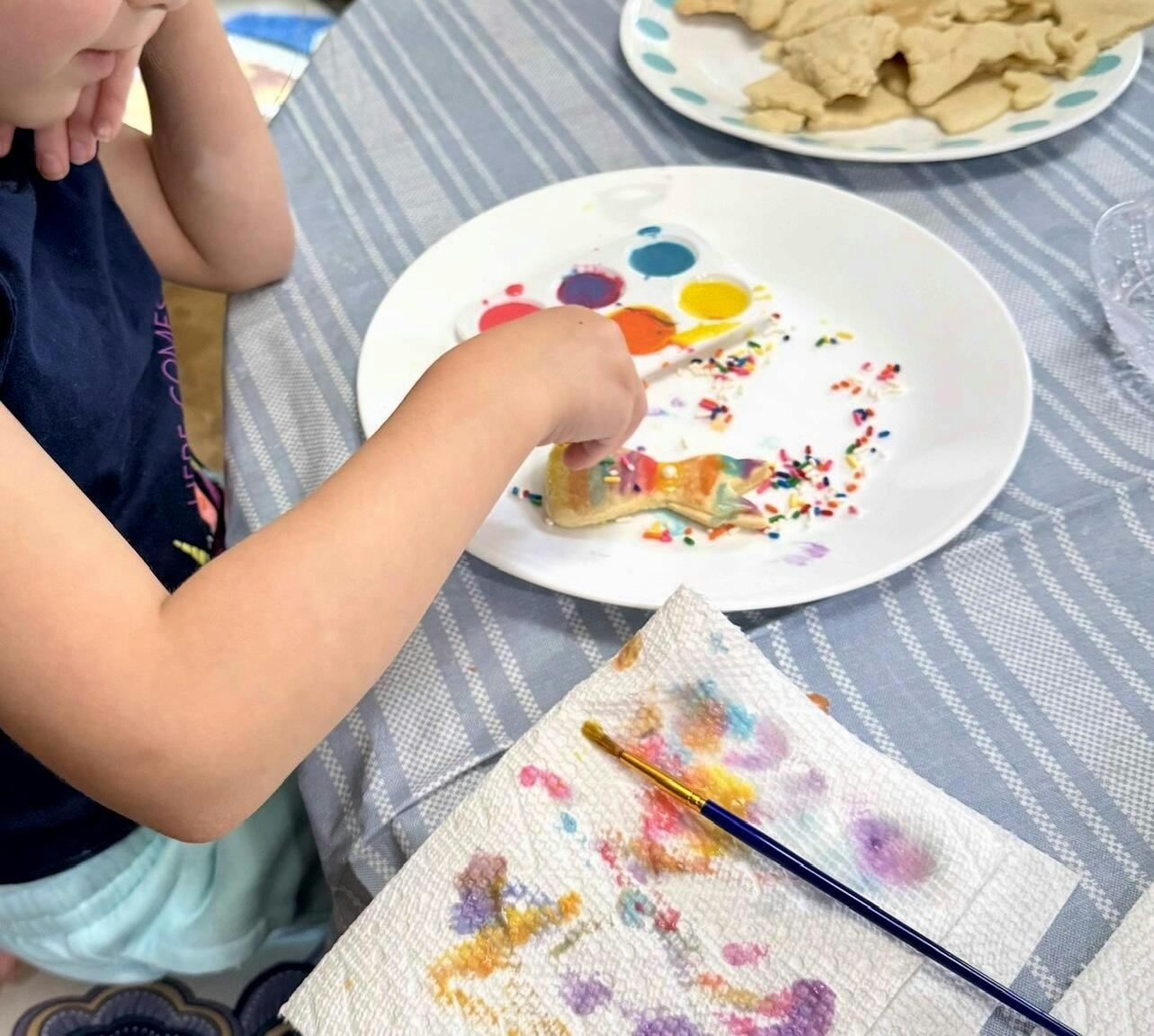
- How to: Set up a decorating station and let children unleash their inner pastry chef! They can experiment with different piping techniques, color combinations, and edible embellishments. This is pure artistic expression with a delicious reward.
-
Fruit Skewers with a Twist:
- What you need: Various colorful fruits (strawberries, blueberries, melon chunks, grapes), wooden skewers, a yogurt dip.
- How to: Children can create colorful patterns by threading different fruits onto skewers. Challenge them to create a rainbow, an alternating pattern, or a face. The act of threading is great for fine motor skills, and they learn about healthy eating.
-
Edible Landscapes or Dioramas:
- What you need: Graham crackers, frosting, candies, pretzels, coconut flakes (dyed green for grass), mini marshmallows.
- How to: Use a graham cracker as a base and let children build an edible scene. They can create a "forest" with pretzels, "snow" with marshmallows, or "water" with blue frosting. This encourages imaginative storytelling and spatial reasoning.
I'm the Chef Too!'s Unique Approach to Edible Crafts
At I'm the Chef Too!, we've perfected the art of edible crafts, making them exciting educational journeys. Our kits are designed to teach complex STEM concepts through delicious cooking adventures. We believe that by making learning tangible and tasty, children are more engaged, retain information better, and develop a genuine love for discovery.
For example, our popular Erupting Volcano Cakes Kit isn't just about baking; it's an exploration of chemistry as children witness a safe, edible chemical reaction that makes their cakes "erupt." Or consider our Peppa Pig Muddy Puddle Cookie Pies – kids get to bake, decorate, and enjoy a beloved character while learning about different textures and flavors. These kits are thoughtfully curated to provide all the pre-measured dry ingredients and specialty supplies, making it incredibly convenient for busy families to dive into a creative cooking adventure. Our mission is to transform everyday activities into extraordinary learning experiences, fostering family bonding and providing a wonderful screen-free alternative.
Ready to explore a world where art, science, and deliciousness collide? If you're eager to embark on new themed adventures every month, without the hassle of planning, then joining The Chef's Club is your perfect next step. A new adventure delivered to your door with free shipping in the US ensures continuous fun and learning!
Tips for Parents and Educators: Fostering a Creative Environment
Creating an environment that encourages and nurtures artistic exploration is just as important as the crafts themselves. Here are some tips to help parents and educators foster a lifelong love for creativity in children.
Focus on the Process, Not Just the Product
One of the most crucial shifts in mindset when engaging in simple arts and crafts with children is to prioritize the journey over the destination. The crumpled paper, the "messy" painting, the wonky clay sculpture – these are all testaments to a child's exploration, experimentation, and learning. Avoid critiquing their work or comparing it to others. Instead, ask open-ended questions like, "Tell me about your painting," or "What was your favorite part of making this?" This validates their efforts and encourages self-expression without the pressure of perfection.
Embrace the Mess (Within Reason!)
Let's be honest: arts and crafts can be messy. But a little mess is a sign of engaged, hands-on learning! Instead of fearing the cleanup, prepare for it. As mentioned earlier, lay down old newspapers, tablecloths, or designate a "messy zone." Dress children in play clothes or aprons. Having wipes and a damp cloth nearby can make quick cleanups much less stressful. When children feel free to experiment without the constant worry of making a mess, their creativity can truly flourish.
Encourage Independent Exploration and Choice
While providing guidance is helpful, allowing children to make their own choices and explore materials independently is key to fostering creativity. Offer a selection of materials and let them decide what to use and how. If they want to combine paint with glitter and then stick pasta on it, let them! This autonomy builds confidence and develops their problem-solving skills. It teaches them to trust their own ideas and innovative spirit.
Display Their Creations Proudly
Nothing boosts a child's confidence and sense of accomplishment more than seeing their artwork displayed. Frame a special drawing, hang a collage on the fridge, or create a rotating "art gallery" on a bulletin board. This shows them that their efforts are valued and appreciated, encouraging them to continue exploring their creative side. It makes them feel like true artists, inspiring them to make more simple arts and crafts for kids.
Join in the Fun!
The best way to encourage creativity is to model it yourself. Sit down with your child and create something alongside them. You don't need to be an artist; just engaging in the activity sends a powerful message that art is enjoyable and important. Shared creative time fosters connection, provides opportunities for conversation, and creates wonderful family memories. It’s a fantastic way to bond and show your child the joy of hands-on creation.
At I'm the Chef Too!, we are dedicated to providing experiences that naturally facilitate this kind of family bonding. Our kits are designed to be enjoyed together, fostering collaboration and shared learning. If you're an educator or run a homeschool group, you might also be interested in extending these creative and educational experiences to a larger group. We offer versatile programs for schools and groups, available with or without food components, designed to bring our hands-on STEM adventures to your classroom or co-op. For individual families seeking ongoing inspiration, remember you can always Browse our complete collection of one-time kits or embark on a monthly adventure by joining The Chef's Club!
Seamlessly Integrating STEM with Arts and Crafts
The beauty of simple arts and crafts is their inherent interdisciplinary nature. Far from being isolated creative pursuits, they naturally intertwine with concepts from science, technology, engineering, and mathematics (STEM). This organic integration makes learning more holistic, engaging, and relevant for children.
Chemistry in Baking and Mixing: Edible Experiments
When children mix colors, they're exploring basic color theory and the chemistry of pigments. When they create edible crafts, they're engaging directly with culinary chemistry. Baking is essentially a series of chemical reactions: leavening agents creating gas bubbles, proteins changing with heat, sugars caramelizing. Even simple activities like watching baking soda and vinegar react in a "fizzy paint" experiment are hands-on chemistry lessons. At I'm the Chef Too!, our kits, like the Erupting Volcano Cakes Kit, are specifically designed to highlight these chemical transformations in a fun, delicious way, turning every kitchen into a vibrant science lab.
Physics in Building and Constructing: Engineering Foundations
Building with blocks, recycled materials, or even just paper teaches fundamental physics and engineering principles. Children learn about balance, gravity, stability, and structure as they try to make their creations stand tall or hold together. They experiment with different shapes and materials to see what works best, understanding concepts like load-bearing and force without even realizing they're doing physics! Designing and constructing a paper airplane, for example, is a direct lesson in aerodynamics.
Biology in Nature Crafts and Observation: Connecting with Life
Nature-based crafts are an excellent way to introduce children to biology. Collecting leaves and discussing why they change color, observing patterns in flowers for a collage, or creating animal masks based on real creatures encourages observation skills and fosters an appreciation for the natural world. Learning about different types of plants and animals as part of a craft project brings biology to life in a tangible, artistic form.
Math in Measuring and Patterns: Quantitative Creativity
Math is everywhere in arts and crafts!
- Measuring: Cutting paper to specific lengths, measuring ingredients for an edible craft, or drawing lines for a weaving project all involve measurement.
- Geometry: Recognizing shapes in materials, cutting circles or squares, and understanding spatial relationships are all geometric concepts.
- Patterns: Creating patterns with beads, colors, or repeated shapes helps children understand sequencing and mathematical patterns.
- Symmetry: Many craft projects, like cutting out paper snowflakes or drawing faces, naturally lead to discussions about symmetry.
How I'm the Chef Too! Exemplifies This Blend
At I'm the Chef Too!, we are pioneers in demonstrating how these subjects can harmoniously blend. Our unique approach of teaching complex subjects through tangible, hands-on, and delicious cooking adventures developed by mothers and educators ensures that every kit is a complete "edutainment" experience. We don't just provide recipes; we provide a story, a scientific explanation, and an artistic endeavor, all rolled into one. For instance, creating our Galaxy Donut Kit isn't just about baking and decorating; it’s an immersive journey into astronomy, teaching kids about celestial bodies as they design their own edible universe. This integrated learning approach helps children make connections across disciplines, fostering a deeper, more comprehensive understanding of the world around them. We are committed to sparking curiosity and creativity in children, facilitating family bonding, and providing a screen-free educational alternative that makes learning fun and memorable.
To ensure your family regularly experiences this incredible fusion of learning and fun, consider the ultimate convenience and value of our monthly subscription. Each box from The Chef's Club is a complete experience, containing pre-measured dry ingredients and specialty supplies, delivering a new adventure right to your door with free shipping in the US. It's the perfect way to consistently provide enriching, screen-free educational fun that blends food, STEM, and the arts.
Conclusion
Embracing simple arts and crafts for kids isn't just about keeping them busy; it's about investing in their holistic development, sparking their creativity, and forging invaluable family connections. From the youngest toddlers exploring textures to school-aged children delving into the physics of building or the chemistry of edible art, these hands-on activities are powerful catalysts for learning. They foster cognitive growth, refine fine motor skills, provide outlets for emotional expression, and instill patience and persistence – all while offering a much-needed screen-free escape.
We've explored a wealth of easy, accessible craft ideas and discussed how art naturally intertwines with STEM education. At I'm the Chef Too!, we elevate this experience by blending food, STEM, and the arts into unique "edutainment" adventures. Our kits, developed by mothers and educators, are designed to make learning tangible, delicious, and incredibly fun, while conveniently delivering everything you need right to your home. We're passionate about sparking curiosity, nurturing creativity, and creating joyful memories for families, offering a screen-free educational alternative that truly makes a difference.
Don't let the fear of mess or complexity deter you. Start simple, embrace the process, and watch your child's imagination soar. The most profound learning often happens in the simplest of moments, with a dash of creativity and a sprinkle of fun.
Ready to embark on a continuous journey of discovery and delicious learning? Join The Chef's Club today! Choose from our flexible 3, 6, or 12-month pre-paid plans, perfect for ongoing enrichment or as a thoughtful gift. A new, exciting STEM cooking adventure is delivered to your door every month with free shipping in the US, providing everything your child needs to explore, create, and taste the joy of learning!
FAQ Section
Q1: What are the benefits of simple arts and crafts for kids? A1: Simple arts and crafts offer numerous benefits, including enhanced cognitive development (problem-solving, critical thinking), improved fine motor skills and hand-eye coordination, a healthy outlet for emotional expression, development of patience and persistence, and a boost to imagination and creativity. They also provide valuable screen-free engagement and opportunities for family bonding.
Q2: What are some essential, low-cost supplies to get started with crafting at home? A2: You don't need much to start! Essential low-cost supplies include various types of paper (construction, printer, recycled cardboard), coloring tools (crayons, washable markers, tempera paint), adhesives (glue sticks, white glue, tape), kid-safe scissors, and a collection of recycled materials like toilet paper rolls, cereal boxes, and fabric scraps. Nature finds like leaves and pebbles are also great additions.
Q3: How can I make crafting less messy? A3: To minimize mess, designate a specific crafting area and protect surfaces with an old tablecloth, newspaper, or a reusable mat. Dress children in old clothes or aprons. Keep wipes or a damp cloth handy for quick cleanups. Focusing on washable paints and markers also helps significantly. Remember, a little mess often means a lot of engaged learning!
Q4: How does I'm the Chef Too! combine arts and crafts with STEM? A4: At I'm the Chef Too!, our mission is to blend food, STEM, and the arts into unique "edutainment" experiences. We use cooking as a hands-on medium to teach complex subjects. For instance, baking involves chemistry (reactions, transformations), math (measuring ingredients), and art (decorating). Our kits provide tangible, delicious cooking adventures that spark curiosity and creativity while exploring these interconnected fields.
Q5: Are I'm the Chef Too! kits suitable for different age groups? A5: Yes, our cooking STEM kits are designed by mothers and educators to be engaging and educational for a range of ages. While specific kits might resonate more with certain age groups due to the complexity of the activity or the theme, the hands-on nature and focus on discovery make them broadly appealing for children, often with adult assistance for younger learners. Each kit typically includes clear, step-by-step instructions that are easy to follow.
Q6: What if my child isn't interested in traditional drawing or painting? A6: Arts and crafts encompass a vast array of activities beyond drawing and painting. If your child isn't keen on those, try sculpting with playdough, building with recycled materials, creating nature collages, making friendship bracelets, or engaging in edible crafts like cookie decorating. The key is to find activities that align with their interests and allow for creative expression in different forms. Our I'm the Chef Too! kits offer a fantastic alternative by blending art with the delicious fun of cooking.
Q7: How often should we do arts and crafts? A7: The frequency of arts and crafts depends on your family's schedule and your child's interest. Even short, spontaneous sessions a few times a week can be beneficial. The goal isn't to force it, but to create opportunities for creative expression. Having readily accessible supplies can encourage children to initiate their own craft time, making it a natural part of their routine. Our Chef's Club offers a convenient way to bring a fresh, engaging project into your home every month, ensuring regular creative fun.